
This is the fourth and final part of our IWCA Conversation Series. This segment is taken from a digital roundtable held with four honourees from the 2026 Influential Women in Canadian Agriculture program, held in June 2026 and moderated by agriculture editor Bree Rody. For information on the honourees and the background of the Influential Women in Canadian Agriculture program, click here.
The honourees featured in this conversation are:
- Jennifer Woike, B.C. Ag Council
- Margaret Hudson, Burnbrae Farms
- Susan Ainsworth, Keystone Potato Producers Association
- Tori Waugh, Ontario Soils Network
Editor’s note: Where the conversation last left off, honourees were discussing the context of 2026 being named the UN’s International Year of the Woman Farmer. While the speakers noted some conflicted feelings, several, including Woike, noted that events such as Pride were once necessary due to communities not having a voice. For the full conversation in Part III, click here.
This transcription has been edited for clarity and length.
Bree Rody: I’m really loving this – especially the Pride comparison from Jennier. I think it’s okay to feel conflicted feelings. Not everyone has to feel black or white, good or bad about something.
Jennifer Woike: I think it does bring about a certain level of recognition, which Susan brought forward – how many years have women been in these roles where we haven’t been getting the recognition? So declaring these events does help bring that awareness, but it’s naming something that’s already been happening.
Tori Waugh: If I’m thinking about it in the context of the UN declaration, it’s an international context. So while it might feel – and I agree, it’s a frustration – it’s a mixed bag in this context. It is absolutely a lot more transgressive in other countries, where women farmers are experiencing more active discrimination, currently.
BR: Yes, that is a pretty important amendment. Obviously, we’re discussing this in the context of Canadian women, but you’re right that with agriculture, especially in issues like food sovereignty and climate change, certain countries and communities are affected disproportionately.
JW: And I think in ag, a good reminder for me is that ag has already relied on women, whether we were given the title of being a farmer or not. That’s what I get from the UN – we’ve always been there. Perhaps now, they’re just recognizing it.
Margaret Hudson: And in the context of the international, it’s going to mean that more women are supported in countries that would historically discriminate against them so that they have increased opportunity for the resources and tools they need to farm, to feed their families, to support their communities. If this moves that along more, I think it will be a very good thing. In Canada and the U.S., we’ve progressed really well – we still have a long way to go – but there are other countries that need to move even further along that continuum.
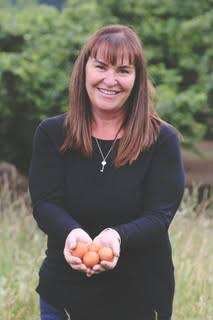 JW: And perhaps we can be the catalyst. Maybe that’s our role. Maybe that’s why we’re in the positions we’re in – to allow the doors to be opened for a gentler approach for those people who are minorities, who are LGBTQ, who are indigenous. We haven’t even touched base on that – indigenous women in farming. Those barriers to even get in the door are huge. Maybe that’s where we can be leaders and role models in the industry: to help advance and open some of those doors and create a gentler approach. From what I gather, most of us didn’t have this welcome into the industry that was, like, “Come on in, we’re going to treat you like an equal and make everything good.” So maybe we can help change that.
BR: I’m thinking back to our discussions early of sustainability and bee lawns – there’s this openness toward sustainability in agriculture, circular economies in agriculture, and yet Indigenous people, their environmental and agricultural practices are significantly much more sustainable than non-indigenous. It’s another matter of “we’ve always been there.” The practices have always been there.
So as we wind things down, we know things don’t stop at just one conversation, but I wanted to leave it up to each of you to offer up some concluding thoughts based on the day.
MH: It’s funny, because we talked about going to events and conferences and how we were received. I think when you grow up that way, you’re used to it. But I took my daughter to a big international egg meeting. And I think – the word “handsy” came up earlier? And there was some, you know, inappropriate, offensive behaviour on behalf of some of the older gentlemen in the industry. And my daughter’s reaction to it all was just horrified. You realize just how acclimatized, how used to if you’ve become. How do we shift things so that the next generation of women coming up behind us are going to want to enter into an industry, to want to be a part of it?
So I think these shifts are needed – because I do believe it is a great area for my daughter. I mean, I’d love to spend some time with Tori, because my daughter loves soil health. She did her undergraduate degree at McGill and she’s now working with an international agricultural company based out of England, and really wanting to come back and bring some more sustainable soil practises to our farm. We’ve only just started cropping some of our own lands, so we’re trying to shift some of those mindsets – it’s going to be interesting, but I know she’s going to want to try, so I want to know how we can create an environment and an industry that she and the next generation are going to want to be part of.
I want to create an environment and an industry that [my daughter] and the next generation are going to want to be a part of.
TW: I think Margaret, that every big door that has been opened for me, in terms of big changes in my career, they’ve been opened by a woman. As much as there’s a boys club, there’s a lot of power in simply thinking about each other, and looking into how we can support each other. Men still definitely need to be involved in tipping the scale so that we see more women inheriting the farm and more women in agriculture period, in positions of leadership. But certainly, we can do a lot for each other.
Susan Ainsworth: This is just honestly reminding me of how awesome it is to get together with like-minded folks – I would love if there was more opportunity for something like this, because we would not have met if it had not been for this. As I listen to everybody, I just think, I can’t wait to be friends after this, because I have so many more questions to ask.
It really revitalizes that part of you, because sometimes it feels like we’re just working on islands. We all have similarities across different situations – potatoes to poultry to soil health – but there are so many similarities in everything that we’ve been through.
JW: I would mirror some of what Susan said – I learned a lot from each person. I’ve known Margaret for 15 years or so now, and I even learned things about [her] today. So that was so nice. We have a long way to go is what I learned today – but I also think we should be proud of where we’ve gotten to. Women have worked so hard to break into this industry and have a voice.
I think it was Tori who said, about supporting the businesses – we need to make sure we don’t just fall into the judgement side of things. We need to support and clap for women when they’re doing great things – even if you’re competitors, even if you don’t know each other personally, you need to be there and be happy and clapping for these women. That’s the big piece, what’s going to get us forward. That’s what’s going to get the daughters of the next generation wanting to be involved – when they see us across lines, being supportive. There are a lot of women who wouldn’t have the same views that we have on this panel.
And maybe, if I’m called a [*****], that’s okay. You know the other day, I said something to someone, and she replied with, “Do you ever wonder why people don’t like you?” And I was like, “Well, you know what? If everyone liked me, I’d be pretty boring.” That’s how I look at it.
Brene Brown said it – you can’t control how people think about you. If you go about your life thinking you can, you’re never going to get anywhere.
BR: Great note to end on. I want to thank everyone so much for the time we spent together.


