

The insights and technical expertise in this article were provided by our Co-founder & General Manager, Raymond
When procurement teams plan their packaging, the first question is almost always: “How can we get the unit price of this box down?” Pressed by tight budgets, focusing on the immediate cost feels like the right move.
However, this is exactly where most brands fall into a trap—skyrocketing product damage, massive shipping inefficiencies, and chaotic quality issues across global factories. When we audit these problems, the root cause is always the same: a legacy mindset that treats packaging as a cheap commodity rather than a strategic supply chain asset.
Heading into 2026, squeezing pennies on a per-box basis is no longer sustainable. It actively leaks revenue through hidden logistics costs and regulatory fines. To protect your bottom line, brands must shift from a “unit-cost” mindset to a “Total Cost of Ownership” approach.
Here is a look at the most common pitfalls brands encounter today, and how you can avoid them to build a resilient procurement strategy.
The Pitfalls of Unit-Cost Squeezing in Packaging Procurement
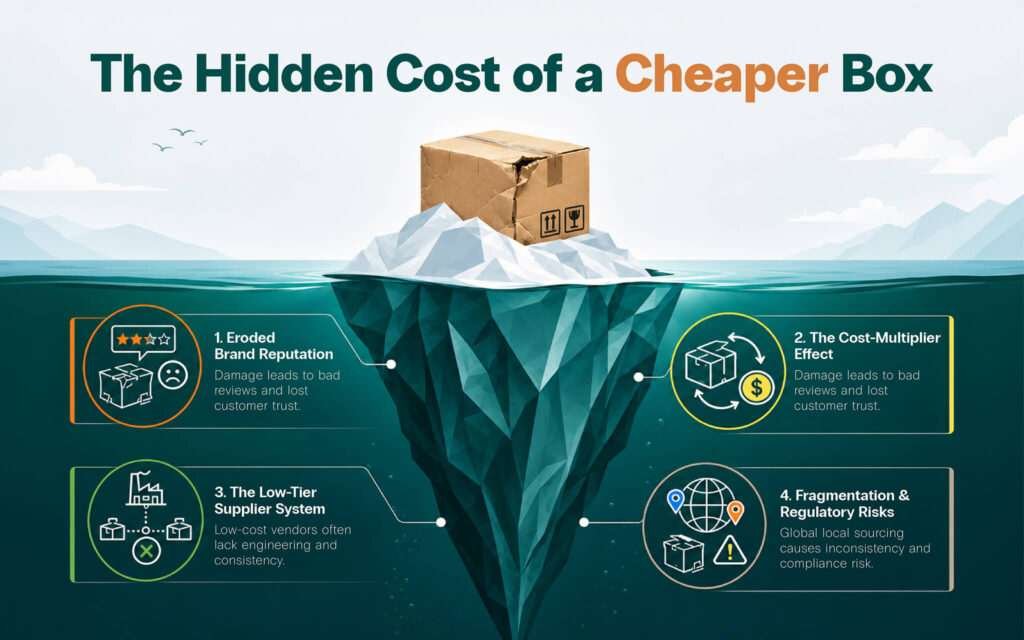
Most procurement teams are forced to focus strictly on the upfront cost of a box. What happens when choosing a cheaper, lower-quality box to hit a short-term savings KPI? Our Co-founder & General Manager, Raymond, pointed out that brands might end up trading a visible, minor saving for three massive, hidden expenses.
Eroded Brand Reputation
Cheaper materials mean weaker structural integrity. The package fails its primary mission: protection. When customers receive damaged or crushed products, brands face immediate backlash in the form of bad reviews and lost customer loyalty.
The Cost-Multiplier Effect
The money saved upfront by purchasing cheap packaging is quickly wiped out on the backend. Brands end up paying drastically more to process customer returns, replace damaged goods, and rush-order emergency replacement boxes.
The Low-Tier Supplier System
Chasing low prices forces brands to work with low-end vendors who lack engineering and design capabilities. Brands can get stuck in a loop of constant supplier turnover, destroying any chance of building a reliable, value-added supply chain.
Fragmentation and Regulatory Risks in Global Packaging Procurement
The Fragmented Reality of Global OEM Management
A major operational headache arises when brands expand production across multiple international factories, such as sites in China, Vietnam, and Mexico. To save time, global procurement managers often let their local contract manufacturers (CMs) handle and buy the packaging locally.
While this seems efficient on paper, it often results in a scattered and inconsistent supply chain. Local factories naturally focus on their own regional profit margins. As a result, brands end up with wildly inconsistent packaging quality, mismatched corporate colors, and a higher risk of local supplier disruptions.
We saw this exact problem play out with our client, Blueair. Because their overseas contract manufacturers sourced packaging independently from unverified local vendors, their entire product lineup looked disconnected in stores. The paper whiteness didn’t match, the structural rigidity varied from box to box, and the signature corporate colors were noticeably off-shade depending on where the item was built. To consumers, the products looked like they belonged to completely different companies. To make matters worse, Blueair’s internal team lacked the precise technical packaging data required to hold those distant factories accountable or tell them how to fix it.
The 2026 Regulatory Enforcement and Smart Tech Traps
The year 2026 is a major turning point for strict green packaging laws and Extended Producer Responsibility (EPR), which holds companies financially accountable for their packaging waste. Sourcing from unverified, non-compliant vendors just to save a few pennies now can expose brands to heavy legal risks and expensive fines.
At the same time, brands face new pressure regarding technology. Marketing and operations teams increasingly demand smart packaging features like QR codes, serialization, and RFID tags to track inventory and interact with consumers.
Because procurement managers rarely have specialized technical printing knowledge, it is hard for them to know what these tracking components should actually cost to produce. As a result, brands frequently overpay, absorbing massive and unnecessary markups hidden in the tech layers of the box.
Smart Solutions for Your Packaging Procurement Strategy
Engineering for Total Cost of Ownership
To solve these backend cost leaks, a modern packaging procurement strategy must look beyond the raw price of cardboard. The solution lies in structural engineering. By optimizing the physical design of the packaging, which helps drastically reduce dimensional (DIM) weight, minimize warehouse footprint, and lower freight expenses.
Raymond, our Co-founder and General Manager, highlights why this shift in perspective is so critical for modern brands:
“Many brands celebrate saving 5% on a raw box price, but ignore that their product damage rates just doubled. If a cheap box causes a single return, the cost of processing that return, replacing the item, and paying for secondary shipping completely wipes out the packaging savings of your next 500 orders.”
Reclaiming Control Through Technical Standardization
Instead of constantly fighting with individual factories over quality issues, brands can take back control of their intellectual property by establishing a strict, universal technical framework for all global suppliers.
The first step is creating unified standard operating procedures (SOPs). This master operational process covers everything from initial design file rules to structural proofing, press-side color sign-offs using a “golden sample,” and final pre-shipment quality control.
Next, brands must set scientific material benchmarks rather than relying on a factory’s subjective opinion. This means defining mandatory, measurable physical standards for your packaging, such as using exact technical color values and precise physical strength thresholds like the Edge Crush Test (ECT) and bursting strength.
Finally, you must establish universal cosmetic standards that clearly define what counts as an aesthetic defect. This removes all guesswork and interpretation from local factories.
An incredible byproduct of this standardization is geopolitical agility. If a sudden tariff or political shift requires you to move production from one country to another, you can pivot your supply chain in a matter of days. Because your packaging standards are already universally set and pre-qualified, you face zero downtime at your new manufacturing site.
Mitigating Risk with System-Driven Sourcing and Smart Tech Hacks
To survive the strict compliance era of 2026, global packaging procurement must focus on system-driven compliance. You can create a powerful shield for your brand by thoroughly vetting suppliers based on their document management infrastructure. Look for partners who maintain meticulous records of raw material tracking, quality control logging, and clear paper trails. Choosing a tier-1 supplier with these robust systems acts as an insurance policy, protecting the company from sudden government audits and heavy compliance fines.
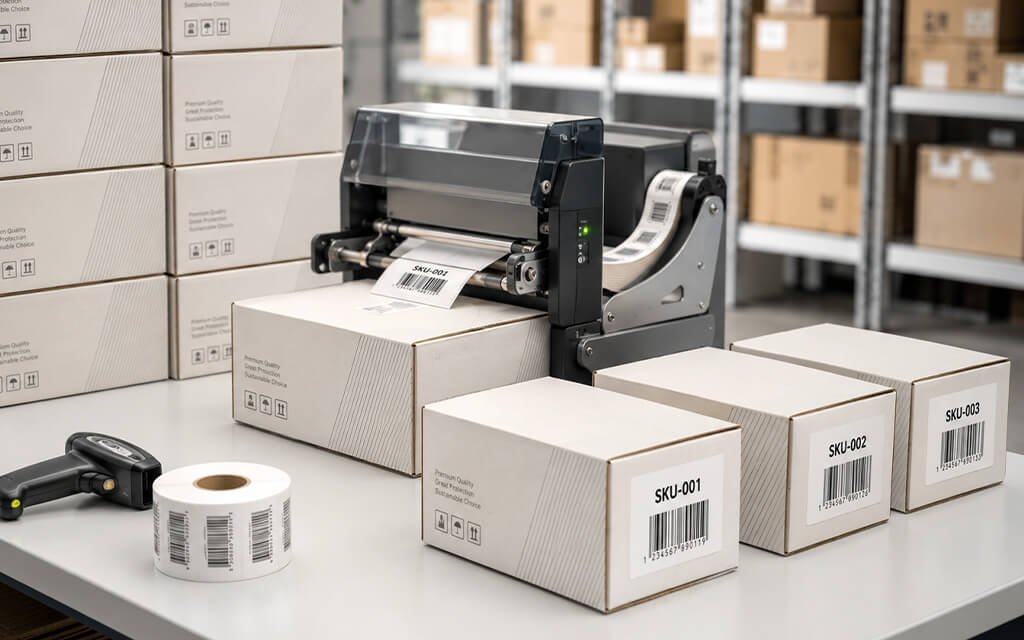
When it comes to tracking tech, procurement teams can use simple sourcing hacks to control rising costs. Instead of paying for expensive, low-volume custom print runs for every single item variation, you can bulk-print uniform outer boxes to capture volume discounts. Once the master packaging is built, simply apply automated barcode stickers post-production to differentiate your products.
Case Studies in Packaging Procurement Optimization
Parse: Achieving Volumetric Efficiency
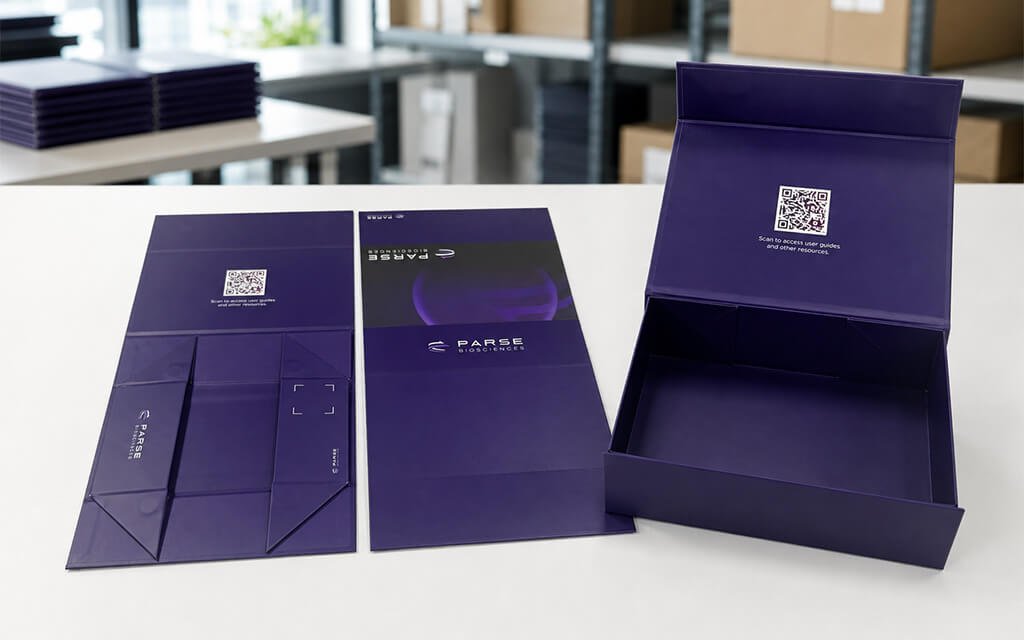
To see how structural engineering transforms packaging procurement data into bottom-line profits, look at our collaboration with Parse. Their team faced a classic logistics challenge: they were utilizing premium, pre-assembled rigid book boxes for their products. Because these boxes were manufactured and shipped fully set up, they took up a massive amount of warehouse space and meant Parse was effectively paying to ship empty air across their supply chain.
Our engineering team stepped in with a structural fix that completely redesigned the packaging into a collapsible, flat-packable rigid book box. Once assembled at the fulfillment center, the box looked and functioned identically to the original premium design, retaining its high-end brand appeal. However, because it could ship and store completely flat, this single engineering change reduced their total shipping and storage volume by 80%, drastically slashing Parse’s long-term logistics overhead.
Flaviar: Driving Material Innovation
Another powerful example of modern packaging procurement in action is our work with Flaviar. They produce a high-end advent calendar containing multiple glass bottles of whiskey, which naturally requires high levels of transit protection. Historically, their supplier relied on plastic foam inserts to keep the glass from breaking. While the foam protected the bottles, it created an environmental problem and was incredibly inefficient to transport.
Our design team replaced the plastic foam with a 100% recyclable paperboard structural insert. This material innovation allowed the entire protective interior to fit into tight, flat bundles during transit to the factory. Based on Flaviar’s production volume of 40,000 units, swapping the bulky foam for our flat-packable paper solution reduced their ocean freight requirement from 11 forty-foot containers to just 5. This simple material shift allowed them to hit their sustainability goals while saving a massive amount of money on ocean freight.

Conclusion
If you want to protect your bottom line in 2026, you don’t need to go find a cheaper factory. You just need to change the conversation inside your own office.
Pull your procurement manager and your logistics lead into a quick meeting. Don’t ask them how to save five cents on a cardboard box. Instead, ask them three simple questions:
- What is our actual product damage rate right now?
- Are our international factories buying whatever packaging they want?
- How much empty air are we currently paying to ship across the ocean?
The answers to those three questions will show you exactly where your company is leaking money—and that is where your new procurement strategy begins.
If you suspect your packaging is costing you more than it should in freight, returns, or factory delays, you don’t have to guess how to fix it. We can help you run the numbers, audit your current designs, and build a standardized framework that works globally.
The post Building a Packaging Procurement Strategy for 2026 appeared first on Zenpack Blog.


