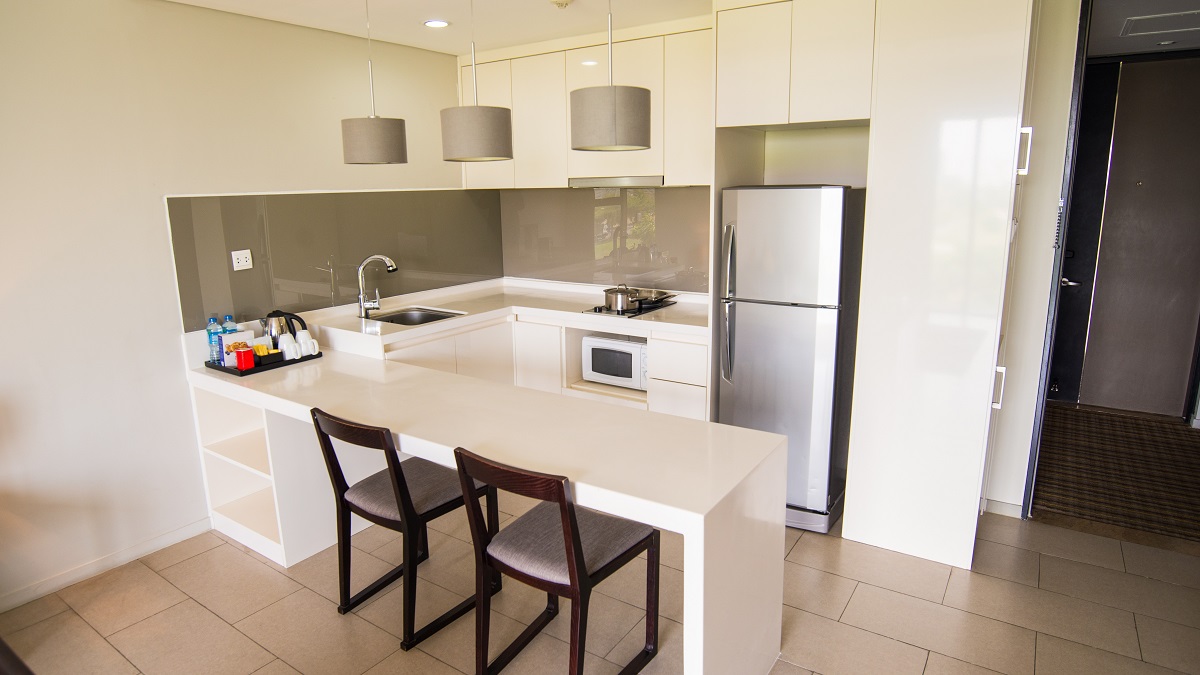
We would all like to buy the most environmentally friendly appliances available. But in real life, energy efficiency is only one of many factors we need to consider when we’re making major purchases. If you’re dealing with a narrow galley kitchen, living in a tiny house, or dealing with any number of awkward kitchen configurations, the dimensions of your new refrigerator might be your top priority. Fortunately, if a counter-depth refrigerator is non-negotiable, there are extremely efficient options.
The refrigerators in the original 2021 version of this guide are either discontinued, superseded, or now five years into an appliance lifecycle that averages 10–14 years. A lot has changed — and not just the model numbers.
Counter-depth refrigerators have closed much of the capacity gap with standard-depth models. In 2024, LG and Samsung introduced counter-depth models reaching 26.5–27 cubic feet, nearly matching standard-depth capacity without jutting past your cabinets.
Even better, refrigerant reform is also essentially complete: R-600a, which has a global warming potential 500 times lower than previous refrigerants, is now the industry standard across virtually all new household refrigerators sold in the U.S. You no longer need to check the door sticker for refrigerant type — it’s almost certainly R-600a. One new nuance: R-600a is flammable. This doesn’t create meaningful safety risk in normal use, but it does mean sealed-system repairs must be performed by a technician with hydrocarbon-rated recovery equipment. Ask before scheduling service.
This article contains affiliate links. If you purchase an item through one of these links, we receive a small commission that helps fund our Recycling Directory.
How to Choose a Counter-Depth Refrigerator
Counter-depth isn’t a single spec, it’s a range. True counter-depth refrigerators, which are 24- to 25-inches deep, offer a counter-flush look but are relatively rare. Most models marketed as counter-depth run 27–30 inches deep are still meaningfully shallower than standard-depth units, which range from 32 to 36 inches. Be sure to measure your space carefully before shopping.
- Fit first. Measure the opening width, depth (including door swing clearance and handle protrusion), and height. Leave at least 1 inch on each side and top for ventilation. Note any door swing obstructions, such as islands, adjacent cabinets, dishwasher handles.
- Right-size for your household. The commonly cited rule is that each person needs 4 to 6 cubic feet of total capacity. A household of two can usually work with 16–20 cubic foot fridge; three to four people generally need 20–26 cubic feet. Don’t oversize, as a mostly empty refrigerator is less efficient than one that’s three-quarters full.
- Freezer configuration. Top-freezer models remain the most energy-efficient configuration per cubic foot. Bottom-freezer designs put fresh food at eye level but add mechanical complexity. French-door models are most popular and offer the widest variety but use more energy and generate more service calls than simpler designs.
- Energy consumption, not just certification. Energy Star certification means a model uses at least 10% less energy than the federal minimum. That’s a floor, not a ceiling. Check the yellow EnergyGuide label on the appliance for estimated annual kWh; typically the difference between the best and worst Energy Star-certified counter-depth models can be 200+ kWh per year, a $20–$40 annual gap at annual utility rates.
- Refrigerant. As of 2025, R-600a is effectively universal in new U.S. refrigerators. Verify on the data plate inside the fresh-food compartment.
- Features that raise energy use. Through-door ice and water dispensers, in-door ice makers, anti-sweat heaters, and smart screens all increase electricity consumption. If you don’t need them, the most efficient models skip them. Internal water dispensers are a reasonable middle ground that provide convenience without an exterior mechanism that uses electricity.
- Reliability data. French-door models with ice makers generate significantly more service calls than simpler designs. Yale Appliance’s 2026 service data, based on 33,190 service calls, ranks LG and GE as the most reliable counter-depth French-door brands, with Bosch leading on temperature stability. Consumer Reports members can find long-term predicted reliability rankings by brand at consumerreports.org, where GE brands and Bosch consistently rank near the top for long-term predicted reliability.
- Service access. A reliable brand is only as good as the technicians who can fix it. GE has the broadest national service network. Bosch and LG are well-supported in most metros. Samsung has historically had longer repair wait times, a real consideration for a decade-long appliance relationship.
- Don’t forget disposal. When your old refrigerator goes, the R-600a refrigerant must be recovered by a certified technician before recycling. Use Earth911’s recycling search to find appliance recyclers near you, and confirm that they are an EPA Responsible Appliance Disposal (RAD) partner to ensure proper refrigerant handling.
The Best Counter-Depth Refrigerators in 2026
The original article featured models from 2021, most of which are discontinued. Here are current alternatives organized by configuration, prioritizing Energy Star certification, current availability, and documented reliability.
Best for Energy Efficiency: Frigidaire FFTR1835VW (Top Freezer)
Top-freezer models remain the most efficient configuration available. The Frigidaire FFTR1835VW is an 18.3 cu. ft. Energy Star–certified top-freezer with a 30-inch depth, which is significantly shallower than standard models. It uses approximately 369 kWh/year, forgoes energy-intensive features like an ice maker and through-door dispenser, and includes humidity-controlled crisper drawers and an auto-defrost function. It’s also garage-ready (tested from 38°F to 110°F) and ADA compliant. No smart features, no ice maker; just efficient, reliable cold storage.
 Depth: 30 in. | Capacity: 18.3 cu. ft. | Est. energy: ~369 kWh/yr | Price range: $600–$750
Best Value French Door (33″): Samsung RF18A5101SR
For smaller kitchens that want a French-door design without a full 36-inch footprint, the Samsung RF18A5101SR is a 33-inch-wide counter-depth model with 17.5 cu. ft. total capacity. Its Twin Cooling Plus system uses two independent evaporators to keep refrigerator and freezer air separate to extend food life and limit odor transfer. It includes an ice maker, Wi-Fi connectivity via Samsung’s SmartThings app, Power Cool and Power Freeze modes, and Energy Star certification. The 33-inch width is a significant advantage for kitchens with narrower openings. Note: Samsung’s service network can have longer wait times in some regions — check availability before purchasing.
 Depth: 28.5 in. | Capacity: 17.5 cu. ft. | Est. energy: ~448 kWh/yr | Price range: $1,100–$1,500
Best Large-Capacity Counter-Depth: LG LRFLC2706S (Counter-Depth MAX)
The LG LRFLC2706S resolves what was long the core counter-depth trade-off: it delivers 26.5 cu. ft. of storage in a counter-depth footprint — previously only achievable with a standard-depth unit. The Counter-Depth MAX uses thinner walls and advanced insulation to achieve this. It includes an internal water dispenser (no exterior mechanism, which reduces complexity), an ice maker, Door Cooling+ for even temperature distribution, a PrintProof stainless finish, and Wi-Fi via LG’s ThinQ app. Energy Star certified. Yale Appliance’s 2026 reliability data ranks LG as one of the top performers for first-year service rates in this category.
 Depth: 29.25 in. | Capacity: 26.5 cu. ft. | Est. energy: ~632 kWh/yr | Price range: $1,700–$2,200
Best for Food Preservation: Bosch 800 Series B36CT80SNS
No other freestanding counter-depth refrigerator matches Bosch’s food preservation system. The B36CT80SNS uses dual compressors and dual evaporators, keeping refrigerator and freezer air completely separate to prevent humidity fluctuations that accelerate produce spoilage and limits odor transfer. Bosch’s FarmFresh System includes VitaFreshPro automatic temperature and humidity balancing for different food types and SuperCool/SuperFreeze modes for rapid chilling of new groceries. The adjustable FlexBar adds organizational flexibility. Energy Star certified. Yale’s 2026 service data shows Bosch’s first-year service rate at 12.7% — higher than LG but with notably fewer cooling failures; its strength is sustained temperature stability rather than low failure probability.
 Depth: 24 in. (case); 29 in. with handles | Capacity: 21 cu. ft. | Est. energy: ~530 kWh/yr | Price range: $2,800–$3,500
Best Premium Option: GE Profile PVD28BYNFS (4-Door French Door)
The GE Profile PVD28BYNFS is a 4-door, 27.9 cu. ft. French-door model with a door-in-door design for quick-access storage without opening the main compartment — reducing cold air loss on high-traffic items. GE’s TwinChill dual evaporators maintain optimal humidity and temperature in fresh-food and freezer sections independently. Includes a hands-free, sensor-controlled AutoFill water dispenser, an adjustable-temperature middle drawer with four preset modes for meat, beverage, snacks, and wine, as well as an LED light wall and Wi-Fi. Energy Star certified with an estimated operating cost of approximately $91/year. GE has the widest service network of any major appliance brand, which matters over a 10+ year ownership horizon.
 Depth: 36.75 in. (standard depth; counter-depth version also available) | Capacity: 27.9 cu. ft. | Est. energy: ~760 kWh/yr (est. $91/yr operating cost) | Price range: $2,400–$3,200
Counter-Depth Refrigerator Comparison
| Model | Config | Depth | Capacity | Est. kWh/yr | Price Range | Best For |
| Frigidaire FFTR1835VW | Top freezer | 30 in. | 18.3 cu. ft. | ~369 | $600–$750 | Max efficiency, budget buyers, small households |
| Samsung RF18A5101SR | French door | 28.5 in. | 17.5 cu. ft. | ~448 | $1,100–$1,500 | Narrow kitchens (33″), mid-budget |
| LG LRFLC2706S | French door | 29.25 in. | 26.5 cu. ft. | ~632 | $1,700–$2,200 | Families needing standard-depth capacity with counter-depth fit |
| Bosch 800 Series B36CT80SNS | French door | 24/29 in. | 21 cu. ft. | ~530 | $2,800–$3,500 | Food preservation, open kitchens, long food storage |
| GE Profile PVD28BYNFS | 4-door French door | 36.75 in.* | 27.9 cu. ft. | ~760 | $2,400–$3,200 | Entertainers, home cooks, service reliability |
*GE Profile PVD28BYNFS is primarily standard-depth; a counter-depth version is available at select retailers.
Getting the Most From Your Refrigerator
The most efficient refrigerator you can buy is the one you already own, as long as it’s working properly. To make your fridge last longer, take these simple steps:
- Set the refrigerator to 35–38°F and the freezer to 0°F. These are the optimal food-safe temperatures.
- Clean condenser coils 1–2 times per year. Dusty coils force the compressor to work harder.
- Check door seals. If a dollar bill slides out easily when the door is closed, the gasket needs replacing.
- Keep it three-quarters full. Both overfilled and mostly empty refrigerators are less efficient.
- Turn off the anti-sweat heater if your climate doesn’t require it, as it’s one of the bigger phantom draws.
Editor’s Note: Originally published on March 24, 2021, this article was substantially updated in April 2026.
The post Buyer’s Guide: Most Efficient Counter-Depth Refrigerators appeared first on Earth911.