

My home has been on an electrification journey for over two years. We added solar, then a battery, but our home was still very much reliant on gas. Three key components of the house were tied to gas: heating, cooking, and hot water. Renting the home we live in has been the greatest barrier to true electrification, but the hot water system was something that we could feasibly tackle to make a meaningful impact on our gas bills. A switch from gas-boosted solar hot water to a heat pump was the logical next step. We chose to install an Emerald heat pump, the Emerald All-in-One 320L Pro, with O’Brien Electrical & Plumbing Rowville…
After one full month with a heat pump hot water system, I can say that it was absolutely worth it! We have saved money, and we now have information about our usage habits that we previously had no visibility into.
TL;DR: Is an Emerald heat pump worth it?
After one month with the Emerald All-in-One 320L Pro, here is what we have found:
- We have not run out of hot water. Our 320L system has comfortably supplied our family of five, even during a Victorian winter.
- Our battery has covered 100% of the heat pump’s electricity use. We have effectively shifted hot water from gas to our own stored solar energy.
- There has been no compromise on comfort. The system is quiet, hot water remains consistent, and Boost Mode provides extra heating when required.
- The Emerald App provides useful visibility and control. We can monitor temperature, hot water capacity, and energy trends, while controlling and boosting the system remotely.
- You do not need a battery to make solar work harder. Emerald’s Solar Soaker can use excess rooftop solar to heat water instead of exporting that energy to the grid.
- We expect meaningful gas savings. Our gas bills previously averaged around $1,500 annually, with projected hot water savings of around $500 to $600 per year
Why make the switch from solar hot water to a heat pump?
I’ve been around long enough in the renewables industry to have worked on the federal solar hot water rebate. Heat pumps were eligible for the rebate, but solar hot water was the rage for many years. Promises of the sun heating your water for free were likely intended for northern states. The water in homes with solar hot water in and around Victoria, where I live, is heated primarily by gas during the cooler months.
Most people I have spoken with who have solar hot water do not realise how their systems actually work. The solar panel on your roof does not operate like a PV solar panel. Instead of generating electricity, the panel has water running through it that is heated by the sun. No sun/heat = no hot water. This is where the gas booster (instantaneous gas) kicks in.
When our gas solar hot water system was decommissioned, the water that flowed out of the tank was ice cold. Worse, the water drained from the panels was almost black – it looked like it had been stagnant in it for a while or was simply a breeding ground for mould. Our solar hot water system was really an instantaneous gas system. Great for consistent hot water – not so much for our gas bills.
Heat pumps are fully electric, require no roof space, and operate more efficiently than gas or solar hot water systems.
Why did we choose an Emerald heat pump?
Open a browser and search for heat pump brands. You’ll undoubtedly find that there are as many brands of heat pumps available as there are cars. Unlike your daily drive, most of us would be completely oblivious to the makes and models of the heat pumps available. The subject of hot water rarely comes up until the tap runs cold one day. This is why our choice of installer was just as important as the brand of heat pump.
Having previously worked with O’Brien Electrical & Plumbing Rowville, we knew that we could trust their advice. With over 100 years of operation in Australia, O’Brien has been around a while and their workmanship is backed by fantastic warranties.
Jordan from O’Brien gave us a few options, but the winner was Emerald. He explained that Emerald is the number one heat pump installed across Victoria. For price, warranty, and quality, Emerald was consistently chosen by Victorian households.
We were quoted for the Emerald All-in-One 320L Pro. As a family of five, 320L is a necessity!
What is the Emerald 320L Pro actually like to live with?
This was probably my biggest concern before making the switch.
I did not want to replace a perfectly reliable gas hot water system with something technically more efficient, but practically worse. Saving money is great. Running out of hot water halfway through a shower is not. My husband loves a long, hot shower, and we are a household of five. Hot water is not an area where I was prepared to compromise for the sake of electrification.
So far, I have not had to.
The Emerald All-in-One 320L Pro has kept up with our household without skipping a beat. We installed it during a Victorian winter, which is hardly giving a heat pump an easy first assignment. Even during colder weather, we have had consistent hot water whenever we need it.
The unit itself is also surprisingly quiet. Yes, you can hear it operating when you are standing nearby. However, it is certainly not something we notice from inside the house.
There is still an element when you need a boost
One misconception about heat pump hot water is that you are entirely reliant on the heat pump itself. Our Emerald also has an electric heating element that can provide additional heating when required.
Think of the heat pump as doing the efficient heavy lifting, with the element available when the system needs some extra muscle. That was important to me with five people in the house. Efficiency matters, but so does knowing that we can produce more hot water when demand increases.
I find myself checking the Emerald app after I have my morning shower. I’ll pop it on Boost Mode if I can see that we might need extra hot water.
The app gives us something gas never did: information
The Emerald app has been eye-opening.
I would not describe the current controls as incredibly advanced, but the information is genuinely useful. I can remotely turn the system on or off, activate a boost, view the water temperature, and monitor energy trends.
The app also provides an indication of the remaining hot water capacity. That visibility has changed how I think about hot water.
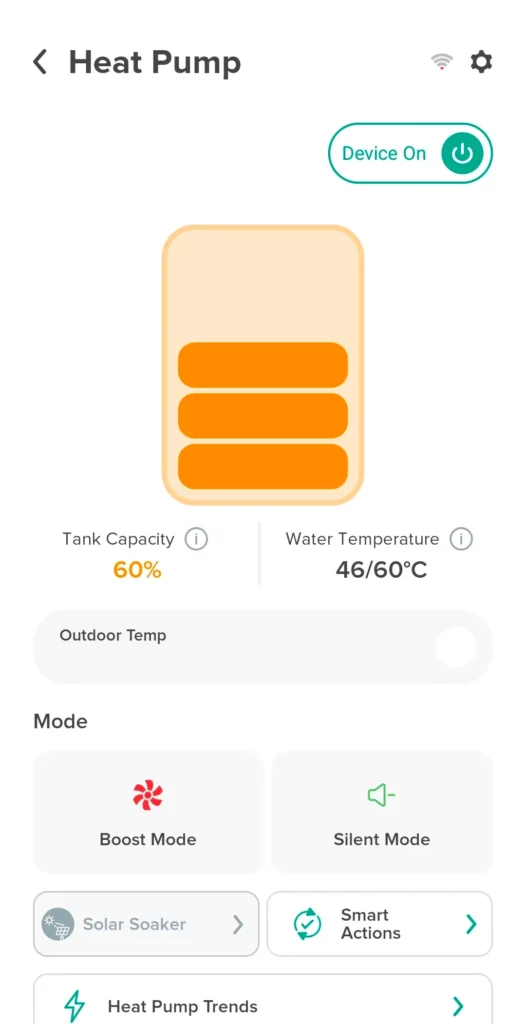
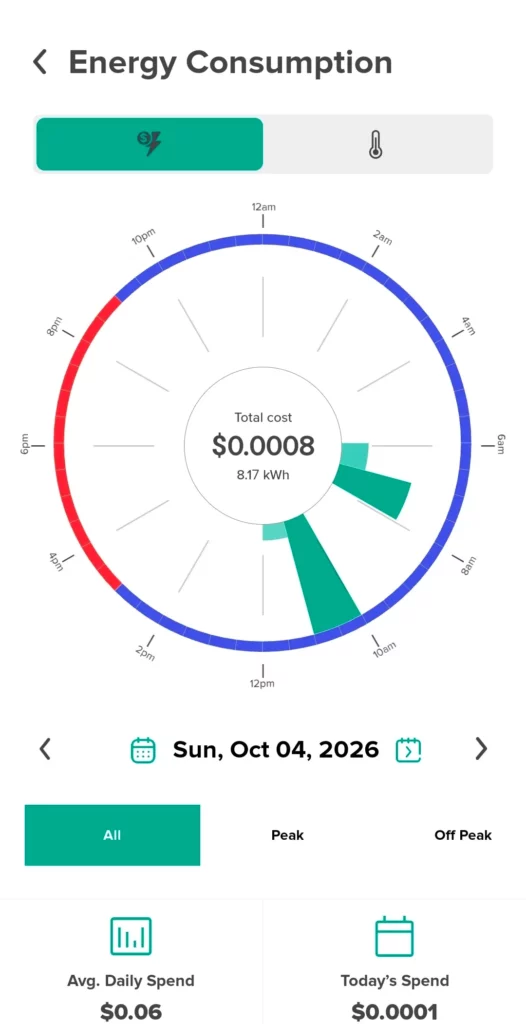
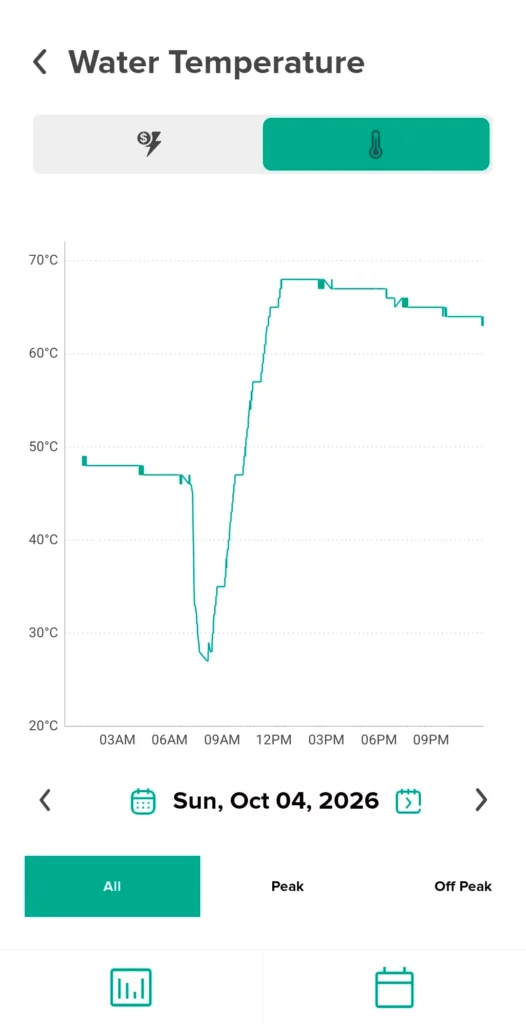
Previously, we turned on a tap and hot water appeared. I had no idea how much energy we were using to produce it. I certainly did not know how much hot water remained in the tank. Now I can actually see what is happening.
For someone who spends far too much time looking at solar production, battery state of charge, and household consumption, naturally I needed another graph to obsess over.
Solar Soaker turns excess solar into hot water
Our battery means we do not really need to worry about when the heat pump runs. However, Emerald has another clever option for households with solar and no battery: Solar Soaker.
Solar Soaker is a free feature within the Emerald App, although you need some additional Emerald hardware to use it. The system requires an Emerald Electricity Advisor and LiveLink, which allow it to detect when your home has excess solar available.
When the Electricity Advisor detects surplus solar that would otherwise be exported, Solar Soaker can automatically activate the heat pump. This effectively turns your hot water tank into another form of energy storage.
Instead of exporting excess solar to the grid for a relatively small feed-in tariff, you can use that electricity to heat your water. The energy is then sitting there as hot water, ready for tonight’s showers.
I think this is a fantastic feature for homes that have solar but have not invested in a battery.
It is not battery storage in the traditional sense, of course. You cannot turn your hot water back into electricity. However, you are storing energy that would otherwise need to be purchased later to heat water.
The best part is that you do not need to constantly watch your solar generation and manually turn on the heat pump. Solar Soaker is designed to detect the excess solar and manage the process automatically.
For us, our battery already allows us to run the heat pump using stored solar energy. For a home without a battery, Solar Soaker offers another way to keep more of that valuable solar energy in the household rather than sending it back to the grid.
Ready to make the switch?
Get FREE Quotes for a heat pump hot water system, as well as solar, batteries, and more.
The form can be filled in the actual website url.
Why heat pump hot water makes so much sense with a home battery
This is where things get particularly interesting.
A heat pump hot water system is already significantly more efficient than conventional resistive electric water heating. However, combining one with solar and battery storage changes the equation again.
Our heat pump has now been operating for a full month.
During that entire period, 100% of the electricity it consumed was supplied by our home battery.
And remember, we installed it during winter.
We have not needed to purchase electricity from the grid specifically to run our hot water system. Our only ongoing utility cost associated with producing hot water has effectively been the water itself.
That is a remarkable change from our previous setup.
Our home already produces solar electricity, which charges our battery. The battery then supplies the electricity required by the heat pump. Instead of exporting excess solar electricity for a relatively small feed-in tariff, we can store that energy and use some of it to heat the water our family needs every day.
That is what household electrification should look like.
A battery makes electrification about more than backup power
People often think about home batteries in terms of storing solar for nighttime use or keeping the lights on during a blackout. Those are certainly benefits. However, batteries become far more valuable as you electrify more of the home.
Hot water is a perfect example.
We have taken something previously dependent on gas and converted it into an electrical load. Our existing solar and battery system can then supply that load. It means more of the energy produced on our roof can replace energy we previously had to purchase elsewhere.
And unlike turning off appliances or changing our behaviour to reduce consumption, there has been virtually no sacrifice involved. We still take the same showers. We still use hot water whenever we need it. The difference is how that water is heated.
How much money could our Emerald heat pump save us?
Before installing the heat pump, our household gas bills averaged around $1,500 per year.
Not all of that was hot water. We still use gas for cooking and heating, so I am not expecting our gas bill to disappear completely (especially with that pesky daily supply charge). However, hot water is a substantial year-round load. Heating might sit idle during summer, but showers certainly do not.
Removing hot water from our gas consumption should therefore produce a noticeable reduction across the entire year. It is projected that we will be saving around $500 – $600 per year. There is another benefit that is harder to put a dollar figure on.
Every appliance we move from gas to electricity allows us to use more of our own solar energy. It also reduces our exposure to future gas prices. Our heat pump is therefore doing more than reducing one bill. It is helping us make better use of an energy system we already invested in.
Emerald heat pump FAQs
Does an Emerald heat pump use much electricity?
Heat pumps use electricity to move heat from the surrounding air into the water, rather than relying entirely on an electric element. In our first month, our home battery supplied 100% of the electricity used by our Emerald heat pump, including during winter.
Can a heat pump provide enough hot water for a family of five?
Our 320L Emerald All-in-One Pro has comfortably supplied our household of five. We have not run out of hot water during our first month. The system also has an electric heating element and Boost Mode when additional hot water is required.
Can I run an Emerald heat pump from solar?
Yes. A heat pump can use electricity generated by rooftop solar. Emerald also offers Solar Soaker for compatible systems. With additional Emerald hardware, it can detect excess solar generation and automatically activate the heat pump, effectively storing surplus solar energy as hot water.
Is an Emerald heat pump noisy?
Our Emerald heat pump has been surprisingly quiet. We can hear it operating when standing nearby, but we do not notice it from inside our home. Installation location will naturally affect how noticeable any operating noise is.
Is a heat pump worth it if I already have a home battery?
Our experience suggests the combination can work extremely well. Our battery has supplied all the electricity used by our heat pump so far. Moving hot water from gas to electricity also gives us another way to use solar energy generated and stored at home.
How much money can a heat pump hot water system save?
Savings depend on your existing hot water system, energy prices, household usage, solar, and battery setup. Our gas bills previously averaged around $1,500 annually. We expect removing gas from our hot water production could save us approximately $500 to $600 each year.
Heat pump hot water is a logical step towards electrification
Solar usually gets the attention. Batteries are exciting. EVs are considerably more fun to talk about than hot water tanks. But hot water is used every single day.
If you are trying to electrify your home, particularly if you already have solar and a battery, it is one of the most obvious gas appliances to tackle. Our experience has also challenged my biggest concern about electrification.
I did not want a cheaper-to-run home if achieving it meant accepting a worse experience. After a month with the Emerald, that has not happened.
We have reliable hot water, app monitoring, boost functionality, and a system that has comfortably handled a family of five through part of winter. Most importantly, our battery has covered every kilowatt-hour the heat pump has consumed so far.
Summer should make the equation even more favourable. Longer days and stronger solar production should give us even more opportunity to heat our water using energy generated at home. The heat pump will also run more efficiently with warmer weather.
For us, replacing gas-boosted solar hot water with a heat pump has not felt like a compromise. It has felt like finally making proper use of the solar and battery system we already had.
The post Can an Emerald Heat Pump Actually Save You Money? appeared first on Energy Matters.


