
Tucked into the back of a building that could be any other on campus is the University of Guelph meat processing laboratory.
The meat science lab, a self-contained processing plant in the animal biosciences building on the university’s campus, is still busy, despite the lack of meat scientists doing public research in Ontario.
WHY IT MATTERS Ontario has no meat scientists doing public research, yet processors, farmers and inspectors still need somewhere to test, cut and train. The University of Guelph meat science facility is that place, and the only one of its kind at a post-secondary institution in Canada.
What the lab does
It’s a place where processors do research and test products, animals are processed for researchers at the university, and farmers and processors who sell smaller volumes can get livestock slaughtered. The Canadian Food Inspection Agency and the Ontario Ministry of Agriculture, Food and Agribusiness use it to train inspectors.
The Centre for Meat Innovation and Technology is based at the lab and was founded and supported by Meat and Poultry Ontario. It helps companies, especially small and medium-sized ones, test processes and technologies and has an increasing role in training.
Jim Reynolds, director of the centre, John Cranfield, dean and Christine Baes, associate dean of the Ontario Agricultural College, recently gave Farmtario a tour of the centre.
The facility is federally inspected, so a smaller company can create test products there that can then be sent across Canada or internationally to prospective customers.
Producers in the area who sell directly to consumers also use the facility to have their beef, pork and lamb processed. Custom processing happens every second Wednesday.
“If they want to do the farm-to-gate sales, they would harvest there. We can cut. We can make sausage,” says Reynolds.
Inside the plant
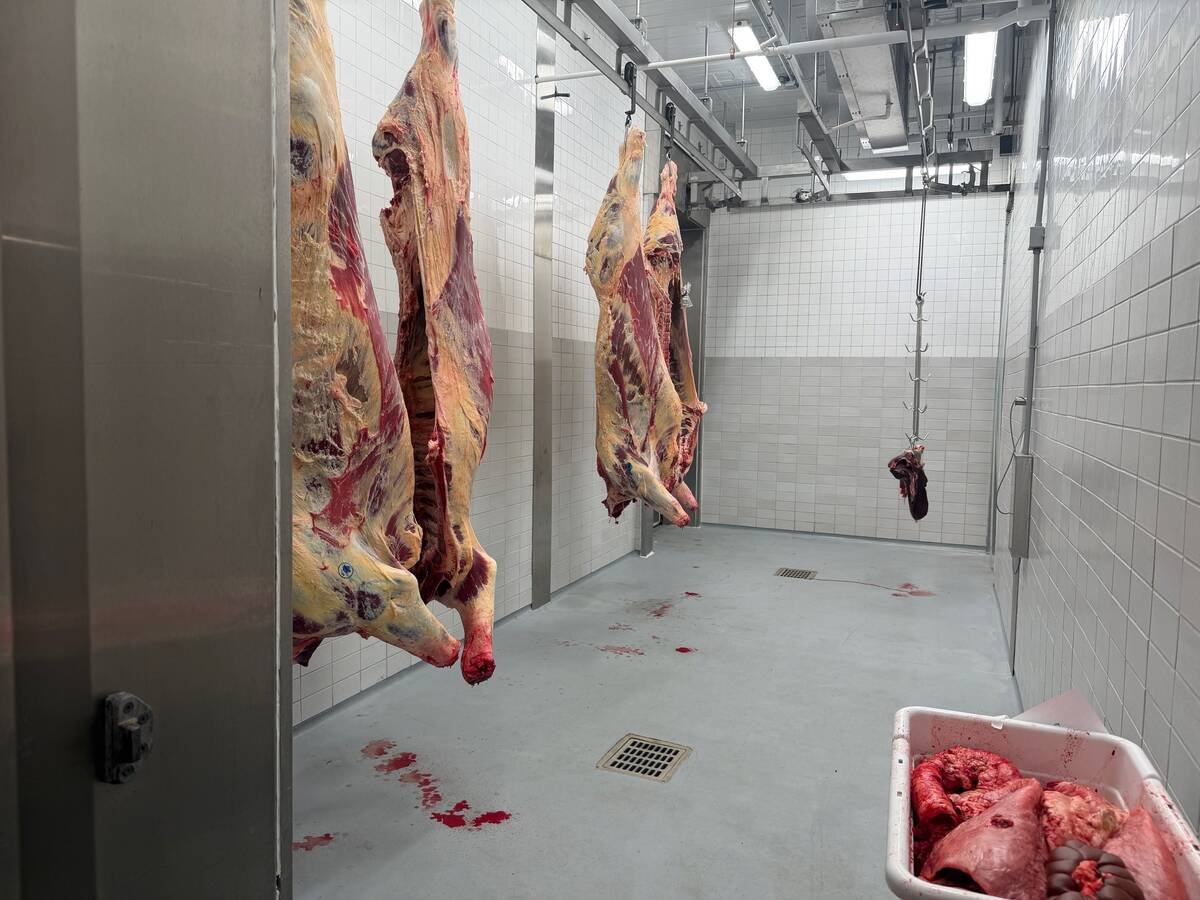
The federally inspected plant gleamed with stainless steel. Three carcasses hang in the blast chiller from cattle harvested that morning. The harvest floor was quiet and clean by the afternoon, with the carbon dioxide stunning machine (funded with help from the Ontario Agricultural College Class of 1977), dehider, and other areas for processing waiting for another day’s work.
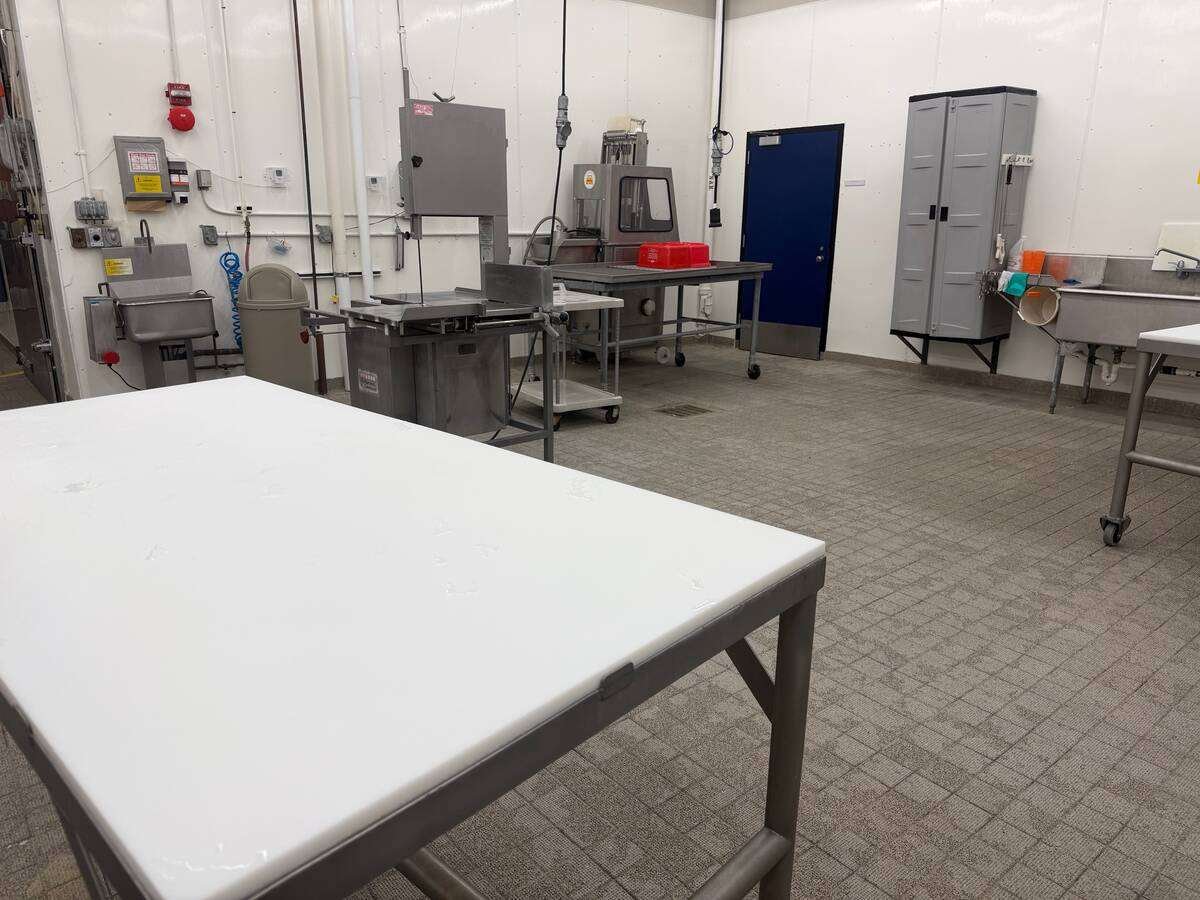
The other processing rooms are also quiet. Earlier in the day, people made a Parisian deli meat product in one room. In the next room is a ScottPec industrial smoker and a meat dehydrator that ages meat quicker than hanging. Other rooms are set up for cutting and processing.
The facility is flexible with mobile machines and tables to help companies create the system they need to create their products.
Training and labour efficiency
The meat processing sector has challenges with employee retention and training, and research done at the Centre for Meat Innovation and Technology aims to help.
“It’s cold, you’re standing in the same spot, and it’s repetitive,” says Reynolds.
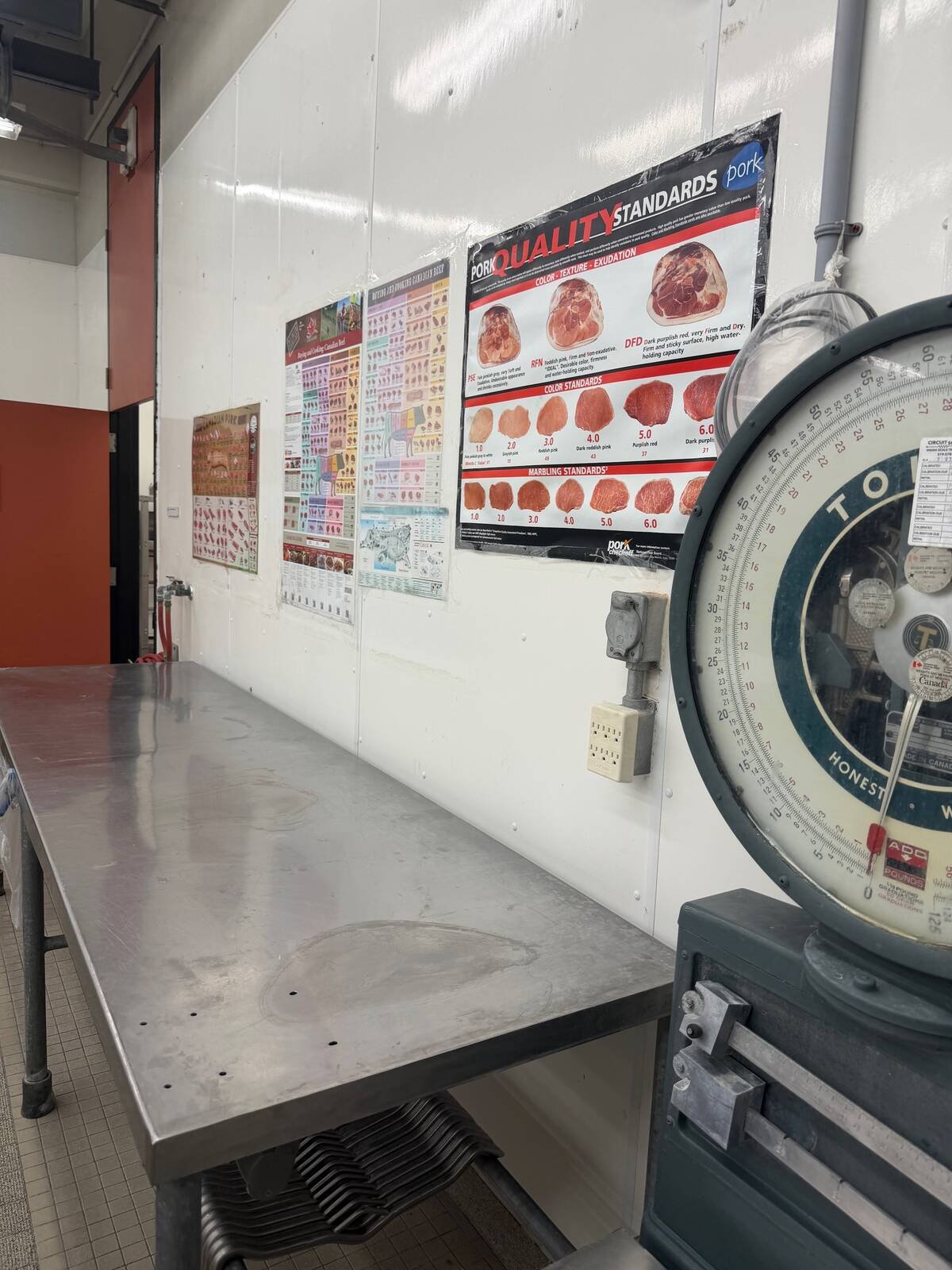
A new program will train employees who will work in the sector before they get onto a meat processing line. The hope is that they will be better prepared for the work they will do, and reduce the number who leave on the first day.
Companies are also looking to increase automation and make tasks easier using robotics and artificial intelligence.
An AI company is working on a tool that will allow workers processing food to interact with it using voice, and the AI will supply needed information about ingredients, cooking temperature and quality assurance.
“The computer will tell them, okay, you want to do a 1,000-pound batch or 500 pounds. You need salt, garlic and then the temperature, also because that’s a critical step: the right temperature for the right time, and also when you’re cooling,” says Reynolds.
The post Canada’s only university meat plant keeps busy appeared first on Farmtario.


