
Canadian mushroom growers are sounding the alarm after the United States Department of Commerce announced new countervailing duties on fresh mushroom imports from Canada effective May 18 — a move industry leaders warned will drive up grocery prices and threaten jobs on both sides of the border.
WHY IT MATTERS
The duties could slow cross-border mushroom trade and raise prices for consumers — with a second antidumping ruling that could stack more duties on top expected later this summer.
What the duties do
The ruling requires U.S. importers to post cash deposits on Canadian fresh mushrooms, with Champ’s Fresh Farms Inc. facing a tariff rate of 1.62 per cent and Farmers Fresh Mushrooms Inc. hit with a 4.97 per cent rate.
Ryan Koeslag, Mushrooms Canada executive vice-president and CEO, told Farmtario the added costs will inevitably be passed on to consumers at the checkout aisle.
“As the price increases, the demand will decrease. This could significantly impact the production in Canada with less demand for mushrooms exported to the U.S. and could eliminate jobs in Canada,” he said.
Why Canadian growers say the case is flawed
The implementation of the duty is not an indication of unfair trade. Under U.S. trade law, a subsidy must meet specific legal requirements before it can be countervailed, including that the alleged benefit be limited to a specific enterprise, industry or group.
Unlike other agriculture sectors that have turned to other markets in the face of duties and tariffs, Koeslag said Canada is very dependent on local mushroom production because fresh mushrooms have a 10-day shelf life, making exports beyond the U.S. cost-prohibitive.
WHY MUSHROOMS CANADA SAYS THE CASE IS FLAWED
- Tax exemptions: general agricultural tax exemptions used by all Canadian farmers, not just mushroom growers — the U.S. has never targeted them before.
- Cash accounting: targeted as a subsidy, though U.S. farmers use it too and it typically only defers tax payments.
- B.C. equipment tax break: named as a primary target, but it’s broad and not specific to mushroom producers.
Koeslag said the reasons for the U.S. Department of Commerce continuing its investigation and implementing duties are based on two issues: general agricultural tax exemptions, which he said open the door for any commodity produced in Canada to be considered subsidized.
He said this exposes the U.S. agricultural industry to countervailing duties in return. He added the U.S. has historically never targeted tax exemptions because producers there operate under the same exemptions.
Koeslag believes the second issue is cash accounting versus accrual accounting.
“The U.S. has never targeted cash accounting as a reason for countervail and it would be questionable how these would provide unfair subsidies to Canadian farmers when cash accounting typically defers tax payments only,” he said.
“The U.S. farm industry also uses cash accounting and U.S. farm groups have advocated for the importance of its use for years. The decision to examine this also exposes U.S. farmers to the same scrutiny in return. It all seems like deeply flawed reasoning to continue the investigation.”
Koeslag said one particular caveat stands out in the decision: British Columbia provincial sales tax exemptions on equipment as the primary target.
He said the investigation claims these tax exemptions provide an unfair advantage to mushroom producers; however, the exemptions are broad and used by all farmers, not just mushroom growers.
“A countervail must identify specific subsidies to the commodity being investigated, which is not the case for the tax exemptions named,” he said.
Like similar measures imposed against Canada in recent months, Koeslag believes these duties will ultimately increase the price of mushrooms entering the U.S. and raise overall food prices. He said the duties will also decrease demand and continue the overall decline in mushroom consumption across North America.
South Mill Champs contests the ruling
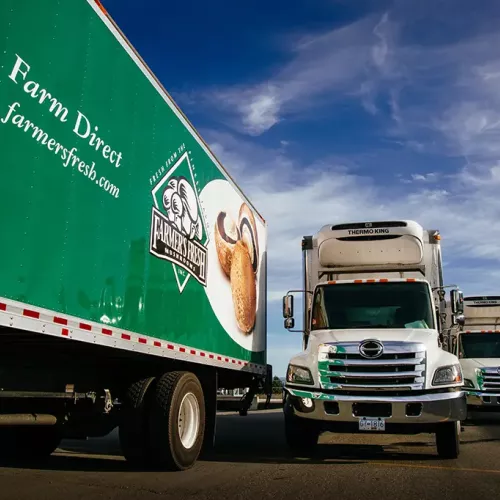
Following the decision, South Mill Champs, one of the largest mushroom growers in North America, announced it was contesting the decision.
South Mill Champs said in a statement the action was initiated by competitor Giorgi Fresh Co., parent company of Giorgi Mushroom Co., a U.S. mushroom producer. The company added the duties are based on a flawed legal theory that threatens agricultural producers across the U.S. and Canada.
“We have earned our position by growing the highest quality and most consistent product available, and investing to keep it that way,” stated Lewis Macleod, CEO of South Mill Champs. “The suggestion that our Canadian operations are propped up by targeted government subsidies is wrong on the facts and wrong on the law. This action was brought by a competitor that has chosen litigation over investment. We will contest it at every stage — for our customers, for our employees, and for the American and Canadian agricultural communities who have a direct stake in how this precedent is resolved.”
Macleod added the company would be reaching out to representatives of other U.S. produce sectors to make them aware of what Giorgi’s actions could mean for them and the legal precedent that could be set.
“Frustratingly, even though we believe the trade case has no merit, it is still causing disruption. At a critical time when the entire industry needs to focus on getting more consumers to purchase more mushrooms by investing in quality, Giorgi prefers the industry to waste time and money on divisive litigation,” he said.
How U.S. petitioners see it
In a press release, Mark Currie, CEO of Giorgi Mushrooms Co., said the ruling follows years of concern surrounding unfairly subsidized mushroom imports that distorted competition, accelerated farm closures and placed increasing pressure on American mushroom growers and surrounding farming communities.
“For years, American mushroom growers have faced enormous pressure from unfairly subsidized mushroom imports that distorted competition and threatened domestic production,” said Currie.
In the release the company stated Canadian mushroom imports grew significantly in recent years while domestic mushroom consumption remained relatively flat, placing increasing pressure on U.S. mushroom growers and surrounding farming communities.
He added the ruling marked an important step toward restoring fairness for U.S. mushroom growers, protecting U.S. jobs and preserving strong domestic mushroom production for retailers and consumers across the country.
“We are encouraged federal investigators recognized the seriousness of these concerns and took meaningful action,” he said.
What happens next
Meanwhile, Koeslag said Mushrooms Canada remains committed to fighting the duties. He said Canadian mushroom growers and the Government of Canada will have the opportunity to challenge the preliminary determination and the calculation of the countervailing duties.
He added the U.S. retail and farm sectors can also weigh in on the conversation with their own views on the impacts these duties will have on consumers and the potential risks to U.S. farmers.
“We hope our arguments will lead to the removal of all countervail duties entirely. It should also be noted that there is a tandem ongoing anti-dumping investigation which will likely lead toward additional duties being applied to fresh mushrooms going into the United States in August,” he said.
In the coming weeks, the U.S. International Trade Commission will conduct its own independent injury determination, separate from Commerce’s subsidy findings. If the USITC finds no material injury to the U.S. mushroom industry, all duties will be terminated regardless of Commerce’s conclusions. Final results are expected by December 2026.
The post Canadian mushroom growers warn U.S. duties will raise prices, threaten jobs appeared first on Farmtario.


