
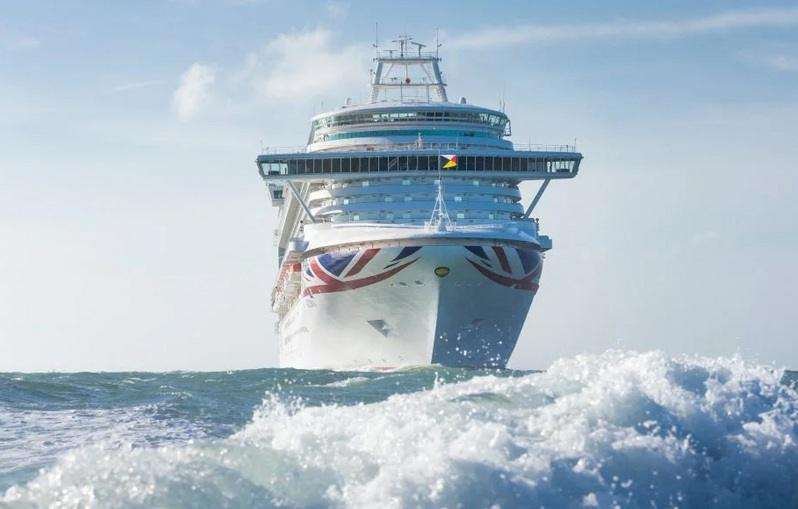
Global cruise company Carnival Corporation announced a new climate target to reduce greenhouse gas (GHG) emissions intensity by 25% by 2029, on a 2019 basis, increasing and accelerating from its prior 20% by 2030 goal, after achieving it five years early.
According to the company, as detailed in its newly published 2025 Sustainability Report, the progress has been driven by a decarbonization strategy focused on operational improvements, energy efficiency investments and low-GHG power generation. Since 2019, Carnival has introduced a new generation of more energy-efficient ships, including 11 LNG-powered vessels, while retiring 27 older, less efficient ships. The company has reduced GHG emissions intensity by 44% since 2008, cutting per-guest emissions nearly in half over the period.
The company said that it is investing in a range of low-carbon technologies and solutions to reduce GHG emissions, including LNG propulsion, shore power, biofuels and battery energy storage. Carnival’s 11 LNG-powered ships represent approximately 21% of fleet capacity, while shore power capability has expanded to 74% of the fleet, towards a target of 80% by 2030.
Carnival is also investing in fleet-wide energy efficiency measures, including HVAC upgrades, LED lighting and advanced energy management systems, reducing annual shipboard energy demand by approximately 535,000 MWh compared with 2019. Seven new ships scheduled for delivery through 2033 are expected to be more than 20% more efficient than the ships they replace.
The company added that fuel efficiency improvements are also expected to generate approximately $650 million in savings in 2026 compared with 2019 levels.
Josh Weinstein, CEO of Carnival Corporation, said:
“Achieving our 2030 GHG reduction goal five years early is a significant milestone that reflects years of disciplined investment, innovation and operational focus across our global fleet. But we’re not treating it as a finish line. Our new 2029 target ensures we’re continuing to improve every part of the equation, from using less fuel to advancing the tools, technologies and infrastructure that will help us lower emissions even further over time.”


