
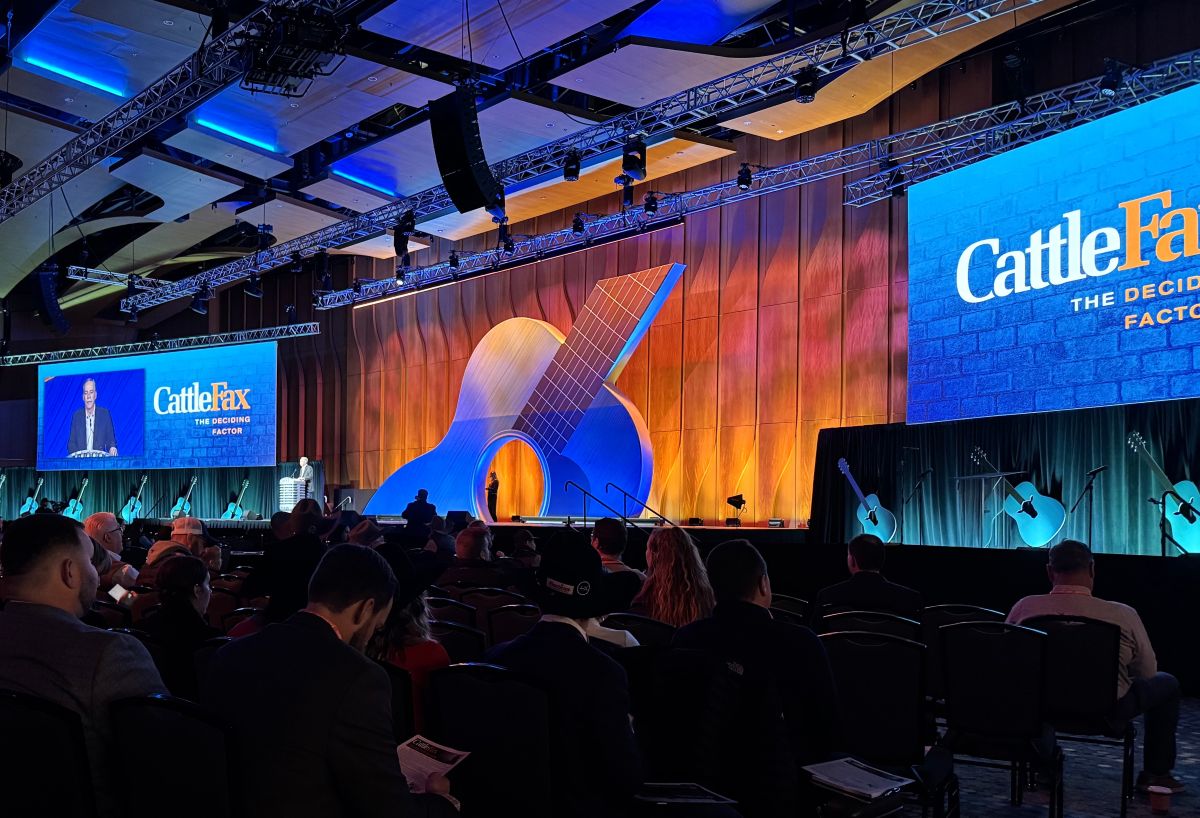
 The CattleFax Outlook Seminar is always a popular event at CattleCon and it was packed as usual last week in Nashville.
CEO Randy Blach told cattle producers they should be proud of the current state of the beef industry.
“This is my 45th year at CattleFax, so I’ve seen some of those ugly, ugly days back in the 80s and early 90s where beef demand was cut in half between 1980 and 1998, we wondered how are we ever going to get out of this mess. And to see the complete opposite of that today, with demand at a 40-year high, 17 straight years of continued growth in beef demand, prices, more importantly, profitability at record high levels, and again, my main message to producers, we shouldn’t have to apologize for this and don’t apologize for this because this has taken a ton of hard work, sweat for the industry,” said Blach.
Randy Blach Presentation (14:20)
Interview with Randy Blach (10:47)
CattleFax chief operating officer Mike Murphy says they expect strong demand and tight supplies this year.
“The U.S. cattle and beef industry enters 2026 with strong but volatile market conditions, as historically tight cattle supplies, record-setting beef demand, and elevated policy and weather uncertainty continue to support prices, even as markets appear to near cyclical highs. Tight inventories and exceptional demand remain the dominant forces shaping the market; however, producer demographics, high input costs, and policy uncertainty point to a slow and measured expansion phase,” said Murphy.
Mike Murphy Presentation (20:52)
Matt Makens, CattleFax atmospheric scientist, sees a transition phase in the weather most likely through spring and early summer.
A fast forming El Niño could deepen drought in corn growing regions while increasing precipitation in the West, whereas slower development may support more balanced moisture. By fall, El Niño becomes increasingly likely, though global climate factors could still alter its typical impacts. “El Niño isn’t a guarantee of rain for everyone,” Makens said. “Other global patterns can amplify or mute its influence, so close monitoring remains essential.”
Matt Makens presentation (20:04)
Shifting the discussion to an outlook on the economy, energy and feed grains, Troy Bockelmann, CattleFax director of protein and grain analysis, noted that inflation continued to moderate in 2025, ending the year at 2.7% CPI growth and spending most of the year below 3%, the lowest since 2020-2021. With inflation relatively low, the U.S. Federal Reserve lowered interest rates in 2025, finishing the year with the Prime Rate just below 7%, which is still relatively high relative to the 3% level seen from 2009 to 2021.
Troy Bockelmann Presentation (16:30)
Kevin Good, vice president of market analysis at CattleFax, reported the U.S. beef cow herd decreased 280,000, while dairy cow inventories increased by 190,000 head.
Kevin Good Presentation (23:18)
In summary, CattleFax forecasts a positive long-term outlook for the beef industry with strong domestic demand, improving beef quality, and sufficient packing capacity expected to continue supporting profitability for the cow-calf sector as the industry moves into the next phase of the cattle cycle.


