
Food is the single most common material Americans send to landfills. About 24 percent of everything buried there, according to the EPA, is food waste. Add yard trimmings, wood, paper, and other other organic materials make up more than half of what fills a U.S. landfill. Almost all of it could be composted instead.
That gap matters because buried food doesn’t just take up space — it rots without oxygen and releases methane, a greenhouse gas far more potent than carbon dioxide over the near term. Composting handles the same scraps aerobically, with oxygen, and turns them into a soil amendment your garden can actually use. Here’s how the process works and how to start a pile that does the job.
What Is Composting?
Composting is the natural decomposition of organic materials sped up by managing the conditions microorganisms need to thrive, and when they thrive, they eat. It is managed, aerobic biological decomposition: aerobic meaning oxygen is present, which is exactly why compost avoids the methane problem that landfills create. The result is a stable, nutrient-rich soil amendment often called humus.
For households: composting cuts your waste output while turning kitchen scraps and yard trimmings into a soil booster for the garden.
For small-scale farms: composting manages the residual plant and animal material a farm generates and puts it back to work as fertilizer and a soil-builder for future crops.
Why Composting Is Worth the Effort
Municipal solid waste landfills are the third-largest source of human-caused methane emissions in the United States. Wasted food is responsible for 58 percent of the methane those landfills release, the EPA reported in its 2023 study Quantifying Methane Emissions from Landfilled Food Waste, the agency’s first peer-reviewed national estimate of that figure.
Food waste drives so much of the problem because it breaks down fast. The EPA found that half the carbon in landfilled food degrades within about 3.6 years, so most of the methane escapes before a landfill’s gas-collection system can capture it. Keeping food out of the landfill in the first place is the more effective fix.
Composting sits in the fourth tier of the EPA’s Wasted Food Scale, after prevention (buying less), donation, and feeding animals, in the 2023 update to the agency’s decades-old Food Recovery Hierarchy. But for the peels, coffee grounds, and yard debris that no one is going to eat, composting is one of the most beneficial things you can do with them.
Finished compost enriches the soil while reducing CO2 emissions. The EPA’s 2025 report, Environmental Value of Applying Compost, documents how compost improves soil health, helps retain moisture during drought, reduces erosion and runoff, reduces the need for chemical fertilizer, and sequesters carbon in the soil.
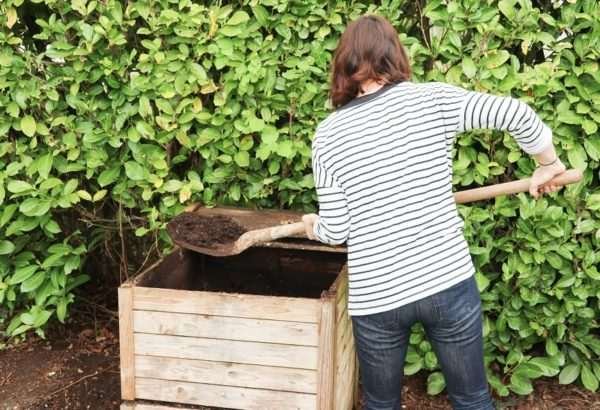
The Science of Composting
So how does composting work? According to researchers at Cornell University, microorganisms break down organic matter, producing heat, carbon dioxide, water, and humus. When a pile is managed well, it moves through three phases:
- The mesophilic, or moderate-temperature phase, lasts a couple of days.
- The thermophilic, or high-temperature phase, can last anywhere from a few days to several months, depending on what’s in the pile.
- The cooling and maturation phase lasts several months.
In the first stage, mesophilic microorganisms rapidly break down easily degradable material, and the heat they generate raises the pile’s temperature. As it climbs above about 40°C (104°F), heat-loving thermophilic microbes take over. At 55°C (131°F) or higher, those microbes destroy many plant and human pathogens and accelerate the breakdown of proteins, fats, and complex carbohydrates such as cellulose.
There’s an upper limit, though. The Cornell team notes that temperatures above roughly 65°C (149°F) begin killing off the microbes that do the work, slowing decomposition. That’s why aerating — turning the pile — matters: it moderates the temperature and moves the pile toward the cooling phase, where activity settles down, and the compost matures for garden use.
What To Put in Your Compost Pile
Knowing what belongs in your backyard compost pile is most of the battle.
The core idea is balance: you need a mix of “green” (nitrogen-rich) and “brown” (carbon-rich) materials, plus enough oxygen to keep the pile aerobic. When a pile runs short on oxygen, often due to too much nitrogen and not enough carbon, or from never being turned, it goes anaerobic and starts to smell. A well-managed pile shouldn’t have a bad odor at all.
Green Materials
Greens are rich in nitrogen. Some examples:
- Food scraps: Fruit and vegetable trimmings are ideal. Skip animal-based leftovers, such as fat, meat, cheese, and milk, since the oils don’t suit a backyard pile and tend to attract pests.
- Fresh grass clippings
- Manure from herbivores like horses, cows, sheep, goats, or chickens speeds decomposition. It’s helpful but not required. Never use manure from carnivores.
- Plants and cuttings: Freshly pulled weeds (as long as they haven’t gone to seed), flower tops, and shredded green leaves all work.
- Coffee grounds
Tip: Freeze your scraps.
Storing kitchen scraps in an airtight container in the freezer cuts down on trips to the pile and keeps the smell of food sitting on the counter at bay. Freezing also helps you manage balance: if a dinner party leaves you with a flood of greens and no browns on hand, freeze the scraps until you’ve gathered enough carbon-rich material to even things out.
Brown Materials
Browns provide carbon, which gives microbes the energy they need to function. Shredding most brown ingredients first reduces the microbes’ workload and speeds decomposition. Some examples:
- Dead, dry leaves
- Hay and straw
- Simple paper products: newspaper, plain paper, and cardboard
- Crushed eggshells
- Tea bags and loose-leaf tea (check that the bag itself is paper or cotton, not nylon)
- Wood ashes and sawdust: use sparingly, as ashes can make a pile very alkaline and limit microbial activity, and sawdust is slow to break down.
Getting the Moisture Right
Moisture is the other lever. The microorganisms doing the work need water to survive, and water also carries nutrients and organic matter through the pile so it doesn’t stall. Cornell’s composting research puts the target range at roughly 50 to 60 percent moisture, because below about 35 to 40 percent, decomposition slows sharply; too wet, and the pile turns anaerobic and starts to smell.
The classic field test, echoed in New York City’s composting guidance: your materials should feel about as damp as a wrung-out sponge; clearly moist to the touch, but not releasing liquid when you squeeze them.
If you get regular rain, it often does the job with a slow soak that’s ideal for a pile. In a drier climate, you’ll likely need to water, adding it slowly and turning the pile so it reaches every section.
Your climate has a real effect here, so expect to experiment a little.
What You Can Do
Ready to start? A few concrete steps:
- Pick a spot and a system. A dry, shady, easy-to-reach corner works best. Match the method to your space — an open pile or bin, a tumbler you crank to aerate, or a worm bin for small indoor setups.
- Layer greens and browns. Start with a rough balance and adjust by feel. Smelly and wet means add browns and turn; dry and cool means add greens and water.
- Turn it regularly. Aerating keeps the pile oxygenated, moderates the temperature, and keeps odors down. Once a week is a reasonable habit.
- Keep food out of the trash even if you can’t compost it all. Many cities now run curbside organics collection. Check what’s available where you live with the Earth911 Recycling Search, or find a drop-off site through the EPA’s Excess Food Opportunities Map.
- Support organics diversion where you live. A growing number of states and municipalities are restricting the landfilling of food and yard waste. Backing those programs multiplies the impact of any single backyard pile.
Editor’s Note: Originally published by Haley Paul on August 31, 2009, this article was updated with recent statistics and guidance in July 2026.
The post Cheat Sheet: Composting appeared first on Earth911.


