
Saucy foods remain among the most popular items in takeout, delivery, and prepared-foods programs because they are flavorful, filling, and well-suited to off-premise dining. Pasta dishes, curries, stews, sauced noodles, rice bowls, meatballs, and comfort-food entrées appear across a wide range of menus, from quick-service restaurants and fast-casual brands to Italian restaurants, Asian concepts, curry shops, grocery prepared-food departments, and catering operations.
As popular as these meals are, they also place real demands on packaging. Sauces add movement, moisture, and potential for mess during transport, while hot temperatures and heavier portions put additional pressure on container structure and closure performance. That is why choosing the right container for saucy foods is not simply about selecting the right size. Operators need packaging that matches how the food behaves, how it is sold, and how they want it to arrive.
Popular Saucy Menu Items Put More Pressure on Packaging
Saucy foods may seem easy to pack, but they pose a very specific set of packaging challenges. The sauce itself adds movement. Heat creates steam inside the package. Portion weight increases when the meal includes pasta, grains, proteins, or multiple components. During pickup, delivery, and handling, all that pressure is transferred to the closure, lid, and sidewalls of the container.
That means the best container for saucy foods usually needs to do several jobs at once. It should help reduce leaks, support the meal’s weight, maintain temperature, and keep the food looking composed rather than messy when the customer opens it. For operators, packaging is not a small detail. It directly affects customer satisfaction, transport reliability, and brand perception.
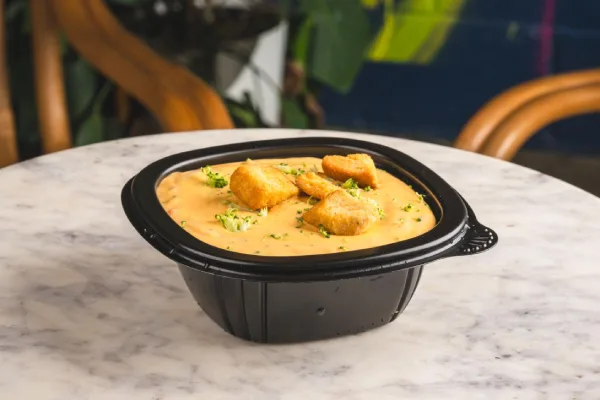
Match the Container to How the Food Travels
The best way to choose packaging for saucy foods is to start with how the dish behaves in transit.
A heavier pasta, whether Alfredo or marinara, needs a container that feels sturdy, retains heat well, and has enough depth to keep the sauce and toppings contained. A curry or stew with a looser sauce puts more pressure on closure performance and dependable containment. A rice bowl with sauce and multiple components needs enough structure to support the meal without allowing unnecessary shifting.
This is where packaging decisions become more useful when they are tied to function rather than cuisine alone. Instead of asking only what kind of food is being served, operators should ask what the container has to do. Does it need to prioritize leak resistance? Is reheating important? Is the meal sold in delivery and takeout or from a grab-and-go case? Is heat retention more important than visibility? Those answers lead to a better packaging choice.
Pasta and Baked Pasta Need Depth, Strength, and Heat Support
Pasta is one of the most common saucy takeout foods, but it is not one-size-fits-all in terms of packaging. Long noodles, baked pasta, layered dishes, and pasta with generous sauce portions all create bulk and weight. A shallow container can crowd the meal, increase contact with the lid, and raise the chance of spills during transport.
For these applications, operators often need a container that offers enough depth to keep the meal contained, enough structural support for a full portion, and sufficient heat retention to keep the food enjoyable during takeout or delivery. If customers are likely to reheat at home, microwave-safe packaging becomes even more important. Genpak positions its polypropylene containers as durable, microwavable, leak-resistant, and designed to travel well, which makes polypropylene a strong starting point for many hot pasta applications.
Curries, Stews, and Rice Bowls Need Secure Containment First
Curries, stews, braised entrées, and rice-based meals with thinner sauces create a different set of demands. These dishes do not just sit in the package. They move during transport, pressing against corners, edges, and lid seams in ways that quickly expose weak closures or poor fit.
For those meals, closure security should be one of the first decision points. A dependable seal and a container profile that helps hold the food in place are often more important than broad surface area. Deeper formats and leak-resistant construction can help reduce spills, keep sauces where they belong, and improve confidence in transport. Genpak’s delivery and takeout packaging solutions are designed to support off-premise dining with durable, efficient containers that travel well, stack easily, and help maintain food quality in transit
Grab-and-Go Meals Need Visibility Without Sacrificing Performance
Not every saucy food is sold the same way. In grab-and-go retail, packaging has to help sell the meal before it is ever opened. Prepared pasta dishes, composed entrées, and ready-to-heat bowls benefit from packaging that supports product visibility while still maintaining portability and containment.
That is where Genpak’s ProView containers become especially relevant. ProView is positioned around a clear, vented top, a black base, leak resistance, microwaveability, stackability, and strong product presentation. For operators selling prepared foods in retail or upscale off-premise settings, that makes ProView a more targeted option when appearance matters along with performance.
Quick Guide: What to Prioritize by Food Type
| Food Type | Main Packaging Challenge | What to Prioritize | Best Fit |
|---|---|---|---|
| Pasta and baked pasta | Heavy portions, heat retention, sauce spread | Depth, structural strength, microwave-safe performance | Polypropylene containers or Clover or Smart2Go |
| Curries and stews | Movement of thinner sauces during transport | Secure closure, leak resistance, containment | Clove, Grab-A-Bowl or other Delivery & Takeout solutions |
| Sauced rice bowls | Weight, multiple components, shifting in transit | Fit, structure, closure performance | Polypropylene containers |
| Grab-and-go prepared meals | Visibility plus containment | Clear presentation, portability, leak resistance | ProView |
| Long delivery windows and hot meals | Heat loss during transport | Insulation, durability, temperature support | Genpak Foam containers |
“Our ProView line is a strong solution for serving saucy dishes, tailored for higher-end takeout and meal prep concepts. These containers feature a thicker gauge, making them more durable and better suited for delivery. They offer many of the same benefits as the Clover line, with the added advantage of a black base and clear lid. This design allows end users to easily identify contents, improving order accuracy and enhancing the overall presentation. The ProView line is also recyclable, supporting sustainability efforts and aligning with widely available recycling infrastructure. Ultimately, ProView delivers a more premium takeout and delivery experience for both operators and customers.”
Genpak
Where Genpak Fits Best Across Saucy Food Applications
For many operators, polypropylene containers are the strongest all-around option because they combine microwavability, durability, travel performance, and a clean presentation. Genpak specifically positions polypropylene for restaurants, grocery retail, and convenience settings, making it a practical solution for hot pasta dishes, curries, sauced bowls, and other prepared entrées.
When the priority is dependable, everyday off-premise performance, Clover hinged containers are a strong fit. Genpak describes Clover as leak-resistant, stackable, suitable for hot and cold foods, designed to travel well, and microwave safe. That makes Clover especially useful for saucy pasta dishes, rice meals, combination entrées, and high-volume takeout operations where speed, portability, and repeatable performance matter most.
For bowl-centric meals, mixed components, and saucy rice dishes, Grab-A-Bowl offers a purpose-built option that aligns container shape and structure with how those meals are assembled, carried, and consumed.
When the food needs to sell visually as well as travel well, ProView is the better choice. Its clear, vented lid and presentation-forward design make it well suited to prepared meals, composed dishes, and retail-ready saucy items where product visibility can influence purchase decisions.
When heat retention is the main concern, Genpak Foam containers deserve consideration. Genpak positions its foam line around unmatched insulation and durability for transporting heavy meals, which makes it relevant for longer delivery windows and hotter, heartier saucy entrées.
Why the Right Container Protects More Than the Meal
When saucy foods arrive hot, intact, and well presented, the food gets the credit. When the package leaks, shifts, or traps sauce in the lid, the packaging becomes part of the customer’s negative experience. In off-premise dining, that can shape how the entire meal is judged.
That is why container selection should be treated as an operational decision, not just a purchasing one. The right package can help reduce spills, improve takeout consistency, support merchandising, and reinforce food quality from the kitchen to pickup to delivery.
Final Thoughts
Choosing the right container for saucy foods comes down to matching packaging performance to menu behavior. Pasta, curries, stews, rice bowls, and other sauce-based meals do not all need the same solution. Some need stronger closure performance. Some need more depth and structure. Some need microwave-safe convenience. Some need a clearer presentation story. Others need better insulation.
Genpak’s portfolio gives operators multiple ways to solve those needs. Polypropylene containers offer a strong all-around solution for many hot, sauce-based meals. Clover is a practical choice for dependable everyday takeout. ProView is a better fit when visibility and presentation matter more. Smart2Go offers strong all-around solutions for hot, sauce-based meals. Grab-A-Bowl is ideal for bowl-driven, saucy, multi-component dishes. Genpak Foam remains relevant when temperature retention and transport durability are the priority. When packaging is selected with the food, service model, and customer experience in mind, it does more than carry the meal. It helps the meal arrive the way it was meant to be served.
The post Choosing the Right Container for Saucy Foods: Pasta, Curries, and More appeared first on Genpak.


