
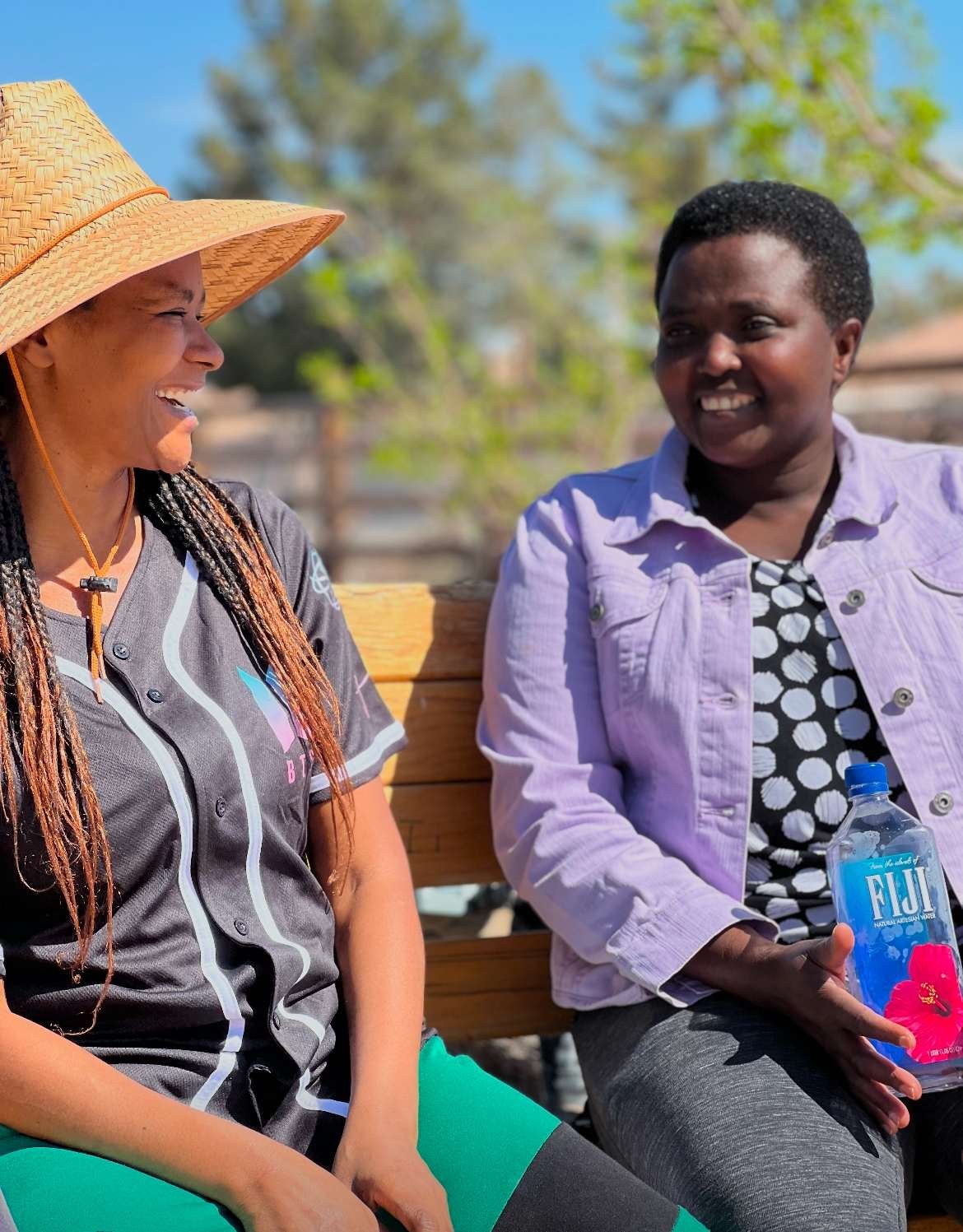
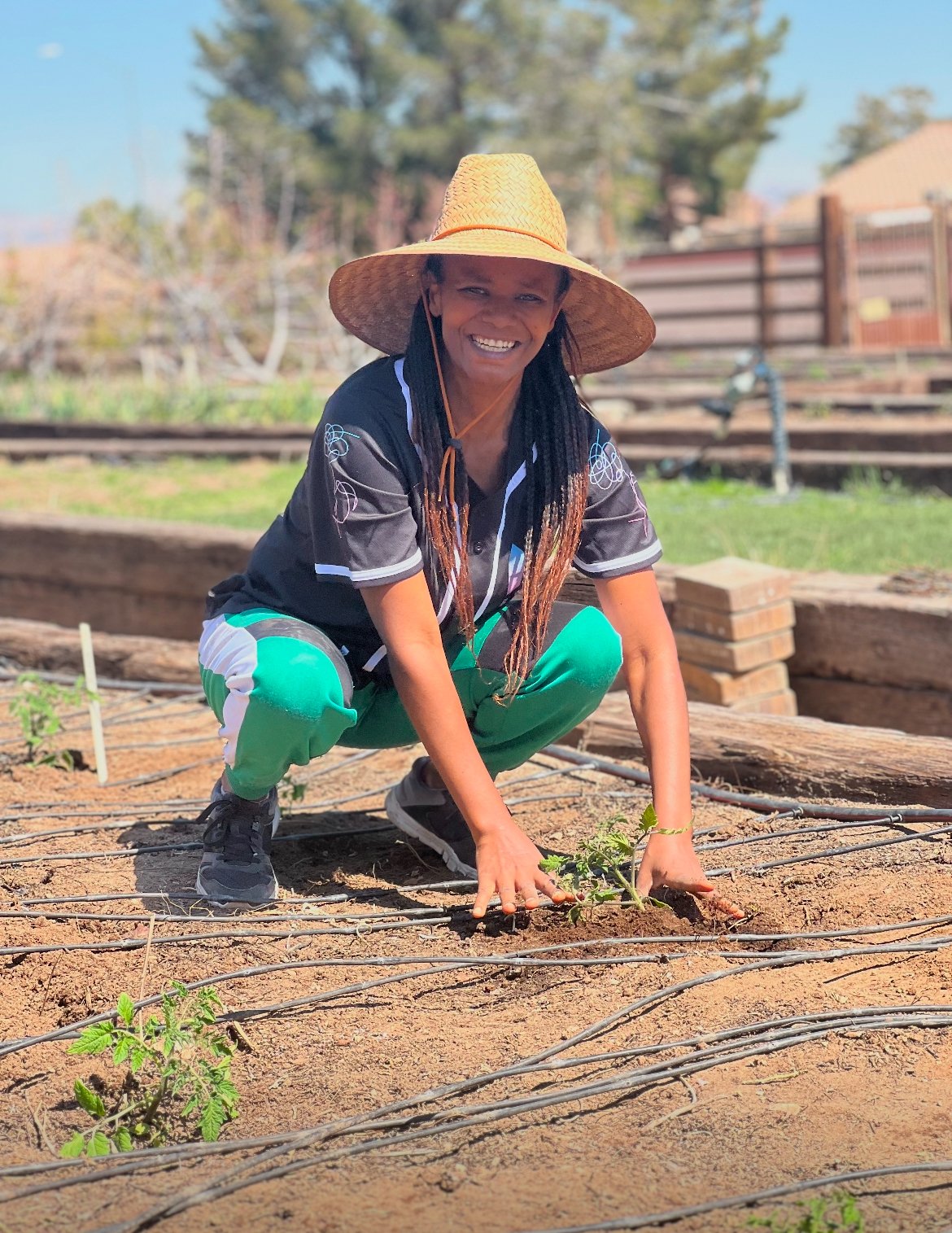
“As a woman in agriculture, I’ve learned that empathy and adaptability are every bit as important as technical skill. Crops have seasons; markets have cycles; people have needs that change. Listening—truly listening—to the land, to partners, to trainees, and to fellow farmers has taught me how to innovate under pressure, blend tradition with new techniques, and lift others as I climb.”
Q: Do you farm or participate in agriculture outside of your position? If so, please describe your activities and what your contributions to agriculture mean to you.
While I do not operate a traditional farm today, my roots in agriculture are the foundation of everything I do. Growing up on my family’s farm in Australia, I learned the value of hard work, stewardship of the land, and the rhythms of planting and harvest. At Lighthouse Charities’ Rose Creek Farm, I remain deeply involved in our agricultural programs—working side by side with refugee trainees on sustainable vegetable plots, hydroponic beds, vermicomposting stations, and our flock of over 100 chickens. To me, these hands‑on contributions are as meaningful as any official farm title: they honor my heritage, my family’s sacrifices, and my belief that farming can heal, teach, and transform lives.
Q: What valuable lessons have you learned as a woman in agriculture?
As a woman in agriculture, I’ve learned that empathy and adaptability are every bit as important as technical skill. Crops have seasons; markets have cycles; people have needs that change. Listening—truly listening—to the land, to partners, to trainees, and to fellow farmers has taught me how to innovate under pressure, blend tradition with new techniques, and lift others as I climb.
Q: What valuable lessons have you learned specifically in your role?
In my role leading agricultural policy and programs, I’ve discovered that leadership is less about giving orders than about cultivating collaboration. Women bring relational strengths—building trust, forging partnerships, and mentoring the next generation. Balancing regulatory demands with community‑driven projects has taught me to translate big‑picture goals into on‑the‑ground practice, ensuring policies serve real people and real farms.
Q: How do women in agriculture impact your state or the agriculture industry as a whole?
Women in agriculture are the glue in our food systems. From field to fork, they farm, process, market, teach, and advocate. In our state, female producers and program directors have launched innovative cooperatives, educational farms, and farm‑to‑table enterprises that drive rural economies, diversify markets, and strengthen food security. Nationally, women’s leadership in sustainable and regenerative practices is redefining agriculture’s future—and inspiring a new, more inclusive generation of farmers.
Q: Describe a specific challenge you faced and how you overcame it.
One of my greatest challenges came as an 11-year‑old immigrant in a drought‑scarred household: learning a new language, attending a new school, and sleeping on the floor—all while my parents scrambled to keep our family farm alive back in Australia. Decades later, launching Rose Creek Farm and our workforce programs amid Vegas’s scorching sun and water constraints felt equally daunting. We overcame it by listening to local experts, investing in drip irrigation and water‑wise crops, and leveraging community partnerships for in‑kind soil replacements and construction labor. Persistence, collaboration, and a willingness to learn from both failure and success carried us through.
Q: What do you wish the next generation of women in agriculture would know about your work?
I want the next generation of women in agriculture to know that every setback—failed planting, unpredictable markets, regulatory barriers—is an invitation to innovate. Your voice matters in boardrooms and barns alike. Seek mentors, share your story, and remember that agriculture is as much about people as it is about plants.
Q: What inspired you to pursue a career in agriculture?
My inspiration came from my own immigrant journey: leaving behind a parched Australian farm, arriving with nothing, and witnessing my family’s resilience in the face of hardship. I saw how land could sustain us physically and spiritually—and I vowed to help others find that same anchor. Today, I channel that calling into every seed we plant, every trainee we mentor, and every life we touch at Lighthouse Charities.
The post Cindy Trussel appeared first on NASDA.


