
As aviation faces mounting pressure to decarbonize without compromising safety, reliability, or access, hybrid-electric propulsion is emerging as one of the most promising near-term solutions. Few companies are advancing that transition as concretely as Ampaire, which recently became the first in the industry to secure an approved Federal Aviation Administration (FAA) certification basis for a hybrid-electric propulsion system—an inflection point not just for the company, but for the sector as a whole.
In this Q&A, we sit down with Ampaire’s CEO and Co-founder, Kevin Noertker, to explore what that regulatory milestone unlocks, how real-world flight deployments—supported by Elemental Impact—reshaped the company’s approach to scalability, and why Hawaii offers a compelling proving ground for cleaner, quieter inter-island aviation. From lessons learned moving beyond proof-of-concept to the realities of infrastructure, airline adoption, and community trust, the conversation offers a candid look at what it takes to turn climate innovation into commercially viable, mission-critical systems.
Looking ahead, Ampaire’s path illuminates a broader truth about climate technology:
Success depends not only on engineering breakthroughs, but on regulatory credibility, ecosystem partnerships, and a deep understanding of how new solutions must integrate into existing systems. What follows is a discussion about building that future—one certified, deployable step at a time.
Ampaire was the first in the industry to achieve FAA approval of a hybrid-electric propulsion certification basis. How has this milestone changed what’s possible for the company, and what comes next on your path to commercial deployment?
Regulatory approvals in aviation are foundational. They are the basis of trust that allows people to put their families, their livelihoods, and critical cargo on airplanes every day. The customers who will eventually operate Ampaire-powered aircraft expect nothing less than the safest possible application of new technology.
In 2025, Ampaire became the first company in the world to receive an approved FAA certification basis for a hybrid-electric propulsion system. This was a major milestone not only for our company, but for the entire industry. It formally established a regulatory pathway for hybrid-electric propulsion, turning what had previously been an open question into a defined, executable process.
What this changes for Ampaire is that we have now moved from proving what is technically possible to executing toward what is certifiable and commercially deployable. We are working closely with the FAA on the next milestones, including means of compliance, test plans, and the full certification program that ultimately transitions our technology into service with operators.
For us, this process is about more than a regulatory clearance. It is about building credibility the right way: showing that we are building the right system, and building the system right. That discipline is what enables real-world adoption and long-term trust in a category-defining technology.
After successful flight demonstrations, what have been the most important lessons in moving from proof-of-concept to a solution airlines can realistically scale?
The most important lessons happen when you leave the lab and confront the real-world constraints of operations, infrastructure, and stakeholder coordination. One of the most impactful moments in Ampaire’s journey came during our deployment program in Hawaii, supported by Elemental Impact, where we operated flights on Mokulele Airlines’ routes between Kahului and the remote town of Hāna on Maui.
Elemental’s support went far beyond capital. Real world deployment comes down to trust, and Elemental’s team has collectively accrued decades of trust that would’ve otherwise required hiring a local business development specialist or lobbyist. They made critical introductions across the ecosystem – connecting us with airline leadership, airport operators, state energy officials, infrastructure providers, and local policymakers. They helped align conversations between aviation stakeholders and energy stakeholders who don’t typically sit at the same table. That coordination was essential in moving from a technical demonstration to a real-world operational deployment.
We had spent years building what was, at the time, the world’s most advanced hybrid-electric aircraft. In parallel, we were working with local partners to integrate a simple Level 2 charger into airport infrastructure. What surprised us was that we solved the aircraft engineering challenges faster than we were able to resolve the infrastructure coordination. Even though we ultimately ran a very successful demonstration program by plugging into industrial power elsewhere on the airport, the experience revealed a critical scaling constraint around infrastructure build-out.
That lesson fundamentally reshaped our product architecture. It pushed us to prioritize self-charging hybrid-electric systems that do not depend on new airport charging infrastructure to operate. Much like early electric ground vehicles needed to function within existing infrastructure to scale, we realized our launch products needed to work anywhere airlines already operate.
This shift eliminated a major barrier to adoption. Today, when we engage airlines that want solutions compatible with their existing routes, operations, and airports, we can offer technology that integrates seamlessly. That expands our total addressable market by orders of magnitude and accelerates deployment timelines, while giving operators confidence they can adopt our systems without waiting on infrastructure buildout.
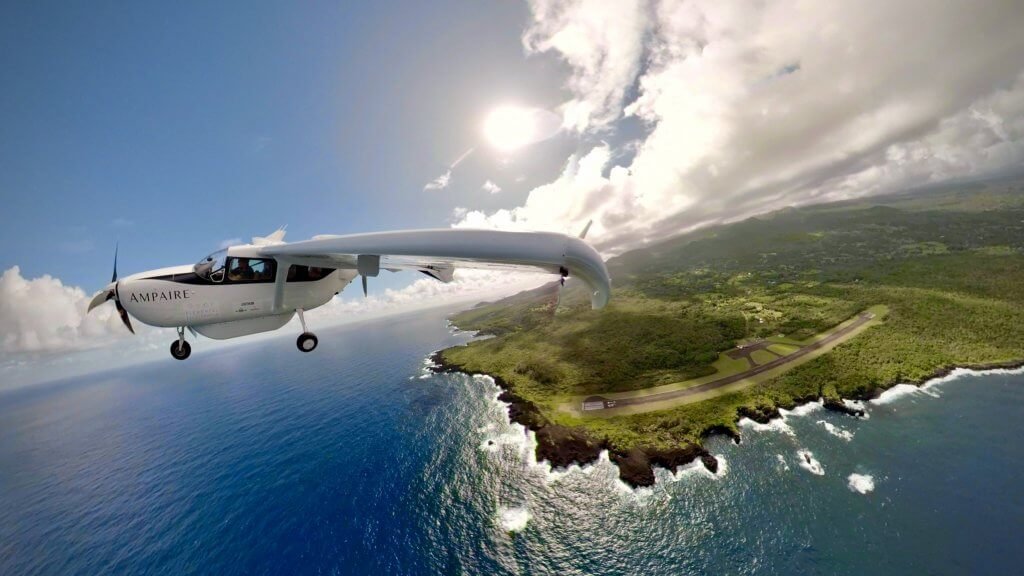
With Hawaiian and Alaska Airlines’ $600M Kahuewai Hawaii modernization plan signaling strong momentum around sustainability, where do you see opportunities for hybrid-electric aircraft to support inter-island travel and emissions reduction?
Hawaiian and Alaska Airlines’ investment in Hawaii represents a meaningful commitment to modernizing aviation in a place where air travel is not just a convenience, but essential for daily life. Inter-island connectivity is critical for economic access, healthcare, education, and community cohesion.
Hybrid-electric aircraft offer a powerful opportunity to make that connectivity cleaner, quieter, and more affordable. Reducing local air pollution and noise directly improves quality of life for communities living near airports. Lower fuel consumption reduces carbon emissions and aligns with the strong environmental values held by many communities across the islands.
At the same time, improved operating economics can enable more frequent service, greater route diversity, and expanded access for residents and visitors alike. That combination of local community benefit, global environmental impact, and improved airline economics is what makes hybrid-electric aviation particularly well suited to the Hawaiʻi inter-island context. This is the kind of real-world, community-level impact that motivates our work.
When you look three to five years ahead, where do you see Ampaire—both in terms of technology readiness and commercial adoption?
The next three to five years represent the transition from demonstration to deployment for Ampaire. We expect to move from prototype systems through the remainder of our certification milestones and into initial commercial service, followed by scaled domestic and international deployments.
A meaningful challenge we anticipate is that for many operators and communities, our aircraft will represent their first exposure to electrification in aviation. That means our role extends beyond technology delivery. We will also be educators, partners, and advocates, helping airlines, airports, and regulators understand both the benefits of hybrid-electric and electric aviation and the practical pathways to adoption.
Equally important is operational excellence. Because this is new technology, our early customers must have an exceptional experience. That means investing heavily in aftermarket support, maintenance programs, spares availability, and field service so that airlines can operate with confidence.
When we do this well, Ampaire will not only establish itself as a trusted commercial partner, but will also help shape how the broader aviation industry evaluates electrification as a viable, scalable solution rather than an experimental one.
As an Elemental Impact portfolio company, how have partnerships and community ecosystems supported Ampaire’s progress, and what advice would you give to other climate innovators about building those relationships?
Nothing meaningful is built in isolation. Ampaire’s progress has been shaped by a broad ecosystem of partners, customers, regulators, funders, and community stakeholders. Elemental Impact in particular has played a catalytic role by supporting real-world deployment, helping bridge the gap between innovation and implementation.
For climate innovators, my strongest advice is to share your vision early and often – with trust, enthusiasm, and humility. Many of the people you encounter along the way will see dimensions of the problem you do not, and will have insights, relationships, or resources that can materially accelerate your progress.
Beyond tactical support, there is also enormous value in community. Being surrounded by peers who are tackling similarly ambitious challenges reinforces resilience, perspective, and commitment. Climate innovation is inherently hard and nonlinear. The ecosystem both increases your probability of success, and sustains your soul through the inevitable setbacks along the way.
The post Cleared for Takeoff: Ampaire’s Path to Hybrid-Electric Flight appeared first on Elemental Impact.


