
Every home hides a secret space that quietly shapes daily routines: the closet. When clutter takes over, mornings feel rushed, outfits feel limited, and stress sneaks in before the day even starts. That is why closet organization ideas matter more than most people realize. A well-organized closet is not about perfection or luxury. It is about ease, calm, and feeling confident every time the door opens.
This guide shares practical, easy-to-follow closet organization ideas designed for real homes and real lives. No technical jargon. No complicated systems. Just smart, human-centered solutions that gently transform chaos into order. And just when it feels like all the basics are covered, a few surprising ideas appear to change everything.
Let’s step inside and see what is possible.
Start With a Full Closet Reset
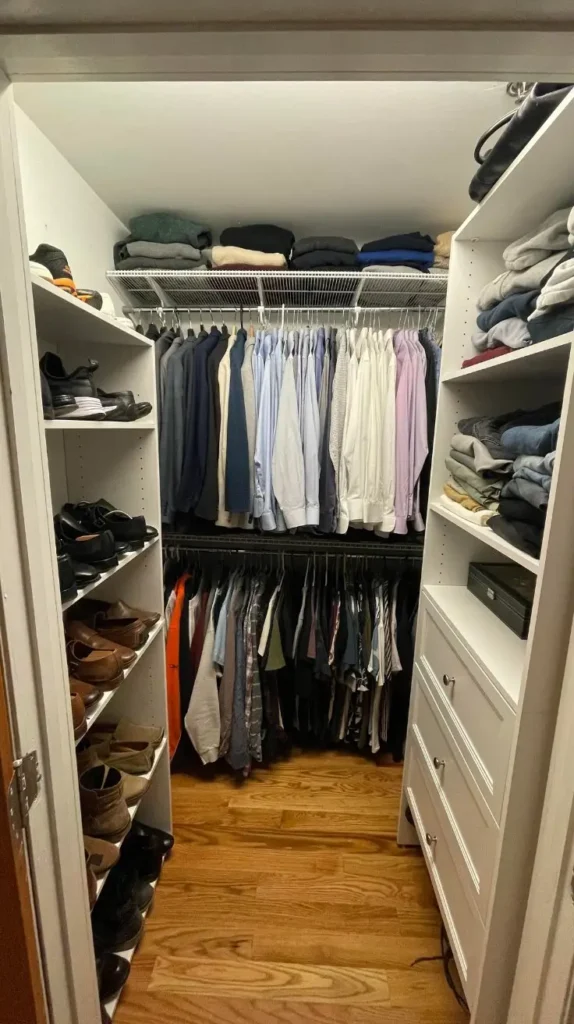
Every successful closet transformation begins with a clean slate. Emptying the entire closet may feel overwhelming at first, but this step sets the foundation for all other closet organization ideas. Taking everything out allows a clear view of what actually exists, not what is assumed to be there. Clothes that have not been worn in years, mismatched shoes, and forgotten accessories suddenly come into focus.
Sorting items into simple groups makes this process easier. Keep piles for everyday wear, special occasions, seasonal pieces, and items that no longer serve a purpose. This step creates space both physically and mentally. It also helps reduce decision fatigue later.
Once the closet is empty, cleaning shelves, rods, and floors makes a surprising difference. Dust and grime build up over time and subtly affect how the space feels. A fresh, clean interior immediately feels more welcoming.
This reset is not just about removing clutter. It is about preparing the closet to support daily life better. Something powerful happens here, and it sets the tone for everything that follows.
Use Matching Hangers for Instant Visual Calm
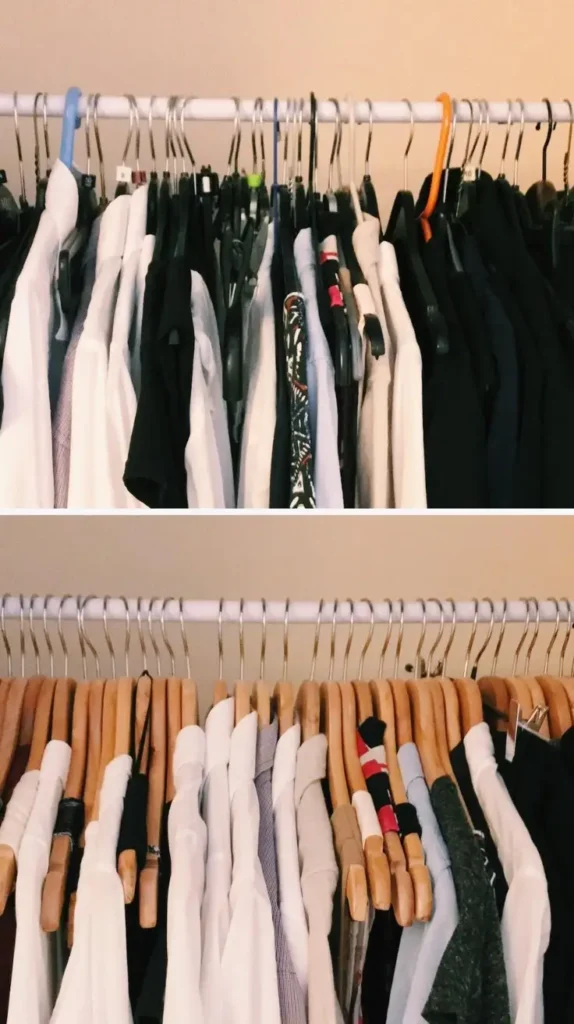
One of the simplest yet most impactful closet organization ideas involves hangers. When mismatched hangers fill a closet, the space looks busy even when it is technically organized. Matching hangers create instant visual harmony and make the closet feel larger and more intentional.
Slim, non-slip hangers work especially well. They save space while keeping clothes secure. Shirts stay aligned, jackets hang properly, and dresses maintain their shape. This uniformity makes it easier to see clothing options at a glance.
Beyond looks, matching hangers improve functionality. Clothes slide more smoothly along the rod, making daily outfit selection faster. Delicate fabrics also benefit from gentle, supportive designs.
This small change often delivers a big emotional payoff. The closet suddenly feels curated rather than chaotic. And once that calm appears, it becomes much easier to maintain order moving forward.
Create Zones for Different Clothing Categories
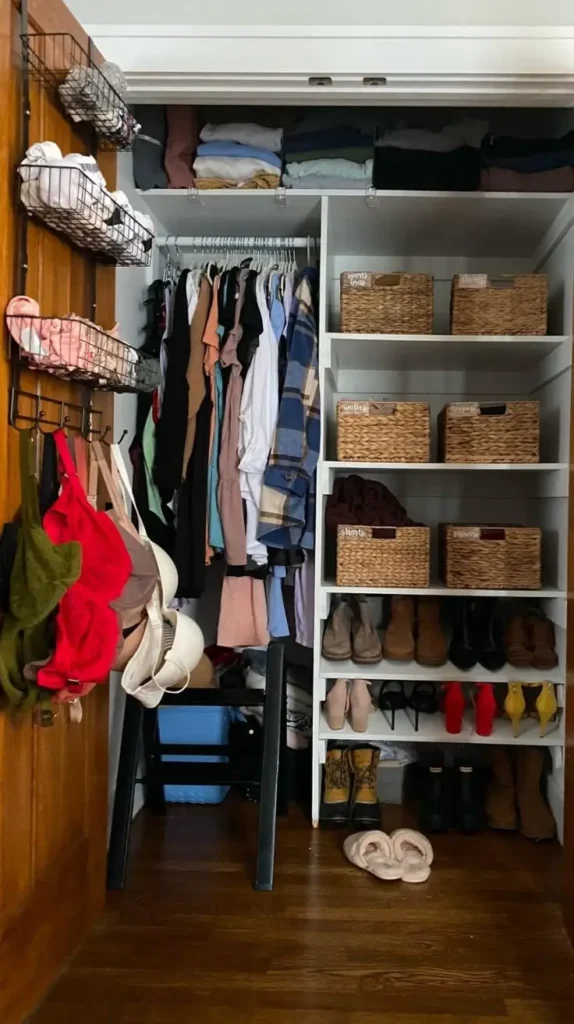
A closet without zones feels confusing. One of the most effective closet organization ideas is grouping similar items in clearly defined sections. Shirts stay with shirts, pants with pants, and outerwear with outerwear. This structure makes the closet intuitive.
Zoning saves time every single day. Instead of searching through mixed items, everything lives in a predictable place. This approach also highlights gaps in the wardrobe and prevents buying duplicates.
Within each zone, arranging items by length or color can add another layer of clarity. Short sleeves, long sleeves, and jackets flow naturally from one section to the next. The closet begins to tell a story.
Zones also help maintain organization long-term. When everything has a home, putting clothes away feels natural rather than like a chore. And once this rhythm settles in, the closet almost organizes itself.
Maximize Vertical Space From Floor to Ceiling

Most closets fail not because they are too small, but because valuable vertical space is ignored. When attention shifts upward, an entirely new world of storage appears. Shelves above hanging rods, tall cubbies, and stacked organizers help transform wasted air into usable space. This approach creates balance by keeping frequently used items at eye level while less-used belongings move higher up.
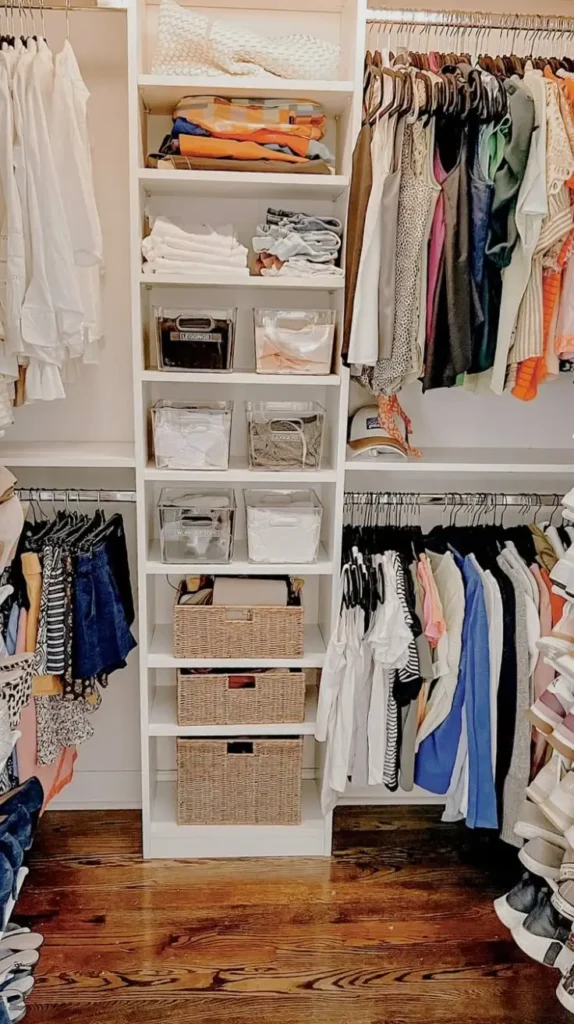
Tall shelving works beautifully for folded sweaters, handbags, storage baskets, and labeled boxes. Seasonal items can live safely overhead without crowding daily essentials. Stackable containers make this space even more effective, allowing items to stay visible and protected at the same time. Clear bins prevent the frustration of forgetting what is stored above.
Using vertical space also improves airflow and visual openness. Instead of clutter spreading outward and downward, everything rises neatly, making the closet feel taller and calmer. Once vertical storage is in place, the entire closet starts to feel more intentional. The real surprise comes later, when extra space suddenly appears where none seemed possible before.
Add Drawer Dividers for Small Items
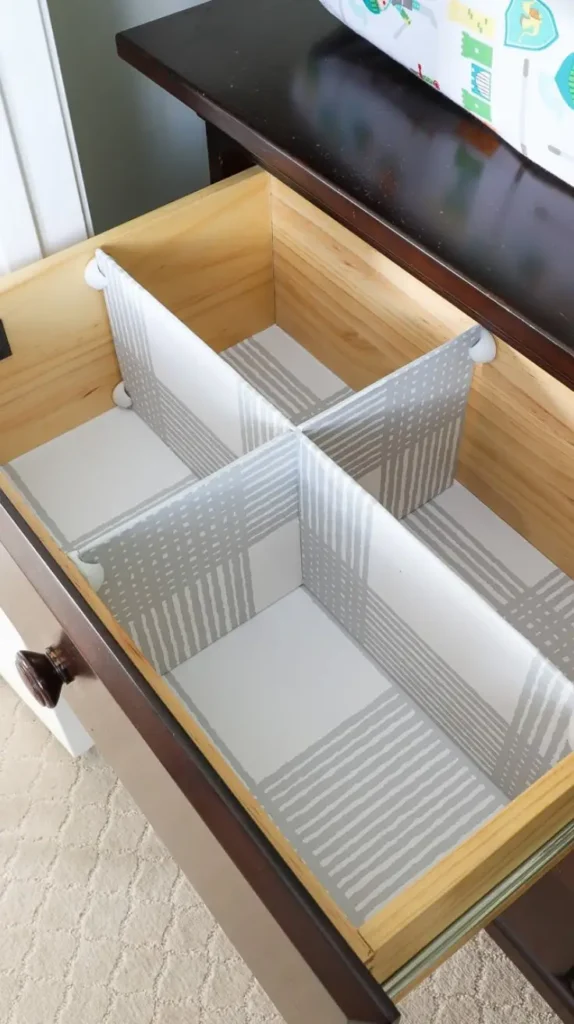
Small items are often the biggest source of frustration in any closet. Socks disappear, scarves tangle, and accessories pile into messy corners. Drawer dividers solve this problem by creating structure where chaos usually lives. Each item receives a dedicated space, making daily routines smoother and far less stressful.
Dividers separate socks, underwear, ties, belts, and even workout accessories. Everything stays visible, which reduces rummaging and saves precious time during busy mornings. This method also prevents overstuffing, helping drawers close properly and last longer. Soft fabrics benefit as well, staying folded and protected instead of crushed.
This organizational style brings a quiet sense of order. Opening a drawer becomes satisfying rather than overwhelming. Even better, maintaining this system requires very little effort. When every item has a clear home, putting things away feels automatic. Over time, this simple solution builds consistency, making the entire closet easier to manage without constant reorganization.
Use Clear Storage Bins for Easy Visibility
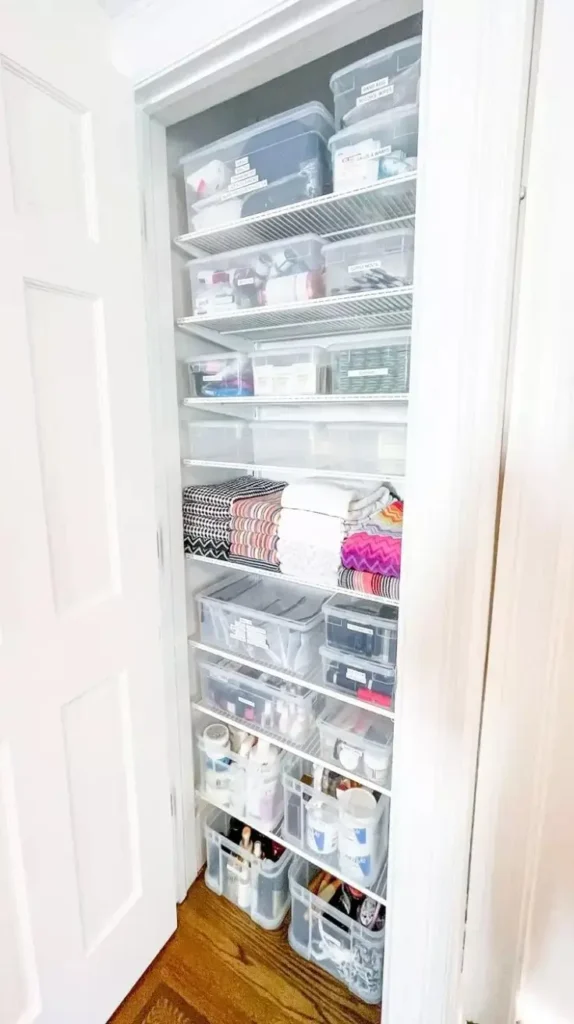
Hidden storage often leads to forgotten belongings. Clear storage bins change that story completely. Transparency removes guesswork and replaces it with instant clarity. Items stay protected while remaining visible, creating a perfect balance between function and simplicity.
Clear bins work especially well for accessories, folded clothing, shoes, and seasonal items. They stack neatly on shelves and maximize space without creating visual clutter. Adding lids keeps dust away, while uniform bin sizes create a clean, cohesive look that feels intentional rather than random.
This system also supports smarter organizational habits. When contents are visible, overbuying decreases, and forgotten items resurface. Labels add another layer of clarity, especially in shared spaces. Over time, this visibility builds trust in the system. Everything feels easier to manage, and frustration quietly fades. Once this method becomes part of the closet, digging and searching feel like problems from the past.
Rotate Seasonal Clothing for Better Flow
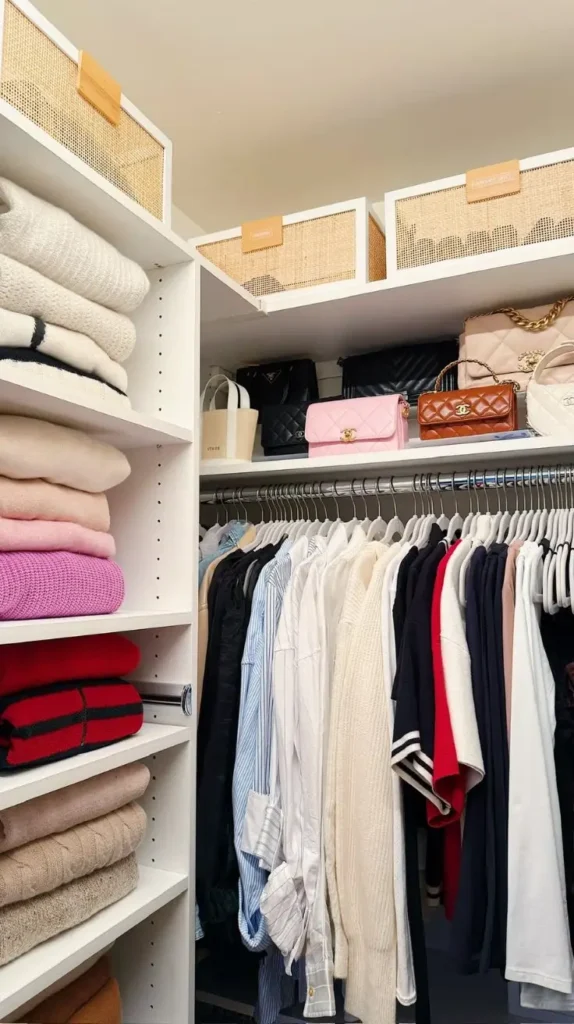
A crowded closet often holds too much at once. Seasonal rotation brings breathing room back into the space. Instead of squeezing every item into one area, clothing flows with the seasons, keeping the closet relevant and easy to navigate all year long.
Warm coats and heavy layers can step aside during warmer months, while lightweight fabrics rest safely elsewhere. Vacuum-sealed bags, labeled bins, or storage boxes work well for this purpose. Clothing stays protected from dust, moisture, and unnecessary wear.
This rotation creates a sense of renewal. When seasons change, pulling out stored clothing feels refreshing, almost like rediscovering old favorites. It also makes daily outfit selection faster because only season-appropriate options are visible. Over time, this rhythm reduces clutter and protects clothing quality. The closet begins to feel lighter, more focused, and far less overwhelming, just when it matters most.
Install Hooks for Bags and Accessories
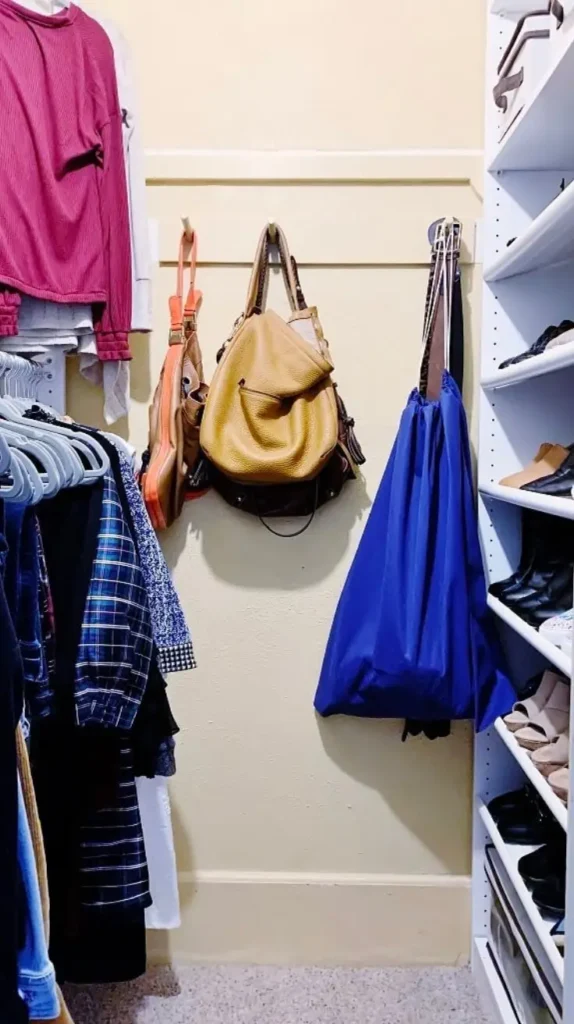
Some items simply do not belong on shelves or hangers. Hooks provide a flexible, space-saving solution that keeps frequently used accessories within easy reach. Installed on walls, closet sides, or inside doors, hooks transform overlooked surfaces into valuable storage.
Bags hang neatly without losing shape. Scarves drape naturally instead of tangling. Hats stay accessible while maintaining their form. Grouping similar items on hooks adds visual order and creates a sense of flow. Even jewelry organizers can hang safely, reducing clutter elsewhere.
Hooks also encourage consistency. When accessories have a clear home, they are less likely to end up scattered. This small change creates a noticeable impact, opening shelves and floors instantly. Over time, the closet feels more open and breathable. What once felt cramped begins to feel thoughtfully designed, all because unused space finally started working.
Arrange Clothes by Color for Visual Harmony
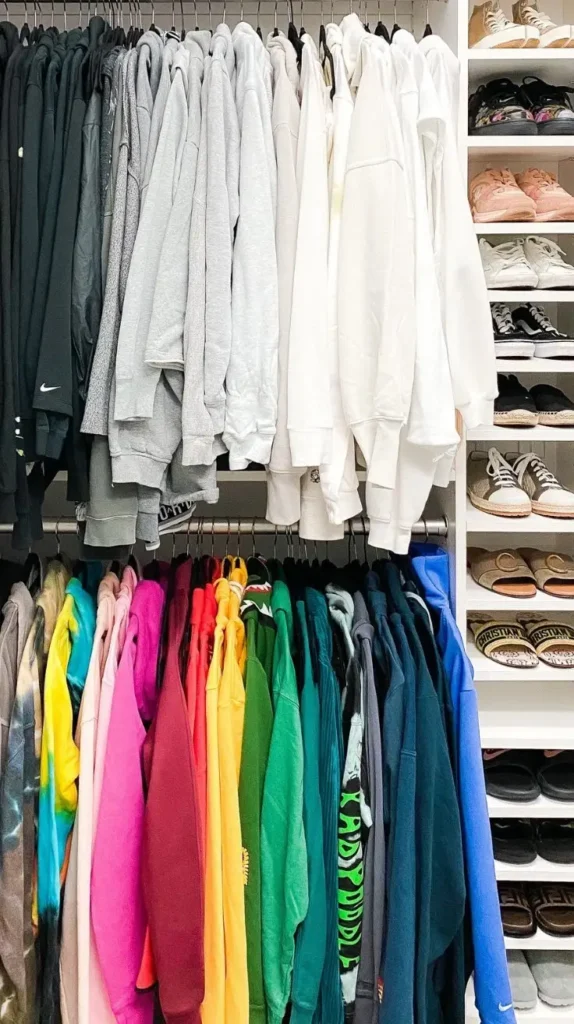
Color-based organization changes how a closet feels the moment the door opens. Instead of visual noise, the eye sees flow. Light shades gently move into deeper tones, creating a calm and balanced appearance that feels intentional rather than accidental. This method does more than look good, it powerfully simplifies everyday decisions.
When clothes are arranged by color, outfit coordination becomes easier without effort. Complementary pieces naturally sit near each other, making styling feel intuitive even on rushed mornings. This system also reveals buying habits. Favorite colors stand out clearly, while items in neglected shades quietly signal what rarely gets worn.
Maintenance becomes easier, too. Disruptions in color order are noticeable immediately, encouraging quick fixes before clutter grows. Shared closets benefit as well, since color feels universally understandable. Over time, this visual harmony creates emotional calm. The closet feels lighter, more open, and surprisingly comforting. And once this sense of order settles in, going back to random placement feels nearly impossible.
Create a Dedicated Shoe System
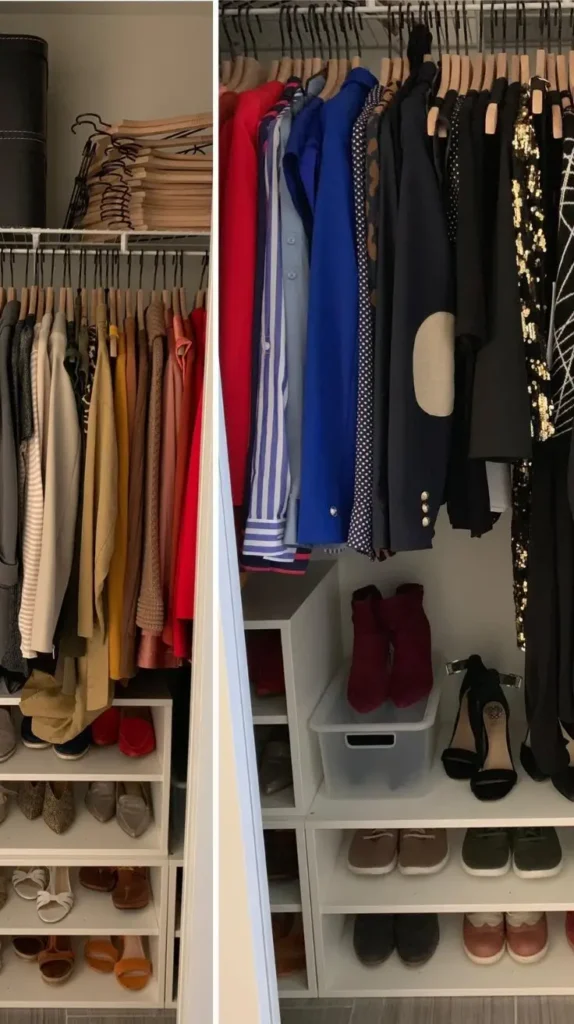
Shoes often become the messiest part of a closet because they lack a defined home. A dedicated shoe system restores order and protects footwear at the same time. Whether using racks, cubbies, shelves, or clear boxes, consistency matters more than style.
Keeping shoes together prevents them from spreading across the floor and crowding other storage areas. Clear boxes allow instant identification while shielding shoes from dust and damage. Open racks improve airflow, helping reduce odors and moisture buildup. Labeling seasonal footwear adds another layer of organization.
Proper shoe storage extends lifespan. Soles stay clean, shapes remain intact, and materials last longer. Over time, the closet floor opens up, making the entire space feel larger and calmer. Once shoes stop competing for space, everything else settles naturally. This system quietly brings balance and keeps it there.
Read – Shoe Organization Ideas
Add Lighting to Brighten the Space
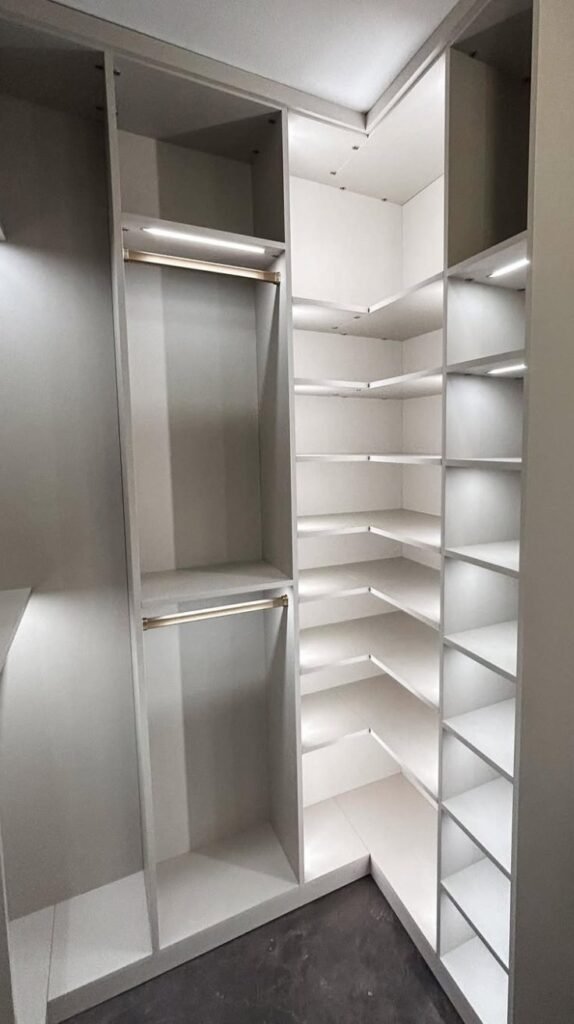
An organization loses impact when visibility is poor. Lighting transforms how a closet functions by revealing what already exists. Battery-powered LED strips, puck lights, or motion-sensor options are easy to install and require no technical skills.
Good lighting makes colors accurate and textures clear. Outfit choices become faster and more confident because details no longer hide in shadows. Dark corners disappear, and every shelf feels usable. Even small closets feel more spacious once light fills the space.
Lighting also changes the emotional tone. The closet stops feeling like a forgotten storage area and begins to feel intentional and cared for. This subtle upgrade encourages better habits, since organized spaces feel worth maintaining. Over time, the difference becomes undeniable. Once light enters the closet, clutter loses its power to hide.
Store Accessories in Trays and Boxes
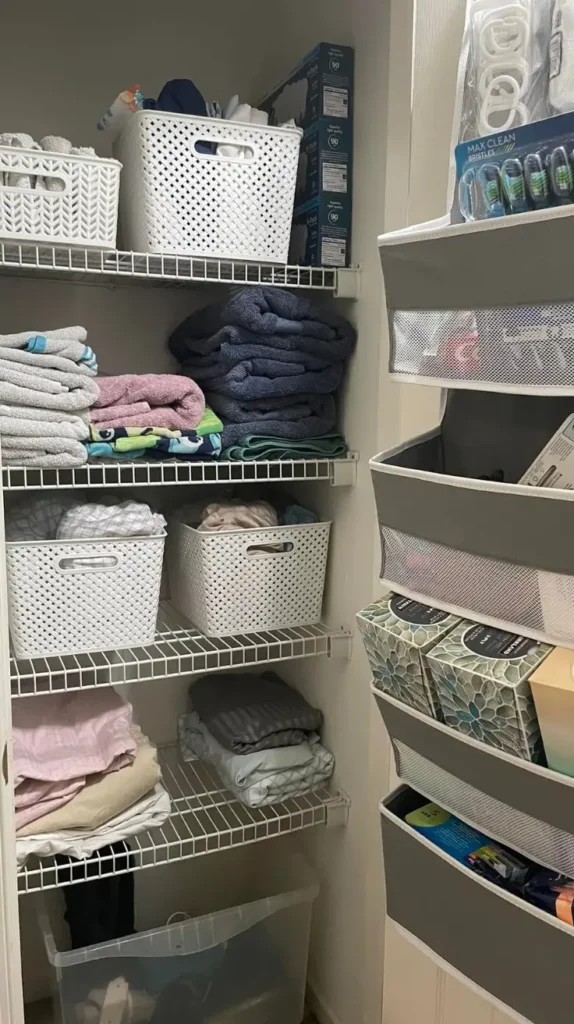
Accessories often create silent clutter because they lack structure. Trays and boxes provide gentle boundaries that keep small items organized and protected. Jewelry no longer tangles, sunglasses avoid scratches, and belts stay neatly coiled instead of twisted.
Lined trays add softness and prevent damage, while stackable boxes save space without hiding contents. Grouping accessories by type simplifies daily routines and reduces frustration. Everything stays visible, making selection quick and effortless.
This system also encourages care. When accessories are displayed neatly, they feel valuable rather than forgotten. Maintenance becomes easier because disorder is immediately noticeable. Over time, drawers stay calm instead of chaotic. Small items stop creating big problems. And once that balance settles in, mornings begin with ease instead of searching.
Personalize With Labels for Easy Maintenance
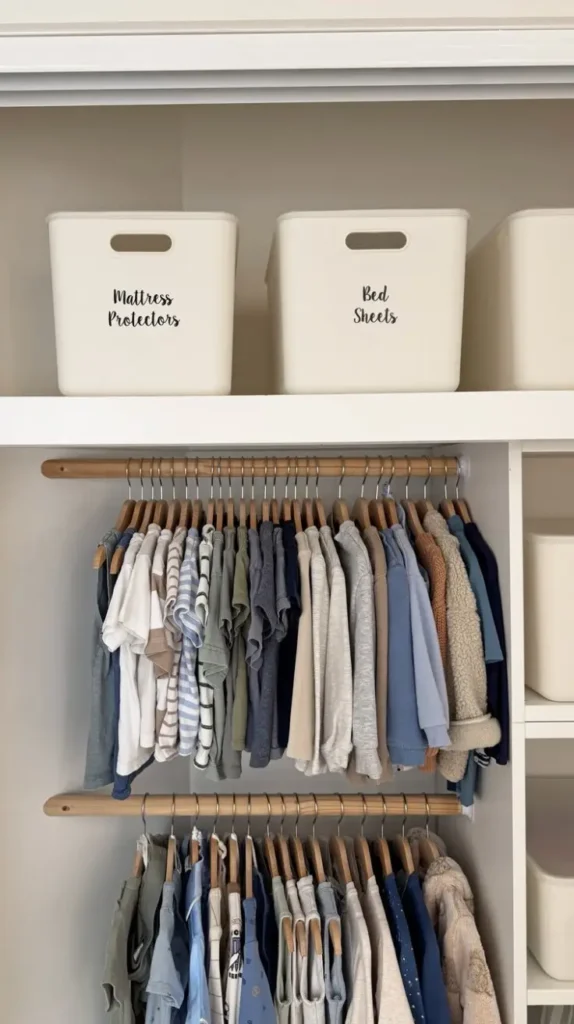
Labels act as quiet guides that keep the organization intact long after setup. They remove guesswork and reduce mental effort. When every shelf, bin, or drawer is clearly marked, returning items becomes automatic.
This approach works especially well in shared closets. Everyone understands where things belong, which prevents clutter from creeping back in. Labels also help maintain consistency over time, even when routines change.
Simple labels work best. Clean text, clear placement, and logical grouping create structure without visual overload. Over time, habits form naturally. The closet stays organized not because of effort, but because the system supports it. That subtle guidance makes all the difference.
Maintain With a Simple Weekly Reset
Even the best organizational systems need gentle upkeep. A short weekly reset keeps everything aligned without overwhelming effort. Just a few minutes of straightening hangers, refolding stacks, and returning misplaced items prevents clutter from gaining momentum.
This routine reinforces existing systems rather than replacing them. Consistency replaces stress. The closet stays functional because small corrections happen before chaos builds.
Perfection is never required. Progress matters more. Over time, this habit becomes effortless, blending into daily life. The closet remains calm, supportive, and ready, day after day. And that quiet reliability is what makes all the other changes truly last.


