
Nature’s Net Wrap’s expanded compostable range caught the attention of farmers at the July Forage Expo, in Norwood, Ont.
“People have asked questions about it — is it safe if the cow eats it? how long will it keep a bale together? and so forth,” said Claude Lesperance, New Holland dairy livestock product specialist, who was demonstrating the wrap.
Why it matters
Compostable wrap could reduce up to 2.5 million tonnes of plastic waste annually, along with lower landfill use, haulage and disposal costs, reduce or eliminate soil and water contamination and improve animal safety.
Frustrated by the lack of sustainable bale wrap solutions, Alberta ranchers Aaron and Larry Ruud spent nine years developing a compostable wrap of renewable, plant-based biopolymers able to maintain strength and structure for more than 12 months with no significant impact from UV and rain.
The company launched the ‘Original’ wrap throughout North America through a dealer partnership with CNH Ventures, the parent company of New Holland and Case IH, for the 2024 forage season. But the momentum didn’t stop there.
Three strength options
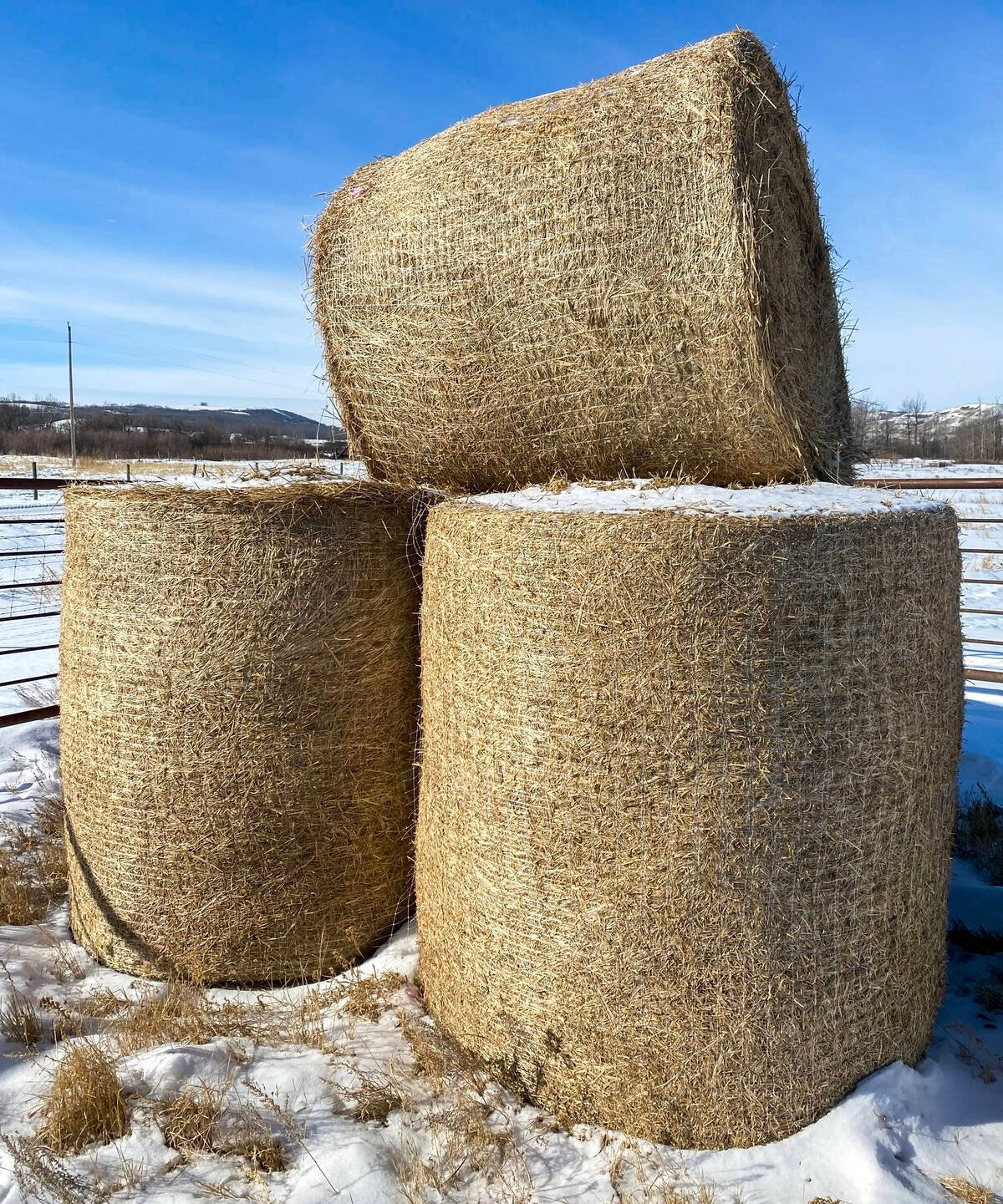
Recently, Nature’s Net Wrap unveiled an extended range providing three strength options and multiple widths.
Original
- Softest option, with strong performance in hay and dry short straw
- Smallest square size provides better coverage for rain shedding.
- Fastest breakdown of the three options.
- Available in 48-inch, 51-inch, 64-inch and 67-inch widths in 4,000- or 5,000-foot rolls.
Ultra strength
- Recommended for cornstalks, stover and hard-to-bale forages.
- Stronger, thicker netting and a large square size require fewer wraps than the Original.
- Performs well in silage and high-moisture conditions.
- Available in 64-inch and 67-inch widths on 5,000-foot rolls.
Pro
- Combines the softness of Original with a larger square size.
- Added strength to meet a broad range of baling needs.
- Suitable for silage and high-moisture conditions.
- Available in 48-inch and 51-inch widths on 5,000-foot rolls.
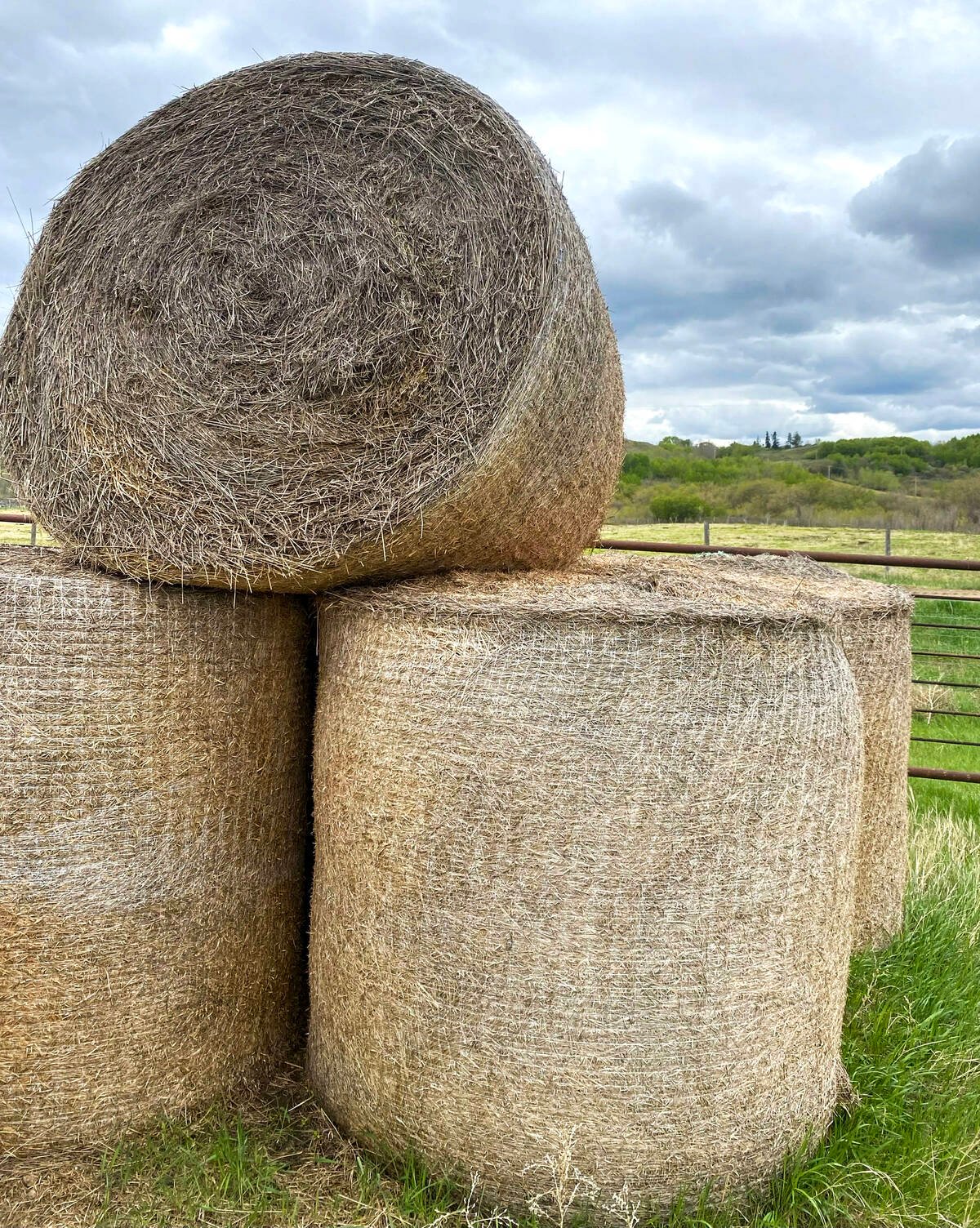
New Holland, Case IH, John Deere, AGCO, Vermeer, Kubota, McHale and Claas balers have successfully run the wrap over the last four years with only standard baler setting adjustments required.
Technology adoption
In an interview on the New Holland Agriculture podcast, Nature’s Net Wrap chief growth officer Marty Chamberland said customers generally try a single roll, then return to purchase 10, 20 or 30 rolls because they witnessed how efficiently the manure pack composts the wrap.
“They’re some of our best advocates,” Chamberland said. “It makes the adoption rate easier because farmers like to try it first, to make sure it works, and if there’s problems, they should call us to find out if there are any adjustments they need to do to their balers.”
The company suggests starting with the same number of wraps used with traditional plastic options and adjusting to find what works best for individual forages and farm operations.
Plant-based polymers
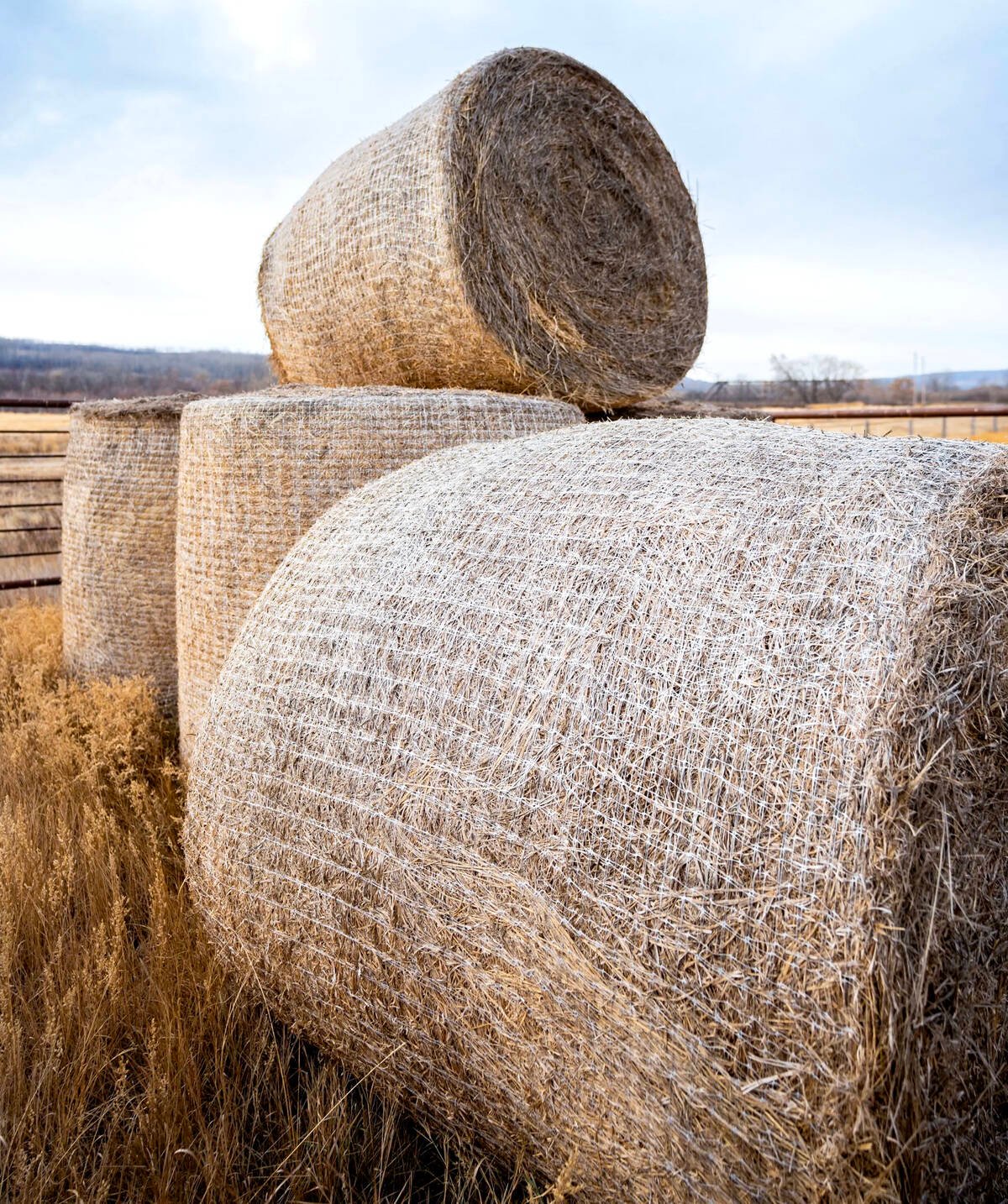
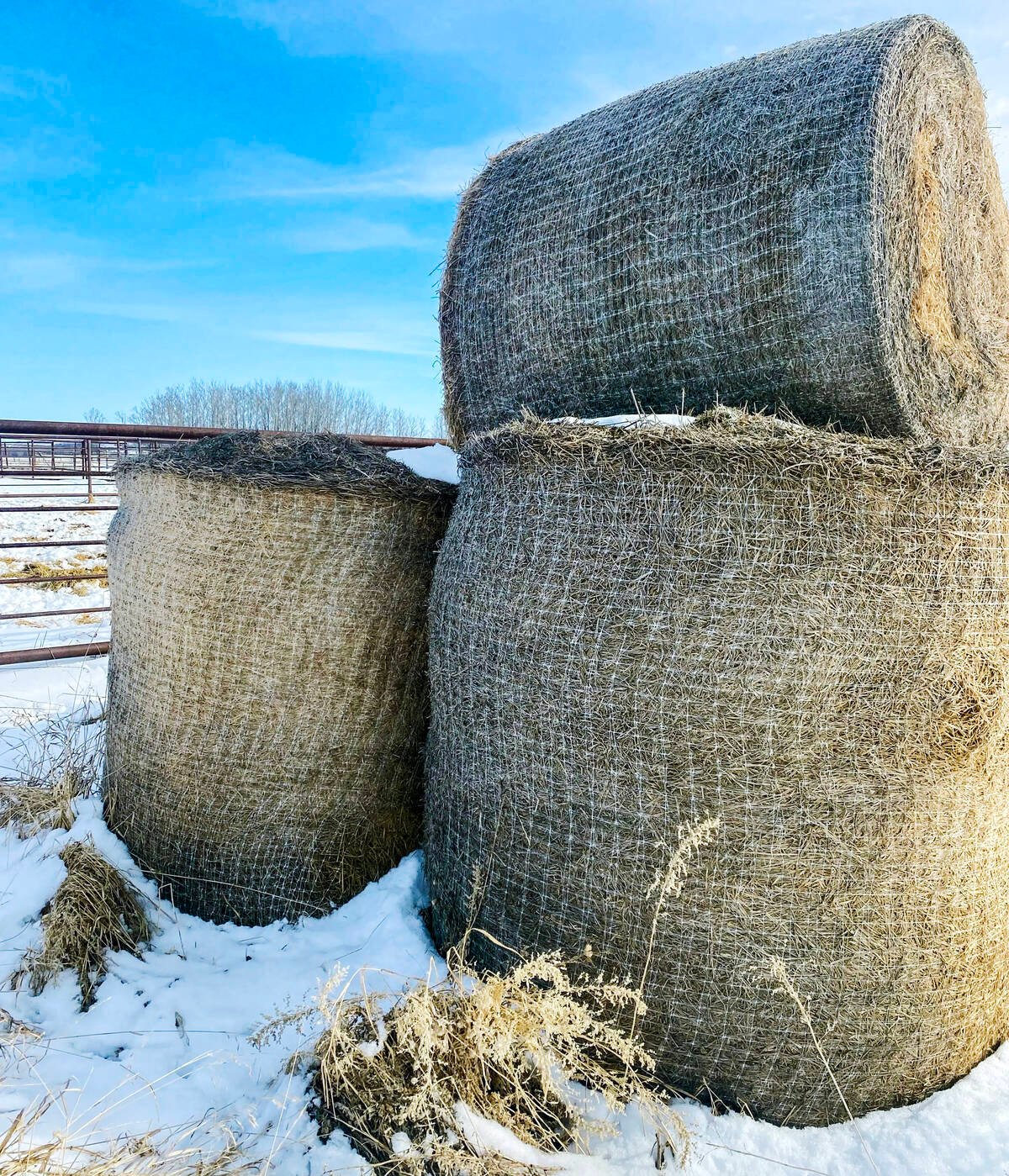
The wrap needs soil micro-organisms and enzymes to trigger the breakdown, elements that can be found in a manure pack and the company’s real-time research has proven it maintains its integrity after two-and-a-half years in the elements using the mushroom stacking method.
The mushroom stacking method is when bottom bales are placed upright on the ground, with the second bale layer stacked on its side.
Chamberland said Nature’s Net Wrap had to find the right blend of polymers to maintain strength, but the soil microbiome could fully consume it. In soil, total degradation of the wrap takes two to three years, he said, but manure-pack-compostability accelerates the process to six months.
“Even into an industrial composting situation where we actually have a global certification with BPI that shows that the material would be eliminated in 12 weeks,” he said during the webcast.
“At that point, it breaks down into carbon dioxide and water. There’s no microplastics left at the end of that process with our material.”
How fast it breaks down
- Industrial composting: 12 weeks, under BPI certification
- Manure pack: about six months
- In soil: two to three years
- Stacked outdoors: still intact at two-and-a-half years
Animal and environmental safety
To ensure animal safety, Nature’s Net Wrap collaborated with the University of Saskatchewan and Lakeland College in 2025 to study how the wrap would impact cattle if accidentally ingested. The results showed that it breaks down in the rumen with no ill effect, but the company recommends removing the wrap before feeding.
An additional study with Lakeland College showed that the net wrap will break down and be fully consumed by a manure pack’s soil microbiome, making on-farm composting easy and convenient — unlike plastic net wrap and polyethylene twine, which leave behind microplastics even if they do break down eventually.
Return on investment
Chamberland said traditional plastic wrap on a hay bale represents two per cent of the cost to create a hay bale, factoring in the forage field inputs, diesel and equipment costs.
“Our cost compared to the two per cent, would be about three per cent. The cost of using sisal twine is actually five per cent,” he stated on the webcast. “So, we’re cheaper than that.”
For producers using sisal twine, Nature’s Net Wrap provides a triple benefit: compostability, no in-field plastic build-up and increased efficiency.
“They were also able to gain the speed of making bales compared to how they’ve made them traditionally with a twine wrap,” he explained, not to mention the incalculable value of increased sustainability for farmers and the environment.
The post Compostable bale wrap adds options for tougher forages appeared first on Farmtario.


