

My (white) family immigrated from South Africa in the 90s and my parents were keen to dive into all the things they thought were “quintessentially Canadian.” This involved skiing, which landed my Dad in cast with a broken leg, ordering food in a drive-thru but we never got what we ordered because no one could understand their accents and camping in parks like Algonquin and Killbear, quite possibly our favourite new activity aside from some canoe mishaps.
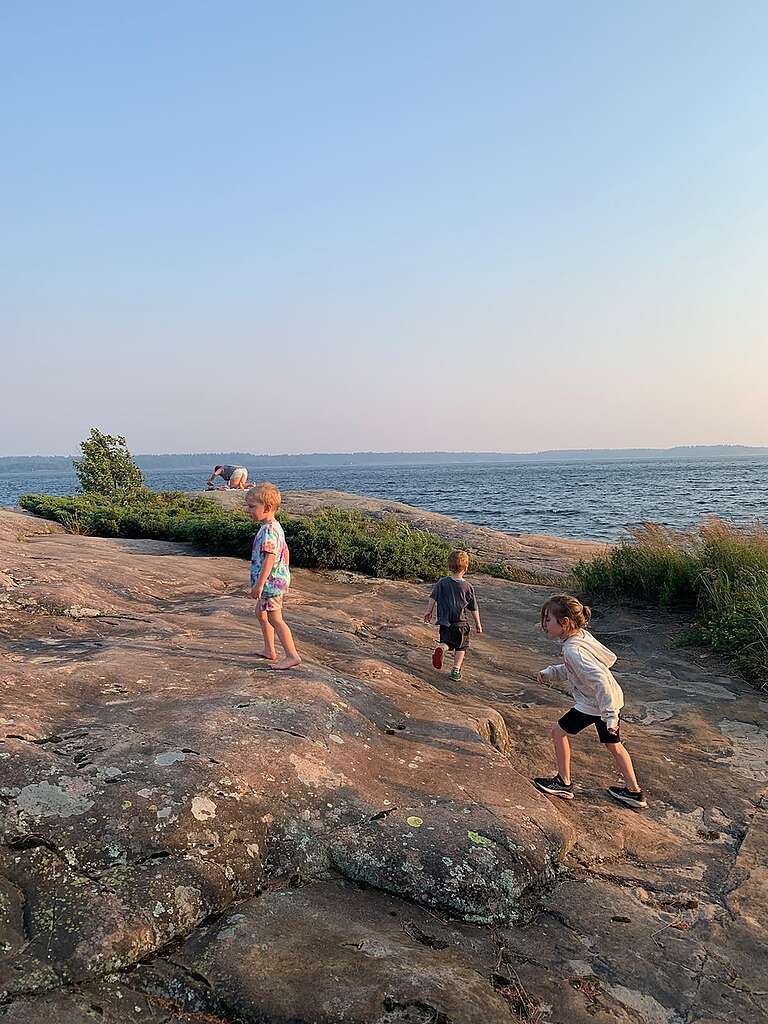
Decades later, my husband and I are now taking our almost four year old son camping to the same parks from our childhood. And, after a rocky start a few years ago, this summer, the magic finally clicked for him. He found joy in the mix of shallow water, sandy beaches, rugged Canadian Shield rocks and of course the bugs. But that magic was interrupted on our second last day when we woke up to an orange haze blocking out the sun – smoke from wildfires in Northern Ontario.
While we were safe, the news was full of stories of communities being evacuated and people losing their homes in an instant. Entire communities have been devastated, emergency response has been slow or non-existent and fires continue to multiply and burn today as I write. I’m sitting with the fact that while this wasn’t part of my childhood camping experience or my experience growing up in the GTA, wildfire smoke is now a permanent fixture in my son’s life, when it doesn’t have to be.
CONNECTING THE DOTS
As the wildfires blaze, destroying vital natural spaces leaving people and wildlife without homes, mid-July is also when publicly traded companies start announcing their second quarter earnings. And, with the Iran war-induced gas price jump, the fossil fuel industry is expected to report record earnings. I’m also sitting with the fact that while a powerful group of polluting industries profit from spending decades lying about climate change, they are stripping away livelihoods, clean air, people’s homes and time outside in the limited number of summer days we have in the Northern Hemisphere. Fossil fuel greed is causing the very fires currently choking communities.
While these forest fires were escalating and forests across Canada continue to burn, Prime Minister Mark Carney was busy signing new pipeline deals that are putting taxpayers on the hook for billions of dollars and releasing the federal “AI for All” strategy that’s light on details but would require many data centres across Canada as well as the energy to power them . Carney has even admitted that because his government scrapped the consumer carbon price and the oil and gas emissions cap, Canadian emissions will be higher in the next few years than previously projected. Saying this at the same time we are witnessing the real time effects of climate change is wildly out of step with people’s lived reality, and certainly not the forward-thinking plan we expect from a Prime Minister who wrote a book on values.
CANADA IS LAGGING, WHILE THE REST OF THE WORLD LEADS
While Canada doubles down on fossil infrastructure, the rest of the world is trying to move in the opposite direction. The Iran war has created a massive global acceleration toward cleaner energy; faced with rising gas prices and vulnerable supply chains, other countries are aggressively cutting ties with oil and gas in favour of the more affordable and stable solar and wind energy.
Whether this momentum marks a permanent acceleration remains to be seen, but as long as fossil fuel prices continue to rise around the world, more visionary leaders are turning this latest energy crisis into an opportunity to completely rewrite their policy playbooks.
The rest of the world is recognizing that fossil fuels are a liability and is actively building a cleaner, more secure future, while Canada is choosing to live in the past, beholden to the oil and gas industry that is destroying our children and grandchildren’s futures by making pipeline deals.
We are being told by leaders that stability and progress sometimes means that emissions will be higher or that animals and natural spaces can be put at further risk by becoming “federal economic zones” in the name of major industry projects. Carney frames this as building a “strong, united Canada,” yet his plan only seems to benefit industry and puts taxpayers on the hook to pay for these pipeline deals deemed too risky even for private investors.
Despite this top-down push for Canada to continue to be a petro-state and attempting to solidify that as our national identity, a new form of resistance is emerging in communities across from coast-to-coast-to-coast. People are finally connecting the dots between the government’s failed climate targets and the tangible impacts on our own lives, from skyrocketing utility bills to the potential for massive projects being developed in our own backyards.
PEOPLE POWER IS THE ONLY WAY
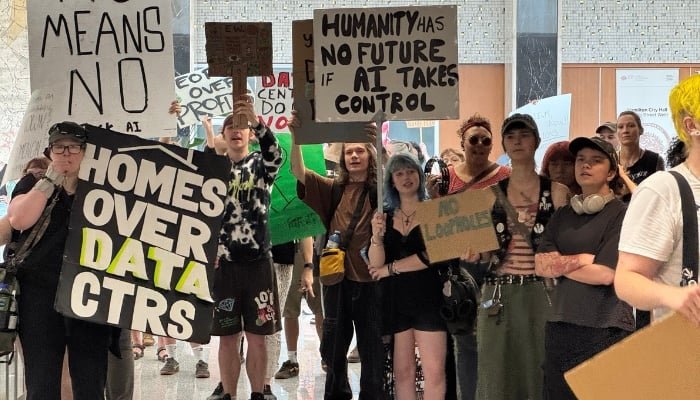
An example is right here where I live, in Hamilton, Ontario, where there has been an unprecedented mobilization against AI data centres. While the federal government is pushing an “AI for All” strategy, Hamilton’s move toward a moratorium on data centres is an attempt to close the gap left by the federal strategy that failed to consult…everyone. I find hope in my neighbours’ organizing, knocking on doors, and packing council meetings to demand that their communities are not sacrificed for corporate interest.
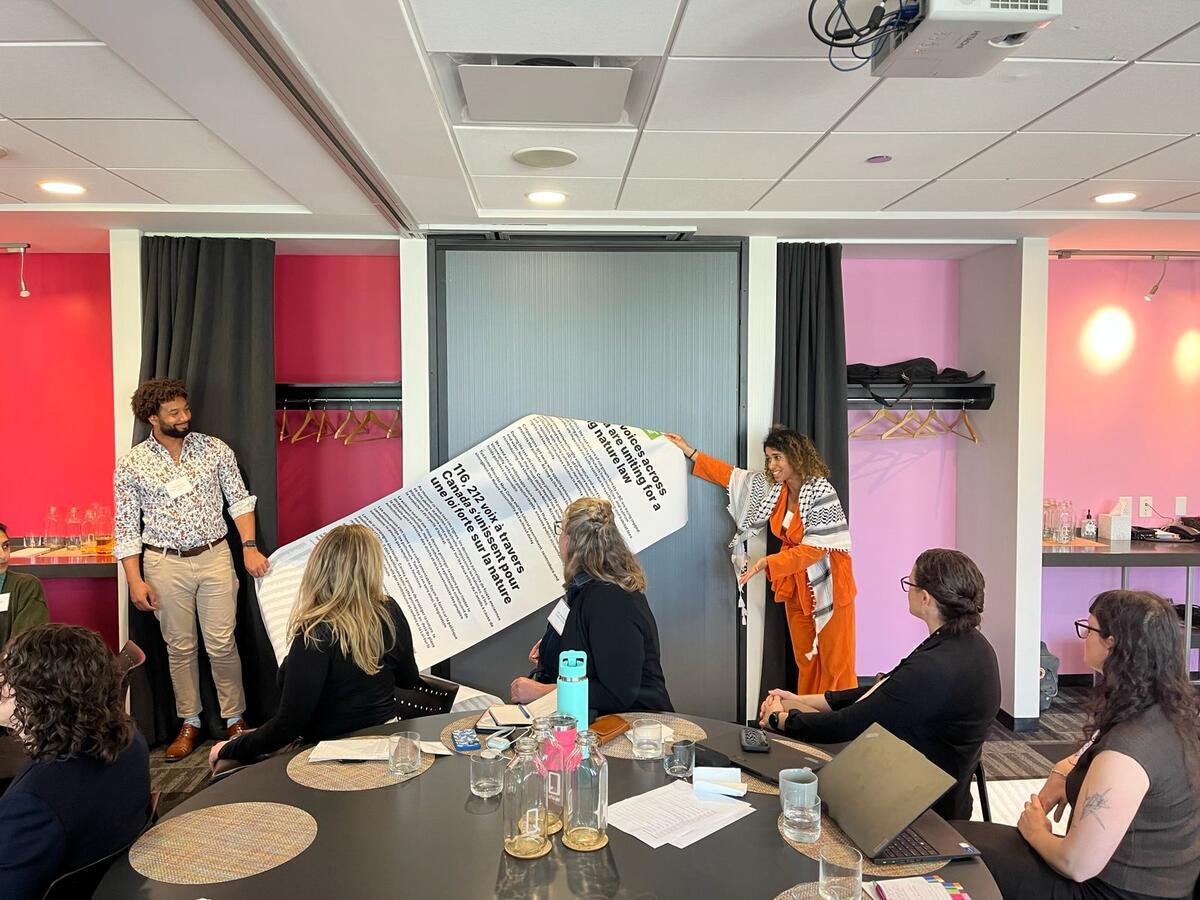
Or the 116,000 people that have demanded strong nature laws in Canada to protect species at risk and precious ecosystems.
To protect the future for our kids, we must move past this idea that fossil fuels equal prosperity and stability and move toward shared prosperity, which focuses on policies and clean energy that benefit everyone. Nature is not a site to exploit and profit from, it is our home—a source of health, wellbeing, and a place of belonging for all.
HOW YOU CAN TAKE ACTION RIGHT NOW
We have a busy summer and fall ahead of us, so stay tuned. Right now there are two things you can do to protect nature and say no to fossil fuel greed.
Nature is our home—not an economic zone. The federal government wants to steamroll ahead with major projects by weakening environmental protections. Tell them to protect the nature that sustains us, not treat it as red tape.
The oil and gas industry is about to announce record profits of the billions they made from war in Iran. Sign to demand an excess profits tax.


