
Ontario’s conventional corn acres appear to be reaching a turning point.
Long considered a niche crop grown primarily for livestock feed or select processing markets, conventional corn — that is, corn not grown from genetically modified seed — is attracting renewed interest from growers as buyers expand contracting programs and premiums are helping to offset rising production costs.
Companies engaged in the industry say the economics are becoming increasingly difficult to ignore.
“We are definitely seeing a trend of more conventional corn acres, significantly over the past few years,” says Will Trudell, vice-president of De Dell Seeds, who notes this year especially has resulted in more grower inquiries and sales of conventional corn seed.
Founded in 1999, De Dell Seeds remains the only Ontario seed company focused exclusively on non-GMO and conventional corn genetics. “This growing season is the strongest we’ve seen in 27 years,” Trudell says.
New opportunities in the marketplace
The conventional corn market in Ontario has changed significantly over the past decade. Historically, growers relied on what Trudell calls “spot-market opportunities” through select feed mills and processors such as Hiram Walker. While demand existed, marketing options were limited and grower incentives were limited.
That began to change roughly 10 years ago when Ingredion established a dedicated conventional corn processing facility in eastern Ontario and introduced forward contracting opportunities to the marketplace. Since then, additional processors have entered the space, including Greenfield Global, creating more competition for grain and market development support.
The growth of processing demand has also attracted grain companies willing to source and market conventional corn. Today, buyers and grain handlers such as The Andersons Canada, Hensall Co-op and Snobelen Farms are active in the sector. For growers, the emergence of multiple buyers signals a market that is becoming more established.
“The contracting opportunities that exist today simply weren’t there 10 years ago,” says Trudell. “That’s a clear sign of market strength.”
Economics attracting attention
The strongest driver behind renewed interest in conventional corn may be straightforward economics. Trudell notes conventional corn seed typically costs $30-$40 less per bag than comparable GMO hybrids because it does not carry technology fees. “Those are immediate savings that are realized at planting,” he says. Combined, the lower seed costs and premium opportunities can significantly improve margins.
“Since last fall, we’ve had more inquiries from farmers who wouldn’t have traditionally considered conventional corn,” he says.
Historically, many of De Dell’s customers have been livestock producers, particularly dairy, poultry and hog farmers. Some serve specialized non-GMO livestock markets and require conventional grain for feed. More recently however, Trudell says interest is coming from larger cash crop operations, “our typical customer might grow 300 to 500 acres of corn, but the new inquiries are often coming from farms with 1,000 acres or more.”
Amanda Peer, grain and organic grain merchant with The Andersons Canada, is seeing a similar trend. “The market in Ontario for conventional corn has seen significant growth in southwestern Ontario and is generating a lot of interest from growers,” Peer says.
The Andersons Canada only began offering forward contracts for conventional corn within the past year, but Peer says demand from both buyers and growers has accelerated quickly.
“We’ve seen a lot more growers asking questions about the programs, the requirements and what kind of premiums are available,” she says.
Yield stigma fading
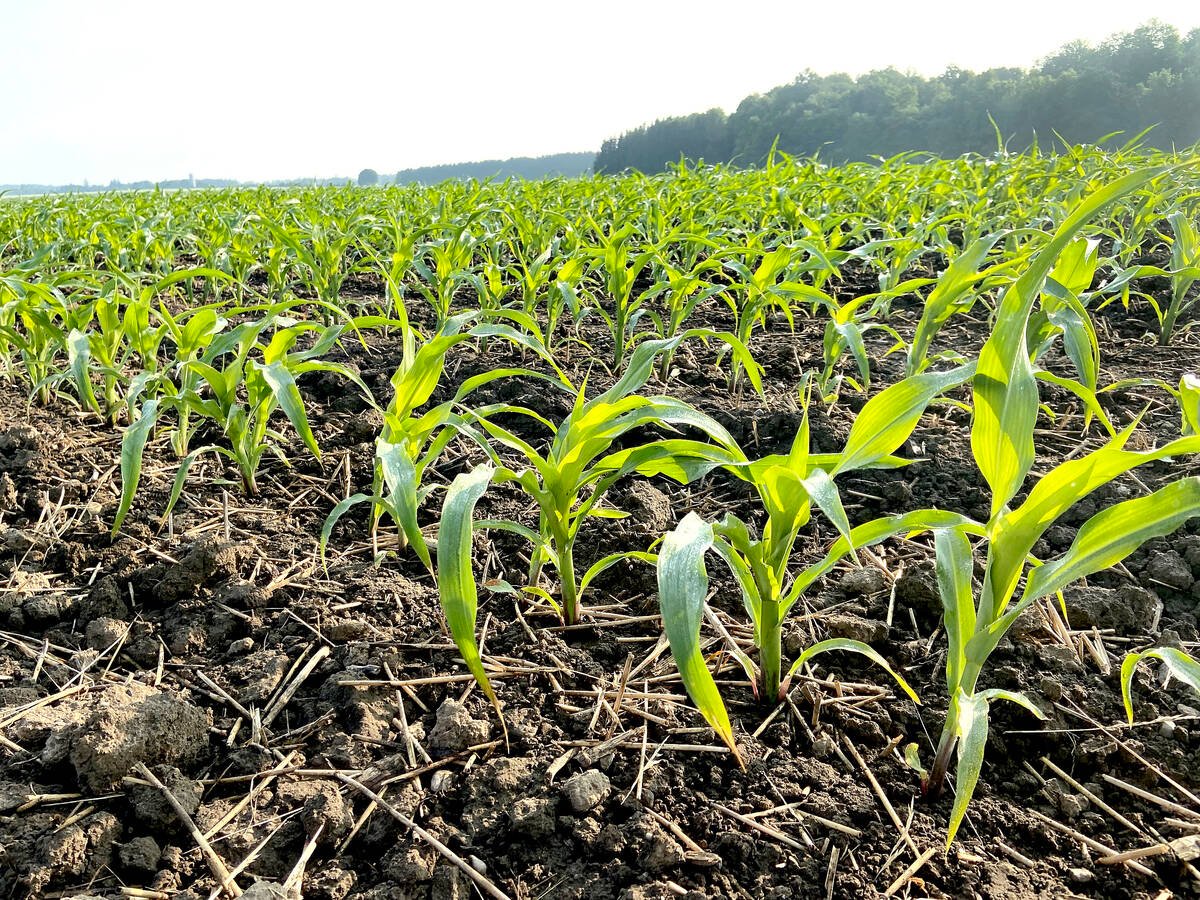
Trudell believes part of the renewed interest stems from improvements in conventional genetics. For years, many growers viewed conventional hybrids as yielding significantly less than GMO alternatives. Trudell says that perception is becoming outdated. “I think there’s still a stigma that conventional corn has a yield disadvantage, but that’s not the case anymore,” he says. “It’s time to break the stigma.”
Trudell says, today’s conventional hybrids are increasingly competitive with GMO corn yields while maintaining the seed-cost advantage. He notes that weed control options have also improved, giving growers access to a broad range of effective herbicide programs. As a result, the conversation around conventional corn is shifting.
What does the grain market look like?
Despite growing interest, Ontario’s conventional corn market remains largely domestic. Justin Geelen, originations merchant manager with The Andersons Canada, says the company’s conventional corn program is focused entirely on supplying Ontario-based processors. “The buyers we deal with are all in Ontario and are sourcing corn for processing,” Geelen explains.
The Andersons Canada acts as an originator rather than an end user, sourcing grain from farmers and supplying it to processors and other buyers. “When demand is high, buyers come to us to source corn to meet their end-user demands,” he says.
While conventional corn is traded globally, both Geelen and Trudell say Ontario’s market is still developing and export opportunities remain limited.
“I can see a business case for an identity-preserved corn market similar to soybeans, but it would take time to develop,” says Trudell, who also points out that Ontario currently lacks the production scale needed to become a significant exporter of conventional corn. “Changing global trade dynamics could eventually create opportunities for more Canadian grain, including conventional corn.”
More management required
The premiums available for conventional corn can be attractive, but they come with additional responsibilities. As with identity-preserved soybean programs, conventional corn contracts typically require detailed documentation and traceability.
Depending on the program requirements, growers may need to provide information on seed sources, crop inputs, field locations and equipment cleanouts. Samples are commonly tested before delivery, and records must be maintained throughout the growing season.
“All corn has to be stored on farm,” says Peer, explaining that on-farm storage is a key requirement because buyers generally do want the corn delivered throughout the year, not just at harvest. Peer says growers considering conventional corn should first understand the program requirements and determine whether they fit their operation.
“It may not be a fit for everyone,” she says. “The premiums might be attractive, but there’s more management required.”
Looking ahead
While conventional corn still represents a relatively small segment of Ontario corn production, it’s clear the momentum is building.
The Andersons Canada reports 2026 is showing a strong demand from buyers. For Trudell, the growing number of contracts, buyers and interested growers suggests the market is entering a new phase of development. “I feel like we’re at a turning point and I’m optimistic,” he says.
As farmers continue searching for ways to improve profitability and mange tight crop margins, conventional corn is increasingly being viewed as a viable option rather than a niche alternative.
“The current economic environment means farmers are more willing to explore more options and value-added opportunities,” says Trudell. “We’re in a good place for the future of corn production in Ontario.”
The post Conventional corn market gaining momentum in Ontario appeared first on Farmtario.


