
A Croatian technology company that started by helping farmers manage fields, costs and crop records is now turning artificial intelligence into a virtual agricultural workforce.
Agrivi, founded in Croatia in 2013, develops farm management software and AI-powered advisory tools used by farmers, agribusinesses, food companies and governments in more than 100 countries.
Why it matters
Croatia, one of the smallest members of the European Union, is looking for ways to capture more value domestically for its agri-food sector rather than simply exporting raw commodities. Homegrown technology companies offer an opportunity to help the sector reach that goal by improving efficiency and competitiveness.
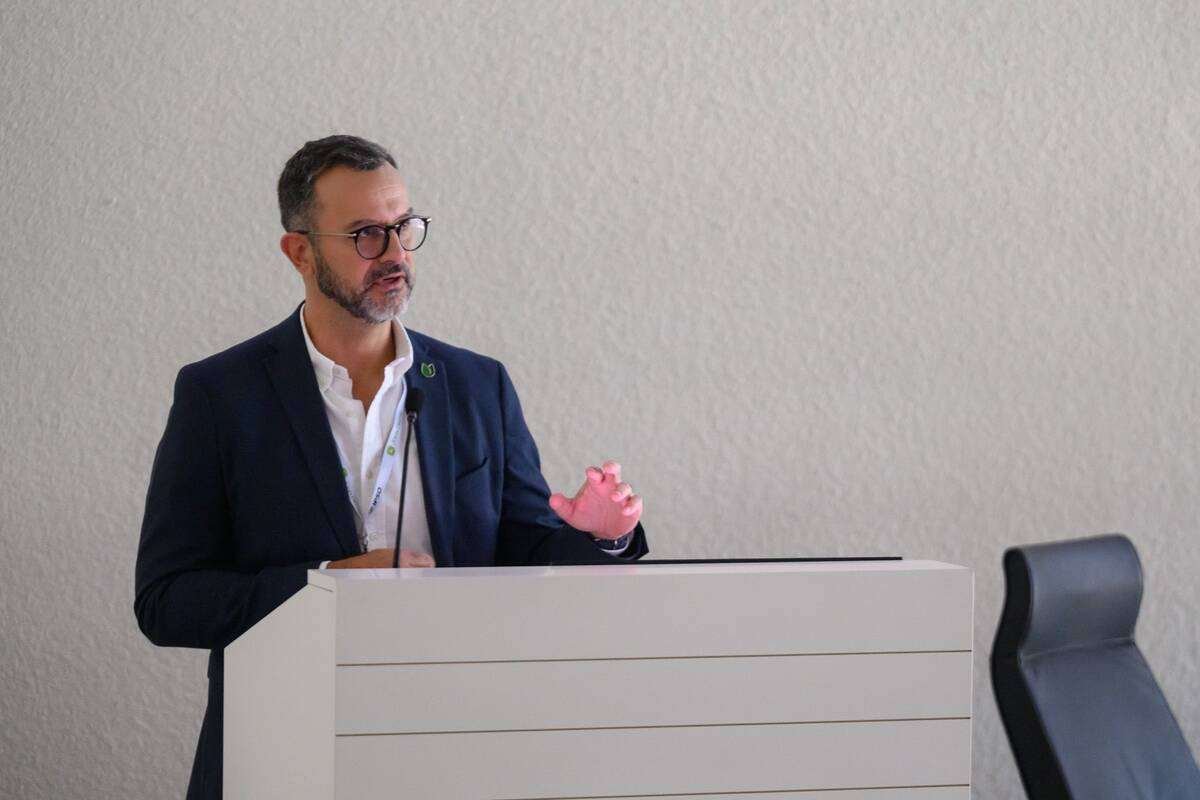
Founder and CEO Matija Žulj told delegates attending the 2026 International Federation of Agricultural Journalists annual congress in Croatia that the company’s focus has remained essentially the same as it has grown: using technology to help agriculture produce food more efficiently.
“We are working on building an AI workforce for agriculture,” Žulj said.
Agrivi began with farm management software, initially focused largely on fruit and vegetable production. Its platform brings agronomic, operational and financial information together so growers can track what is happening in individual fields and what it costs to produce a crop.
One customer is tequila producer Sauza in Mexico, where Agrivi’s software is used across more than 12,000 hectares of agave production to manage field operations, inputs, inventories, budgets and labour.
But technology alone isn’t enough to drive adoption, Žulj said, adding that one of the things his team has learned about working with farmers is that a successful agtech solution must be done in farmers’ own language.
That lesson is shaping Agrivi’s expansion into artificial intelligence. The company launched its AI agronomic advisor in 2023 and now offers AI agents that agricultural businesses and public agencies can customize and make available to farmers through familiar messaging platforms such as WhatsApp. The technology can operate in more than 50 languages.
Žulj said that approach is a way to overcome a common barrier to agtech adoption, particularly on smaller farms, by delivering agricultural advice through familiar messaging apps instead of asking farmers to learn another piece of software.
For seed, fertilizer, crop protection and biostimulant companies, AI agents can extend the reach of sales and technical staff by handling routine farmer questions. The same approach can help food processors communicate with supplying farms and collect information such as anticipated harvest volumes.
Governments are another emerging market. In Barbados, Agrivi has worked with the Barbados Agricultural Development and Marketing Corporation to launch an AI agronomic advisor available to farmers through WhatsApp.
According to Žulj, AI could also help farmers navigate increasingly complex regulations in areas like crop protection, for example, where products come with detailed requirements governing where, when and how they can be used — requirements that can vary between countries.
Despite the rapid development of the technology, Žulj doesn’t see AI primarily as a replacement for agricultural workers.
“We view the AI as a trusted co-worker, not a threat to jobs,” he said, pointing instead to labour shortages and a lack of capacity across agriculture.
Agrivi is already looking beyond software. The company has four humanoid robots in its lab as it explores possible agricultural applications. And while the technology is still largely in the research and pilot stage, he expects its commercial use to increase quickly.
Žulj said agriculture could be particularly well suited to humanoid robots because so much farm infrastructure and equipment has been designed around people — and he sees great potential in filling agriculture’s “3-D jobs” — work that is dull, dangerous or dirty.
The move into humanoid robots is a significant expansion of its original vision of creating farm management software, but Žulj noted the underlying challenge hasn’t changed: finding ways to give agriculture more capacity and get useful technology into farmers’ hands.
Increasingly, he believes, that technology won’t look like another piece of farm software, but rather simply like a conversation.


