
Potato early dying (PED) complex happens when the fungus verticillium dahliae and the root-lesion nematode pratylenchus penetrans act together, lowering potato yields.
“If you’re looking at your field and thinking, what the heck’s going on and you know it’s not fertility, it’s not moisture or topography, but you’re seeing kind of dead patches late in the season. Chances are it’s probably PED.” said Griffin Bailey, Little Potato Company’s regional agronomist for Eastern Canada.
WHY IT MATTERS: PED causes tuber size reduction, resulting in yield losses of 10 to 15 per cent under moderate pressure and 30 to 50 per cent under severe pressure.
Verticillium alone causes leaves to curl and change colour, leading to plant decline. But when the nematode is also present, the problem worsens significantly, Bailey told Ontario Potato Conference attendees in Guelph on March 5.
“The verticillium has to work pretty hard to infect the root on its own. If the nematode is there, feeding and creating an open wound, it’s kind of like opening the door for the verticillium,” he explained. “And infection happens a lot faster, a lot more readily, and the damage can be a lot more severe.”
Infection starts at the root and moves up, with symptoms appearing after flowering, causing the lower leaves to yellow, brown and die. A key indicator is that one side of the leaf, or the whole plant, wilts and browns while the other half remains green and healthy. The plant can also appear to wilt during the day and recover at night, or show flagging, where the plant remains upright despite being dead.
Non-visual symptoms that occur beforehand include reduced photosynthesis and transpiration, and increased leaf surface temperature.
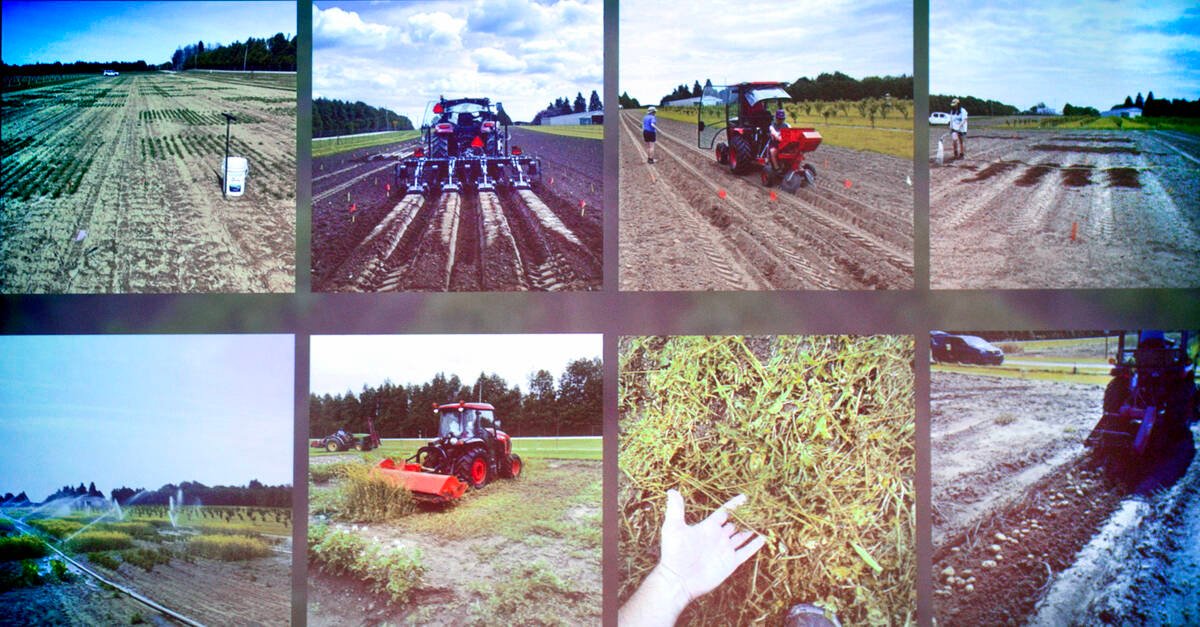
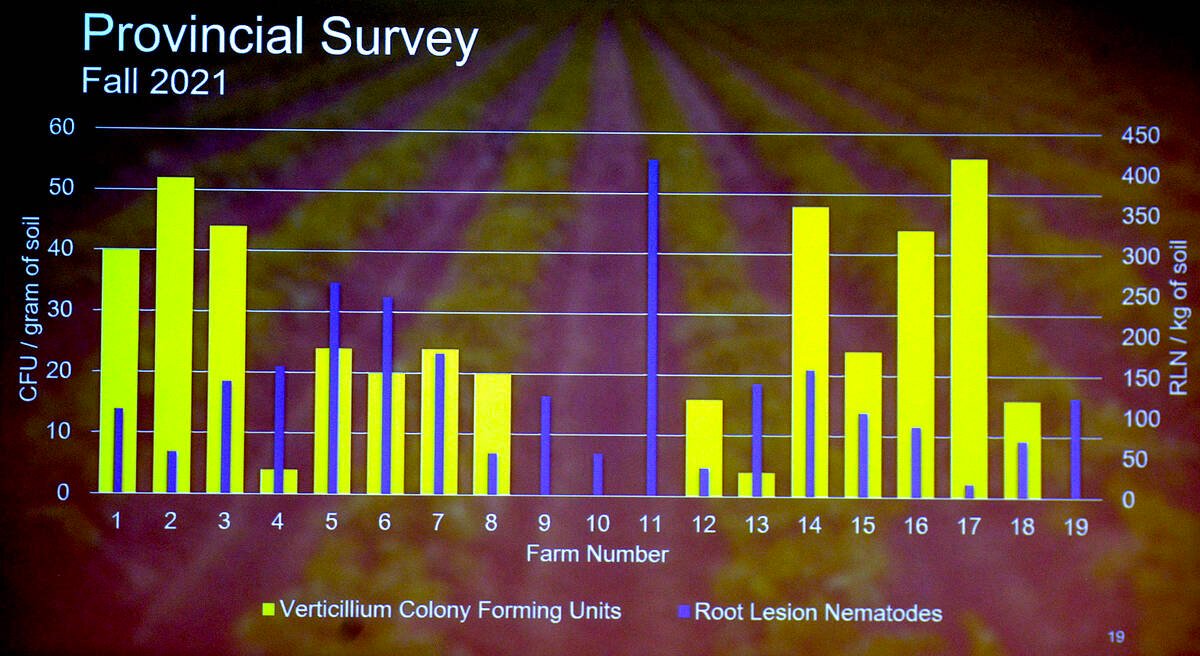
In 2021, Griffin launched a study of Ontario’s potato-producing land, including 19 commercial fields in long-term potato production, to quantify root lesion nematode populations and verticillium soil inoculum pressure by using soil samples. Additionally, a grower questionnaire examined historical management practices — main crops grown, cover crop use, organic amendments, and pesticide use — to assess potential impact.
‘We do need alternatives’
Fortunately, Ontario’s nematode populations aren’t very high; however, several fields are at high risk of PED due to verticillium populations.
Bailey explained the threshold for nematodes to cause damage is over 1,000; if verticillium is present, that threshold drops to one.
In 2022, he focused on four fields due to field variability. He used small plots, about two rows of vines by 10 metres instead of 50 to 100 acres. Even in these small areas, he found significant variability within fields, despite their close proximity and similar management.
“It’s really, really hard to put your finger on what might be happening on your farm. You can sample all day long, every year, and maybe not totally understand the exact level that you have,” Bailey said.
Chemical fumigation for PED is expensive, highly regulated, and kills both good and bad pathogens, providing growers with a costly double-edged sword.
“It’s a good tool to have, certainly, but we do need alternatives,” he explained. “There’s a lot of good research on cover cropping, organic amenities and biochemical options.”
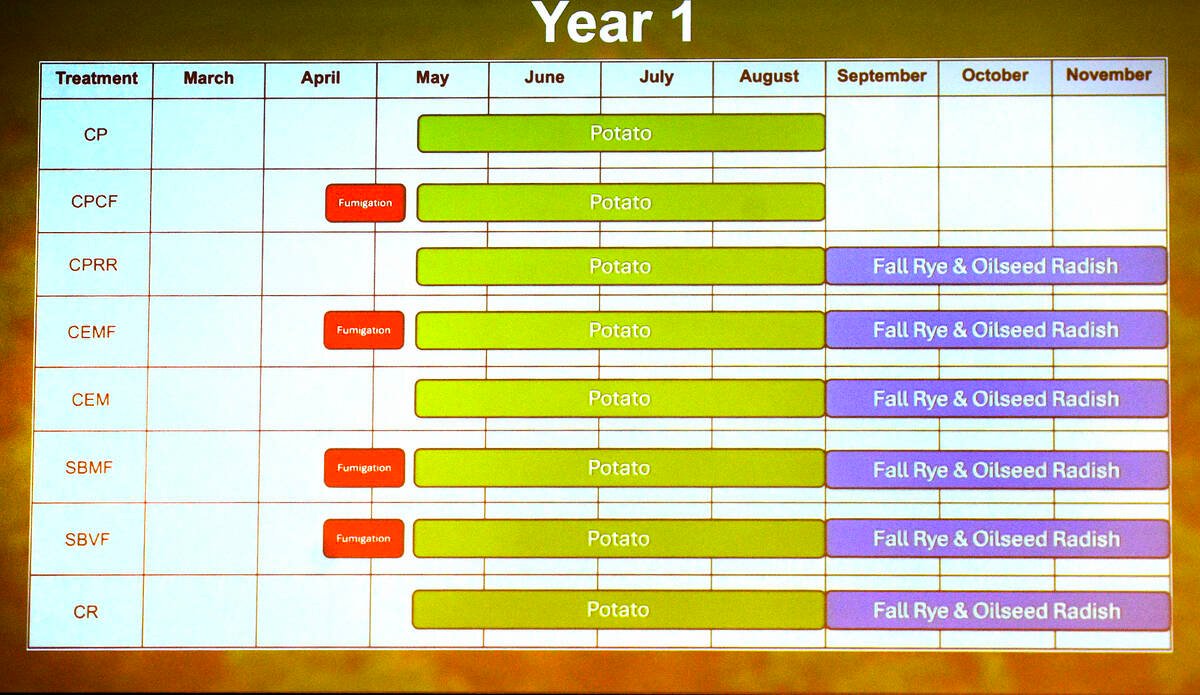
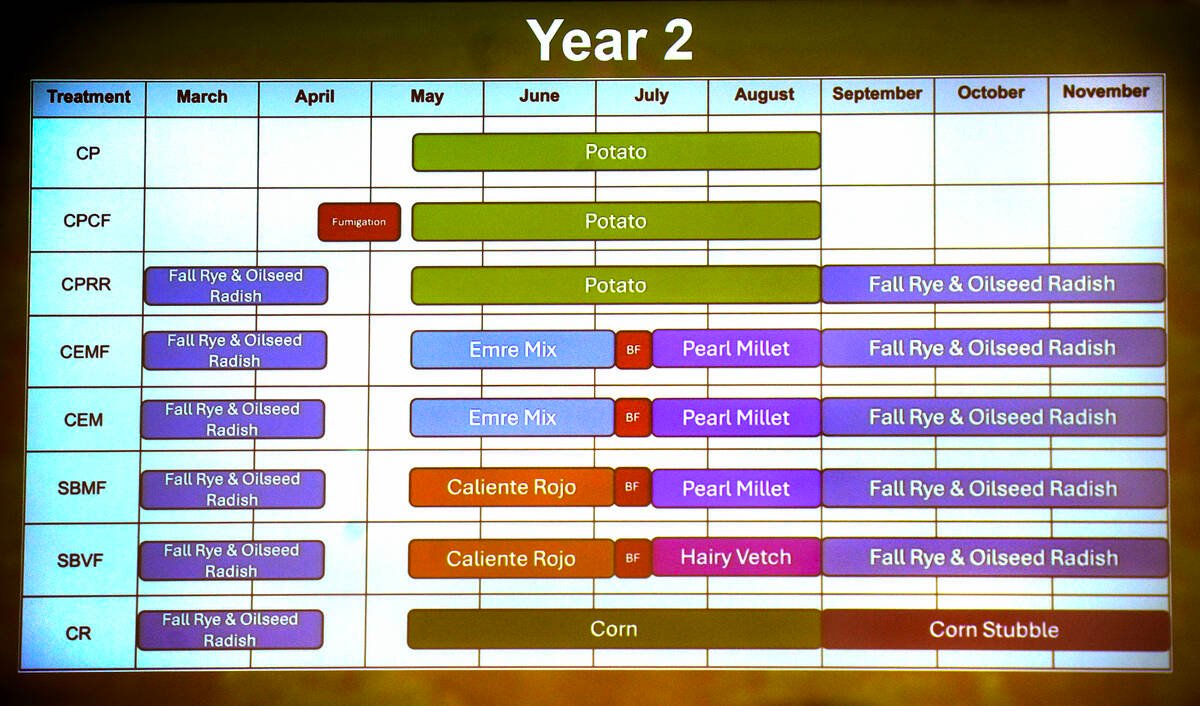
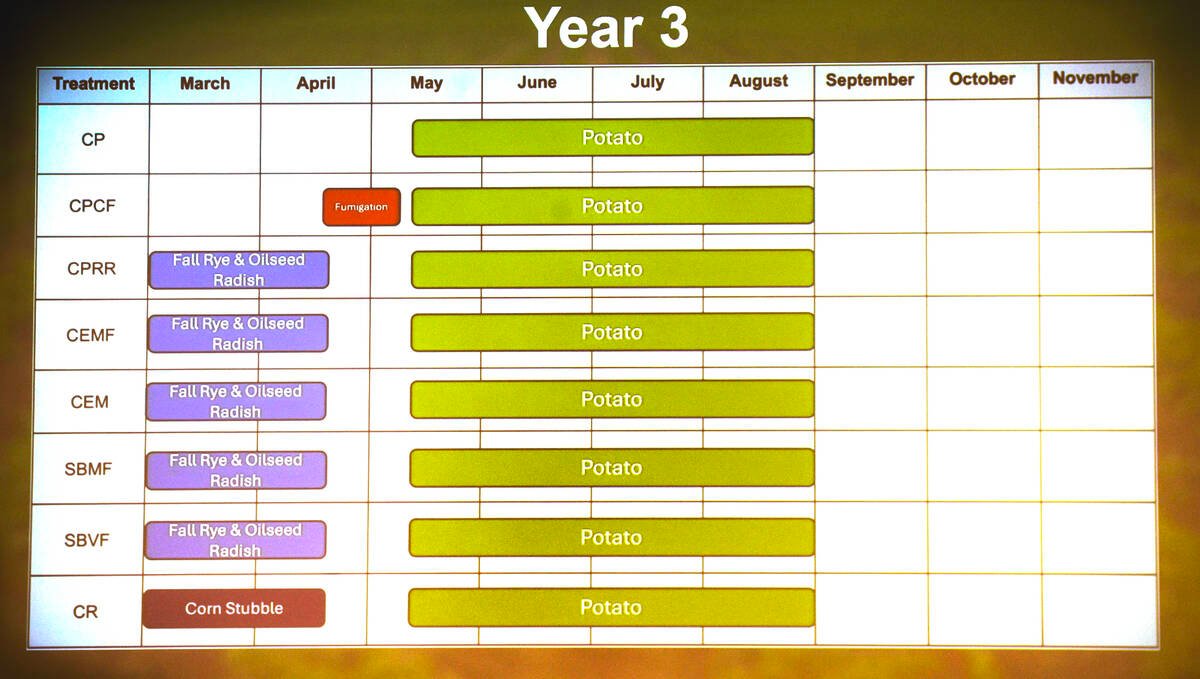
At the Simcoe Research Station in Norfolk County, Bailey ran several trial treatments over three years, testing biofumigants, along with potato trials using grower Chuck Emre’s biofumigant system:
- Continuous potato (CP) — no crop rotation, use of cover crops or fumigant intervention.
- Continuous fumigated potato (CPCF) — no crop rotation or cover crops, plus annual chemical fumigant intervention.
- Continuous potato with rye and oilseed radish (CPRR) — no crop rotation, use of PED-supressing cover crops, no fumigant intervention.
- Charles Emre mix with initial fumigation (CEMF) — Rotation with full-season cover crops (Caliente 199 mustard and arugula, followed by pearl millet), winter cover crops of fall rye and oilseed radish, and biofumigation in the second year, all following an initial chemical fumigation prior to treatment application.
- Charles Emre mix (CEM) — adaptation of CEMF without the initial chemical fumigation prior to the treatment application.
- Soil building with pearl millet (SBFM) — tested soil-building principles following a one-time chemical fumigation by rotating potato with a summer cover crop of pearl millet, use of winter cover crops and biofumigation in the second year.
- Soil building with hairy vetch (SBVF) — tested soil building principles following a one-time chemical fumigation by rotating potato with a summer cover crop of hairy vetch, use of winter cover crops and biofumigation in the second year.
- Corn rotation (CR) — conventional rotation, potato being rotated with field corn and use of winter cover crop.
Soil samples were collected each spring and fall, and each plot was irrigated and used the Superior potato variety.
Bailey reported in 2021, before the trials began, verticillium numbers were “pretty low” but jumped across all treatments after potatoes were planted.
He noted that verticillium inoculum was reduced and potato yields increased following the initial chloropicrin application; however, repeated applications provided no benefit.
“Our numbers kind of went up and went down as the season went on, but none of our treatments made any difference after that first year,” he said.
Given that it was virgin potato land, the first year of fumigation caused a “fertilizer effect,” with a yield boost, a higher proportion of larger potatoes, and a lower proportion of smaller potatoes. However, there was no discernible benefit from fumigation or cover crop on yield in the second year.
Improved soil health helps
In the third year, potato yields were slightly higher with the Charles Emre mix and soil-building methods, indicating that improving soil health worked as well as, or better than, other methods for managing PED and supporting higher yields.
Bailey joked that if someone wanted a difficult career, studying nematodes was a good choice, since root-lesion nematode populations were not influenced by the agronomic practices tested in the study.
“I will say that the (nematode) numbers are quite low, so maybe under severe population, you might see a little bit more of a difference,” he said.
The 2023 season was conducive to PED, with signs beginning in the first week of July and reaching severe pressure by the end of August.
“We had a pretty wet spring with a lot of moisture, and then a very hot, dry setting,” he explained. “Those are perfect conditions for PED.”
By the end of the trial, a significant difference in disease severity emerged, with continuous potato showing higher severity than the Charles Emre mix and soil-building treatments.
“Just rotating your crops, extending the rotation length, is a really good way to manage this disease in the long term,” Bailey said.
When testing the soil fungal-bacterial ratio (fungal DNA relative to bacterial DNA), Bailey found it was higher in crop-diverse treatments than in continuous potato treatments. Treatments with the highest disease severity had the lowest ratio, suggesting that soil health can directly improve crop resilience to stress and disease.
The post Crop rotation, soil-building offer resilience against potato early dying appeared first on Farmtario.


