

It took a cheating scandal in the trucking industry for the Environmental Protection Agency (EPA) to finalize rules dramatically reducing the emissions from new heavy-duty trucks. In the two decades since those regulations have phased in, particulate matter (soot) pollution and smog-forming emissions of nitrogen oxides (NOx) from the trucks meeting those requirements have significantly reduced diesel truck emissions, a critical step to cleaning up the air we all breathe.
Now, as the next phase of tailpipe regulations of truck engines is set to go into effect, the technology enabling these emissions reductions is being attacked by both the Trump EPA and Congress. These proposals attack the ability to set regulations and enforce them to ensure emissions reductions in the lab result in emissions reductions in the real world. And it comes as the result of heavy lobbying by special interest groups including Big Ag, drivers through organizations like the Owner-Operator and Independent Driver Association (OOIDA) and the American Bus Association, trucking fleets, and truck manufacturers.
Diesel emissions control systems are incredibly efficient, cutting emissions by 90 percent or more, so anything that undermines that technology can result in emissions increases of 10X or more. Below I walk through how these controls have been so successful and the attacks that could completely obliterate any reductions in emissions made to date by the trucking sector.
How cleaner trucks cut soot pollution
In response to EPA regulations, new trucks deployed aftertreatment systems to significantly reduce the pollution resulting from diesel combustion. These systems are called “aftertreatment” because rather than reducing emissions within the engine (say, through more efficient combustion), they are deployed downstream of the engine and work to reduce the component materials of the exhaust itself.
Beginning with the 2007 model year, new diesel trucks meeting strong particulate matter (PM) standards began to deploy diesel particulate filters (DPFs), which do exactly what is said: filter particulate matter from diesel exhaust. DPFs cut particulate matter from diesel trucks by over 90 percent, critical emissions reductions given the negative impacts of soot on health and the carcinogenic nature of diesel particulate.
How cleaner trucks cut smog-forming NOx pollution
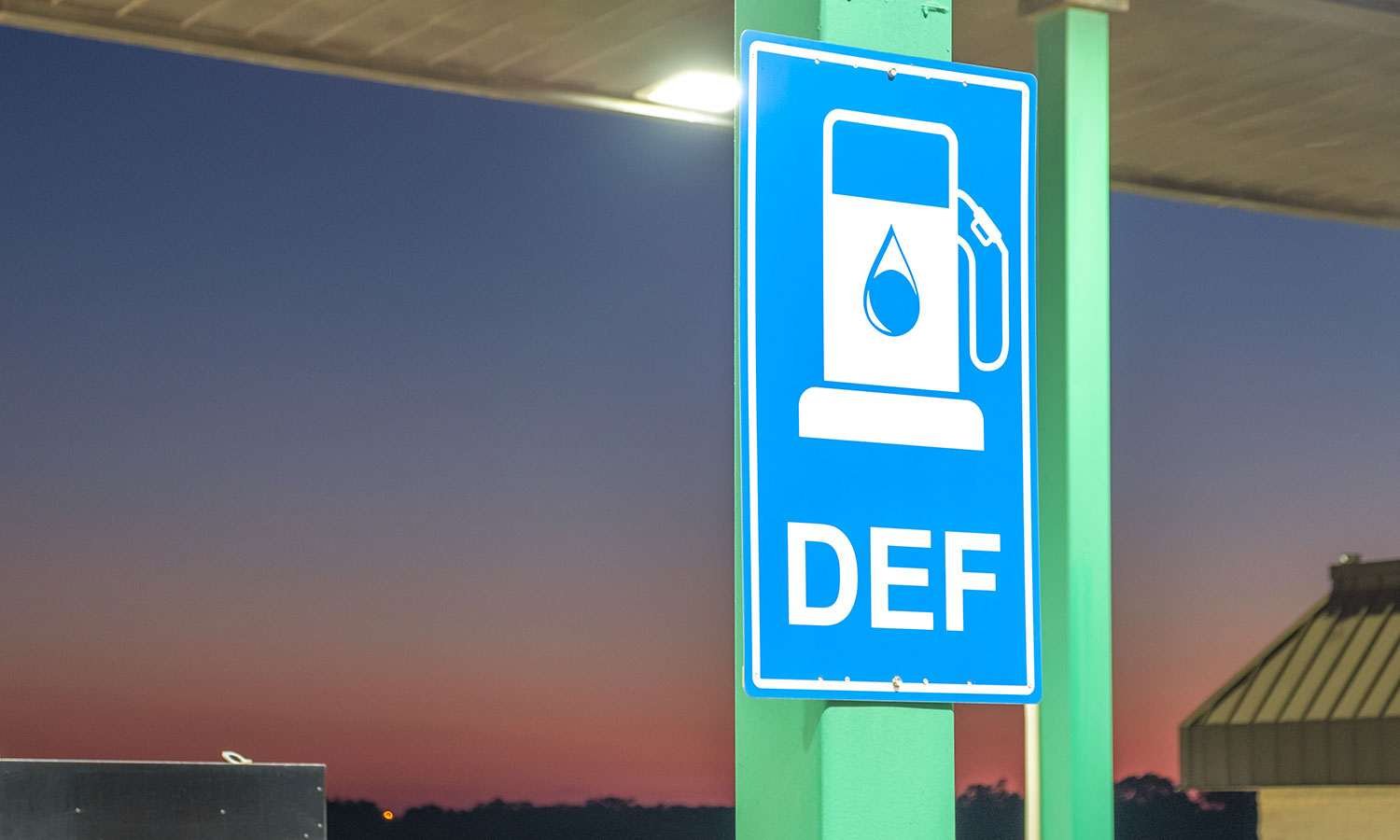
In addition to cutting particulate matter, since 2010 EPA standards have resulted in trucks deploying selective catalytic reduction (SCR) systems to cut smog-forming NOx pollution. SCR systems inject diesel exhaust fluid (DEF) into the diesel engine exhaust. Under high heat the urea-based DEF turns into ammonia vapor that reacts within the SCR system to neutralize the NOx pollution from the engine, forming nitrogen gas and water.
Because the SCR system is an aftertreatment system, the efficiency of the catalyst is critical to cutting NOx pollution. Modern diesel engines typically emit between 3 and 4 grams of NOx per brake-horsepower-hour (bhp-hr is a measure of work); with aftertreatment, trucks already on the road today can cut that to below 0.2 g NOx/bhp-hr, and engine manufacturers are responding to next year’s standards to drop that even further to 0.035 g/bhp-hr.
However, anything that impairs the efficiency of the SCR system has a dramatic impact on the total emissions from the truck. For example, real world measurements of pollution from 2010-compliant trucks turned out to be much higher than anticipated under the types of low-speed operation near ports and warehouses because those older SCR systems were running too cold to be maximally effective.
A number of actions the Trump administration and Congress are seeking to make SCR systems even less effective, or even non-existent, increasing NOx emissions nationwide and threatening public health.
How regulators incentivize compliance with emissions regulations
The trucking industry has a long history of opposing attempts to clean up the sector. In fact, in response to EPA’s regulation, a cottage industry developed around Class 8 trucks to sell new truck bodies with old truck engines, a pollution loophole resulting from a number of truckers wanting to avoid emissions control systems. There’s also been widespread tampering with diesel engines, illegal activity which the Trump administration and Congress are now trying to absolve.
Since the pollution from a truck is dependent upon those emissions controls acting properly, it is critical that any failure in the emissions control system is dealt with ASAP. Emissions from a post-2010 truck with a faulty SCR system has about 10 times the pollution impact of a truck with a working SCR system—a small number of faulty trucks and/or a small number of miles driven under sub-optimal conditions can add up to big harms quickly.
In order to ensure that truckers handle any failures to the emissions control systems quickly, EPA uses so-called “inducements” that affect the truck’s operation to encourage drivers to fix the issue immediately. Upon detection of a fault, the truck will notify the driver, typically with both a “check engine” light on the dash and an accompanying auditory notification. After this condition exists for a certain period of time/distance traveled, if the issue has not yet been dealt with the next step is what is called a derate—the engine’s power/torque will be throttled, e.g., to 50 percent of maximum power. After this phase is triggered, the inducement cycle will then look for a safe harbor to institute a final limitation—upon parking, for example, the vehicle will be limited to low-speed operation only, e.g., 5 mph.
The goal of the inducement is to be severe enough to push the driver to proceed to the nearest service center to handle any fault while providing enough latitude to do so, with the vehicle typically capable of traveling a couple hundred miles before the final level of inducement. These inducements were set by EPA via industry guidance after both an industry workshop and notice-and-comment process where the trucking industry and manufacturers all weighed in.
Trump EPA attacks emissions controls through guidances and rulemaking
Truckers do not like the fact that inducements affect operability of the vehicle, a major reason for the existence of the highly polluting glider trucks noted earlier. As a result, they’ve lobbied both Congress and EPA to eliminate any inducements. And, unfortunately, some policymakers have followed through on that request.
While issues with premature failure of Diesel Exhaust Fluid (DEF) sensors have led to some disruptive derates, this is a problem solved with the redundancy of the emissions control systems as well as stronger warranty provisions set to go into effect next year. Yet industry has instead shown its true colors by pushing for total elimination of ties between vehicle performance and the emissions controls limiting pollution from those vehicles.
First, EPA blew wide open the window for the inducements—rather than a couple hundred miles, trucks could now travel thousands of highly polluting miles with little repercussion, a loophole some in Congress have sought to enshrine in law through the “Diesel Engine Flexibility Act” or the “DEF Act”, along with a 10-year freeze even as new standards go into effect next year. Under this guidance, a single emissions control failure could emit as much pollution as the truck would emit over the course of an entire year before the final “limp mode” derate took effect.
But even worse, now EPA is threatening to do away with inducements altogether in a newly proposed rule, replacing them with a mere “check engine” light and auditory warning, something which is already required and has repeatedly been ignored by truckers (or they would not experience deratement). Surveys of car drivers show that up to half drive with a “check engine” light for up to 18 months to delay repair costs—given that we know truckers routinely ignore emissions-related notifications until deratement and have even more pointed concerns around cost, there is no reason to expect the share of truckers responding to these notifications to be any higher. And yet the costs of such failure would be devastating.
If just 1 percent of trucks operate without a fully functioning SCR system, they could generate roughly as much emissions as the remaining 99 percent.
As noted earlier, the NOx emissions of a Class 8 engine are around 3 or 4 g/bhp-hr, about 100 times the required average certification level for 2027 and newer engines. If just 1 percent of trucks operate without a fully functioning SCR system, they could generate roughly as much emissions as the remaining 99 percent. If just 6 percent of truckers ignore the proposed “check engine” light, the rule could be no more effective than the current 2010-era standards. And yet the survey data suggests 6 percent may be a gross underestimate of the size of this problem.
Of course, the only thing worse than not having inducements to keep emissions controls operating properly is to not have strong emissions controls in the first place. But EPA is proposing to allow manufacturers to buy their way out of compliance with the standards through “non-compliance penalties”—and manufacturers are jumping at the chance. Major engine manufacturers like Cummins and PACCAR have already said that they’re going to pay up to continue selling older, more polluting engines even though they already have engines that meet the next set of standards.
Emissions controls are necessary to reduce public harm from trucking
A new tractor-trailer engine will be on the road for about 1 million miles. EPA is proposing to cut the warranty requirements of the engine (and therefore the warranty requirements of the emissions controls) down to just 100,000 miles. That means for roughly 90 percent of the time that engine is on the road, truckers will bear the cost of the emissions control system’s upkeep rather than truck manufacturers. And the public will bear the cost of any failure for truckers to do so.
Diesel engines are the largest manmade source of NOx emissions in the United States, and diesel trucks represent about half of those emissions. According to EPA’s COBRA model, from this NOx pollution alone, trucks are estimated to cause between 3,600 and 4,700 premature deaths every year, along with 21,000 new cases of asthma and 1.8 million lost days of work or school. This amounts to between $58 and $75 billion in health-related costs to the country.
The trucking industry is built on externalizing these costs, subsidized by the health impacts borne disproportionately by the low-income communities and communities of color who see greater levels of truck traffic. EPA regulations are meant to shift those costs, reducing health burdens through emissions controls that reduce pollution, paid for by the emitting industry. And history has shown that these and other Clean Air Act regulations are not just effective but a tremendous bargain!
EPA and Congress are now seeking to break that social contract, putting public health in the hands of an industry that has shown repeatedly it doesn’t care about its impacts. Not only must EPA set the strongest possible emissions standards, but it must also ensure that any emissions controls are operating as intended for the entire lifetime of the vehicles in which they are deployed. And that means we need strong inducements to hold industry accountable for its harms. After all, their strong lobbying effort to pollute more freely has shown they’re not going to do it of their own free will.


