
A messy drawer has a sneaky way of turning even the most beautiful home into a stressful space. It starts small, a tangled mess of utensils, scattered papers, or mismatched socks, and suddenly, finding anything feels like a daily battle. But here’s the good news: drawer organization doesn’t have to be complicated or overwhelming. With the right ideas, even the most chaotic drawers can become calm, functional, and satisfying to use.
This guide dives deep into 15 powerful drawer organization ideas designed to simplify life, reduce clutter, and bring a sense of order back into every corner of your home. Each idea is easy to follow, beginner-friendly, and designed to create a lasting impact. And just when it seems like things couldn’t get any better… there’s always one more clever trick waiting ahead.
Use Adjustable Drawer Dividers for Flexible Organization
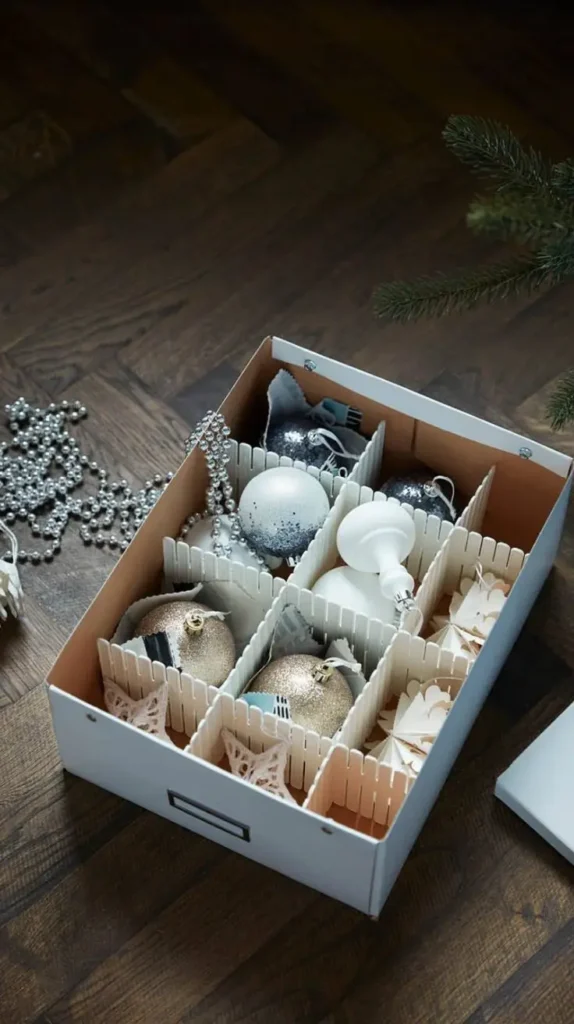
Adjustable drawer dividers are one of the smartest ways to create a system that evolves with changing needs. Instead of dealing with fixed compartments that may not fit everything properly, these dividers allow spaces to be resized, reshaped, and rearranged whenever needed.
This flexibility makes them incredibly useful across different areas of the home. In kitchen drawers, they can neatly separate utensils, spatulas, and measuring tools. In office drawers, they can hold pens, chargers, sticky notes, and small gadgets without creating clutter. Even in bedroom drawers, they help organize accessories, socks, or undergarments in a way that feels intentional and clean.
Another major advantage is how they prevent overcrowding. When each item has its own defined space, it naturally limits how much can be stored, reducing unnecessary accumulation. This leads to a cleaner, more breathable layout.
Over time, this system becomes intuitive. Items are easier to find, quicker to put away, and less likely to get mixed up. And once this level of clarity is achieved, it becomes surprisingly addictive, because suddenly, every drawer starts to feel like it deserves the same transformation.
Declutter Before Organizing for Better Results
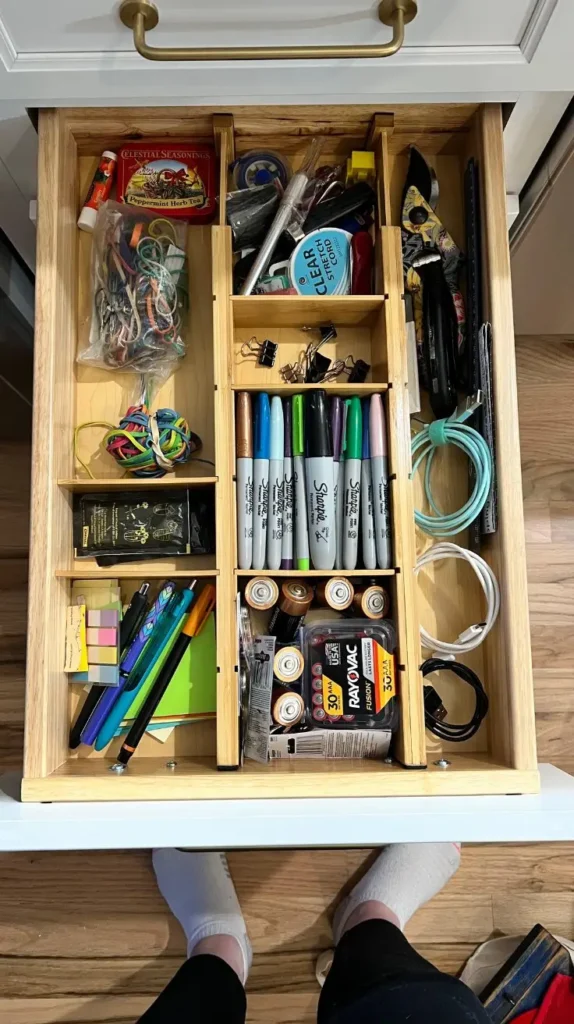
No drawer organization method will ever succeed without decluttering first. This step is often skipped, but it is the foundation of every effective system. Without removing unnecessary items, even the best organizers will simply hide the mess instead of solving it.
Start by emptying the entire drawer. Yes, everything. This allows a clear view of what is actually being stored. Most people are surprised to discover duplicates, broken items, or things they haven’t used in months or even years.
Next comes decision-making. Items should be sorted into keep, donate, or discard categories. This process might feel slow at first, but it creates instant relief. Removing excess items frees up space and makes organization easier.
Decluttering also helps define priorities. It reveals what truly needs to be accessible and what doesn’t belong in the drawer at all. This clarity leads to smarter storage choices and a more efficient layout. Once the drawer is cleared and cleaned, something interesting happens—it feels lighter. That fresh start creates momentum, making the next steps not just easier, but far more satisfying.
Categorize Items to Create Logical Zones
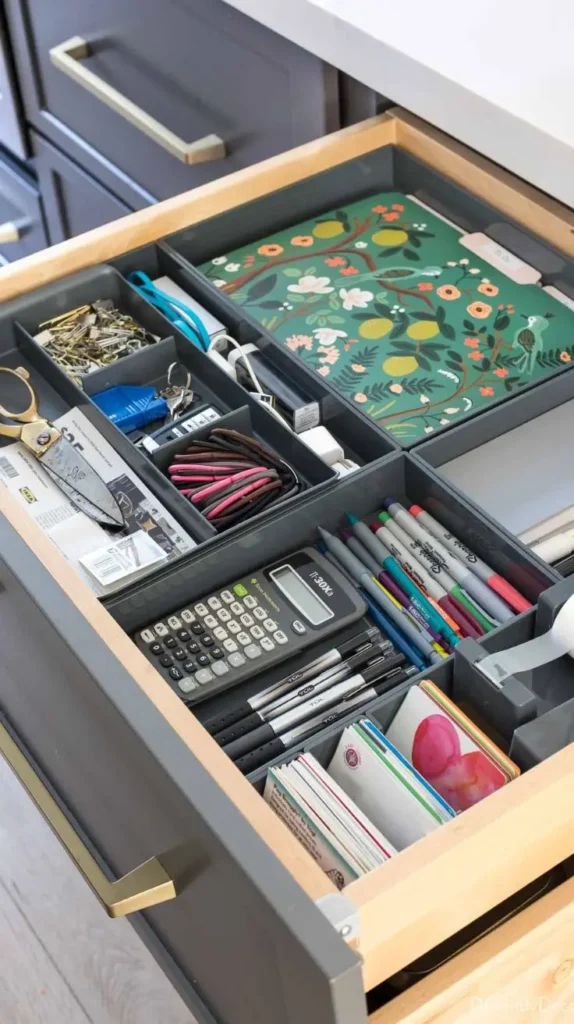
Categorizing items is where drawer organization begins to feel truly structured. Instead of placing items randomly, grouping similar things creates logical zones that make everyday life smoother and more predictable.
Think about how frustrating it is to search for something in a cluttered drawer. Now compare that to opening a drawer where everything has a clear category. Utensils are grouped together, stationery is separated neatly, and personal items are arranged in defined sections. The difference is immediate.
This method works because it mirrors how the brain naturally processes information. When items are grouped logically, it becomes easier to remember where things are stored. This reduces search time and eliminates unnecessary stress.
Categorization also supports long-term organization. When new items are added, it’s obvious where they belong. This prevents the system from breaking down over time. And here’s the surprising part: once categories are established, maintaining order becomes effortless. It’s no longer about constant cleaning, but about simple habits that keep everything in place.
Use Clear Storage Bins for Easy Visibility
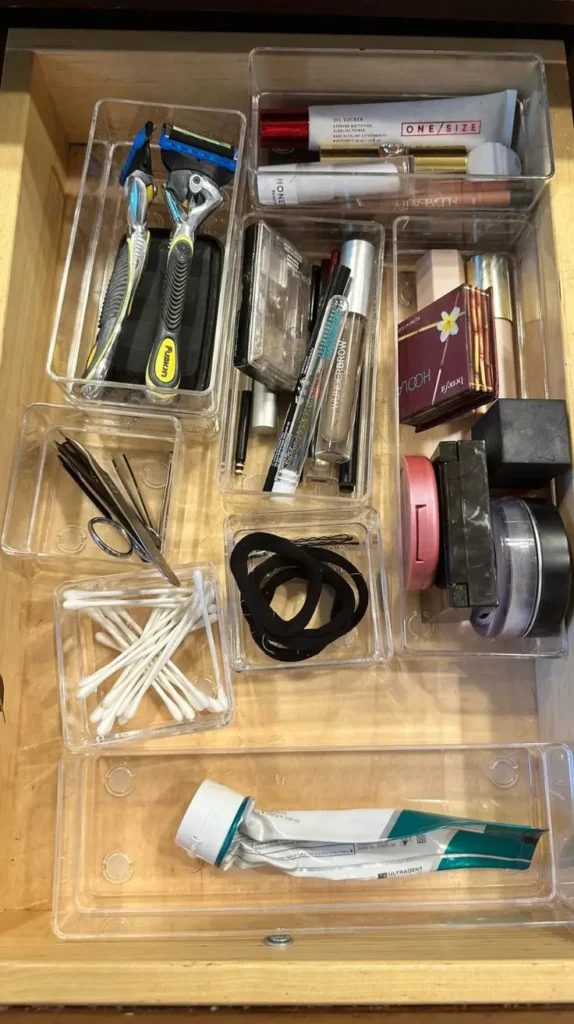
Clear storage bins bring a powerful advantage to drawer organization: visibility. Being able to see exactly what is inside a container without opening it saves time and reduces frustration.
This is especially helpful for drawers that hold small or frequently used items. Office supplies, beauty products, kitchen tools, or craft materials can quickly turn into a mess if not contained properly. Clear bins keep everything grouped while still allowing easy identification.
Another benefit is accountability. When items are visible, it becomes easier to notice when something is out of place. This encourages quick corrections and helps maintain organization without much effort.
Clear bins also create a clean, uniform look. Even if the items inside vary in shape and size, the overall appearance remains neat and cohesive. This adds a sense of order that goes beyond functionality; it actually makes the drawer feel more pleasant to use.
And once visibility improves, something shifts. The need to dig, search, and reorganize constantly starts to disappear.
Maximize Space with Layered Drawer Inserts

Layered drawer inserts completely change how storage space is used, especially in deeper drawers where a lot of vertical room often goes to waste. Instead of piling items on top of each other and creating hidden clutter, these inserts introduce multiple levels that separate and organize items in a structured way. This instantly makes drawers feel more spacious and manageable.
For example, in a kitchen drawer, the top layer can hold frequently used utensils, while the bottom layer can store less-used tools like baking accessories or specialty gadgets. In a jewelry drawer, one layer can neatly organize rings and earrings, while another keeps necklaces from tangling. This method not only saves space but also protects delicate items.
Another key benefit is accessibility. With layered inserts, there’s no need to dig through piles to find something. Each level is easy to lift or slide, giving quick access to everything inside. This reduces frustration and keeps the organizational system intact for longer periods.
Once this system is in place, drawers no longer feel cramped or chaotic. Instead, they become thoughtfully designed spaces that support daily routines with ease and efficiency.
Add Non-Slip Drawer Liners for Stability
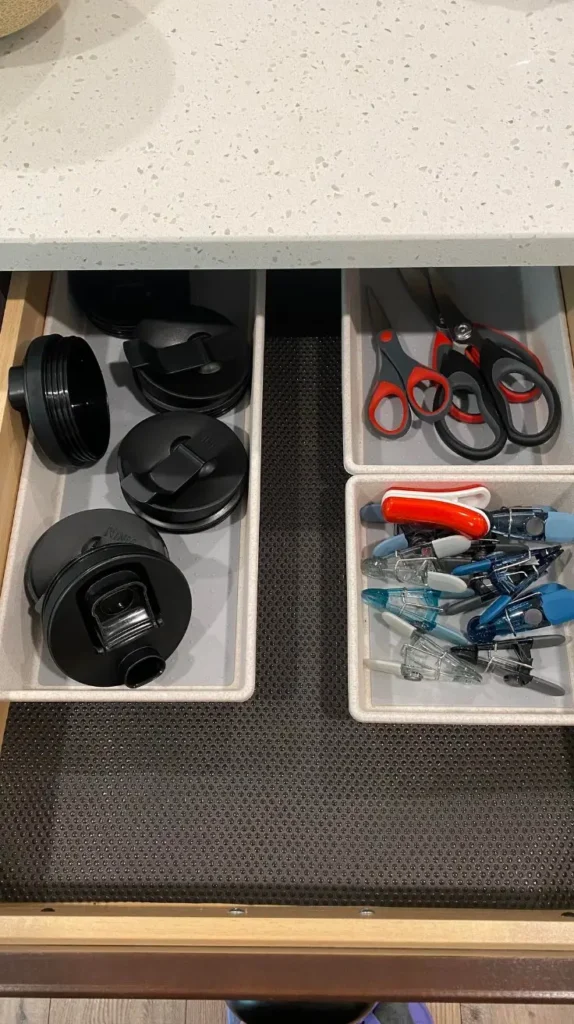
Non-slip drawer liners might seem like a small addition, but they play a surprisingly powerful role in maintaining long-term organization. Without them, even the most carefully arranged drawers can quickly fall apart as items shift and slide every time the drawer is opened or closed.
These liners create a stable surface that holds items in place. In kitchen drawers, this means utensils stay neatly arranged instead of clattering together. In office drawers, it prevents small items like paper clips or chargers from drifting out of their sections. This stability preserves the effort put into organizing and reduces the need for constant adjustments.
Beyond functionality, non-slip liners also protect the interior of drawers. They act as a barrier against scratches, spills, and general wear and tear, helping drawers stay clean and durable over time. This is especially important for wooden or delicate drawer surfaces.
They also contribute to the overall look and feel of the drawer. With different textures and designs available, liners can add a subtle aesthetic touch that makes the space feel more polished. Once installed, everything feels more secure, and that sense of order lasts much longer than expected.
Use Vertical Storage to Save Space
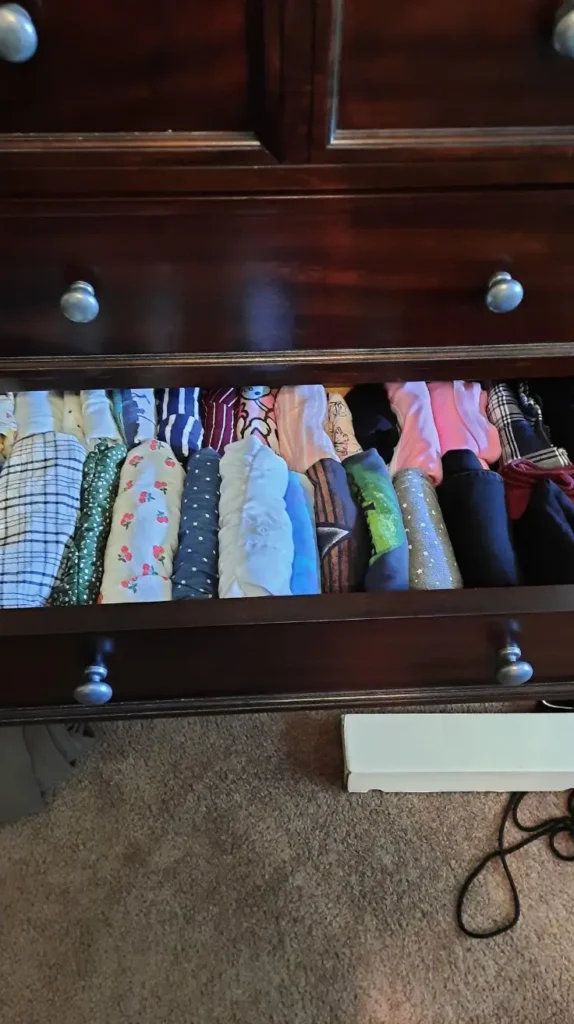
Vertical storage is one of the most effective yet overlooked techniques for improving drawer organization. Instead of stacking items horizontally, which often leads to hidden clutter and difficult access, vertical storage allows items to stand upright, making everything visible at a glance.
This method is especially useful for clothing drawers. Folding shirts, pants, or towels vertically creates neat rows where each item can be seen without disturbing the others. This eliminates the need to dig through stacks, which often leads to mess and frustration. It also helps maintain the condition of fabrics by reducing wrinkles and creases.
Vertical storage works well beyond clothing, too. In office drawers, notebooks, files, and folders can be stored upright for easy access. In kitchen drawers, cutting boards, lids, or trays can be arranged vertically to save space and improve visibility.
What makes this technique so powerful is its simplicity. It doesn’t require expensive tools or complicated systems, just a different way of thinking about space. Once implemented, drawers feel more open, organized, and efficient, making everyday tasks smoother and less stressful.
Label Sections for Consistent Organization
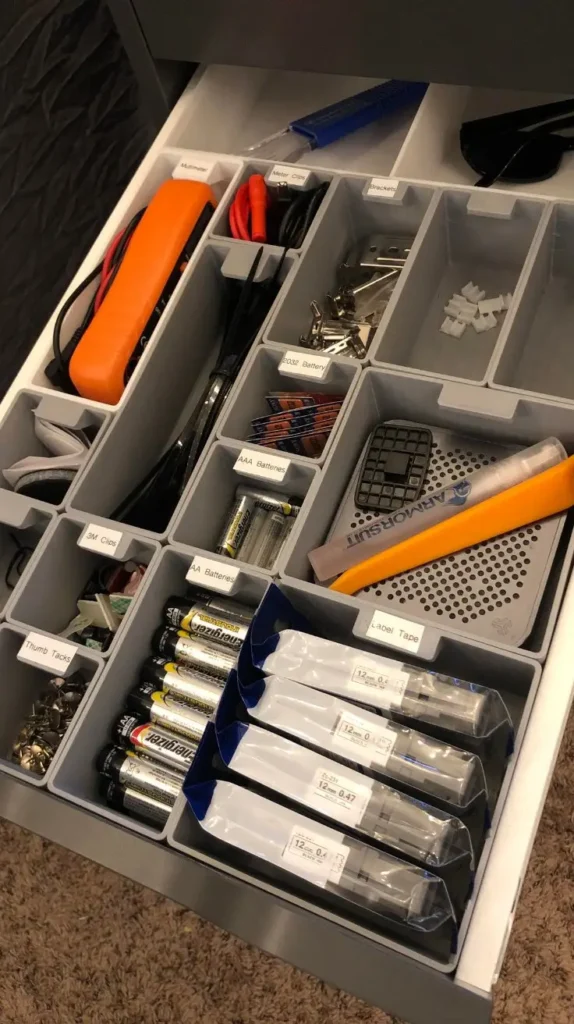
Labeling is a simple but highly effective strategy that brings clarity and consistency to drawer organization. When each section of a drawer is clearly labeled, it removes any guesswork about where items belong. This makes it easier to maintain order over time, especially in busy or shared spaces.
In households where multiple people use the same drawers, labels act as a silent guide. They help everyone follow the same system, reducing confusion and preventing items from being placed randomly. This is particularly helpful in kitchen drawers, office spaces, or family storage areas.
Labels also encourage accountability. When a section is clearly marked, it becomes obvious when something is out of place. This makes it easier to fix small issues before they turn into bigger messes. Over time, this habit keeps drawers consistently organized with minimal effort.
Another advantage is customization. Labels can be as simple or decorative as desired, matching the style of the space while still serving a practical purpose. Once labeling becomes part of the system, the organization feels more structured, and maintaining it becomes almost effortless.
Store Frequently Used Items in Easy Reach
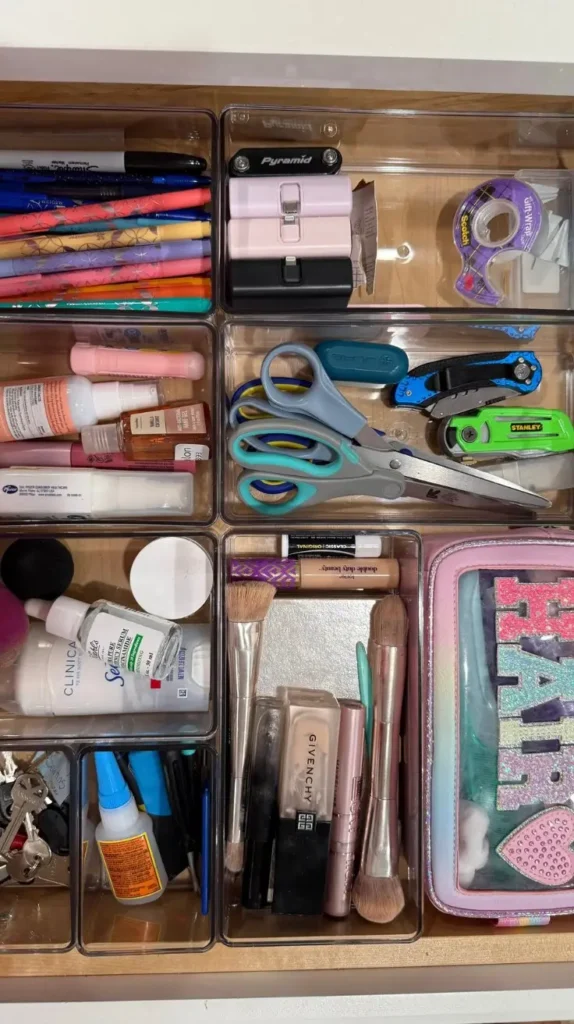
A well-organized drawer is not just about neatness; it’s about functionality. One of the most important principles of effective drawer organization is placing frequently used items within easy reach. This small adjustment can significantly improve daily routines and reduce unnecessary effort.
When commonly used items are placed at the front or in the most accessible sections, it eliminates the need to search or move other items around. In a kitchen drawer, everyday utensils should be positioned so that they can be easily grabbed. In a desk drawer, essential tools like pens, chargers, or notebooks should be immediately accessible.
This approach also helps maintain order. When items are easy to access, there is less disruption to the rest of the drawer. This means the overall organization stays intact for longer periods. It also reduces frustration, making daily tasks smoother and more efficient.
Over time, this setup becomes intuitive. Reaching for items feels natural, and putting them back becomes just as easy. This balance between convenience and organization creates a system that not only looks good but also works seamlessly in everyday life.
Use Small Containers for Tiny Items
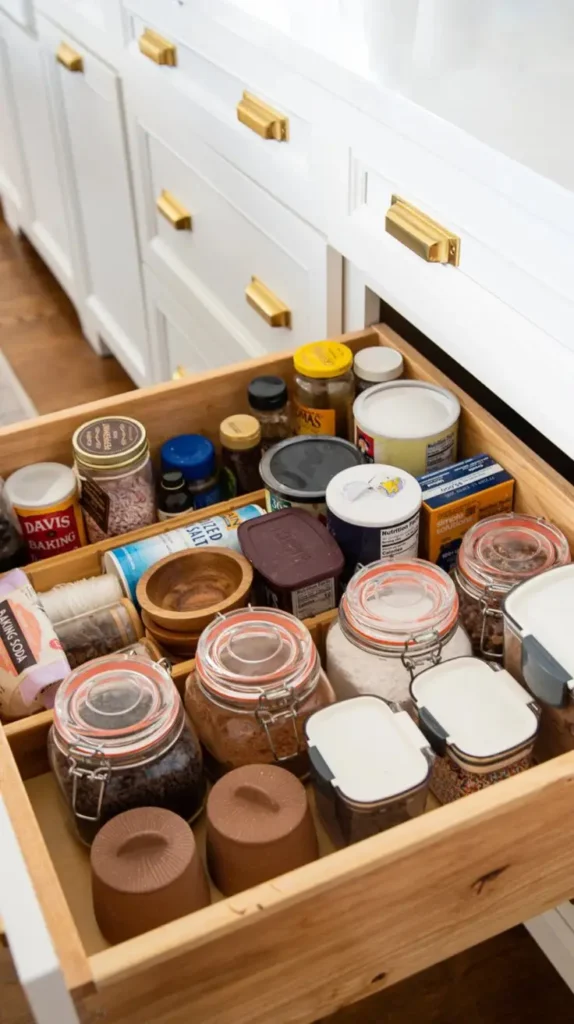
Tiny items may seem harmless at first, but they are often the biggest reason drawers become messy so quickly. Without proper storage, small objects like paper clips, hair ties, rubber bands, screws, batteries, or spice packets tend to scatter across the drawer, creating visual clutter and making it difficult to find anything when needed. This is where small containers become incredibly useful.
Using small containers creates clear boundaries for these tiny items. Instead of letting them mix together or get lost under larger objects, each category gets its own dedicated space. This not only improves visibility but also saves time during daily routines. For example, in a desk drawer, one container can hold clips while another stores USB drives or chargers. In a kitchen, small bins can separate spices, seasoning packets, or measuring tools.
Another advantage is flexibility. These containers can easily be rearranged, replaced, or resized depending on changing needs. They also fit well into almost any drawer layout, making them a practical solution for beginners. Once tiny items are contained properly, the entire drawer instantly feels more controlled, cleaner, and much easier to maintain over time.
Clean Drawers Regularly to Maintain Order
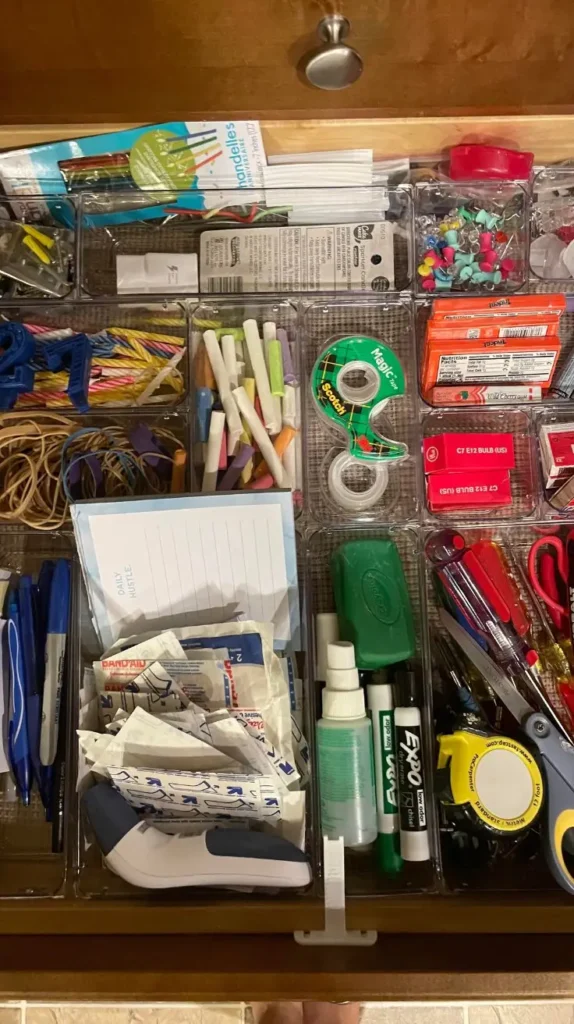
Drawer organization is not something that stays perfect forever; it requires consistent care to remain effective. Regular cleaning plays a major role in maintaining order and preventing clutter from slowly creeping back in. Without this step, even the most beautifully organized drawer can eventually return to chaos.
Over time, drawers collect dust, crumbs, and random items that don’t belong there. These small build-ups may not seem noticeable at first, but they gradually affect both cleanliness and functionality. Setting a routine to clean drawers every few weeks helps prevent this problem. The process doesn’t need to be complicated. Simply remove everything, wipe down the interior, and place back only the items that are still useful.
This habit also creates an opportunity to reassess what is being stored. Items that are no longer needed can be removed, making more space for essentials. It keeps the drawer from becoming overcrowded and ensures it stays practical.
Consistency is what makes this step powerful. With regular maintenance, organization becomes easier to manage, and drawers continue to feel fresh, neat, and stress-free without requiring major effort each time.
Use Drawer Organizers for Specific Purposes

Drawer organizers designed for specific purposes bring a level of precision and efficiency that general storage solutions often lack. These organizers are created to fit particular items, which means they provide compartments that match the size and shape of what needs to be stored. This makes the organization not only easier but also far more effective.
For example, a cutlery organizer separates forks, knives, and spoons into individual sections, preventing them from mixing together. A makeup organizer can hold brushes, lipsticks, and palettes in a structured way, making daily routines faster and more enjoyable. Tool organizers also help keep equipment in place, reducing clutter and improving accessibility.
One of the biggest benefits of using these specialized organizers is that they eliminate guesswork. Every item has a clear place, which reduces the chances of clutter building up again. It also encourages consistency, as it becomes obvious where things should be returned after use.
Additionally, these organizers improve the overall look of the drawer. Everything appears neat, balanced, and intentional. Over time, this structured approach makes the organization feel effortless and keeps drawers functioning at their best.
Use Color Coordination for Visual Appeal
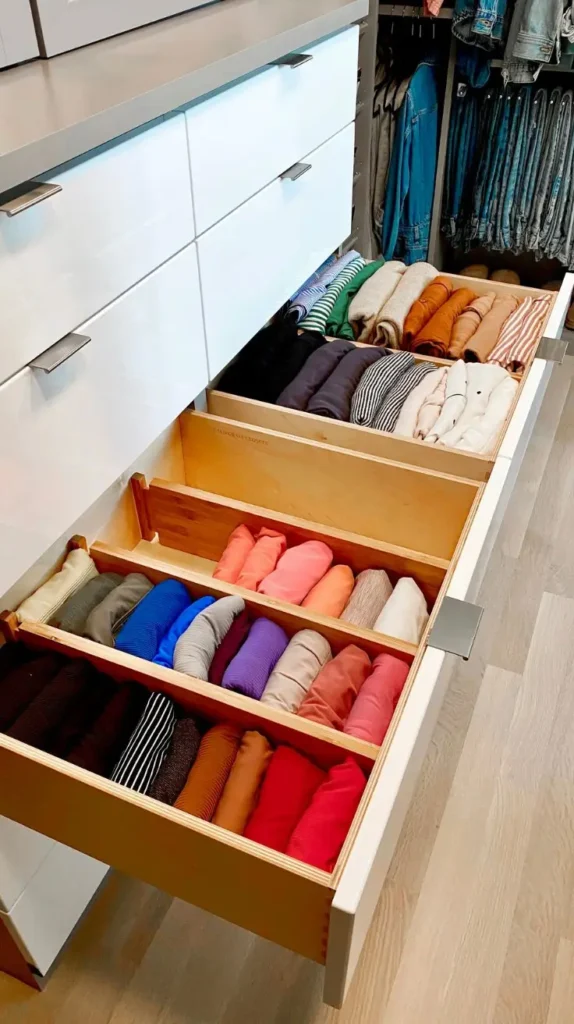
Color coordination adds a creative and visually satisfying layer to drawer organization. While it may seem like a decorative choice, it actually improves functionality by making items easier to locate and identify quickly. When everything is arranged in a visually consistent way, the drawer feels more structured and less chaotic.
This technique works especially well for clothing drawers. Arranging clothes by color, from light to dark or by category, creates a clean and pleasing look. It also makes selecting outfits faster, as everything is clearly visible. The same approach can be applied to office supplies, craft materials, or even kitchen tools.
Beyond practicality, color coordination makes an organization more enjoyable. It transforms a basic task into something that feels creative and rewarding. Opening a drawer that looks neat and visually balanced can bring a small sense of satisfaction that encourages maintaining the system.
Although it is not a required step, it enhances the overall experience of using the drawer. Once this method is introduced, it often becomes a favorite part of staying organized, adding both beauty and function to everyday spaces.
Create a Habit of Putting Things Back
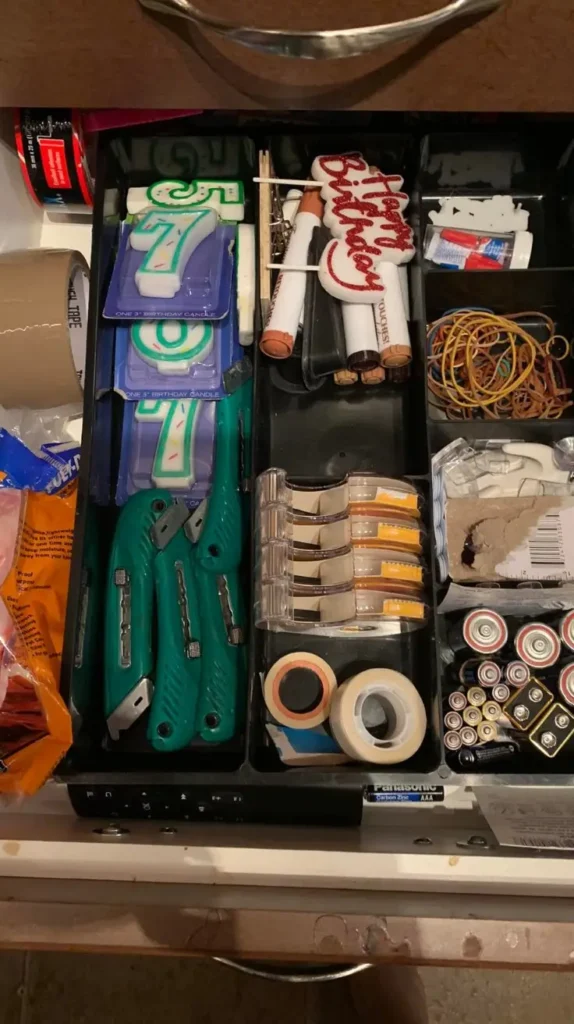
No matter how well a drawer is organized, everything depends on one simple habit: putting things back where they belong. Without this consistency, even the best systems will slowly fall apart, leading back to clutter and frustration. This is the final and most important step in maintaining long-term organization.
Building this habit does not require much effort, but it does require awareness. Taking a few extra seconds to return an item to its designated spot prevents mess from building up. Over time, these small actions create a lasting impact, keeping drawers neat and functional without needing constant reorganization.
This habit also reinforces the organizational system itself. When items are always returned to the same place, it becomes easier to remember where everything is. This reduces search time and makes daily routines smoother.
The key is consistency. At first, it may feel like a conscious effort, but with repetition, it becomes automatic. Eventually, maintaining an organized drawer feels natural and effortless. And once this habit is established, the sense of order and calm it creates becomes something that is hard to live without.


