
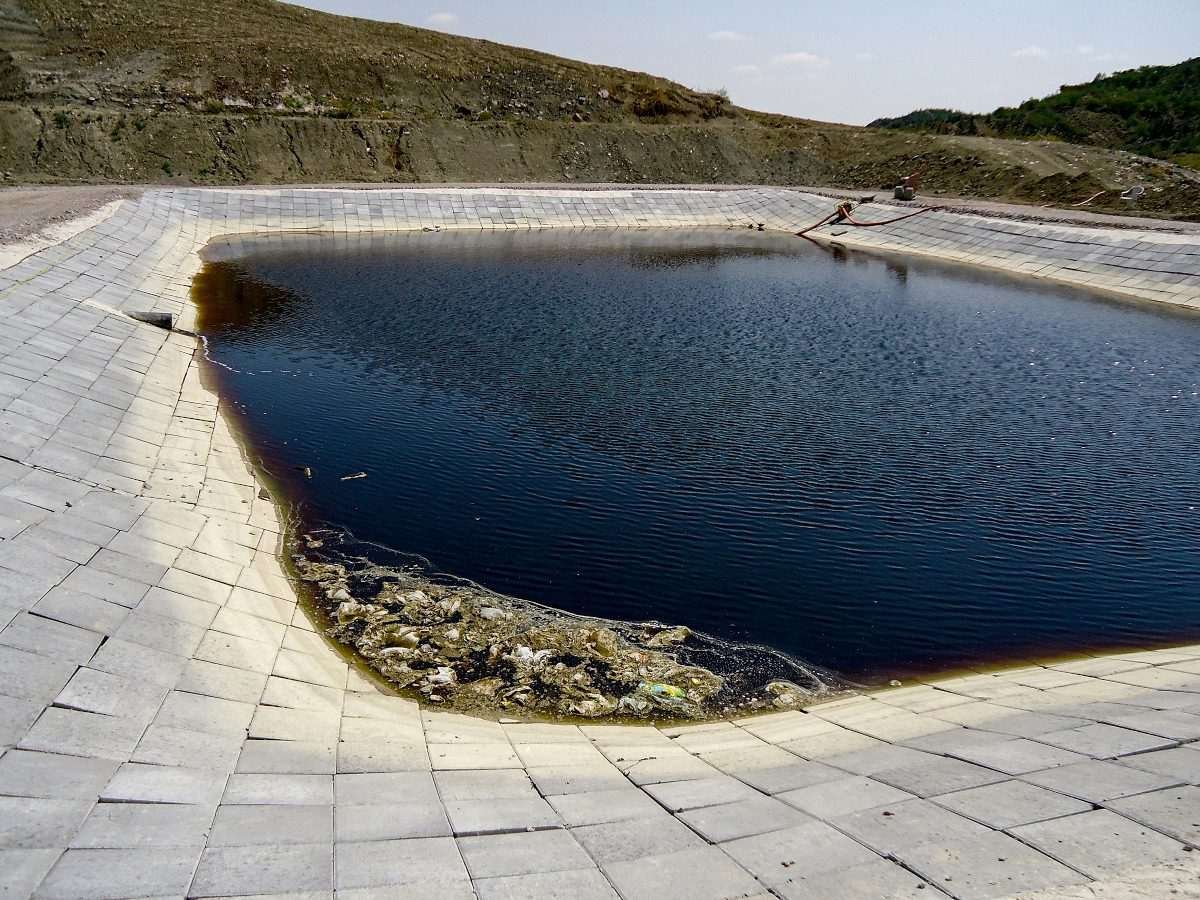
Researchers have created a new two-layer membrane filtration system that can significantly reduce the amount of micro and nanoplastics that leak from landfills into local water basins.
The group – at the University of British Columbia (UBCO) – has published the study which details how a double-layer membrane installed at landfills can act as a filter to keep these pollutants out of groundwater and surrounding ecosystems.
“Landfills are silent threats to our environment, acting as major reservoirs for emerging pollutants,” said Dr Sumi Siddiqua, Professor at UBCO’s School of Engineering. “Conventional drainage systems fail against microscopic contaminants, including nanoplastics and hazardous chemicals. This allows them to infiltrate groundwater.”
Although most landfills are designed to contain the leachate generated when rainwater passes through waste, recent studies show leachate has become a major collection basin for microscopic plastic, which can escape into water systems.
“As plastic waste breaks down, these particles accumulate in landfill leachate,” said co-author Mahmoud Babalar. “Current systems handle liquid waste, but they were never designed to completely intercept plastic micro and nano particles.”
The two-layer membrane system featured in their study, published in the Journal of Environmental Management, proved to be the most effective when it comes to trapping these pollutants. The top layer uses chemical attraction and filtration to capture micro and nanoplastics. It is engineered to bind plastic particles efficiently, even in complex, organic-rich leachate. The lower layer establishes a protective barrier that repels the remaining plastic particles through electrostatic forces, reducing clogging, membrane fouling and maintaining steady performance over time.
“The two complementary layers work together to block tiny plastic particles under harsh landfill conditions,” he adds. “This combination of layers allows the membrane to filter plastics while liquid can still flow, which is a critical requirement for landfill safety.”
In repeated lab tests, the membrane removed nearly all microplastics and captured more than 98 per cent of nanoplastics. Babalar says that during the testing, the membrane performed well over multiple filtration cycles, and could be cleaned and reused thanks to a methodical backwashing system.
“The membrane is made from durable, chemically stable materials designed to withstand temperature changes, aggressive wastewater and long-term exposure,” he adds. “Its ability to be cleaned and reused reduces waste and supports more sustainable landfill operations.”
Beyond filtration, the researchers say the technology could serve as a foundation for next-generation landfill liners that combine structural protection with active pollution control. This discovery has significant potential to protect groundwater and surface water supplies, reduce the spread of pollutants and also support circular waste management and climate-resilient infrastructure.
The study marks an important step toward smarter landfill systems that not only contain waste but also actively prevent long-term environmental harm, said Dr Siddiqua.
“Our unique dual-layer modified matrix membrane system is specifically engineered to handle highly contaminated, fouling-intensive raw leachate, positioning it as a foundational component of advanced waste containment.”


