
Early and ongoing engagement of farming partners is a critical step in sharing research with end-users.
The challenge of getting research out of universities and colleges and onto farms was addressed during a panel on how agri-food researchers engage partners at the 2026 Knowledge Translation and Transfer (KTT) Symposium, held May 12 at the University of Guelph.
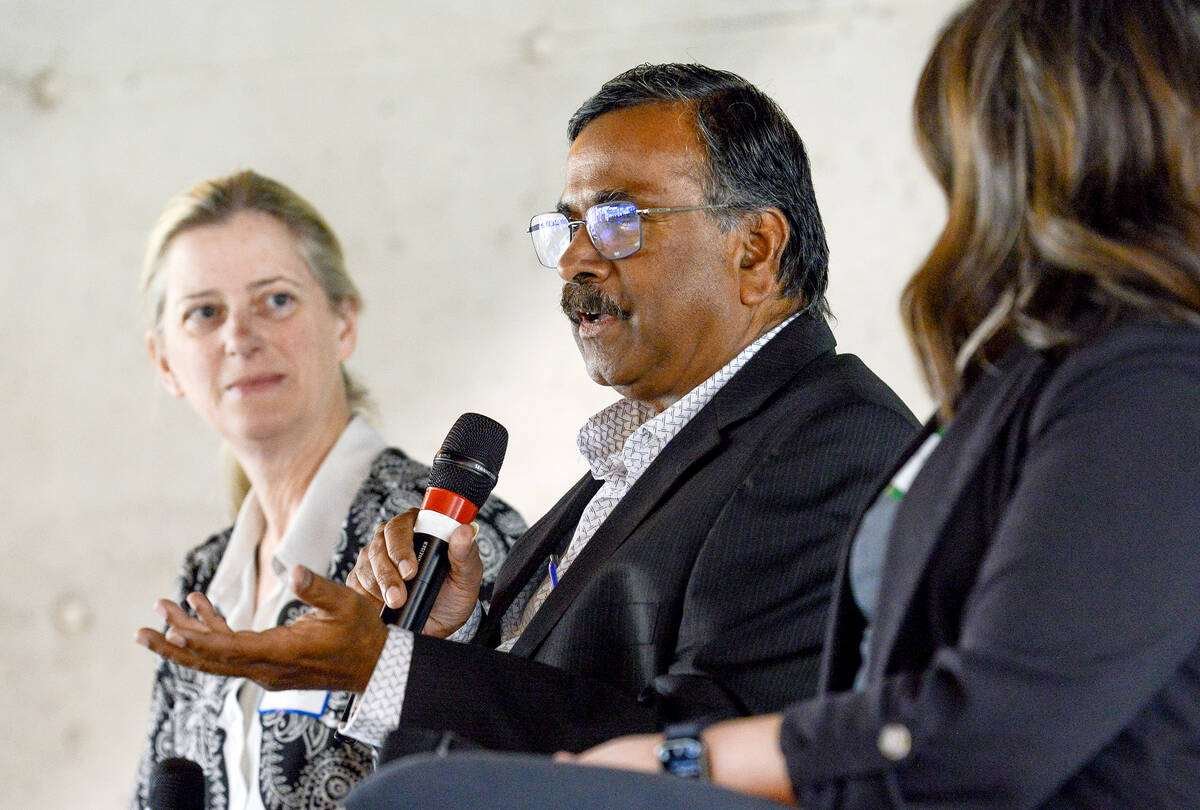
Panellists Terri O’Sullivan and Kelsey Spence, associate professors in the Ontario Veterinary College department of population medicine, and Jay Subramanian, professor in the Ontario Agricultural College department of plant agriculture, shared insights on how successful partner communication enhances research impact.
Each had a unique perspective on what impact looks like in their field of research.
“To me, impact is something you can give at a very low cost and is sustainable and should make a real change in the end-user’s life,” said Subramanian. “If your work can improve life, be it an animal, or plant or human, then I think you have created a great impact.”
O’Sullivan said research that informs decision-making on farms and across the agri-food community is key. Influencing partners, the public and other audiences, and encouraging learning that creates lasting change, is important to Spence, even if that change is not immediate.
Engagement
The panellists touted early and ongoing involvement of partners as a winning strategy to keep research active and relevant.
“I found that consistency and open and honest communication has been the foundation of having successful partnerships,” said Spence. “In my case, also coming with an open mind and no judgment.”
Everyone should have a place at the table, where their strengths and expertise are recognized alongside those of researchers, if the goal is producer adoption of even incremental changes to on-farm management.
“No one likes being told what to do,” she said. “Where we’ve had successful collaboration, there’s been a lot of buy-in from the people on the ground, which is hard to get with biosecurity (measures), but super important.”
As an early-career researcher, Spence said her greatest challenge is getting her foot in the door with people of varying experience, approaches and levels of engagement within the industry, and leveraging those connections into partnerships.
“Having a really diverse range of perspectives and experiences can also increase the impact that you have, because then you can get a better understanding of the issue,” she said, and lay a strong foundation for the next generation of researchers.
The panel’s consensus was that being present, engaging in active listening and staying curious in conversations often shines a light on research gaps within the industry from a producer’s point of view.
Ownership
According to Subramanian, farmer-to-farmer knowledge sharing has the greatest reach, far exceeding social media, webinars, research bulletins, papers and other materials produced through the project.
From the outset, Subramanian, as Ontario’s premier peach breeder, took a radical research approach involving farmers from day one.
He admitted he had never seen a peach tree before arriving in Vineland and wanted farmers to help inform how a new variety would need to perform to benefit the sector.
Subramanian toiled on the technical side, but “once the trees start fruiting, they are part of the journey. They take ownership at every stage of the selection process.”
This includes tours and tastings of potential varieties, including a few “placebo” peaches that show the good and the bad within the research to value chain members, just to confirm producers were giving him honest feedback.
“When the varieties go out, nine out of 10 times, they are successful,” he said.
Timelines and funding
The desire of industry partners to see results does not always align with research timelines, which is why clear communication and setting expectations are important.
“It’s an ongoing process, managing timelines, especially in a perennial crop; it’s a 20-year process,” said Subramanian. “Suddenly the grower comes in and wants a square peach — it’s not going to happen.”
Involvement from day one allows farmers to be educated on the process, building patience and an understanding that three-year funding will not necessarily deliver real-world impacts by the end, but is a significant stride toward them.
However, accessing research funds remains challenging.
“I think it’s just a reality of life right now, I spend way more money at the grocery store and get one bag than I did even two weeks ago, right?” said O’Sullivan. “The money doesn’t go as far as it used to. The healthy funding stream, in terms of dollar values, is really, really valuable.”
Spence suggested that two researchers doing two arms of the same project could leverage similar research dollars and provide results for less than a single researcher over 10 years.
“Seeing if there’s any connections where you can facilitate the sharing of money or funds, or even resources, like in-kind resources — I think that will help with some of the funding challenges that we’re all experiencing,” said Spence.
Evidence into practice
Whether research funding tied to KTT could help effectively relay results to industry in a way that supports adoption is another matter.
“The KTT funding initiatives that are offered are really crucial, because that helps us earmark funds and resources towards that,” Spence said. “Then the productivity is also KTT. So, if we can tie some of those benchmarks to also delivering evidence to knowledge users, that’s super important.”
It also helps facilitate conversations with people better suited to deliver evidence into practice, she added.
O’Sullivan said this is where partnerships with industry organizations can play a vital role.
“Ontario Pork, as an example, and those types of organizations can help me get those challenging messages out,” she said. “(I can) draw on their expertise and marketing and networking resources.”
Subramanian said tying results to their direct impact on the industry helps translate findings. For example, producers are interested in how isolating a specific peach genetic marker leads to a healthier, tastier fruit — not how researchers got there.
The panel agreed that artificial intelligence will play a significant role in turning research into practice, particularly through dashboards linking data or through technology in the field.
Subramanian’s colleague is using AI to pick and thin apples in British Columbia, and while AI will impact agriculture, he said, “it’s a question of bridging AI to the real world and real agriculture; that is the challenge amongst us researchers.”
The post Early buy-in helps turn agri-food research into on-farm practice appeared first on Farmtario.


