
In modern farming and gardening, getting the soil moisture just right can make a major difference. Too little water and plants suffer drought stress; too much and roots may rot or nutrients could leach away. As an agriculture scholar and avid gardener, I always want reliable tools to help me understand what’s happening underground — without guesswork. That’s why I decided to try the ECOWITT WH51 Soil Moisture Sensor.
In this review, I walk you through exactly what it is, how it works, my own setup and experience, and whether it’s worth buying — especially if you, like me, care deeply about efficient, science-based gardening or farming.
What is ECOWITT WH51 Soil Moisture Sensor?
The ECOWITT WH51 is a wireless soil moisture sensor — a device that measures how much water is present in the soil. But on its own, it’s only a “sensor probe”; it does not display moisture readings by itself. Instead, the WH51 must be paired with a compatible gateway or console (for example a Wi-Fi gateway) from the same manufacturer so you can view the data on a smartphone or computer.
The idea is simple: insert the probe into the soil (soft soil, not hard rock or heavy clay with stones), and the sensor will send data about soil moisture to the gateway. From there, you can check real-time moisture levels, view graphs of moisture history, and use that information to decide when to water. Here are the key details of the ECOWITT WH51:
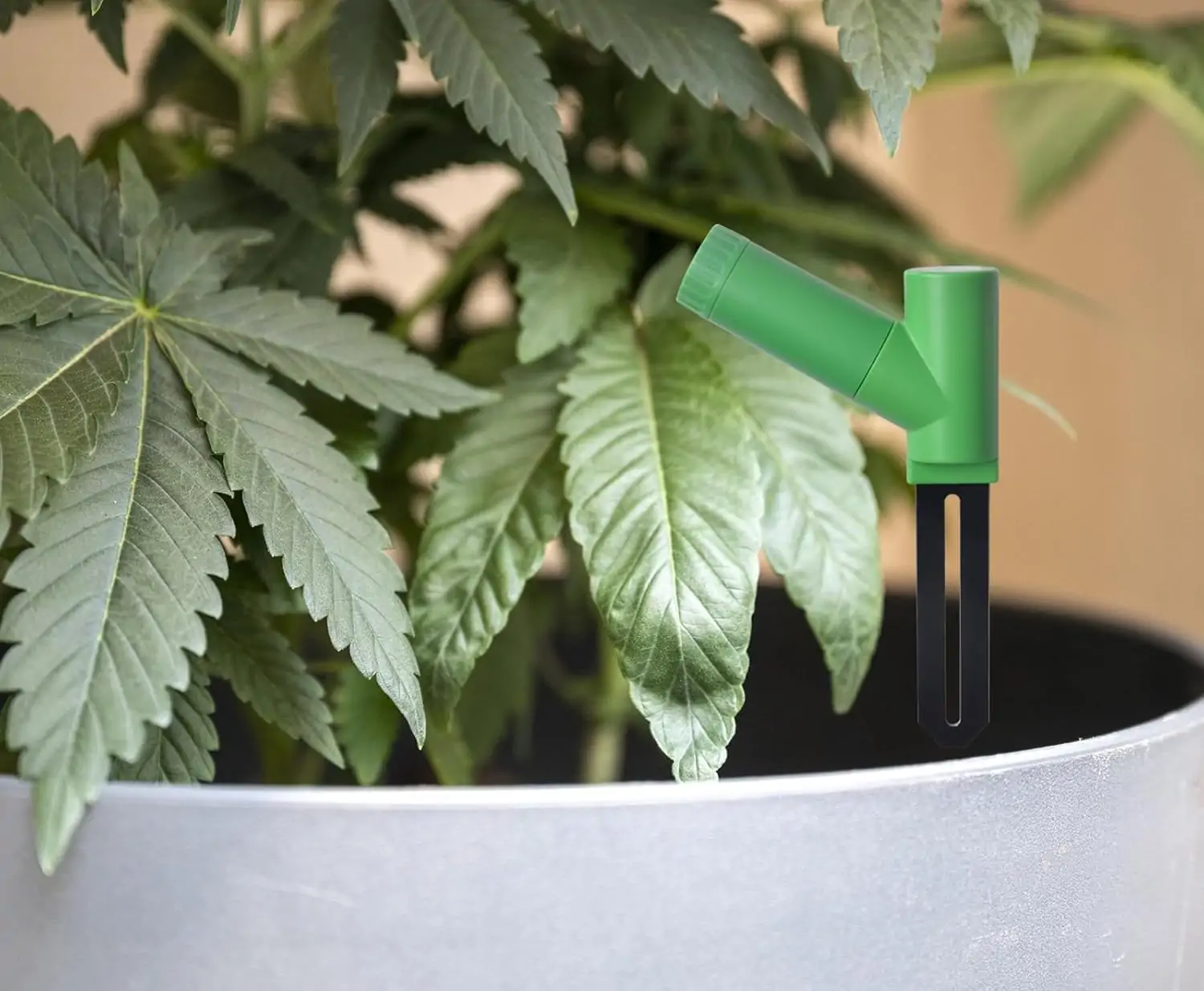
- Wireless soil-moisture sensor — probe-type, no built-in display.
- Needs a separate Wi-Fi gateway or weather station console from ECOWITT (e.g. GW1100/GW1200 or similar) to work.
- Supports up to 8 sensors per gateway (so you can monitor multiple pots, beds or zones) — handy for gardens, farms, or multiple containers.
- Moisture measurement range: 0 % to 100 %, with resolution of 1%.
- Waterproof: it has an IP66 rating — meaning it’s safe for indoor and outdoor use.
- Power: runs on a single AA battery (not included).
- Data reporting: once properly inserted into soil, it collects soil moisture data and transmits to the gateway.
- Soil type caveats: the sensor is designed for soft soil — using with rocky or very hard soil may damage the probe or give inaccurate readings.
In short: WH51 is a simple, fairly affordable soil-moisture sensor — but to get utility from it, you need the full system (gateway + sensor(s)).
Pros & Cons of ECOWITT WH51 Soil Moisture Sensor
| Pros | Cons |
|---|---|
 Accurate soil moisture measurement (0–100%, 1% resolution) Accurate soil moisture measurement (0–100%, 1% resolution) |
 Cannot be used alone — you need a gateway/console to get any data Cannot be used alone — you need a gateway/console to get any data |
| Wireless, real-time data reporting and remote monitoring (phone / computer) |
Initial cost increases when adding gateway/console (not just the sensor) |
| IP66 waterproof — works in outdoor gardens, pots, farms in varying weather conditions |
Sensor probe relatively short — may not reach deep root zones in large pots/trees (common user complaint) |
| Supports multiple sensors per gateway — good for monitoring multiple pots/beds/areas simultaneously |
Requires manual calibration for different soil types to get accurate readings |
| Data logging: you can view graphs and history over time, useful for watering scheduling and trend analysis |
Not suitable for heavy or rock-filled soil — only works on normal soil, potting mix, or soft garden earth |
| Helps make irrigation more precise — avoid over- or under-watering, saving water and optimizing plant health |
For larger/deep containers or field crops, may need alternative or deeper sensors to get representative moisture readings |
Why Soil Moisture Sensor Matters?
Based on recent research and my own experience, using a soil moisture sensor like WH51 brings real benefits — especially in water-stressed regions or for sustainable farming:
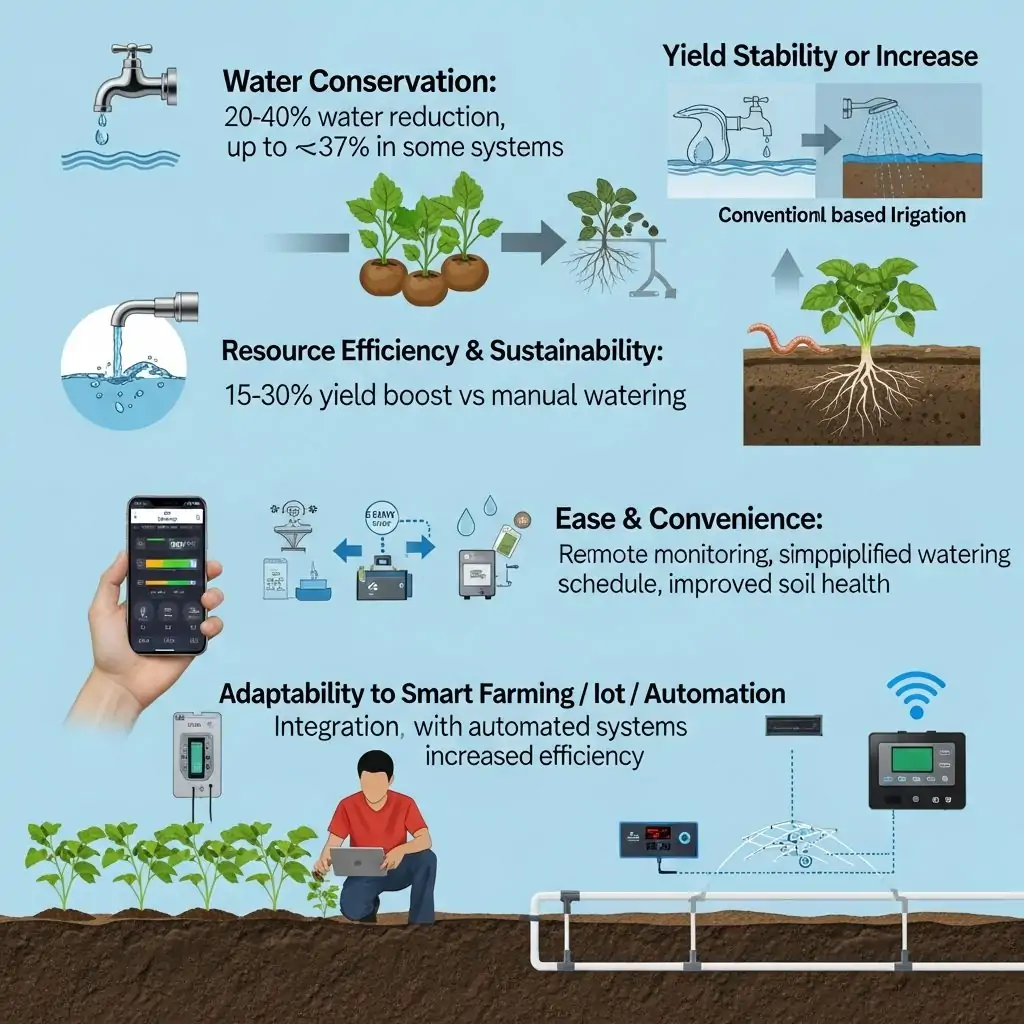
i. Water Conservation: As studies show, sensor-based irrigation can reduce water use by 20–40%, even up to ~37% or more in some rice/wheat/vegetable systems, compared to conventional irrigation.
ii. Yield Stability or Increase: Because moisture stress (too dry or too wet) is minimized, plants can grow consistently — resulting in stable or improved yields (many studies report 15–30% yield boosts vs manual watering)
iii. Resource Efficiency & Sustainability: Less water waste, reduced energy/pumping costs, less nutrient leaching — good for soil health and environment in long term.
iv. Ease & Convenience: For someone like me who tends multiple beds, pots, and plant types — remote monitoring and data logging removes guesswork, simplifies watering schedule, and helps manage resources better.
v. Adaptability to Smart Farming / IoT / Automation: WH51 — when combined with gateways and automation — can be part of a modern, smart farming setup (e.g. automated drip irrigation triggered by soil moisture thresholds, saving labour and improving efficiency). This trend is growing fast.
So especially in regions like Pakistan, where water scarcity is common and efficient farming is critical, tools like WH51 can make a big difference.
i. A recent paper on using soil moisture sensors for vegetable cultivation reported that precision irrigation based on sensors improved yield by 20%–30% compared to traditional methods.
ii. The same study showed significant water savings and more efficient irrigation management when sensors were used instead of calendar-based watering.
iii. According to experts in water-scarce areas (and as highlighted by a major water-informatics center in Pakistan), sensor-based irrigation can greatly reduce water use without sacrificing yield, making them especially valuable for Pakistani agriculture.
More generally, soil moisture sensors are increasingly viewed as key tools for “precision agriculture” — enabling smarter resource use, better crop yields, and long-term sustainability.
Taking these findings into account, devices like WH51 contribute not only to individual gardeners’ convenience — but also to broader goals of water conservation, yield improvement, and sustainable farming.
My Experience with ECOWITT WH51 Soil Moisture Meter
I have experimented with a wide range of soil moisture tools — from basic dip-and-read meters to DIY probes — and relied heavily on observation and experience. My garden setup includes potted plants, small raised beds, and open-ground plots, with soils ranging from loamy and sandy to heavy clay patches.
I wanted to test the ECOWITT WH51 in these varied conditions to see how it would perform across different soil types and planting setups. I paired the WH51 sensors with a compatible ECOWITT Wi-Fi gateway, allowing me to monitor soil moisture remotely via my smartphone or laptop.
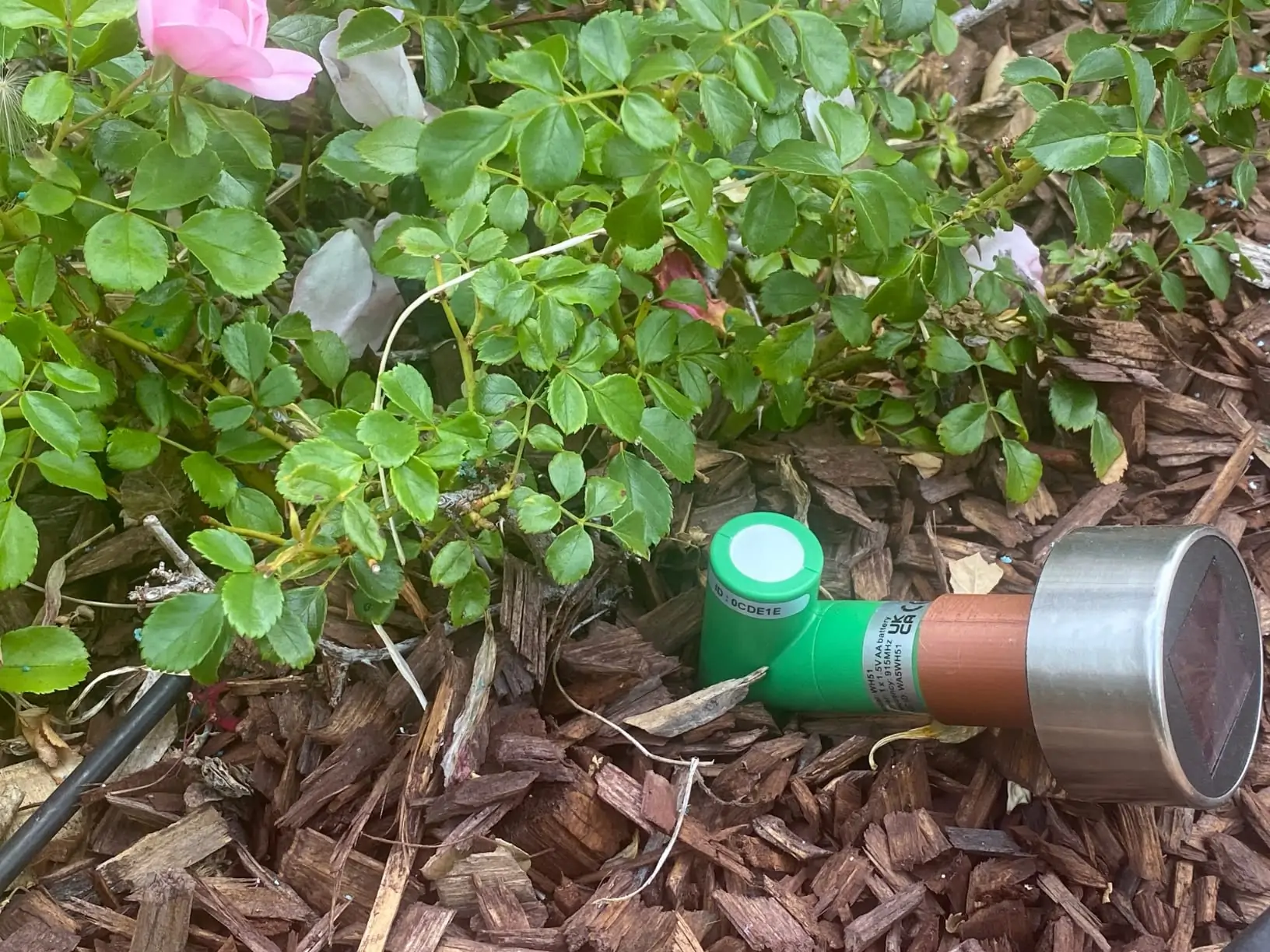
Installation was straightforward in loose soil, though for the heavier clay sections, I had to slightly moisten and loosen the soil before inserting the probe to avoid damage. Each sensor was assigned a specific location — for example, “Tomato Bed 1,” “Herbs Pot,” or “Lawn” — making it easy to track moisture across my garden.
Over several weeks, I used the sensor data to optimize watering schedules. Instead of following a fixed schedule, I watered when readings fell below set thresholds, adjusting the depth and frequency based on plant needs.
I noticed more consistent soil moisture, reduced water usage, and healthier plant growth — with less wilting, richer leaf color, and more uniform development. The sensors remained reliable over time, and battery performance exceeded expectations, providing continuous data-driven control for all my plants.
Performance of ECOWITT WH51 Soil Moisture Sensor
In terms of performance, WH51 delivers reliably for what it is designed for: monitoring top-soil moisture (top few inches / first ~7–10 cm of soil). It communicates wirelessly to the gateway every ~70–72 seconds (per manufacturer), which gives near real-time updates.
Accuracy is reasonable: the sensor reports volumetric moisture content (0–100 %), with 1% resolution. In my use, moisture readings responded quickly after watering — showing a jump followed by gradual decline over days, correlating with actual soil dryness I observed manually.
For small-scale gardening, container gardening, raised beds, lawns — I’d say performance meets expectations: consistent, useful, and stable. For deep-rooted crops or deep beds, performance may be limited by the shallow probe.
Practical Tips for ECOWITT WH51 Soil Moisture Tester
Based on my experience (and user reports from others), here are some practical suggestions to get the most out of WH51:
a. Use soft soil / avoid stones or rocks: The probe is delicate; forcing into hard soil may damage it or give wrong readings.
b. Insert fully and allow 2–3 minutes before reading: For best accuracy, the sensor should be completely inserted, and wait a little for soil to settle and give accurate moisture data.
c. Pair with gateway/console — don’t expect standalone use: Remember, the WH51 is only a sensor; you need gateway or display console to get data.
d. Monitor multiple zones if you have diverse planting areas: Since you can use up to 8 sensors per gateway, it’s worthwhile if you have a garden + potted plants + lawn — you can monitor each separately.
e. Set moisture thresholds suitable for your plants: Different plants (vegetables, flowers, lawn) need different moisture levels. Use historical data to learn optimal moisture ranges for each.
f. Use data history (graphs): Instead of just relying on instant readouts, look at moisture trends over days/weeks to plan watering better (e.g. after rain, or during heat).
g. Replace battery in time: Sensor runs on AA battery; keep an eye on battery status and replace when low to avoid false readings or data drop.
Comparisons with Alternatives Soil Moisture Meter
| Feature | Ecowitt Soil Moisture Sensor | Traditional Moisture Meter | Finger Test |
|---|---|---|---|
| Accuracy | High digital accuracy (0–100%) | Low to medium accuracy | Very low accuracy |
| Waterproof Use (Outdoor) | IP66 waterproof | Not designed for outdoor long-term use | N/A |
| Depth Reading | Consistent shallow-depth readings | Can push deeper manually | VaryVery shallow |
| Soil Type Compatibility | Works in normal soil & potting mix | Often inaccurate in dense soil | |
| Need Additional Device | Requires Gateway (extra cost) | No extra device needed | No tools needed |
| Cost | Medium to high (sensor + gateway) | Low | Free |
| Best For | Gardeners, growers, greenhouses, smart irrigation | Beginners with small indoor plants | Quick casual checking |
Final Recommendations
If you are a gardener, home gardener, small-scale farmer, or container-garden enthusiast — and you want to move from guesswork to data-driven, efficient watering — then ECOWITT WH51 is a very good choice. It’s affordable (especially compared to high-end deep-soil sensors), wireless, easy to install, and works well for top-soil moisture monitoring.
However, if you plan to irrigate deep beds or grow deep-rooted crops — and need accurate moisture monitoring deeper in soil — you should consider investing in a deeper probe sensor or more advanced soil-moisture / soil-tension sensor.
For me, WH51 has been a valuable addition to my gardening toolkit — especially in a region where water is precious and efficient irrigation is key.


