

The fastest-growing corner of electric riding is also the most confusing. A “moped-style eBike,” an “electric moped,” and an “electric motorcycle” can look almost identical in a photo, cost similar money, and hit similar speeds. In the eyes of the law they are three different animals. Get it wrong and you are looking at a ticket, a denied insurance claim, or a bike you legally cannot ride home. Here is how to tell them apart in 2026, and exactly what each one needs.
The confusion is not your fault. Marketing leans into it. A bike sold as an “eBike” might be a street-legal bicycle, or it might be an unregistered moped wearing a costume. The label on the product page does not decide what it legally is. Three things do: how many watts the motor makes, how fast the throttle pushes it without pedaling, and whether it has working pedals at all.
Nail those three and everything else falls into place. We will define each category, show you the one rule that sorts them, then walk through licenses, registration, insurance, helmets, and where you can actually ride. A quick heads-up first: this is a plain-English guide, not legal advice, and the rules vary by state and even by city. Always confirm with your local DMV.
The 3 Categories, Explained
Moped-Style eBike
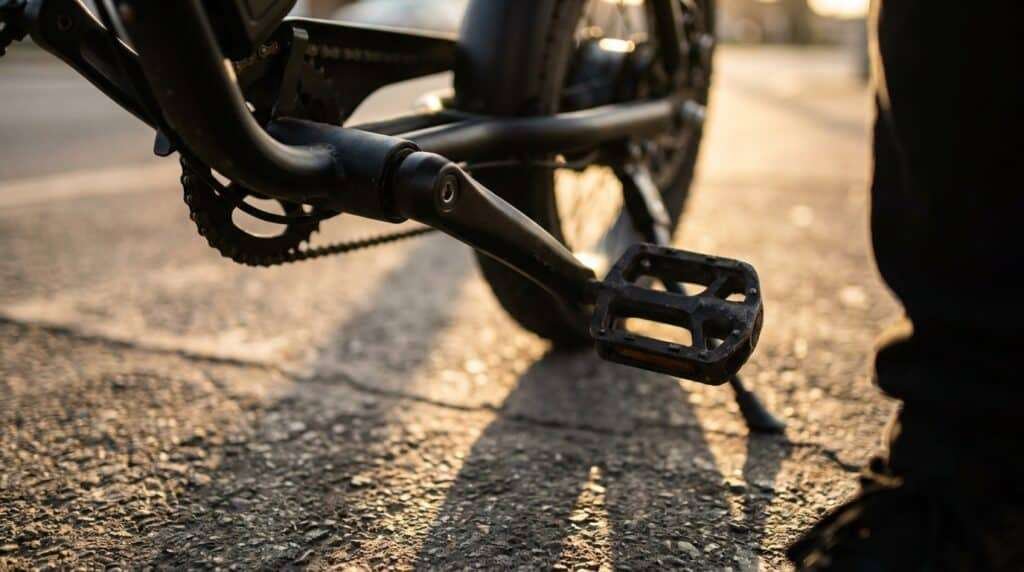
This is the gray-area star. Bikes like the Juiced Scrambler, Super73, and Ride1Up REVV1 are styled like tiny mopeds, with fat tires and a long seat, but they hide a set of working pedals. As long as the motor stays at or under 750W and the throttle stops pushing at 20 mph, most states treat one of these as a regular bicycle.
That means no license, no registration, no plate, and no insurance in the roughly 43 states that use the three-class eBike system. You ride it in bike lanes and on roads like any other eBike. It is the cheapest, simplest way into moped looks without the moped paperwork.
TYPICAL: ≤750W · throttle to 20 mph (Class 2) or pedal-assist to 28 mph (Class 3) · working pedals · no license/registration/insurance
We tested one: the Juiced Scrambler is a great example of a moped-style eBike done right, at $1,999.
Electric Moped
A true moped sits one step up. It usually has no pedals, or pedals that are there for show, and it makes more power than the bicycle limit allows. Top speeds land around 28 to 30 mph in most states. Once a vehicle clears the 750W bicycle line but stays under the motorcycle threshold, the law calls it a moped or a motor-driven cycle.
That label brings paperwork. Most states want it registered with a plate, many require a license (sometimes a regular one, sometimes a motorcycle endorsement), and some require insurance. The exact power cap for a moped swings wildly by state, from around 1,500W in many to nearly 4,500W in Colorado, so this is the category where you really must check local law.
TYPICAL: above 750W up to the state moped cap (often ~1,500W) · ~28–30 mph · usually no real pedals · registration + often license/insurance
Electric Motorcycle / E-Moto
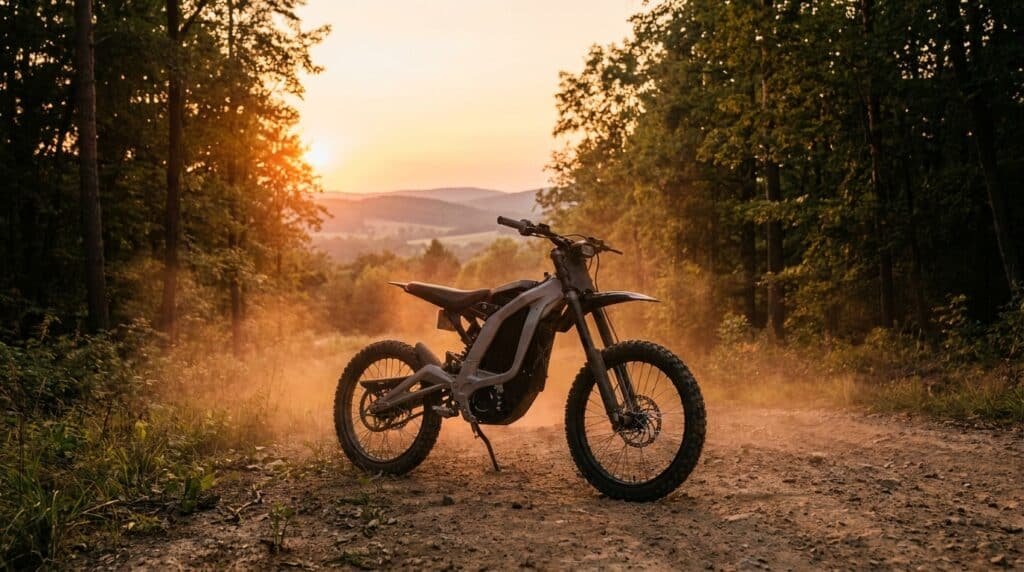
At the top sit electric motorcycles and the e-moto dirt bikes everyone is talking about, like Sur-Ron, Talaria, and the Aptum VM1. No pedals, serious power, and speeds from 35 to well past 60 mph. The law treats these as motorcycles, full stop.
To ride one on the street you need a motorcycle license, registration, a plate, insurance, and DOT-legal equipment like lights, mirrors, and a horn. Here is the catch most buyers miss: many e-motos ship as off-road-only machines with none of that gear, so they are not street-legal out of the box. Off-road they are a blast and need little more than OHV registration. On the road, untouched, they are a ticket waiting to happen.
TYPICAL: well above moped caps · 35–70+ mph · no pedals · motorcycle license + registration + insurance + DOT gear for street use
We have ridden these: the Aptum VM1 mini e-moto and the Juiced Nomadix show how fast this category is moving.
The One Rule That Decides Everything
Forget the marketing name. Three trip-wires decide what your vehicle legally is, and crossing any one of them flips a “bicycle” into a registration-required moped or motorcycle:
THE 3 TRIP-WIRES
>750W
A motor over 750W is past the bicycle limit in almost every state.
>20 mph
A throttle that drives you past 20 mph without pedaling is no longer a bicycle throttle.
No pedals
No working pedals means it cannot be a bicycle, period.
Stay under all three and you are almost certainly riding a bicycle in the eyes of the law. Cross even one and you are in moped or motorcycle territory, with the license, plate, and insurance that come with it.
The Unlock-Mode Trap
⚠ THE “UNLOCK MODE” TRAP
This is the part that catches good people off guard. A lot of moped-style eBikes ship with a hidden “off-road” or “unlock” mode that bumps the top speed to 28, 30, even 35 mph. The second you ride in that mode on a public street, your street-legal bicycle becomes an unregistered, uninsured moped. If you crash, your insurer can deny the claim because the vehicle never met the bicycle definition. Know what mode you are in, and keep the unlock mode for private land.
License, Registration, Insurance & Helmets by Type
| VEHICLE | LICENSE | REGISTRATION | INSURANCE | HELMET | WHERE YOU RIDE |
|---|---|---|---|---|---|
| Class 1/2/3 eBike | No | No | No | Often under 16; Class 3 stricter | Bike lanes & roads |
| Moped-style eBike (compliant) | No | No | No | Same as eBike class | Bike lanes & roads |
| Out-of-class eBike (unlocked) | Usually | Usually | Often | Per moped/motorcycle law | Roads only, if at all |
| Electric moped | Usually | Yes | Often | Often required | Roads, not bike lanes |
| Electric motorcycle / e-moto | Yes (motorcycle) | Yes | Usually | Per motorcycle law | Roads only (or OHV off-road) |
General guidance only. Exact rules vary by state and city. Confirm with your DMV.
How the Rules Differ: 4 Example States
California
Compliant eBikes need no license, registration, or insurance, but Class 3 requires a helmet at any age and riders must be 16+. Mopeds need an M1 license plus registration. A street Sur-Ron is a motorcycle: M1 plus full DOT gear.
New York / NYC
Class 3 is capped at 25 mph and only legal in cities over a million people (effectively NYC). Anything that throttles past 20 mph becomes a registered, licensed, insured “limited-use motorcycle.” As of late 2025, NYC caps all eBikes at 15 mph on city streets.
Florida
Very permissive. Compliant eBikes are bicycles with no license, registration, or insurance, and helmets are required only under 16. Mopeds need a license and registration. Florida also does not require liability insurance on motorcycles, which changes the e-moto math.
Texas
Class 1, 2, and 3 eBikes are treated as bicycles with no license, registration, or insurance, and there is no statewide helmet law for adults. Go over 750W or throttle past the limit and it becomes a motor vehicle.
Which One Should You Buy?
So which one should you actually buy? If you want moped looks with zero paperwork, get a compliant moped-style eBike and leave the unlock mode off in public. If you want real moped speed and you are fine registering it, a true electric moped is the move, just confirm your state caps first. If you want the raw performance of an e-moto, decide up front whether you will ride it off-road (simple) or on the street (a motorcycle, with everything that requires). Match the vehicle to the life you actually live, not the spec you want to brag about.
Frequently Asked Questions
Is a moped-style eBike street legal without a license?
What is the difference between an electric moped and a moped-style eBike?
Do I need a license to ride an electric motorcycle or e-moto?
Why is my eBike suddenly a moped when I unlock it?
How fast can each type go?
Do the rules really change state to state?
A Note on Legal Info
This guide is general information, not legal advice. E-bike, moped, and motorcycle laws vary by state and city and change often. Always confirm the current rules with your state DMV and local government before you buy or ride.
Affiliate Disclosure
This article may contain affiliate links. RiderGuide may earn a commission if you buy through links here, at no extra cost to you. Our testing and opinions are our own.
{
“@context”: “https://schema.org”,
“@graph”: [
{
“@type”: “Article”,
“@id”: “https://riderguide.com/guides/electric-moped-vs-ebike-vs-motorcycle/#article”,
“headline”: “Electric Moped vs Moped-Style eBike vs Electric Motorcycle: What’s the Difference (and What’s Legal)?”,
“description”: “Electric moped, moped-style eBike, or electric motorcycle? We explain the difference and exactly what each needs for licensing, registration, insurance, and where you can legally ride in 2026.”,
“datePublished”: “2026-06-14”,
“dateModified”: “2026-06-14”,
“author”: {
“@type”: “Person”,
“name”: “Matt Kaye”,
“url”: “https://riderguide.com/author/matt-kaye/”,
“jobTitle”: “Lead Tester”,
“worksFor”: {
“@type”: “Organization”,
“name”: “RiderGuide”,
“url”: “https://riderguide.com”
}
},
“publisher”: {
“@type”: “Organization”,
“name”: “RiderGuide”,
“url”: “https://riderguide.com”
}
},
{
“@type”: “FAQPage”,
“@id”: “https://riderguide.com/guides/electric-moped-vs-ebike-vs-motorcycle/#faq”,
“mainEntity”: [
{
“@type”: “Question”,
“@id”: “https://riderguide.com/guides/electric-moped-vs-ebike-vs-motorcycle/#faq-1”,
“name”: “Is a moped-style eBike street legal without a license?”,
“acceptedAnswer”: {
“@type”: “Answer”,
“text”: “In most states, yes, as long as it stays within the bicycle limits: 750W or less, a throttle that cuts out at 20 mph, and working pedals. Then it is treated as a bicycle with no license, registration, or insurance. If it exceeds any of those, it becomes a moped or motorcycle and needs paperwork.”
}
},
{
“@type”: “Question”,
“@id”: “https://riderguide.com/guides/electric-moped-vs-ebike-vs-motorcycle/#faq-2”,
“name”: “What is the difference between an electric moped and a moped-style eBike?”,
“acceptedAnswer”: {
“@type”: “Answer”,
“text”: “A moped-style eBike has working pedals and stays under 750W, so it is legally a bicycle in most states. An electric moped makes more power, usually has no real pedals, and tops out around 28 to 30 mph, so the law treats it as a motor vehicle that needs registration and often a license and insurance.”
}
},
{
“@type”: “Question”,
“@id”: “https://riderguide.com/guides/electric-moped-vs-ebike-vs-motorcycle/#faq-3”,
“name”: “Do I need a license to ride an electric motorcycle or e-moto?”,
“acceptedAnswer”: {
“@type”: “Answer”,
“text”: “To ride one on public roads, yes. Electric motorcycles and street-legal e-motos like Sur-Ron and Talaria need a motorcycle license or endorsement, registration, a plate, insurance, and DOT equipment. Ridden purely off-road on private land or OHV areas, most need only OHV registration where it applies.”
}
},
{
“@type”: “Question”,
“@id”: “https://riderguide.com/guides/electric-moped-vs-ebike-vs-motorcycle/#faq-4”,
“name”: “Why is my eBike suddenly a moped when I unlock it?”,
“acceptedAnswer”: {
“@type”: “Answer”,
“text”: “Many moped-style eBikes have an off-road or unlock mode that raises the top speed past 20 mph or above 750W of power. The moment you use that mode on a public street, the vehicle no longer meets the bicycle definition, so legally it becomes an unregistered moped or motorcycle. That can also void your insurance after a crash.”
}
},
{
“@type”: “Question”,
“@id”: “https://riderguide.com/guides/electric-moped-vs-ebike-vs-motorcycle/#faq-5”,
“name”: “How fast can each type go?”,
“acceptedAnswer”: {
“@type”: “Answer”,
“text”: “Moped-style eBikes assist up to 20 mph on the throttle or 28 mph with pedaling (Class 3). Electric mopeds usually top out around 28 to 30 mph. Electric motorcycles and e-motos run from about 35 mph to well past 60, depending on the model.”
}
},
{
“@type”: “Question”,
“@id”: “https://riderguide.com/guides/electric-moped-vs-ebike-vs-motorcycle/#faq-6”,
“name”: “Do the rules really change state to state?”,
“acceptedAnswer”: {
“@type”: “Answer”,
“text”: “Yes, a lot. The moped power cap alone ranges from around 1,500W in many states to nearly 4,500W in Colorado. Helmet rules, minimum ages, and where you can ride also vary, and cities like New York add their own limits on top. Always check your state DMV and local ordinances before you buy.”
}
}
]
}
]
}
<p>The post Electric Moped vs Moped-Style eBike vs Electric Motorcycle: What’s the Difference (and What’s Legal)? first appeared on Rider Guide.</p>


