
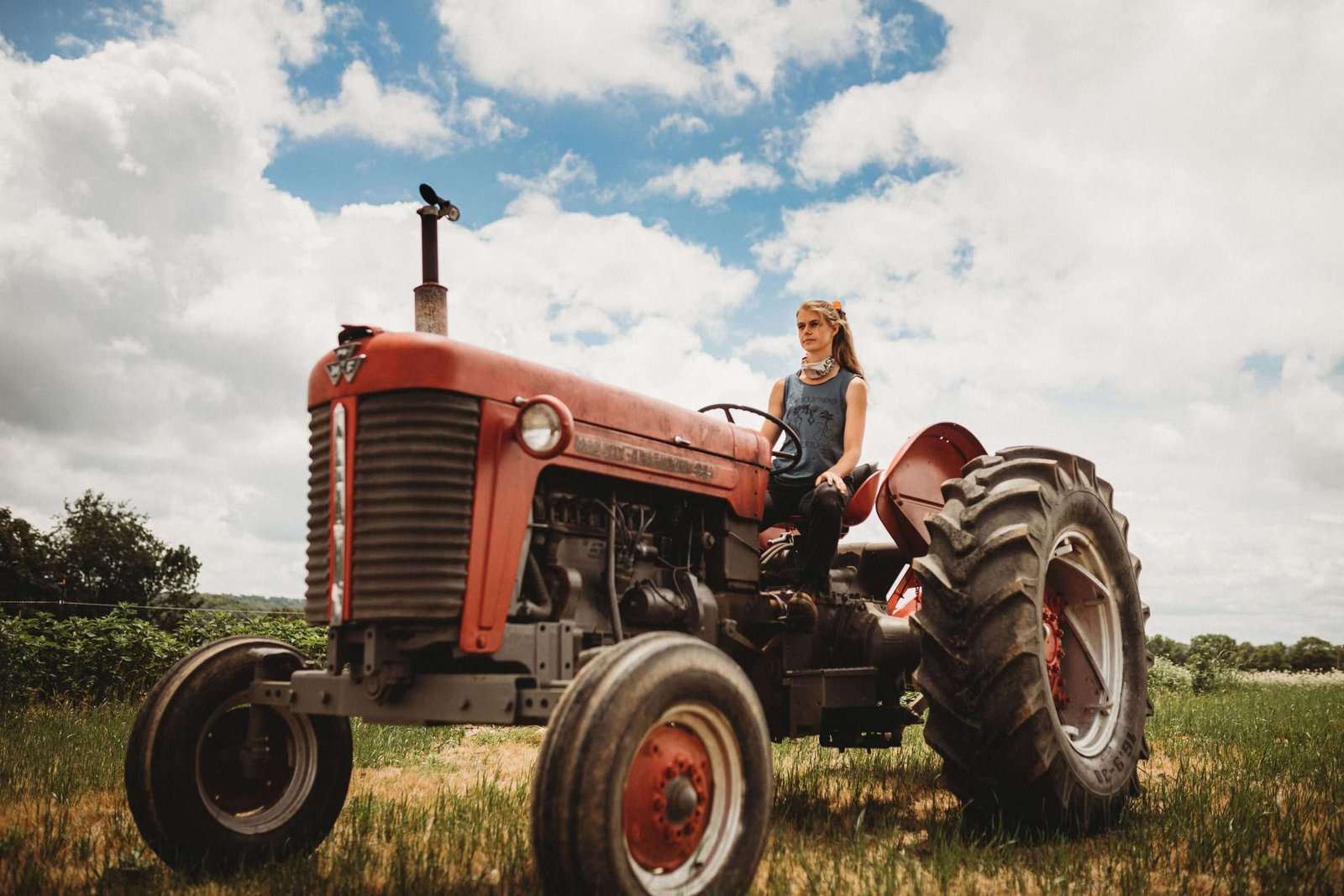
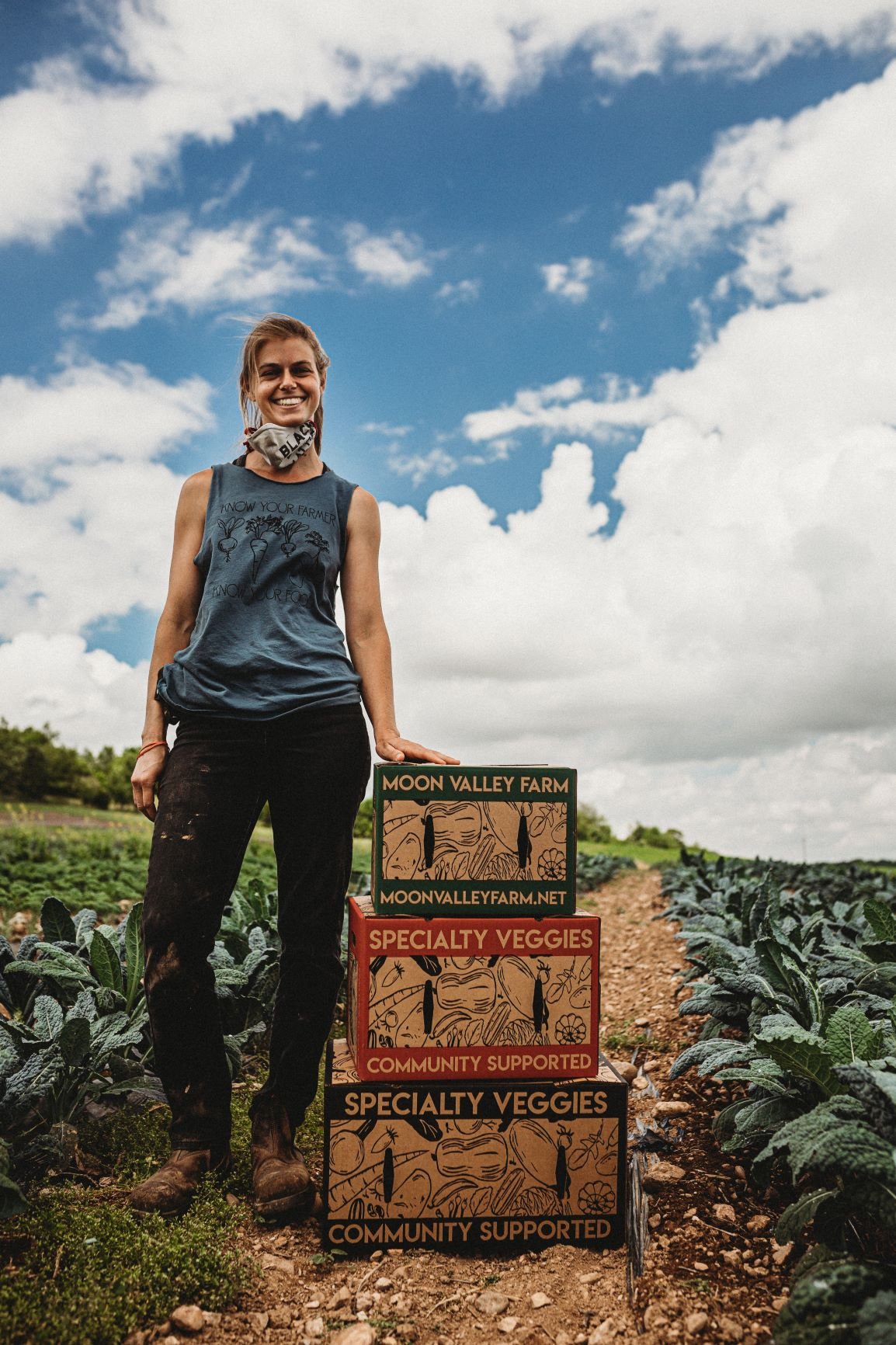
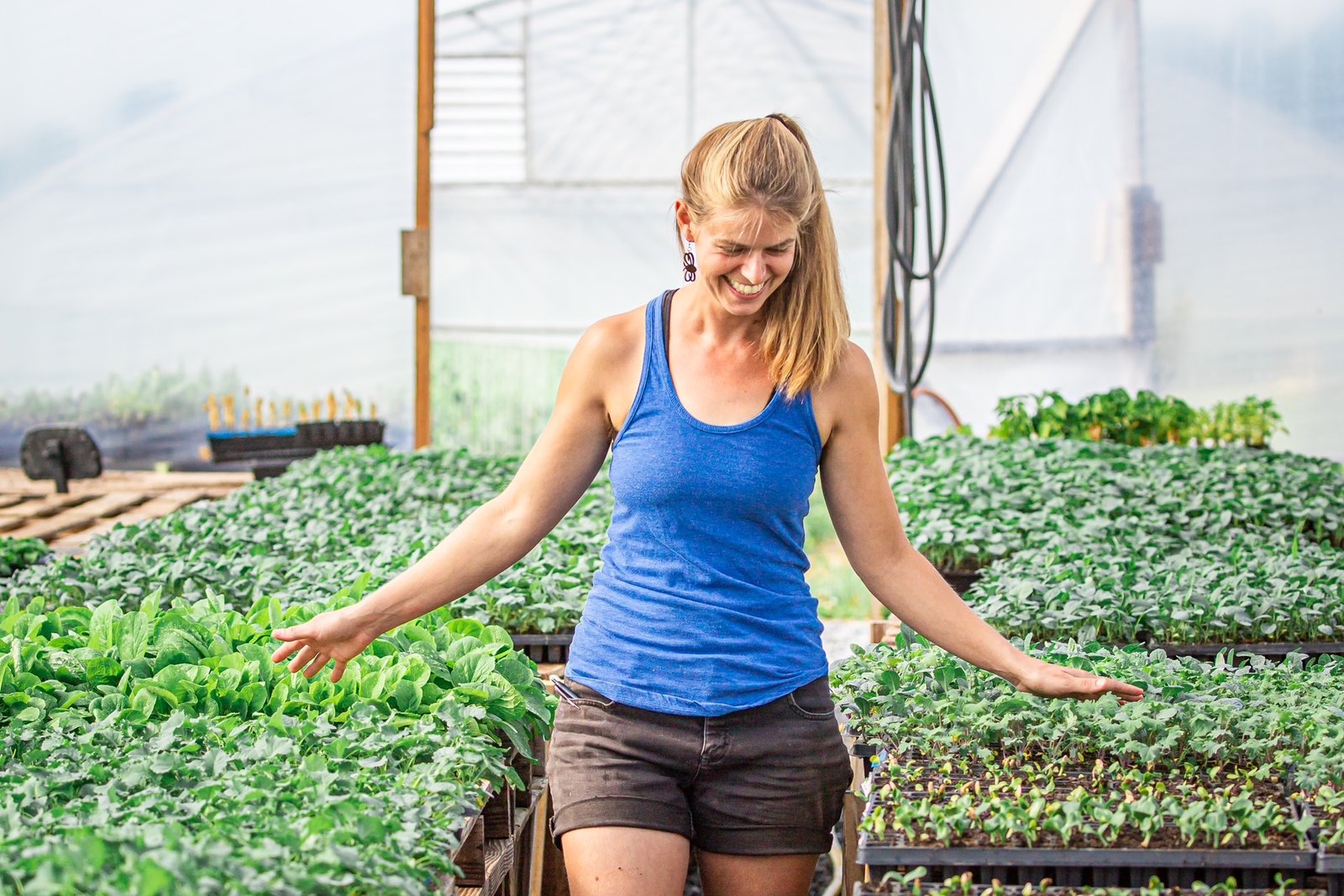
Moon Valley Farm
“At its heart, my work in agriculture remains rooted in the same motivation that first brought me to the field: to raise my children in a healthier world, to strengthen local food systems, and to model a form of farming that heals rather than harms. As a female farmer, I’m proud to contribute to a future where access—whether to land, credit, training, or information—is no longer a barrier for those who want to grow food and grow community.“
Q: Tell us about your agricultural operation, your background and how you got started in agriculture.
I founded Moon Valley Farm as a first-generation farmer, a mother, and someone searching for a healthier path for my family and my community. I did not grow up in agriculture; I came to farming out of necessity and hope. When I was pregnant with my first child, I became acutely aware of how disconnected I felt from my food and how few local, organic options were readily available. What started as a small attempt to grow clean, healthy vegetables for my own family quickly grew into a calling—to feed many families, to build community, and to steward land in a way that supports climate resilience.
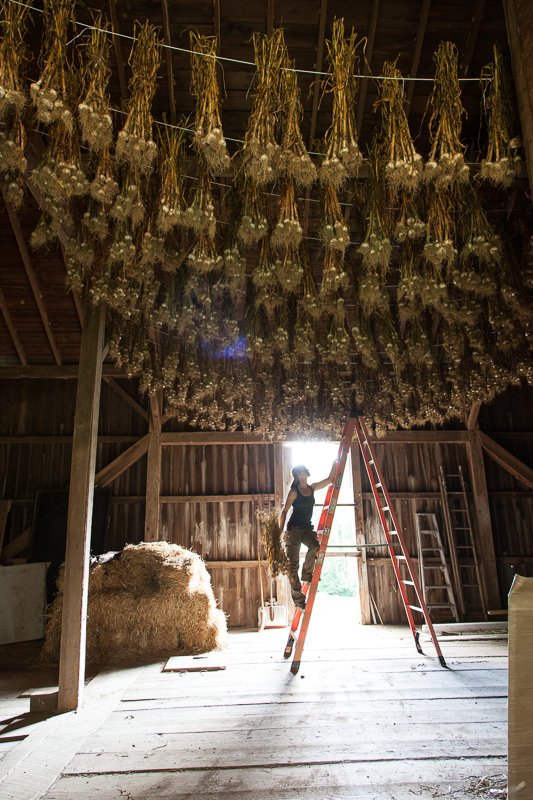
Moon Valley Farm began in 2012 on borrowed land with no equipment, no farming experience, and no access to credit. What I did have was determination, the generosity of mentors, and a deep belief that diversified, organic farming could be a real solution to climate change and food insecurity. Over time, our operation has expanded to a thriving certified organic farm serving thousands of families through our CSA, supplying restaurants, school systems and food as medicine programs, and sustaining a year-round crew devoted to ecological agriculture.
As a woman entering agriculture without generational land or financial backing, I had to rely heavily on education and training opportunities—both formal and community-driven. Programs for beginning farmers, organic growing networks, and peer-to-peer learning were essential in building my skills. Access to land has always been one of the biggest hurdles; we slowly grew from small barter-based leases to eventually securing our own farmland, a milestone that allowed us to invest more fully in soil health, perennial plantings, and long-term climate-smart practices. Access to credit was another major barrier, especially as a young business owner and mother balancing childcare with the demands of farm work. Creative financing, community partnerships, and USDA programs played a critical role in helping us expand responsibly.
At its heart, my work in agriculture remains rooted in the same motivation that first brought me to the field: to raise my children in a healthier world, to strengthen local food systems, and to model a form of farming that heals rather than harms. As a female farmer, I’m proud to contribute to a future where access—whether to land, credit, training, or information—is no longer a barrier for those who want to grow food and grow community.
Q: What does working in agriculture, and specifically being a woman in agriculture, mean to you?
To me, working in agriculture is fundamentally about empowerment. Growing food—real, nourishing food—feels like one of the most meaningful ways to contribute to the health and resilience of my community. At a time when so many people are disconnected from their food, their land, and even their neighbors, farming allows me to help rebuild those connections. Owning and stewarding even a small piece of land throughout my lifetime is a profound responsibility and an incredible privilege. It grounds me, gives me purpose, and reminds me every day that healing our planet starts with the soil beneath our feet.
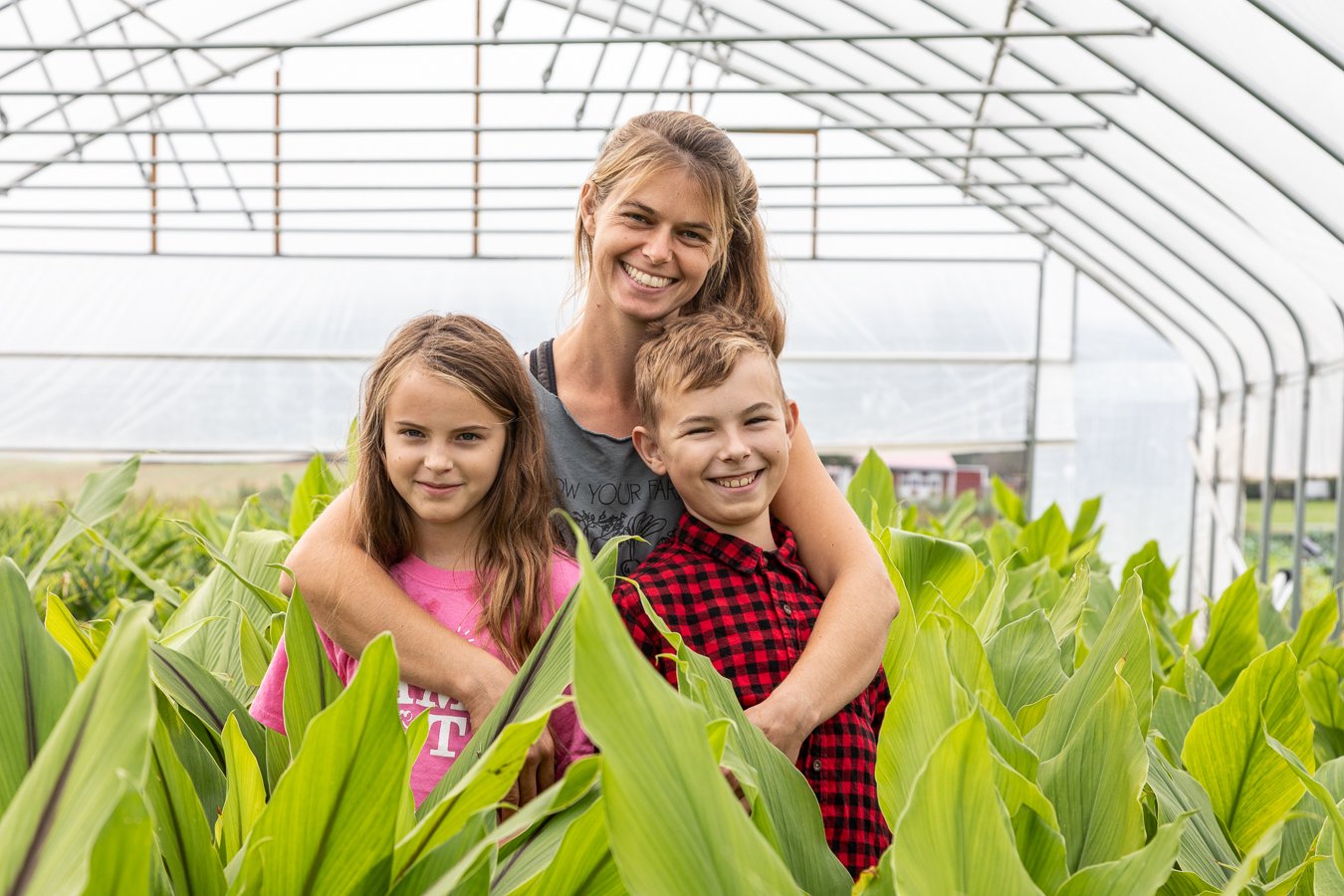
Being a woman in agriculture adds another layer of meaning. As a first-generation woman farmer, I didn’t inherit land or a roadmap—I built this path step by step. The challenges have been real, but so has the empowerment. To stand on my own land, to grow food that sustains thousands of families, and to model for my children—especially my daughter—that women can lead in agriculture is deeply significant. Women have always played essential roles in farming, but too often those roles have been invisible. I’m proud to be part of a movement that brings that leadership into the light.
For me, farming is about being in collaboration with Mother Nature to shape my family’s food supply and contribute to a more stable climate future. It’s about strengthening community through food and demonstrating that women farmers are—and always have been—central to building the food systems we all depend on.
Q: What do you wish the next generation of women in agriculture would know about your work? What advice would you give them?
I want the next generation of women in agriculture to know that this work is both possible and powerful—even if you don’t come from a farming background, even if you don’t have land handed to you, even if the path feels uncertain at times. My work has taught me that women’s intuition, resilience, and relationship-building are tremendous strengths in agriculture. Farming is not about knowing everything from the start—it’s about learning, adapting, and showing up every single day with intention and resolve.
I would tell young women farmers that their voice and perspective matter. Agriculture needs more leaders who understand the connections between soil health, community well-being, climate resilience, and nourishment. Your care, your creativity, and your lived experiences are assets, not obstacles.
I’d also want them to know that it’s okay to start small. I began with borrowed land, secondhand tools, and a desire to grow good food for my family. You don’t need to have it all figured out on day one. Seek out mentors, ask questions, keep learning, and trust your own instincts. The agricultural world can be incredibly supportive once you find your community.
Most of all, I want them to know that their work has meaning. When you grow food, you are shaping healthier families and stronger communities. You are helping heal the land and participating in solutions to climate change. Your contributions matter deeply. And there is space for you—not just to farm, but to lead.
The post Emma Jagoz appeared first on NASDA.


