
Words by Zoë Goodhead, with photography by Abhishek Khedekar
In villages in the Amravati region in Maharashtra, India, farmers are coming together to share knowledge and learn regenerative practices for their small-scale cotton farms. As the scheme grows, they are discovering that these practices can not only save them money, but also save their soil.
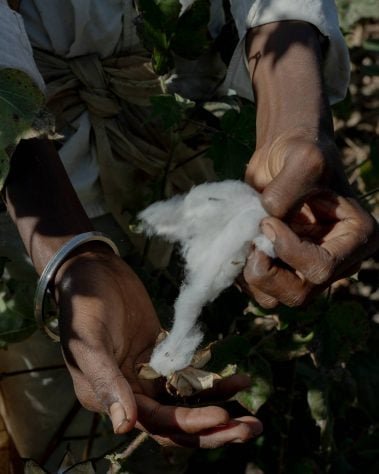
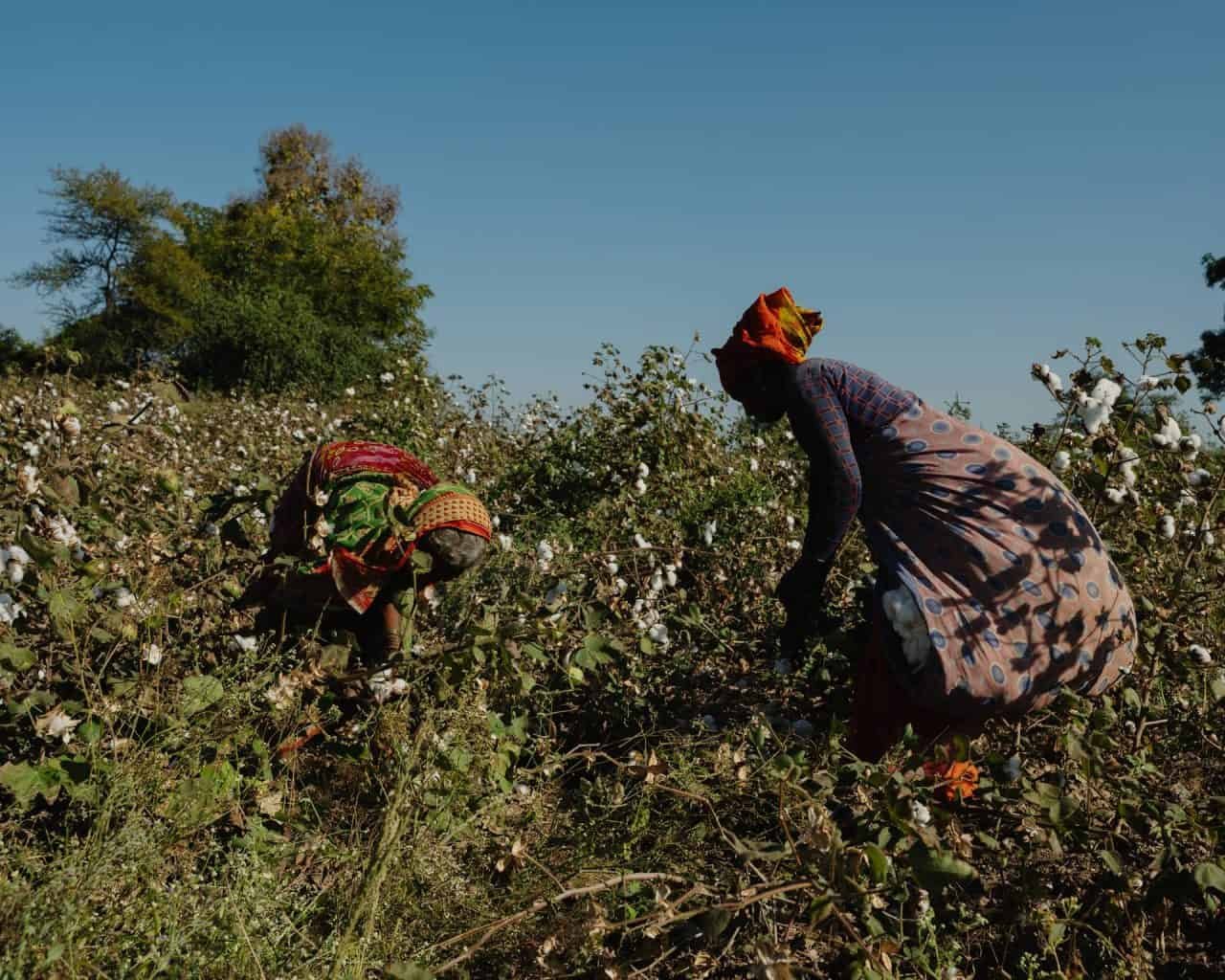
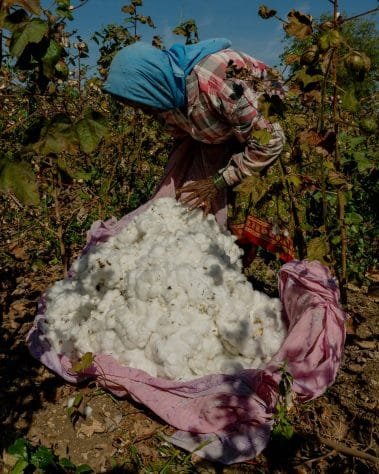
At Nagpur airport, welcome signs declare it the City of Oranges, but driving through the Maharashtra landscape towards the Amravati region, it’s not just orange trees that can be seen growing in the fields, but cotton, with balls of white catching the light of the sun.
The connection with this cotton is deeply felt by those who spend their days sowing, growing, and picking it. Madhuri Anil Dugane, from Kati, a small village in Amravati, describes her special relationship with the soil.
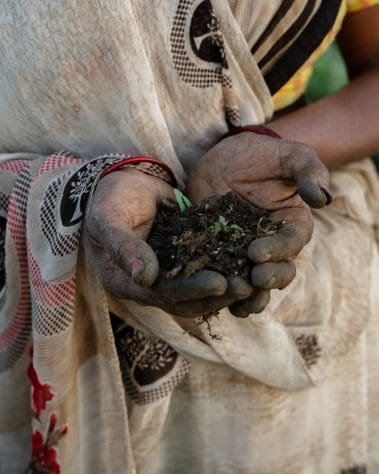
“My connection with the soil feels like one between a mother and a daughter,” she explains in Marathi, the local language. “Unless you work hard at it, unless you love your mother, how can you expect to get anything out of it?”

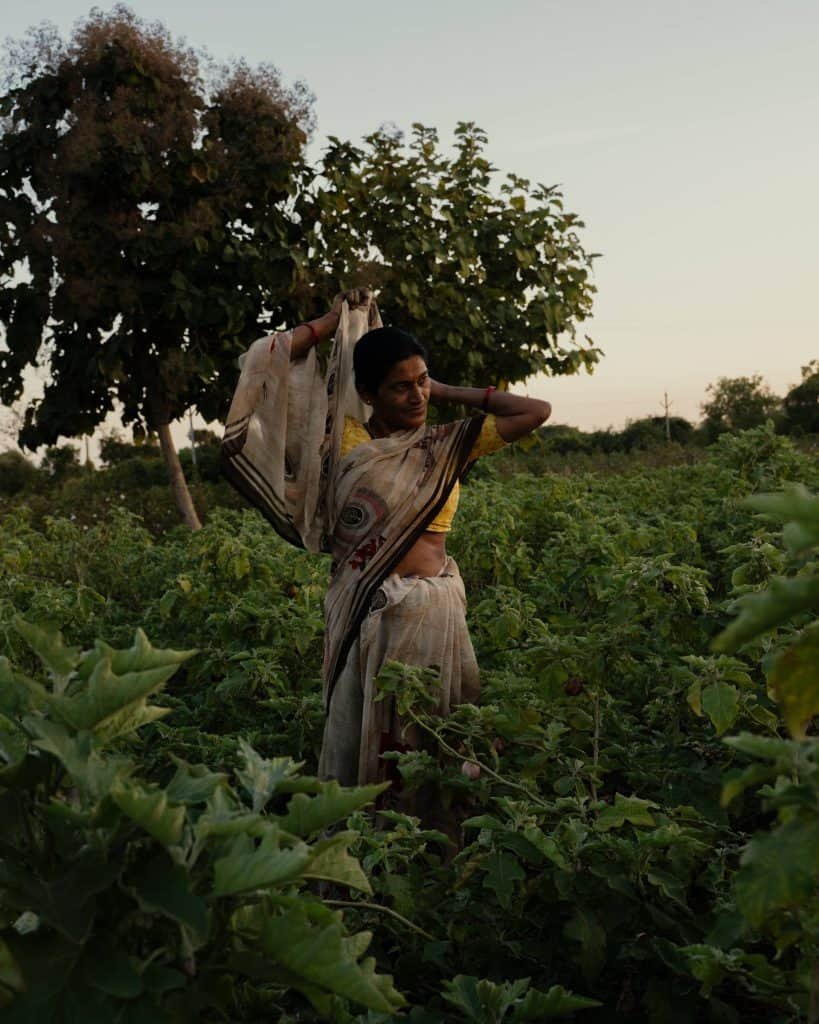
Madhuri has always lived in Kati, surrounded by cotton fields. She now lives with her husband and two children, farming cotton on her own land and also picking up shifts as a laborer on other nearby farms for extra income. Along with others in her village, she has recently signed up to CottonConnect’s REEL Regenerative program.
CottonConnect works with local partner Apeksha Homoeo Society to roll out the program in villages across the region, working with around 4,500 farmers in just this area alone. This is just one of many projects for Apeksha, a local charitable organization ensuring the sustainable development of women, children, farmers, and landless communities. Under the stewardship of Apeksha and CottonConnect, local people are employed to help teach regenerative practices and offer live demonstrations in farmers’ own villages.
For Madhuri, it didn’t take much convincing. Even before the program came to the village, she had discovered that chemicals were harming the soil. So when the program came along, she saw it as an opportunity she had to take, for the good of her farm, her business, and her soil.


Her neighbor in Kati, Narayan Krushnaji Maski, had a similar realization. Aged 61, he farms both his six acres and the six acres next to it belonging to his brother who, at 72, is now too old for physically demanding farming work. “I’ve been farming for many years now,” Narayan says, “but in the last seven years, I’ve noticed that the cost of fertility management has gone up, and the impacts of chemical fertilizer are very visible. So I started to do my own research.”
Narayan cites India’s Green Revolution as a factor in the spread of chemical fertilizers. Beginning in the 1960s, the Green Revolution caused a monumental shift in Indian agriculture with the introduction of high-yielding varieties of wheat and rice, which required controlled irrigation, chemical fertilizers, and pesticides. Though this initiative resulted in a dramatic increase in food production, it also led to soil degradation, water scarcity, and increased dependency on chemical inputs, which Narayan experienced firsthand.
“Plants need something else, something which is naturally available,” he remarks. “Ultimately, plants and soil need life. They are alive and they need live support. The living microbes in the soil are essential as a source of nutrients.”
Narayan’s research, borne out of a deep-seated fascination for soil health and lifelong connection with cotton farming, took the form of experiments—he notes that he prefers not to depend on theory alone but has conducted practical experiments with different combinations of ingredients, and recorded the results.
He started using cow dung as a fertilizer, then began to improve the mixture using jaggery and chickpea flour, and experimenting with different ingredients such as black gram and green gram. When CottonConnect’s REEL Regenerative program started, Narayan met with the team and realized that his principles were aligned to the approach and goals of regenerative agriculture, and he supplemented his knowledge with additional learnings from the program.
Does he enjoy passing on his knowledge to others in his community? He smiles: “yes, I am a teacher.” Thanks to his keen interest, the CottonConnect team knew that Narayan would be a good partner in the regenerative project, and chose to have one of their training and demonstration centers on his farm.
CottonConnect has installed 13 demonstration centers across the area, where local farmers can come and see regenerative techniques firsthand and take the learnings home to their own farms. Each training center has a zone for the development of vermicompost and several containers filled with different kinds of biopesticides, including jeevamrut, from the words jeeva meaning life and amrut meaning antidote or elixir. Farmers are taught to make this elixir of life using easily accessible ingredients, such as cow dung, cow urine, chickpea flour, and jaggery.
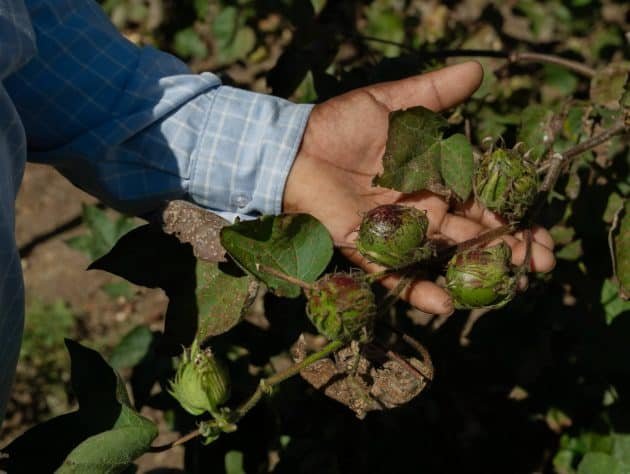
In the nearby village of Goregaon, Praful Subhashrao Raut is proud to announce that his land is home to another training center, including a demonstration plot where regenerative practices can be seen in action. The plot is divided: one half is a control plot, and the other half has been grown using regenerative practices. As well as the regular use of biopesticides, this includes methods such as pheromone traps to catch male pink bollworms and sticky yellow patches to catch flying insects. Intercropping cotton with other crops such as castor and pigeon pea also brings benefits, improving soil health while also adding some insurance and an additional source of income for farmers.

Orange ribbons can be seen tied to some stalks, a bright pop of color against the green and white of the cotton crops. They mark out the specific plants that are monitored every fortnight to see whether the regenerative practices are having a positive impact, checked against those in the control plot.
Praful is a keen proponent of testing and monitoring. For him, the REEL Regenerative program’s introduction of formal soil testing is its most valuable contribution. “Thanks to the regular training sessions, there is now an increased awareness of the importance of soil testing, and it is now properly organized,” he explains. “This means we have more of an idea of the level of nutrients in the soil and where the deficiencies are, and we can apply fertilizers accordingly.”
In this area, the REEL Regenerative program is still in its first year, where the main goal is to raise awareness and understanding among farmers. Going forward, its impact will be measured on a series of parameters, including soil health, water consumption, and chemical use. Elsewhere, the program has been successful, with CottonConnect reporting yields increased by 4.8%, water use reduced by 14%, and 41% lower carbon emissions per acre from the project farms, in the second year of its Regenerative Cotton Pilot.
The urgency of moving toward more sustainable practices has never been so visible. Farmers in both villages have noticed changes to weather patterns in recent years. Rainfall has become more erratic and temperatures are more likely to vary into extremes. Farmers have found ways to cope with these changes, such as using drip irrigation systems when there is less rainfall, and ridges for drainage when there is excess water.
There is evidence of other, more traditional practices being implemented in Goregaon. Vibrant patterned saris are strapped to the edges of fields once they are worn out and no longer wearable, the bright colors deterring wild animals. Plastic bottles can also be strung up and used for the same reason, reflecting light in a way that shocks animals and rattling in the breeze.
“Recycling is not a new concept here,” says Abhijeet Bhosale, Organic Farm Program Director at CottonConnect who oversees the project in the area. “There’s a lot we teach the farmers, but there’s also a lot they teach us,” he smiles.

Perhaps this is why the REEL Regenerative program has been so successful here. Cotton farmers have long been adapting and innovating to ensure the survival of their crops. And ultimately, they will do what is best for business. In both villages, farmers cite cost-saving as one of the main benefits of the REEL Regenerative program. Chemical fertilizers are expensive, and in the past, they sprayed them at regular intervals no matter what state the soil was in. Now, with increased soil testing, they only spray when necessary, and with training on how to make their own biopesticides, they don’t have to spend money on chemicals.
The training from the program extends beyond farming practices. Narayan, so knowledgeable about the science of the soil, has learned valuable business skills as a result of the program. “A high income doesn’t mean a high profit if the production costs are high,” he points out, “so now I am working toward reducing the costs of production.”
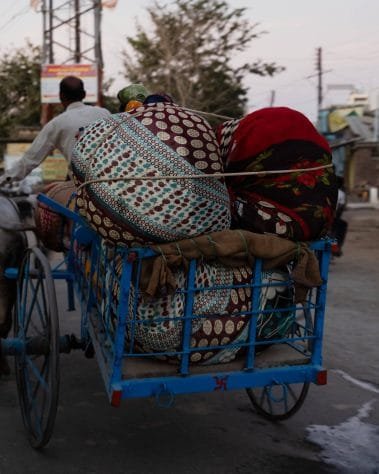
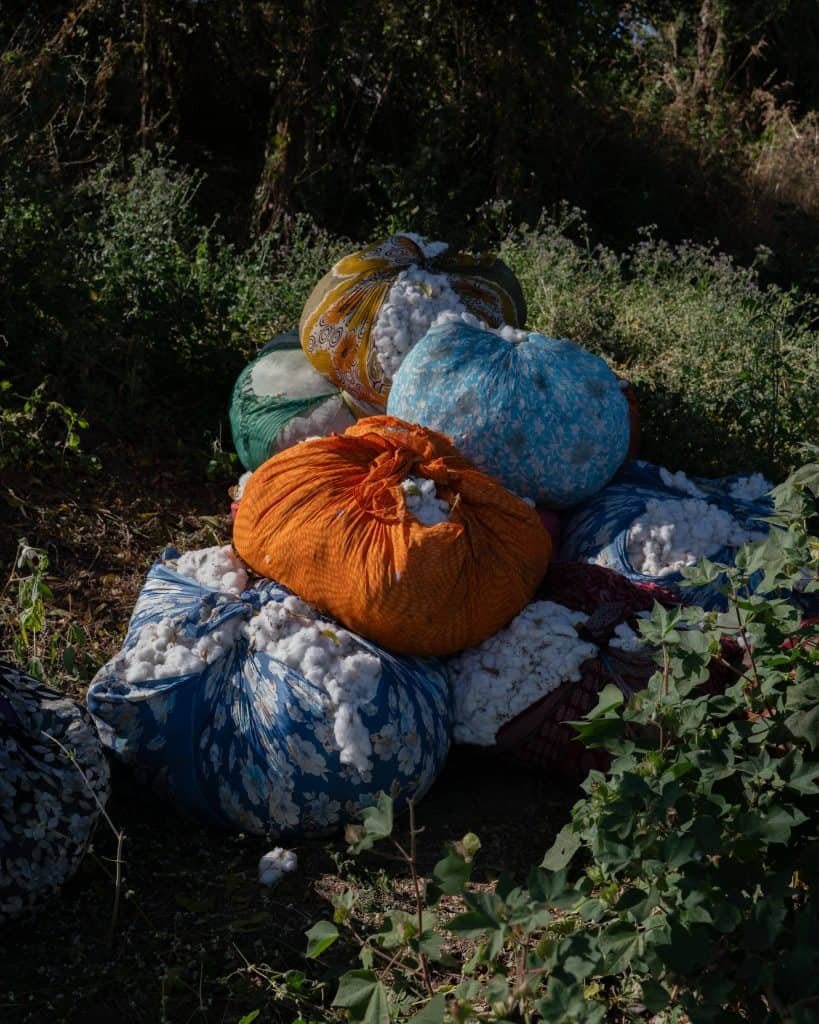
While farmers can do their best to reduce production costs, incomes still vary. They sell the picked cotton to local processing facilities, either by waiting for a representative from a local ginnery to come into the village and offer them a fair price, or by clubbing together to rent a truck and take their cotton to the ginnery themselves when they think the price will be right. Increasingly, brands are seeking responsibly grown cotton for their products, so CottonConnect steps in to link up their partner brands with a local ginnery where they can attest that the cotton has come from one of their verified sources.
But a high income alone is not enough to ensure a future for cotton farmers. “Ultimately, we have to save our Mother Earth,” urges Madhuri. “Even if we learn, even if we get an education, ultimately, we have to save our land and take care of the health of the soil. If the soil is healthy, we get the produce, but if it is not healthy, we will not be able to sustain our livelihood.”
The post Empowering and Equipping Cotton Farmers with Regenerative Practices in Maharashtra appeared first on Textile Exchange.


