

Australia’s leading electric vehicle consumer advocacy group has backed the introduction of road-user charging, but says EV drivers should not be singled out and every vehicle on Australian roads should ultimately pay.
The Australian Electric Vehicle Association (AEVA) is calling for a nationally consistent road-user charge overseen federally, with the amount motorists pay determined by both the distance they travel and the weight of their vehicle.
Under the proposal, petrol, diesel, hybrid and electric vehicles would face the same basic charging system, while fuel excise would remain in place for petrol and diesel vehicles as an additional charge reflecting their emissions.
READ MORE: https://evcentral.com.au/unplugged-ev-buying-incentives-to-be-reduced-as-sales-spiral-not-everyone-is-happy/
READ MORE: Why the FBT exemption for EVs isn’t under threat … yet. And why there’s every chance you’ll be paying a road user charge soon
READ MORE: Don’t do it Jim! Stupid road user charge will be a disaster for the EV market in Australia | Opinion
AEVA says more than 85 per cent of its members support its proposed model.
The proposal comes as Australian governments grapple with how to replace revenue expected to decline as motorists progressively move away from petrol and diesel vehicles.
Federal, state and territory treasurers agreed in September 2025 to progress work on road-user charging, saying reforms should provide fair and sustainable funding for roads without deterring EV uptake. However, the Commonwealth has not settled the design or timing of a national scheme.
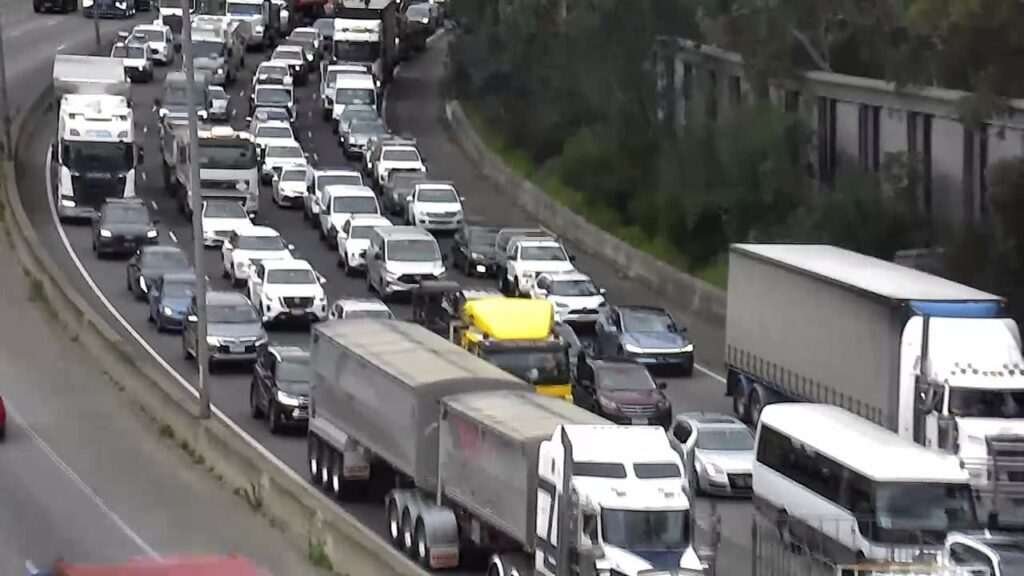
AEVA argues that if two vehicles of the same weight travel the same distance, they should incur the same road-user charge regardless of whether they are powered by petrol, diesel or electricity.
“If two vehicles weigh the same, and are driven the same distance each year, it’s only fair that they pay the same road user charge,” AEVA policy convenor Dr Chris Jones said.
“But if one of those vehicles burns petrol or diesel, they should pay for the cost of that pollution too.”
AEVA’s policy favours a mass-multiplied distance charge, so a heavier vehicle would pay more per kilometre than a lighter one. The association argues this better reflects road wear and would also encourage buyers towards lighter, more efficient vehicles.
The proposal is particularly relevant in NSW, where legislation provides for an EV road-user charge to begin on July 1, 2027, or earlier if battery-electric vehicles reach 30 per cent of new light-vehicle sales.
For 2026-27, the legislated NSW rates are 3.095 cents per kilometre for battery-electric and hydrogen fuel-cell vehicles and 2.476 cents per kilometre for plug-in hybrids.
But whether that scheme can proceed in its existing form remains unresolved. The NSW Government says it is still assessing the implications of the 2023 High Court decision that struck down Victoria’s EV road-user charge after finding the state levy amounted to an excise.
AEVA argues the NSW approach would create anomalies because it considers distance and powertrain but not vehicle weight.
“The NSW model means an EV would pay more per kilometre than a conventional petrol hybrid,” Jones said.
“It also means an electric motorcycle would pay the same rate as a 3-tonne electric SUV, despite having a negligible impact on infrastructure.”
The more contentious element of AEVA’s proposal is its treatment of fuel excise.
Rather than simply replacing fuel excise with a road-user charge, AEVA wants excise retained for combustion-engine vehicles, describing it as effectively a pollution tax on petrol and diesel consumption.
Fuel excise has been particularly politically sensitive in 2026. The Federal Government more than halved excise for three months to June 30 as part of temporary fuel-price relief, then reduced it by 16 cents per litre until August 2 before rates returned to their pre-relief settings.
AEVA says the objective is not to give EV drivers a free ride, but to ensure the eventual road-funding system does not specifically penalise electric vehicles.
“We knew this was coming, so we’ve spent the last decade both leading the debate and advocating for a fair implementation,” Jones said.
“We’re not after a free ride, but we are asking for policy which encourages EV adoption and motivates better vehicle choices.”
The post EV owners back road-user tax: But AEVA also says petrol and diesel vehicles should pay it too appeared first on EV Central.


