
Ontario’s municipal elections on Oct. 26 highlight how farmer representation remains critical as rural Ontario wrestles with relentless development pressure.
There are numerous farmers who have stepped into municipal work, balancing farming, family and careers along with political commitments.
Jennifer Kyle, a farmer and agriculture industry worker, loves municipal politics because it shapes and impacts a community’s daily life and services.
“That is the level of government that’s the closest to the people,” she said. “I also really like the nonpartisan part of it as well. I’m elected on council as Jen Kyle: to be the voice, to speak up and be an independent thinker.”
WHY IT MATTERS
Farmers need seats around municipal government tables — as part of council or advisory committees — if they want their voice to help shape local decisions.
After one term as County of Brant Ward 1 councillor, Kyle is running for mayor against five other candidates in the Oct. 26 municipal election.
It’s a gamble, but the decision was made easier when outgoing mayor David Bailey and several colleagues threw their support behind her.
“Four out of six (mayoral candidates) with some ag background is definitely a good problem to have,” she said. “I think there’s a lot of municipalities that would love to have that many with some sort of farm background.”
Not to mention 30 candidates vying for 10 councillor seats.
Building relationships
Kyle, a farmer and manager of public engagement and digital strategy for Beef Farmers of Ontario, is a “relationship builder,” a critical skill needed to navigate the big infrastructure and growth projects coming down the pipe and rebuild strained government relationships.
“We really need to ensure we have some improved relationships with other levels of government, with other municipal neighbours and partners,” she said, to ensure the municipality is in a strong position to secure funding to offset project costs when it’s available.
Kyle said after election day, regardless of who’s at the municipal table, it’s important for those with a rural and agriculture background to speak up and keep pushing.
“Every four years it changes — the mix of urban and rural — and there’s varying degrees of understanding of how things work outside of the town limits, depending on who’s around the table,” she said, adding participation matters “because I would suggest we’re probably not getting more ag background, probably less.”
Engaging in council meetings, providing public input on projects or being involved in advisory committees is an easy way to provide an agricultural lens to local issues without running for council, said Kyle.
First-time candidates
Wellington County is experiencing a glut of candidates, with 116 running across seven municipalities — perhaps one of Ontario’s most active municipal politics areas.
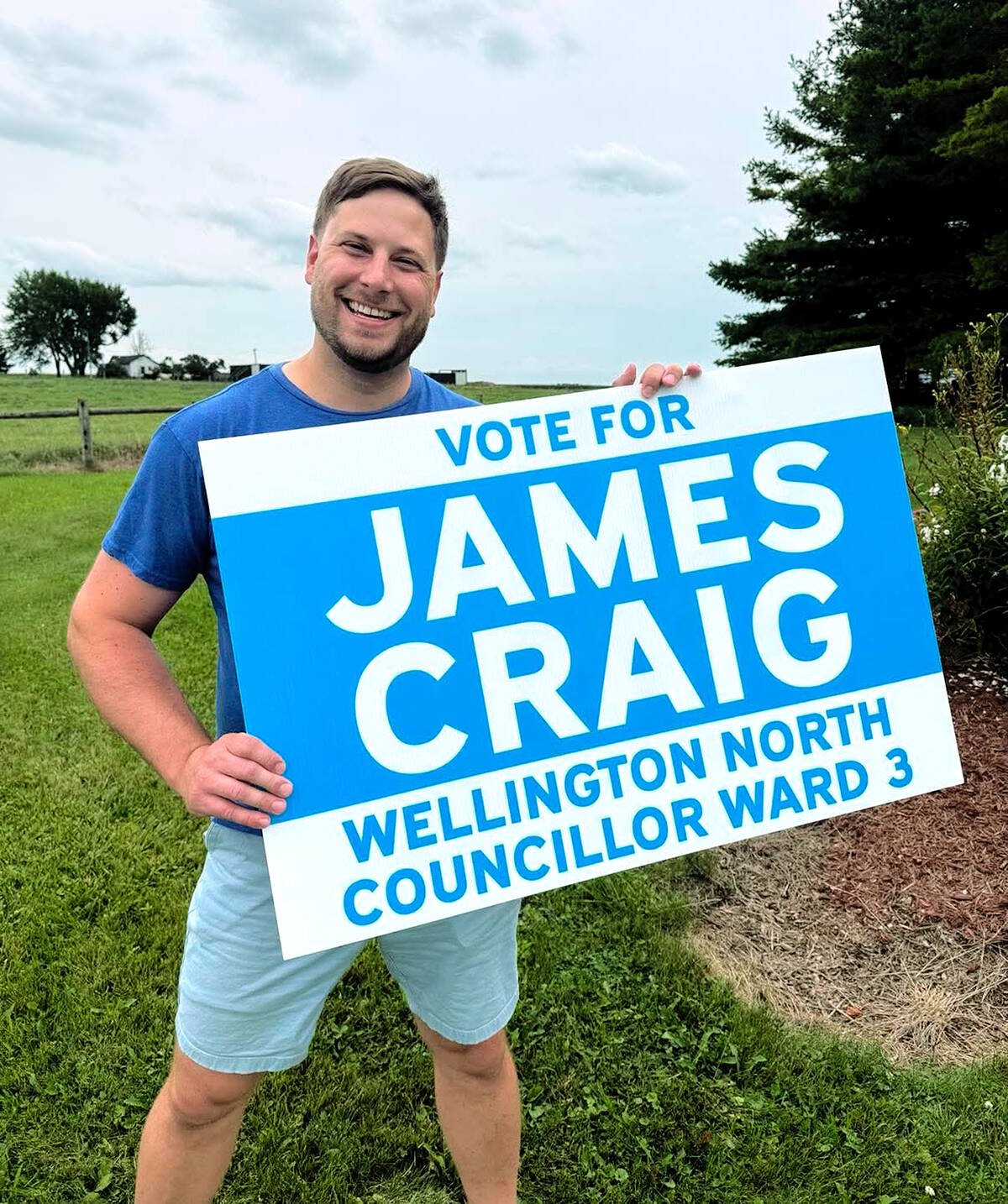
James Craig, 37, a director of business credit focused on agricultural finance and a beef and cash-crop farmer north of Arthur, is running in Wellington North’s Ward 3.
“We have an area where people are willing to step up and put their names forward and say, “I’m going to do something. I’m going to be a part of the solution.” I think that’s what we’re seeing right now,” said Craig. “Which is actually a really good thing, even though it makes for a crowded field. It makes for a more legitimate election at the end of the day.”
With critical votes ahead on urban growth, water, roads and infrastructure, Craig said his background in public affairs, policy management, economics and agriculture could bring a useful perspective to the municipal table.
“We have a wonderful resource in that we are an agricultural community,” he said. “We need good representation on our municipal councils, because if we don’t step up and speak out, then our voice, our opinions won’t get shared.”
Craig said representation matters, but voters also need to know their candidates, understand what they stand for and cast a ballot.
The crowded Wellington County ballots are also drawing younger first-time candidates, including Minto council candidate and farmer, Joe Andrade, 24. Andrade said younger people need a stronger voice in municipal politics. In his riding, 12 people are running for five positions, and aside from Andrade and one other candidate, he said most are retired.
“(Municipal politics) kind of shapes what our towns are going to be like in the future,” Andrade said. “Having a say in what actually happens — it’s going to be our future.”
Andrade said his concerns centre on how the community balances growth, housing demand and agricultural land.
“I’d like to have a stop build,” he said. “At what point do you stop building and growing the towns out? There’s a lot more houses and they keep on taking up more fields. When do you stop?”
Andrade said harvest has limited his campaigning and kept him from some debates, but he is confident he can meet the demands of council.
Municipal demands
Balancing work and council commitments is one challenge facing younger candidates.
That includes Ellice Ward councillor Amanda Brodhagen, whose decision not to seek re-election highlights how difficult it can be for candidates who are building their careers, on and off the farm.
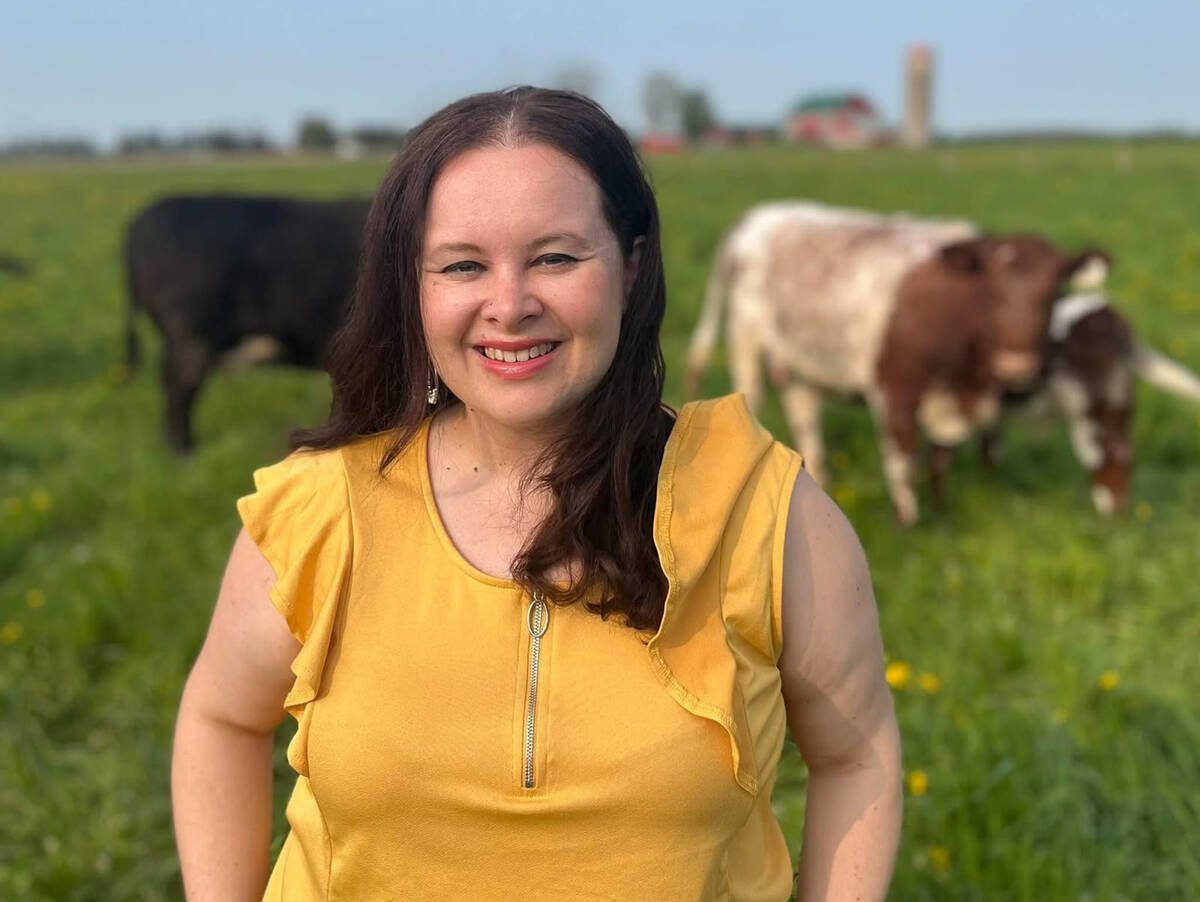
“Four years is a big commitment, but let me tell you, it goes by really fast,” Brodhagen said, adding that having a mentor and ally, like Rhonda Ehgoetz, Perth East mayor, to navigate difficult situations and provide context for historical issues made it easier.
Brodhagen, like many rural council representatives, balanced farming, a Queen’s Park staff job and municipal responsibilities.
“I know what questions to ask, especially coming from a different level of government and having a different perspective on things,” she said. “Looking around the council chamber, I had different opinions than others because of the age demographic that I represent.”
While she thrives on a busy schedule, the loss of her father last year, navigating the farm without his direction and a decision by council to switch to daytime meetings effectively eliminated her ability to participate.
“We just get an honorarium for our time, and it really eliminates working professionals and typically young people by doing that,” she explained, adding she voiced her concerns that it “would eliminate so many people who might want to put their name forward.”
Rethinking honorariums
To create a diverse council of different age demographics, backgrounds and perspectives, the municipality must account for candidates who aren’t semi-retired or retired and are balancing a career, she explained.
If the honorarium doesn’t cover what someone is paid at their job, justifying taking a day off to fulfill council duties becomes challenging, she said.
Municipalities and rural communities should consider reassessing current honorarium protocols to see if claiming mileage, a half- or full-day participation rate, might be feasible to encourage participation.
“There are things that come across counsel that you feel you can make a difference on,” she said. “That is really impactful and important, and so yeah, I am gonna miss that, but I’m grateful for the experience.”


