
Janna and Ryan Greir didn’t intend to become leaders in grazing sheep under solar panels.
They moved from British Columbia to Alberta for Ryan’s job and bought a small farm to raise sheep.
Market changes made them realize that when feed costs rise and the market for sheep declines, times get tough.
WHY IT MATTERS: Partnerships with companies managing land with solar panels are a chance for farmers to expand their businesses.
After talking to a sheep farmer in Ontario about grazing sheep under solar panels, they started knocking on doors, Ryan told a panel at the recent Agrivoltaics Canada conference in Waterloo.
Capital Power was interested, and that translated into a mutually beneficial relationship that launched Solar Sheep, the Greirs’ company that manages the grazing of sheep under solar panels.
The deal with Capital Power also helped redefine the Greirs’ business, located in Alberta’s Wheatland County east of Calgary. More than farmers, they are property managers.
“We’re first and foremost a contractor for our clients,” said Ryan.
“We think it’s really important to note that much of our grazing practices are the same, but the difference being that we have a job to do and that’s to keep the grass down.”
Capital Power knew that a major expense for solar farms is managing properties. It’s a requirement of their ability to operate. Invasive weeds must be managed, for example.
“It’s been a real journey to get there and to learn from Janna and Ryan,” says Wade Heuscher, solar power manager for Capital Power.
Weed managers
There can be a lot to think about when managing the land on a solar farm. How are weeds being managed? Are there areas that need to be reseeded? The site needs to have healthy grass before sheep start grazing.
Maintaining animal health is also important, said Ryan Greir, especially if those animals are being managed for other people under solar panels. His goal is to have the sheep leave the site in better condition than when they arrive.
“Our focus is moving animals frequently and keeping food in front of them.”
Sheep moved with aggressive rotation are great weed managers, said Greir.
“We saw very much in our first year of operations, that ability of the sheep to slow down the life cycle of the weeds.”
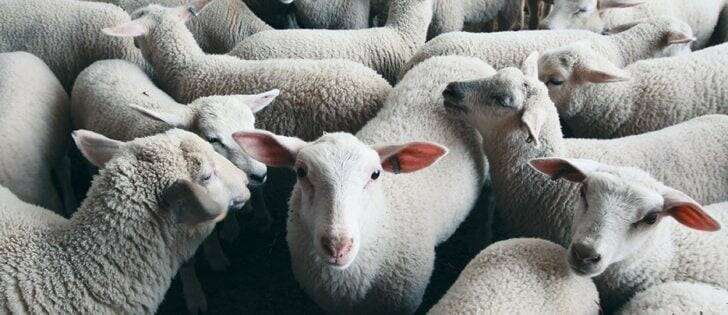
A mower can also manage the weeds, but Greir said he believes that they can knock down weed populations in a year with sheep. The same level of success might take three years of regular mowing.
He said the manure and tramping from the sheep help keep the weeds down and allow grasses to compete beneath the weeds.
The Greirs now work with other farmers on solar grazing and continue to innovate on their Capital Power site near their farm near Strathmore. They’ve added an automated chicken tractor, which moves chickens along between the panels, as well as introduced grazing pigs. Bee hives have also been added.
As a contractor for the site, the Greirs also manage the area outside the fence surrounding the solar panels, which can mean mowing, but it’s also an opportunity to bale feed for winter.
Infrastructure
Building long-term relationships between farmers and solar companies can also lead to better input early on in the solar farm construction process.
Greir said the discussions on operating expenses versus capital expenses can be big conversations.
Keeping wires away from prying animal tongues, building proper infrastructure for water and planning fencing are all ways that managing livestock under solar panels can be made more efficient, for little extra money, during construction.
That can be a challenge, said Greir, because the companies building the solar farms are often contractors themselves and aren’t the ones who will be operating the farm.
Involving the companies providing the infrastructure enables design changes that can be inexpensive, said Sam Alradhi, vice-president of operations at Polar Racking, which provides the infrastructure to hold solar panels.
“I think an agrivoltaics success project starts with the structural design, not with the livestock,” said Alradhi.
Adding animals doesn’t require more steel and infrastructure but needs to be designed with more intelligence around mingling the panels with animals, he said. That includes avoiding sharp edges that can be harmful to the animals.
When the farm is operating, communication is again important, especially when something has to be repaired in the solar part of the property.
“We’re in the business of making megawatts,” said Heuscher.
If a truck or workers have to get to a certain panel and there are electric fences and animals in the way, there has to be a way for the sheep farmers to get the animals and fences moved efficiently for them and for the solar company.
The power of a partnership around infrastructure like solar panels, that are in place for decades, can be stability both for the power company and the farmer. For farmers, it’s a chance to build a larger business by accessing more land.
The post Farmers add value as maintenance contractors at solar farms appeared first on Farmtario.


