
Ontario livestock producers need to be proactive if they want their voice heard in the climate debate at the municipal level.
If they don’t, they could lose ground, especially in the face of things like the Plant-Based Treaty Initiative. That program is delivered as a greenhouse gas emissions-reduction tool for municipalities, but it could undermine livestock, processing, and feed production operations, industry advocates say.
Why it matters: Some climate initiatives begin with the assumption that animal agriculture is automatically environmentally harmful.
Jason Leblond, vice-president of Beef Farmers of Ontario, tabled a last-minute resolution at the November 2025 Ontario Federation of Agriculture meeting, highlighting the initiative and urging members to lobby against it at the local level.
Leblond said some Ontario municipalities, including Vaughan and Richmond Hill, adopted the initiative’s motions to encourage more plant-based foods at city events as part of a greenhouse gas (GHG) emissions reduction plan.
“They think they can eliminate the GHG numbers by eliminating meat from municipal food procurement, all in the name of sustainability,” Leblond said.
“It appears, in our perspective, and some of the language used, (the resolutions) fall under trying to help with food procurement, but it also can include after-school programs and municipal-run facilities,” including hospitals, long-term care facilities and shelters, he added.
Critics have called this unfair to livestock producers, and the OFA resolution calls on livestock groups works with municipalities to achieve climate plans without resorting to similar measures.
The initiative promotes businesses, organizations, and governments to transition to plant-based diets. It also urges municipalities to eliminate approvals for new livestock farms, the intensification or expansion of existing farms, the conversion of land for animal feed production, and the construction of new meat processing facilities, among other agricultural-sector limiting demands.
What farmers can do
Leblond gave two pieces of advice to producers seeking to prevent similar occurrences. The first: speak with local politicians.
“We need people to get out to council meetings. My local council meeting, I hope to be at every second Tuesday,” he said. “The more our producers are talking with their municipality in a respectful way, the more that the municipality will understand.”
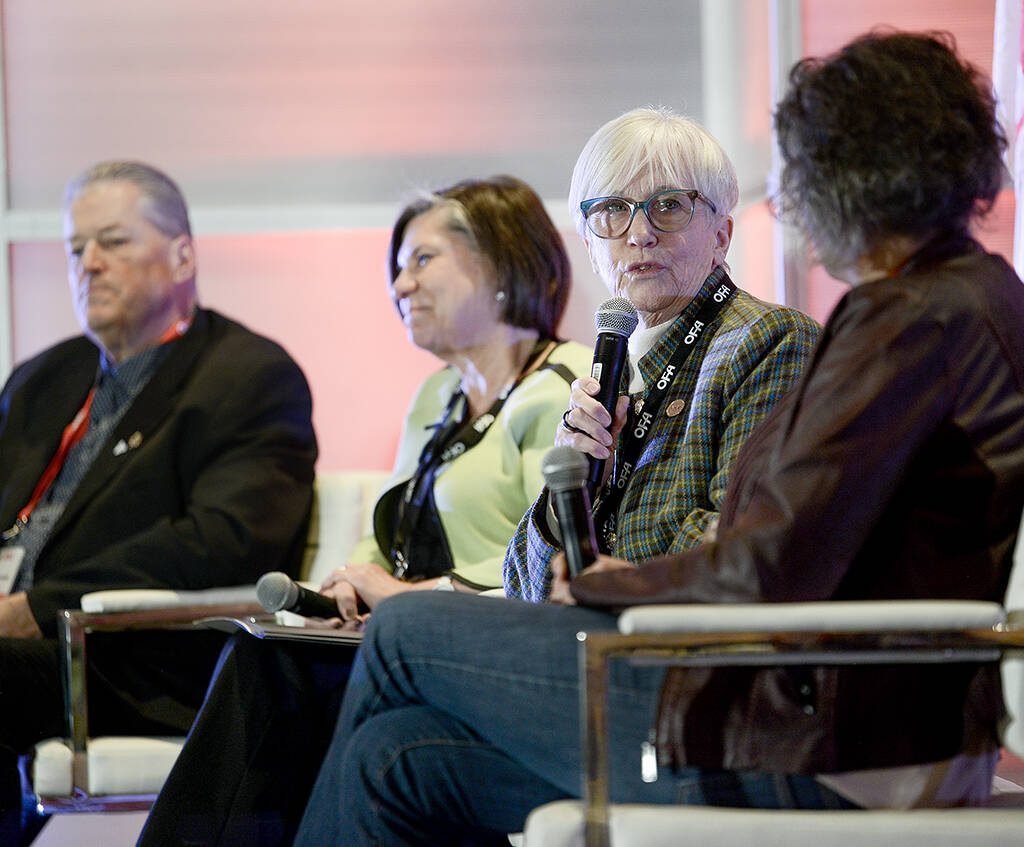
Secondly, he urged members to alert their local, provincial, and national organizations, such as the BFO, OFA, the Canadian Federation of Agriculture, and other agriculture, agrifood, and food processing groups, to help bring the issue to the forefront.
“The truth is that agriculture is a leading part of the GDP for Canada and Ontario specifically,” Leblond added. “So, we’re trying to point out that things that are going to hamper agriculture are not a good thing.”
The Plant Based Treaty contains 40 proposals across three categories for those who adopt it, including calculating GHG emissions based on consumption and designing public information campaigns “to raise awareness about the climate and the environmental advantages and health benefits of plant-based food, nutrition and cooking.”
According to the treaty, none of the 40 proposals are legally binding. However, areas that adopt it are “encouraged to make meaningful changes and implement good practices in plant-based food policies and rewilding within their own jurisdiction.”
Municipal interest
In Vaughan, city councillor Mario Racco introduced the initiative after learning about it at a food products conference in Milan, Italy, suggesting the intiative’s goals align with a local Vaughan organization called Glacial Community.
Although Vaughan and York Region’s decision had met with opposition from producer and farm organizations, Racco said there’s been no personal backlash from the motion, and he doesn’t expect any.
Racco, who once bought fresh produce from local farmers but no longer does, said he can’t think of any farmers active in Vaughan.
“You’ve got to keep one thing in mind: In Vaughan, we used to have lots of farmers 40 years ago,” he said. “Vaughan has lots of rural areas, of course, but there isn’t much farming taking place because, quite frankly, developers are buying or bought most of the farms.”
According to a York Region agri-food highlight report posted on the Vaughan website, the region has 52 farms and 7,862 acres of farmland, contributing $33,127,196 in total operating farm revenue and supporting 46,000 agriculture and agri-food jobs in York Region.
Is Canadian beef more sustainable?
One key aspect of the OFA resolution is sharing data with local politicians like Racco.
Leblond said municipalities often use misleading data that could paint Ontario agriculture, particularly beef, in a negative light to support these motions, even though Canadian beef produces 52 per cent fewer GHG emissions than the global average.
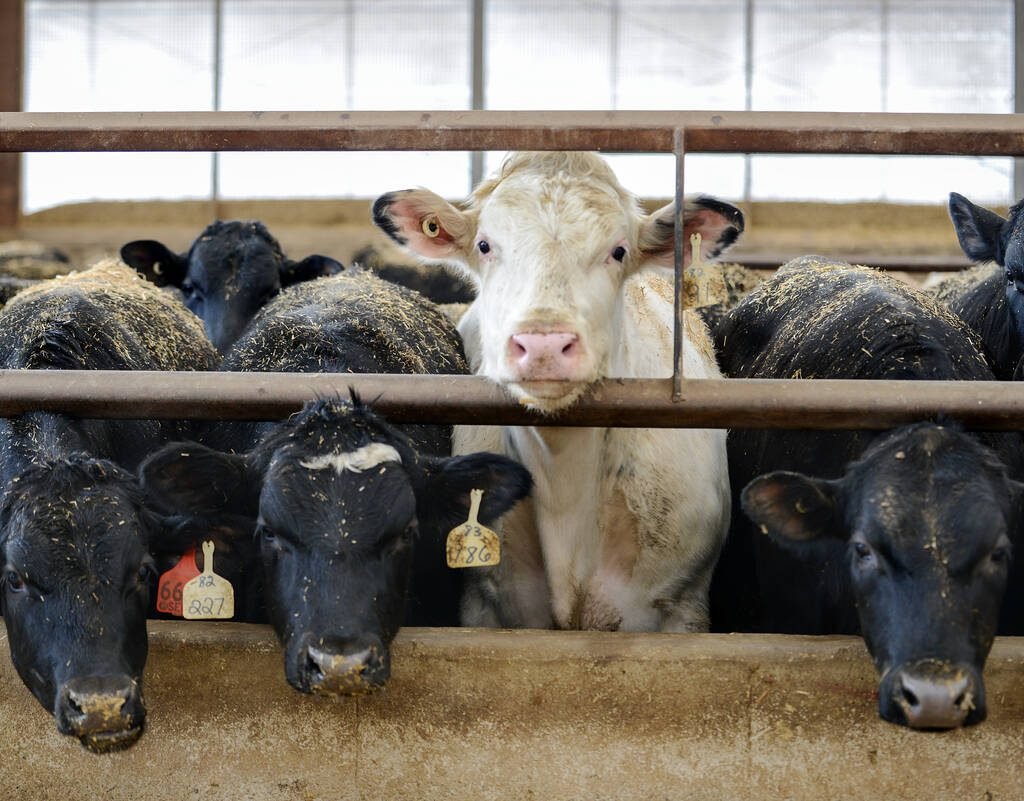
“We’re not talking the high end and saying 52 per cent less. We’re talking about just the average,” Leblond said. “We’re on track for reducing our emission intensity by 33 per cent by 2030. We’ve been working on this for the whole time that I’ve been on the provincial board.”
He pointed to the Canadian Roundtable for Sustainable Beef as an example of the sector’s sustainability efforts.
Life cycle assessments show that Canadian beef, dairy and poultry producers have significantly reduced their emission intensity through best management practices, technology and quality assurance programs.
“Stuff done here in Canada is done differently than in other countries,” he said. “We rise above, the cream of the crop.”
Leblond said BFO has additional data, including rough figures on cattle and key commodities within a region, to share with municipalities to support better decision-making.
“What we need the municipality to do is, when someone is coming forward with a presentation,” he explained. “(Is) to take the time to ask others if it’s going to affect things.”
Room to evolve
Racco is open to feedback from the agricultural industry.
“I will be happy if I receive any,” he said, adding that evidence-based decisions are his goal. “If there is anything that we can do and it’s in the best interest of the people, then I would be more interested in helping. If it’s not, I will let them know.”
Racco believes farmers, including beef farmers, should have the option of “operating in the best interest of society.
“I would be sympathetic to some degree when a farmer says, ‘but my livelihood is going to be destroyed,” Racco said. “Well, we have to update ourselves to reflect society’s needs and wants.”
The post Farmers must engage with municipalities appeared first on Farmtario.


