
By Vanessa Hunt, ASA Director of Publications & Visuals
The American Soybean Association is first and foremost a farmer-led organization. It is powered by farmers who volunteer their time as directors and step up to lead the next generation of soybean leaders.
For every agriculture policy win, there are countless hours of work and numerous people behind the scenes who are consistently advocating for soybean farmers. Within the board of directors, ASA’s bylaws establish advocacy teams to help soy leaders share that load and sharpen their focus. Advocacy teams (ATs) monitor and analyze policy actions, develop advocacy action plans, and provide leadership in specific policy areas. Each of these advocacy teams is chaired by an ASA director. Check out the Q&A below to learn more about ASA’s Advocacy Team chairs, why leadership matters to them, and the priorities they have for their team in 2026.
FARM POLICY ADVOCACY TEAM
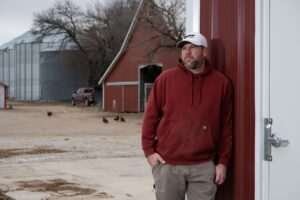
Photo by Kathy Plunkett
The Farm Policy Advocacy Team addresses economic sustainability and financial services-related issues. ASA Director Geoff Ruth from Rising City, Nebraska, is the chair for the Farm Policy AT. Ruth is a seventh-generation farmer and produces soybeans, corn, and cover crop rye. He is no stranger to leadership roles, having served on numerous boards, including Shelby-Rising City Public School’s Board of Education, Nebraska Soybean Association, Nebraska Farm Service Agency, and various committees within his local community.
What are your priorities/goals for 2026 as chair of this advocacy team?
Ruth: There is no shortage of issues facing soybean farmers and agriculture as a whole in 2026. It is important for me as chair of the Farm Policy Advocacy Team to stay engaged and focused on the challenges and opportunities that lie before us in the soybean industry. This mindfulness of the issues has led me to set a few goals for myself and our AT this year. At the top of the list of priorities is encouraging Congress to pass a farm bill. We are long overdue for an updated farm bill, and continued extensions of the previous farm bills are not the security and stabilization that agriculture needs in these uncertain times. The issues change weekly, daily, hourly, and sometimes down to the minute. It is a goal of our AT to be timely in evaluation and response to proposed legislative policy and regulatory changes. We have implemented a few things to get information into our directors’ hands quicker, and in doing so, we get timelier responses from members to the issue of the day. I believe these small changes have made us a more effective advocacy team.
What inspired you to take on a leadership role? How did you get started?
Ruth: It is an honor to serve as chair of the Farm Policy AT. I have always enjoyed serving people, whether that be as the current president of my local board of education, church council leadership, Nebraska Soybean Association, the Farm Service Agency as a member of the State Board, or even as a youth basketball/football/ softball coach. As much as I enjoy being involved in these endeavors, I certainly didn’t have leading the Farm Policy AT as chair on my 2026 bingo card. I am thankful to members of the ASA Executive Committee who encouraged me to take on this role and further my involvement in ASA. Their guidance and leadership have helped me realize the importance of our soybean farmer-led organization and the impact we have on domestic policy that can directly drive global demand of soybeans. These first few months as the Farm Policy AT chair have been a rewarding experience and have certainly helped me gain a greater understanding of how relentlessly our ASA staff and directors work on behalf of soybean farmers.
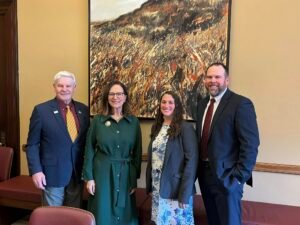
Farm Policy AT Chair Geoff Ruth and Nebraska soybean leaders Dennis Fujan and Chandra Blase meet with Sen. Deb Fischer during spring Hill visits.
What advice do you have for those who want to get into leadership?
Ruth: For those who have an interest in leadership, be willing to do the hard thing. Saying “yes” and being outside your comfort zone is one of the hardest first steps when it comes to leadership. There are very few things in leadership that are easy, and leadership positions within an influential organization, such as ASA, often lead you to have the hard conversation with your nationally elected officials. We in agriculture today need all the leaders we can get. Our voices continue to shrink in number, which makes the need for those voices that speak on behalf of agriculture to get louder and carry more weight.
Can you talk about the impact of ASA and why it’s important as an organization established over 100 years ago, as well as why it’s critical for soybean farmers to get involved?
Ruth: The American Soybean Association’s impact for more than 100 years is astonishing. It truly is the premier trade organization. We, as soybean farmers, have benefited from wonderful farmer leaders and amazing staff who always put what is best for the soybean industry above all else. Knowing that we have a team that is continually engaged in the issues and the impacts those policies have on our way of life is extremely encouraging and gives us, as farmers, the freedom to go about our daily work. However, as our industry continues to shrink in the number of people it employs, it is critical that we get all soybean farmers to be a part of ASA. Taking our issues to Capitol Hill with a unified voice makes us stronger. Membership within ASA has been a very rewarding experience for me as someone who is very involved within the organization, but it should also be viewed as rewarding to those who simply pay their dues to their state organization. The work that ASA does has a direct impact on our bottom line.
Is there anything else you would like to share about your advocacy team?
Ruth: I would like to thank all those who are a part of the Farm Policy AT. At Commodity Classic, ASA voting delegates passed their policy manual during the voting delegate session. This process started months ago and required many meetings from our AT members. Their diligence and willingness to work through the process made a great group of policies that we will use in 2026 to guide our national advocacy work. It truly is an honor to serve as the Farm Policy AT chair, and I look forward to working with our AT members to create the best possible outcome for soybean farmers nationwide.
CONSERVATION & PRECISION AG ADVOCACY TEAM
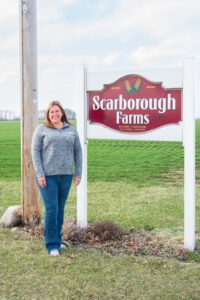
The Conservation & Precision Ag Advocacy Team addresses issues relating to conservation, ag tech, checkoff and agricultural research, soy foods and nutrition, biobased consumer goods, livestock, and labor. ASA Director Denise Scarborough from LaCrosse, Indiana, is the chair for the Conservation & Precision Ag AT. She farms with her husband, Mark, and they produce soybeans, commercial corn, seed corn, and wheat. The couple also owns an excavating business, and Scarborough has an off-farm job with the First National Bank of Monterey as a commercial and agricultural lender. Scarborough is involved in the Indiana Farm Bureau and has served not only locally, but also on state and national committees. She volunteers with 4-H, Purdue Council for Agricultural Research, Extension, and Teaching, youth sports, and her church. Since 2017, Scarborough has been an Indiana Soybean Alliance director, serving in various leadership roles on the board.
What are your priorities/goals for 2026 as chair of this advocacy team?
Scarborough: I think some of the personal goals are to be proactive instead of reactive. When President Trump took office for the second time, we didn’t know what to fully expect, and it caused us to be reactive to what was happening. The goals were 180 degrees from what we were assuming when he came into office. We couldn’t be prepared for the political changes. When the Make America Healthy Again (MAHA) report came out, we didn’t imagine that we would have to defend the soybean as much as we are. In Indiana, we are the number one grower of high oleic soybeans. They are heart-healthy. We have worked hard to get high oleic soybeans into major venues in Indiana. We didn’t think we would have to combat healthy eating and ultra-processed foods as much as we have. There have been several conservation topics that have come up that weren’t on our radar as farmers. We now have a better understanding of MAHA and precision ag changes. For 2026 and going into 2027, I want us to be more proactive than 2025 as that was more of a reactive year.
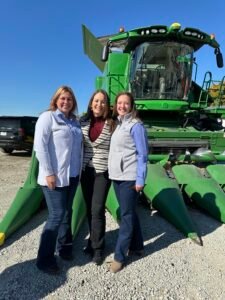
Conservation & Precision Ag AT Chair Denise Scarborough (IN) spoke about the importance of trade to Indiana farmers during a roundtable with USDA Secretary Brooke Rollins in the fall. Pictured from left: Scarborough,
Rollins, and Indiana Soybean Alliance CEO Courtney Kingery.
What inspired you to take on a leadership role? How did you get started?
Scarborough: I am wrapping up my last year as a director for ISA. I have been on the board for nine years. When I started, there was a lot of strong leadership, and I’ve seen a lot of organizational changes. Throughout that, there has been continual strong leadership coming onto the board. I believe that the best person for the job should always fill the role for what is needed for the organization. I also had mentors who had more board experience that took me under their wing and explained about external organizations I could get involved in. I have a passion for policy. My goal was to not start with ASA until I was done with my time on the board at ISA as I was on a leadership track. However, there was an ASA director who was not able to fulfill their term. Board members asked me to join the ASA board, so I took on the challenge. The last two years have been challenging between being an ISA director and an ASA director while having a full-time job, being a mom to two teenage kids, and juggling farm and excavating business responsibilities. Not everyone has time to leave their family for the betterment of agriculture. It’s a gift I’ve been given. I am fortunate to have a supportive husband and kids and a job that allows me to leave and speak for the betterment of ag, promote ag, and fight the battles.
What advice do you have for those who want to get into leadership?
Scarborough: I feel like when you join an organization, you have to start at the beginning and understand the organization before you jump into a leadership role. Spend time learning their goals and see if you are aligned with them. However, don’t be afraid to step up. I have had to get outside of my comfort zone, which has allowed me to become a better leader. I’ve accomplished a lot of things for where I am right now, and a lot of that has come from having the support of other people who have encouraged me to take on leadership roles. Don’t be afraid, take the challenge. Even if it’s one little challenge, it can grow into something else. If we don’t stand up for ourselves, someone else will speak for us and it might not be the right message. Stand up and give the right message for agriculture.
Can you talk about the impact of ASA and why it’s important as an organization established over 100 years ago, as well as why it’s critical for soybean farmers to get involved?
Scarborough: The last year is a true testament of ASA. Our executive committee has participated in an astronomical number of interviews. There has been more news and media about U.S. soybeans in the last 12 months than there has ever been in my lifetime. Sometimes as farmers we get stuck in our heads of what’s going on in our state, but our soybeans don’t just stay in our local area. They get exported. If somebody isn’t in D.C. looking for new exports/markets, purchasers are going to look at other countries. We need to continue to find new places for our soybeans to go. ASA has been the leader of the pack this last year with the efforts in Washington D.C., and all of agriculture, not just soybeans. Testimonies, interviews, and amazing spotlights all show the success ASA has had.
Is there anything else you would like to share about your advocacy team?
Scarborough: The Conservation & Precision Ag AT has the most diverse portfolio of all the AT teams. It’s interesting because when I first came onto the Conservation & Precision Ag Advocacy Team and was then asked to be chair, I didn’t understand all of the things that fell into it. That’s the fun part; there is so much diversity. It keeps you on your toes. We are continuing to combat Waters of the U.S. (WOTUS), making sure it doesn’t come back in the future. There are so many things in ag at the national level that may not affect me, but it is for the betterment of all agriculture. It gives you a wider aspect of making decisions for the greater good of soybean farmers and all farmers, especially when it comes to conservation and agricultural issues going forward.
BIOFUELS & INFRASTRUCTURE ADVOCACY TEAM
The Biofuels & Infrastructure Advocacy Team addresses energy issues, focusing on policies related to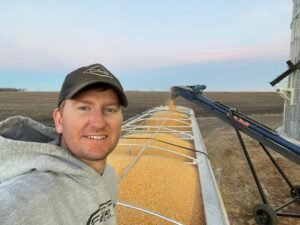 biodiesel, renewable diesel, and sustainable aviation fuel; infrastructure issues related to ocean shipping, inland waterways, railways, roads, broadband, and industrial biobased products; and transportation issues, including vehicle emissions, biofuel utilization, and fuel taxes. ASA Director Drew Peterson from Salem, South Dakota, is the chair for the Biofuels & Infrastructure AT. Peterson is a fifth-generation family farmer, and he and his wife, Lauren, and their two young children raise soybeans and corn and run a cow-calf and cattle feeding operation alongside his father, Steve.
Peterson joined the South Dakota Soybean Association as a Corteva Young Leader in 2019 and served as vice president of the board the last three years. In addition, he serves on the South Dakota Ag Foundation and has been a state legislator for the last four years.
What are your priorities/goals for 2026 as chair of this advocacy team?
Peterson: Coming into 2026, my main goal was to get finalized Renewable Volume Obligations (RVOs) in the Renewable Fuel Standard (RFS) and Clean Fuel Production Credit (45Z) guidance in place. Not only would this certainty be good for soybean producers, but it will also help our country with energy security in a volatile geopolitical climate across the globe. The announcement at the end of March regarding RVOs was a great step forward in that regard, and I want to commend our board and ASA staff for the yearslong efforts that got us to this point. The proposed 45Z tax guidance is good – we just need to get them finalized. This is the win soybean producers have needed after years of tight or negative margins.
Regarding infrastructure, continued investment in inland waterways and rail improvements are needed to keep our transportation infrastructure resilient, no matter where our whole bean and soybean byproducts need to be transported. With the increased domestic demand, the direction our products are transported may change significantly. Our infrastructure must be ready for the new opportunities.
What inspired you to take on a leadership role? How did you get started?
Peterson: I care deeply about the future of the family farm. Strong biofuel policy will help create reliable, long-term markets for the soybeans we grow that will allow our generations of producers and those who follow to continue to sustainably and profitably raise and market soybeans.
The opportunity to serve as chair of the Biofuels & Infrastructure Advocacy Team likely started when I offered to the executive team my assistance wherever I could be useful when I officially joined ASA in December 2025. I have been active in ASA activities as VP of the South Dakota Soybean Association for many years and was fortunate to know and learn from our past and present ASA leadership over the last six years. I visited with many of our leaders and staff about the biofuels industry and my policy experience in the biobased diesel and ethanol spaces. Shortly after some of these conversations in December, the invitation to serve on the B&I AT and request to be chair followed, and to be honest, I was a little apprehensive if I was ready. ASA Vice President Dave Walton, Government Affairs Executive Director Alexa Combelic, B&I AT Vice Chair Bob Worth, and the rest of the ASA biofuels staff, and I quickly started working through resolutions. That caught me up to speed on the ins and outs of the industry at the federal level, the opportunities and challenges that may exist between objectives of various industry organizations, and what we needed to do today to move forward.
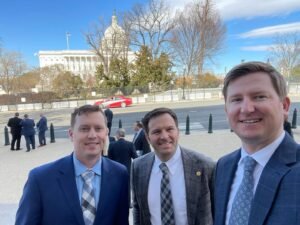
Biofuels & Infrastructure Advocacy AT Chair Drew Peterson (SD) visits lawmakers on the
Hill with fellow South Dakota ASA directors. Pictured from left: Jordan Scott, Brandon Wipf, and Peterson.
What advice do you have for those who want to get into leadership?
Peterson: Get to know ASA leadership and staff, read up on policy areas that interest you, attend meetings and conferences that you want to be active in, and offer your assistance where it can be most useful. Everyone I have met through ASA enjoys the work they do and the role they play, and that is critical for having an organization that can serve the American soybean farmer as well as ASA does.
Can you talk about the impact of ASA and why it’s important as an organization established over 100 years ago, as well as why it’s critical for soybean farmers to get involved?
Peterson: ASA is a voice for the American soybean farmer, and it’s our responsibility to play a role in that effort. If we don’t tell our story, someone else will and we might not like what they have to say about us. The soybean industry has evolved immensely from a forage crop to the “everything bean” we know today. I cannot thank the industry leaders enough who have come before us for their role in getting us here today where our meal is the premium protein feed and our oil is used for cooking and fuel production. It’s an exciting time to be a soybean grower.
Is there anything else you would like to share about your advocacy team?
Peterson: Every day, I learn new things about farming, and the same can be said for the soybean industry. We must continue to work towards progress in our industry and continue to advocate to policymakers in D.C., both elected and appointed decision makers. The other exciting thing is getting to meet new friends on our AT and the ASA board who are leaders in their home states as well as D.C. and St. Louis. I learn so much as far as knowledge from ASA, but I also learn how to communicate, advocate, and ultimately make positive change in our industry from my fellow directors and staff. Additionally, I’ve always believed that likeminded groups in our industry are better off working together toward common goals than working apart. I think that has been proven this year.
REGULATORY ADVOCACY TEAM
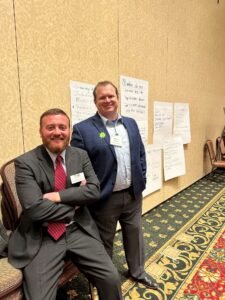
tools, and other regulatory activity. ASA Director Andrew Moore from Dalton, Georgia, is the chair for the Regulatory AT. Moore farms with his father and uncle in Northwest Georgia. Through a double crop production, the Moores raise nine different row crops or cereal grains on a five-year crop rotation. In 2008, they decided to add value per acre through vertical integration. They constructed an Expeller Press oilseed processing facility and a pellet mill manufacturing all classes of animal feeds. Moore advocates strongly on behalf of the industry, stressing responsible financial and sustainable production practices that are both conventional and unconventional. The Regulatory Advocacy Team addresses issues relating to biotechnology, crop protection and pesticidal
What are your priorities/goals for 2026 as chair of this advocacy team?
Moore: As chair of the advocacy team in 2026, my priorities are to further strengthen our soy team members’ capacity to advocate effectively on near-term regulatory issues impacting soy farmers. This includes identifying and defining emerging regulatory challenges that are moving through the pipeline and are likely to affect farmers in the future. In addition, I aim to develop clear tools and resources that empower farmers to confidently communicate the safe and responsible use of pesticides and their essential role in modern agriculture.
What inspired you to take on a leadership role? How did you get started?
Moore: I’ve always believed in having a seat at the table, regardless of the situation. Over the past decade, regulatory issues and challenges have been a constant, both personally and professionally. On our farm, our production practices and location make it essential to have access to a full range of safe and effective pesticide tools. The challenges we face aren’t unique – they closely mirror those experienced by farmers across the country – which motivated me to step into a leadership role and help advocate for practical, farmer-focused solutions.
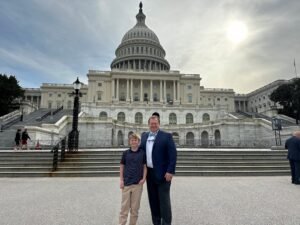
Regulatory AT Chair Andrew Moore (GA) brings his son, Joseph, along for Hill visits to discuss soybean policy issues.
What advice do you have for those who want to get into leadership?
Moore: Say yes to opportunities, commit to learning something new, and don’t be afraid to ask questions. Be honest when you don’t know something—but be willing to find the answer. Getting involved matters because participation makes our voices stronger and ensures they are heard.
Can you talk about the impact of ASA and why it’s important as an organization established over 100 years ago, as well as why it’s critical for soybean farmers to get involved?
Moore: Developing strong voices and leadership to advocate for farmer interests has been the cornerstone of the American Soybean Association’s century of success. Most farmers I know are honest and operate with a high level of integrity. The responsibility of providing food for families and friends, caring for livestock, and supplying feedstock for industry is a daunting task. Having farmers from across the United States aligned around this shared mission is lifegiving. Only farmers can truly advocate for farmers.
TRADE POLICY & INTERNATIONAL AFFAIRS ADVOCACY TEAM
The Trade Policy & International Affairs Advocacy Team (TPIA) addresses issues relating to trade, market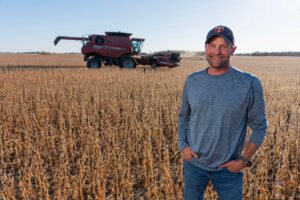 access, tariff and non-tariff trade barriers, international food aid, aquaculture, federal grain standards, fertilizer, and tax. ASA Director Josh Gackle from Kulm, North Dakota, is the chair for TPIA. He farms 2,800 acres of soybeans and also produces corn, wheat, and barley. Gackle began his service on ASA’s board of directors in late 2017 and served as ASA president in 2024. He has served as a director on the North Dakota Soybean Growers Association board and has been an active member of NDSGA’s legislative and membership committees. He is also on the Kulm City Council.
What are your priorities/goals for 2026 as chair of this advocacy team?
Gackle: TPIA plays a key role in maintaining and increasing existing demand and building new demand for U.S. soybean farmers’ international markets. The AT works closely with the state soybean associations, WISHH, USSEC, and USB to build on these priorities, and we will continue to work together to accomplish these goals for U.S. soybean farmers.
What inspired you to take on a leadership role? How did you get started?
Gackle: Having been involved with public policy before coming back to the family farm, I know the importance of farm organizations like ASA and all our state and national partners. I was also encouraged by fellow board directors to put that experience to work and advocate for farmers across the country.
What advice do you have for those who want to get into leadership?
Gackle: Get involved with your state and national farm organizations. Tell your story as a farmer to legislators and policymakers, whether at the local, state, or national level. Our voice makes a difference.
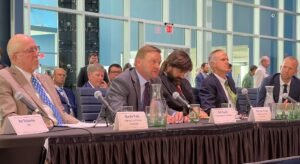
Trade Policy & International Affairs AT Chair Josh Gackle (ND) testifies during a Senate
Appropriations Committee subcommittee field hearing.
Can you talk about the impact of ASA and why it’s important as an organization established over 100 years ago, as well as why it’s critical for soybean farmers to get involved?
Gackle: ASA is one of the most impactful organizations when it comes to government policy that affects our farm and business operations. There is power in numbers, and our organizations make sure our voice as farmers and rural America are heard by decision makers at the local, state, and national level.
Is there anything else you would like to share about your advocacy team?
Gackle: For TPIA in particular, the AT will continue to advocate for strong international markets. U.S. soybean farmers provide a high-quality and reliable supply of soy products. We as producers, and our customers as well, benefit from that relationship.
The post Farming & Leading: Meet The 2026 Advocacy Team Chairs appeared first on American Soybean Association.


