

When fellow Ontario Nature Youth Council member Yiming and I created Project 275 to fight species extinction with art, there were 275 species and subspecies at risk in Ontario (see the full list here). We had always known that the “275” would eventually become symbolic when the actual number changed, although we had hoped any change would be driven by species recovery, not politics and declines. Alas! At the very least, as a family member pointed out, it is not yet extinction reducing the number of at-risk species in the province. That would be far worse! On January 27, 2025, the mudpuppy, a species of salamander, was officially added to the list of species at risk in Ontario as a species of Special Concern. With this species now listed as at risk, we have the chance to support their recovery and look closer at the threats they face.
As salamanders and amphibians, mudpuppies are especially vulnerable to pollution and habitat loss (Learn more about mudpuppies here!). While they breathe mainly through their gills, they can also breathe through their skin, leaving them vulnerable to absorbing any contaminants in their home waters and lands. Furthermore, their eggs do not have shells, so they too absorb everything in the surrounding waters (Fun fact about spotted salamander eggs!). It is not surprising then, that half of our salamander species are provincially at risk (learn about the 13 species with Ontario Nature’s reptile and amphibian field guide!).
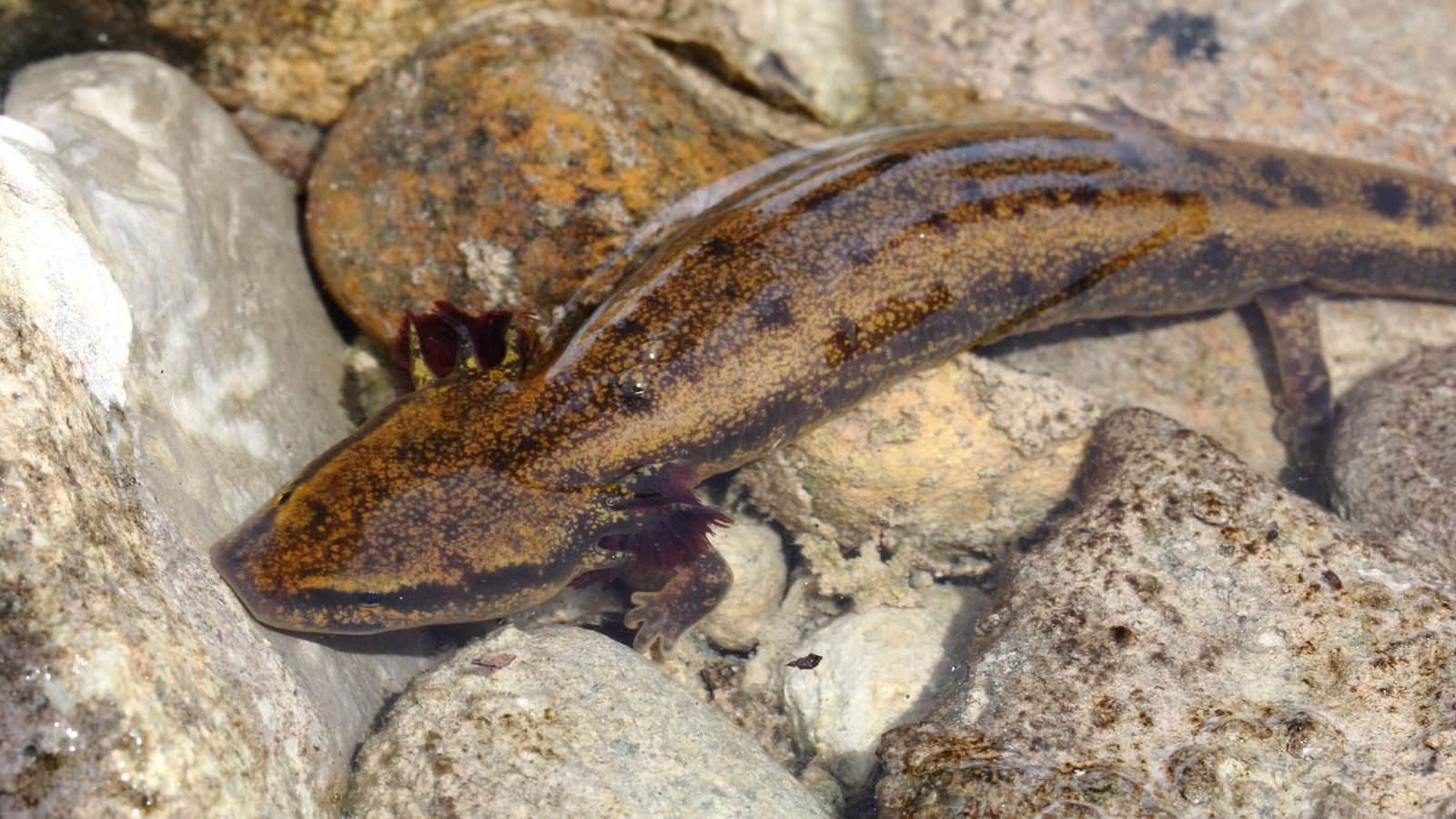
Being at risk might be the least interesting thing about mudpuppies. Unlike most salamanders, they do not metamorphose into terrestrial adults. Instead, they keep their external gills and live in water for their entire lives, not unlike the famous axolotl. They live in a variety of habitats, favouring cold water, but ranging in depth from relatively shallow river bottoms to 30 meters below the surface of Lake Michigan. Furthermore, once they reach adulthood, they don’t have as many predators and can live over 30 years. They average around 30 centimeters in length as adults, but can grow up to 50 centimeters. That is massive compared to our other native salamander species!
Mudpuppies are not the only remarkable species at risk in Ontario, nor even the only remarkable salamanders! While we have 13 self-sustaining salamander species, we also have a species of unisexual mole salamander (aka unisexual Ambystoma). Every member of this species is female, and they reproduce asexually. Daughters are often perfect clones of their mothers. This is remarkably rare in vertebrate animals! However, while they do not usually use the DNA from males, they are still dependent on males of other salamander species for reproduction. Among the species which support unisexual mole salamanders are Jefferson and small-mouthed salamanders, both of which are endangered. As a result, so are the two subspecies of unisexual mole salamander which rely on them.
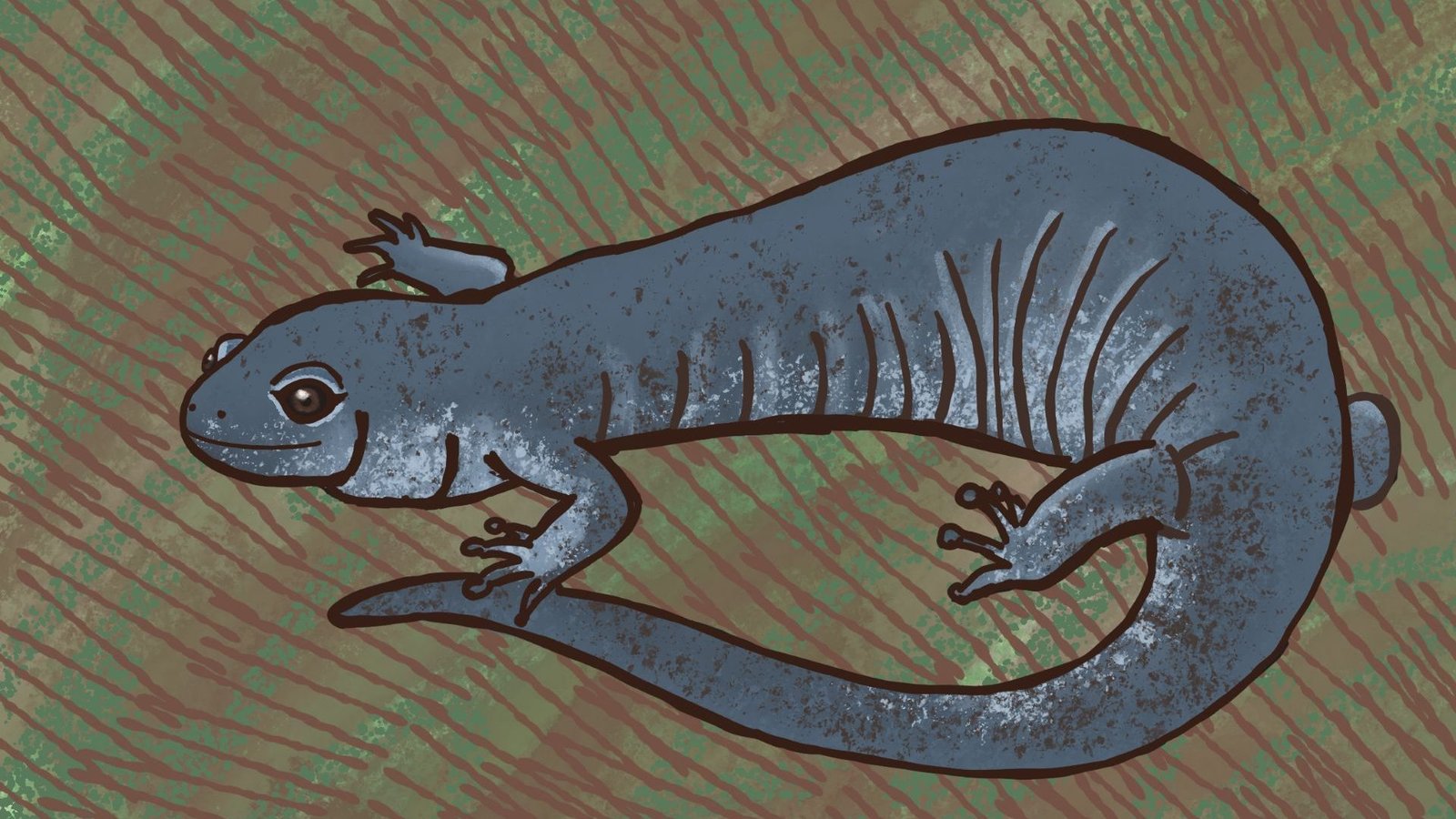
Although this might all seem somewhat dreary, there is a lot of hope. The threats outlined here are all by human hands, which means that human hands can solve them, too (the Ontario Nature Youth Council did their part at the annual wetlands field trip!). If there is something that sets humans apart, it is our creativity. That is exactly the principle behind the Ontario Nature Youth Council’s Project 275. Our objective is to create and collect art featuring our species at risk to raise awareness for the diversity of life in Ontario which needs our support to continue living here. Art donated through this project will support fundraising efforts Ontario Nature’s first transit accessible nature reserve, Thickson’s Woods, a unique stretch of old-growth pine forest on the shore of Lake Ontario. It is home to many species at risk, and an important stopping point for migrating birds.
We are fighting extinction, and you can join us by creating and submitting art by November 1st (learn more here!), learning about our species at risk (you’re already doing that!), and telling everyone you know!


