
Standard soil tests tell you what this year’s crop needs. A University of Guelph campaign says five other measurements tell you something fertility tests can’t: whether your ground is actually getting better.
As soil testing programs become easier to access, and results easier to understand, the opportunity to improve business sustainability and land management grows.
That’s according to Making Sense of Soil Health – a campaign from the University of Guelph’s Soils at Guelph initiative, encouraging farmers to go beyond conventional fertility testing.
Why it matters
Standard soil tests tell a farmer what this year’s crop needs. Soil health indicators track whether the ground itself is getting better or worse over time, which is the difference between managing a season and managing an asset.
Measuring soil health indicators allows farmers to monitor and manage the below-ground ecosystem associated with sustained crop productivity.
By monitoring and managing five key soil health indicators, the Making Sense of Soil Health campaign identifies why building better soil for the long term also makes good business sense in the short term.
What are soil health indicators?
Soil health indicators are measurements of the physical, chemical or biological properties of soil. There are dozens of potential soil health indicators, but Soils at Guelph – in conjunction with a wide network of Ontario farmers, advisors, laboratories and others – identified five most relevant for Ontario soils:
- Soil organic matter
- Active carbon
- Respiration
- Potential mineralizable nitrogen
- Aggregate stability
Identified by Soils at Guelph with Ontario farmers, advisors and laboratories as the most relevant for Ontario soils.
Angela Straathof, soil scientist and research impact manager for Soils at Guelph, says healthy levels in these five categories are increasingly linked to yield stability and production resiliency in the face of extreme weather events.
While standard soil fertility testing is a means by which farmers support short-term management decisions, the practice provides an incomplete picture of how well soil is functioning. Conversely, soil health indicators can show how well soil is functioning as a system.
Straathof says these indicators have been hard to measure, historically. Determining how each indicator interacts with the others or are impacted by field management decisions has also been a challenge.
“In production agriculture, we’ve been focused for a long time on using fertility, genetics, and crop breeding to enhance yields. Now we’re ready for the next phase,” says Straathof.
“This is just a part of the evolution of knowledge around soil health. In the 21st century, there is more of an understanding of the interface between the chemistry, biology and physics below-ground.”
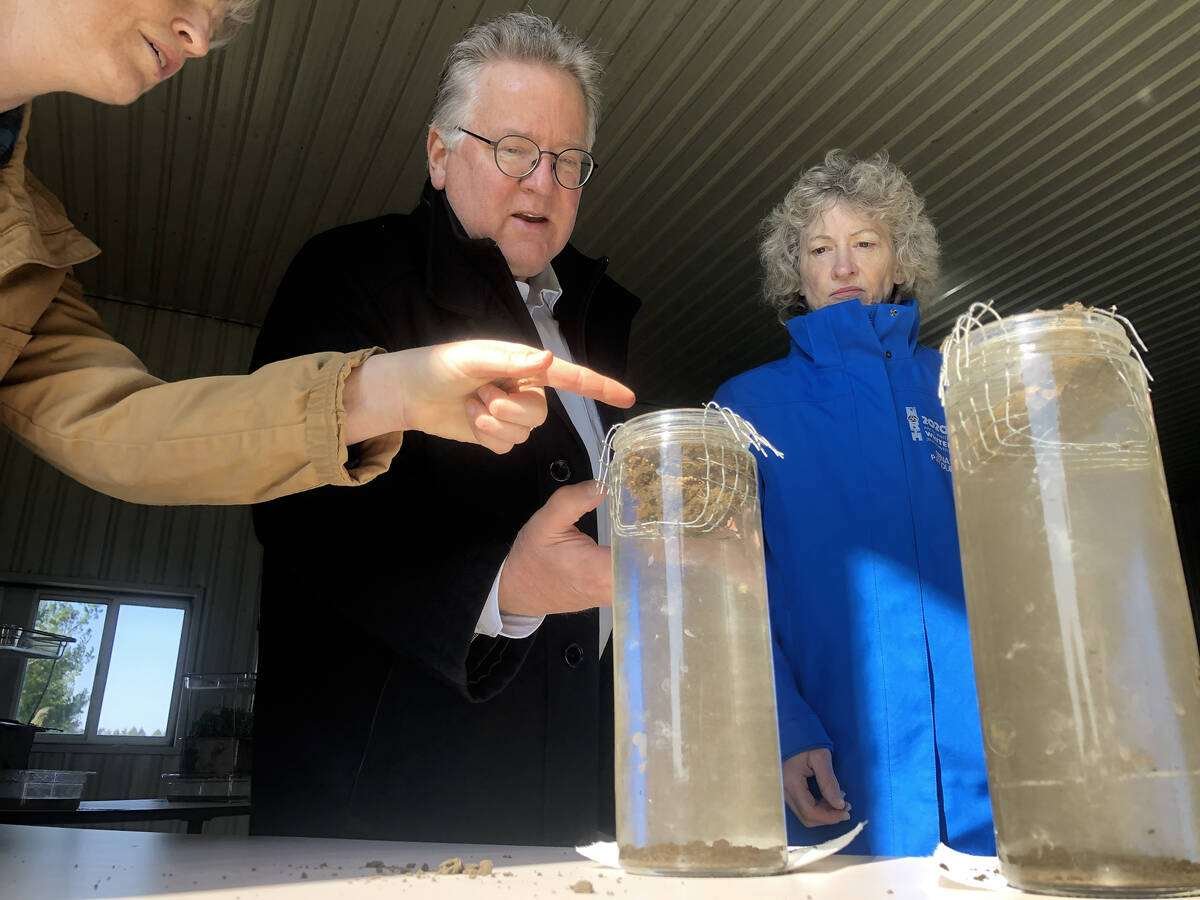
Baselines matter
Improving soil begins with measuring a baseline – that is, establishing the condition of the soil today, as a starting point. As management practices change over time, measurements of the five indicators can be taken repeatedly to determine if those practices are having a positive impact.
Many Ontario soil analysis laboratories offer services for each soil health indicator, Straathof says, in addition to traditional nutrient analysis. Farmers just need to request results for both. Beyond individual fields, more farmers requesting and sharing their soil health indicator data would support benchmarking, and the determination of both averages and potential for Ontario’s different regions and soil types.
“This is where research as a system becomes valuable. It provides an opportunity for farmers to add to a growing body of knowledge,” she says.
“Fertility testing is really important as a one-season or a one-harvest approach to soil management. You know what your crop needs and what it will take out of the soil as it grows. Looking at soil health indicators means you’re thinking longer term, and with a more systems-approach, than fulfilling that particular crop’s nutritional needs.”
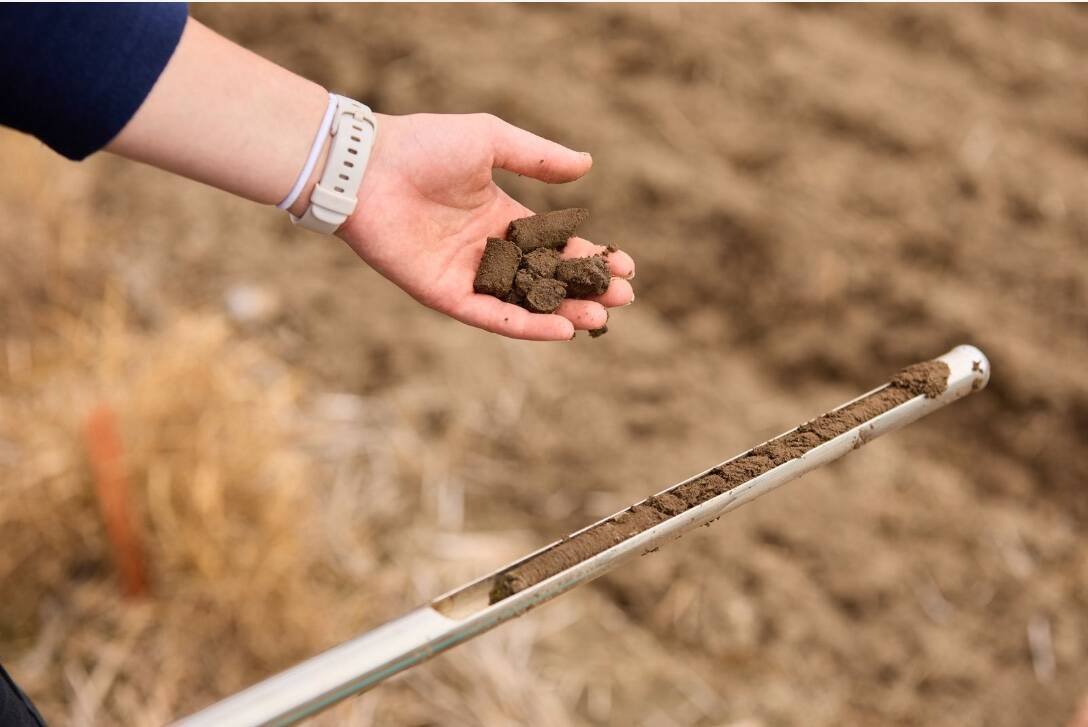
Know why you’re testing
Straathof adds each farmer should consider what their individual motivations for measuring soil health are.
“Measuring soil health should be done with a goal in mind. Maybe they feel their land’s production capacity has plateaued and are looking for other options to get the most out of their fertility management. Or maybe they’ve noticed problems in parts of the field that haven’t been there before,” Straathof says.
“A farmer will always have a problem they’re trying to solve or a potential they’re trying to reach. Soil health testing provides the next generation of information you can gather about your field, beyond fertility levels and production in yields.”
Editor’s note: Matt McIntosh is writing on behalf of Soils at Guelph. This is the first in a series on the initiative’s five soil health indicators and its Making Sense of Soil Health campaign.
Soils at Guelph is an effort to increase awareness of research initiatives, facilitate collaboration and knowledge exchange, and to educate on the importance of soil health.
The post Five soil tests that flag problems fertility misses appeared first on Farmtario.


