
The launch of the Agri-Food Mission to MaRS is the next step in the trend that’s bringing agriculture and food technology closer to the mainstream tech development ecosystem in Canada.
WHY IT MATTERS: There are challenges bringing enough capital into agriculture and food technology, and by connecting the larger entities, there could be more funding options.
The MaRS Discovery District recently launched its new agri-food mission in an attempt to convince a downtown Toronto audience there’s value in bringing the sector to one of Canada’s most significant technology commercialization organizations.
The new mission at MaRS, which also includes missions on technology for building and carbon removal technology, was initiated by Farm Credit Canada (FCC).
“A misconception is that agri-food is not important to our Canadian economy, which is a massive misconception,” says Lisa Ashton, director of agriculture policy for RBC Thought Leadership.
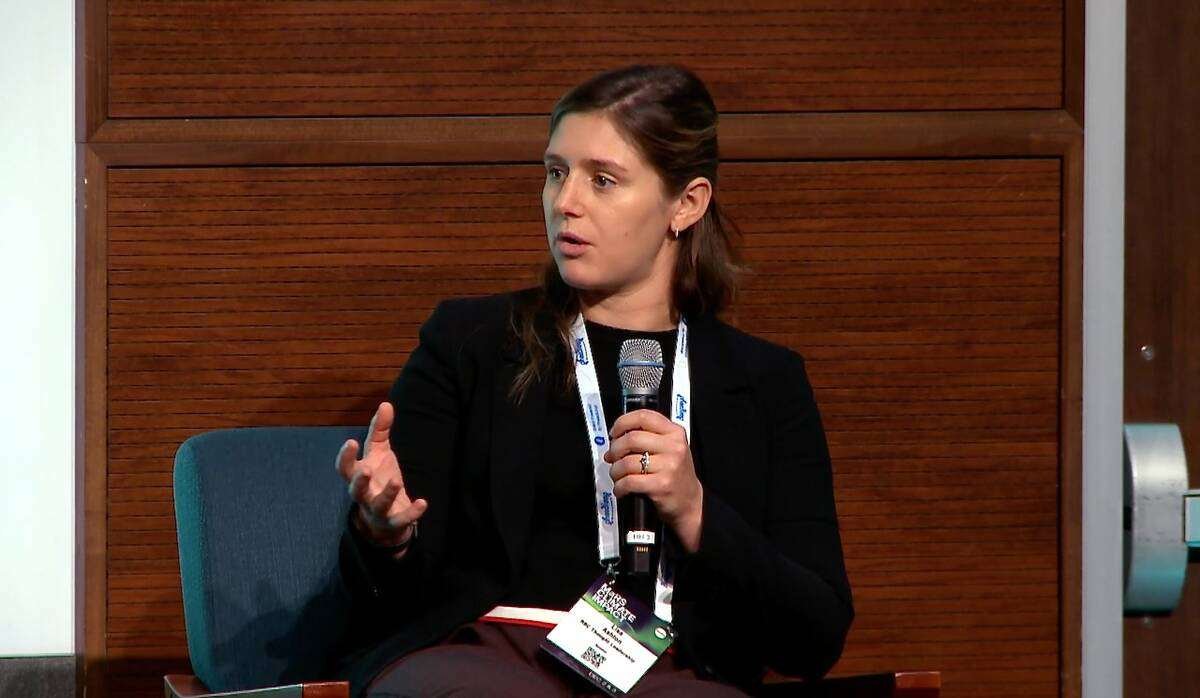
“The system employs one in nine people. It accounts for seven per cent of our GDP. We export over $100 billion in agri-food products every year. It’s very important. It defines our Canadian landscape from coast to coast.”
Marlise Hunter, director of ecosystem partnerships with FCC, took a different route to underline the sector’s importance, tying it to food scarcity.
“People interact with food and make decisions about food multiple times a day, but yet they don’t see themselves in this space thinking about how we can innovate and solve for food security,” she says.
Canada is rich with water and agricultural resources, she says, but the country’s supply chains are fragile, and 70 per cent of fruits and vegetables are imported from the United States, including $5 billion in produce from California, which is dealing with water supply and climate change challenges.
“We’re exposed. And this is exactly why, as Canadians and as innovators cross-sectorally, A: you all have a vested interest in this space and B: I assume you eat multiple times a day.”
Another gap in the food system is the lack of processing in Canada, says Joshua Goodman, head of corporate sustainability at Sobeys, the large national food retailer.
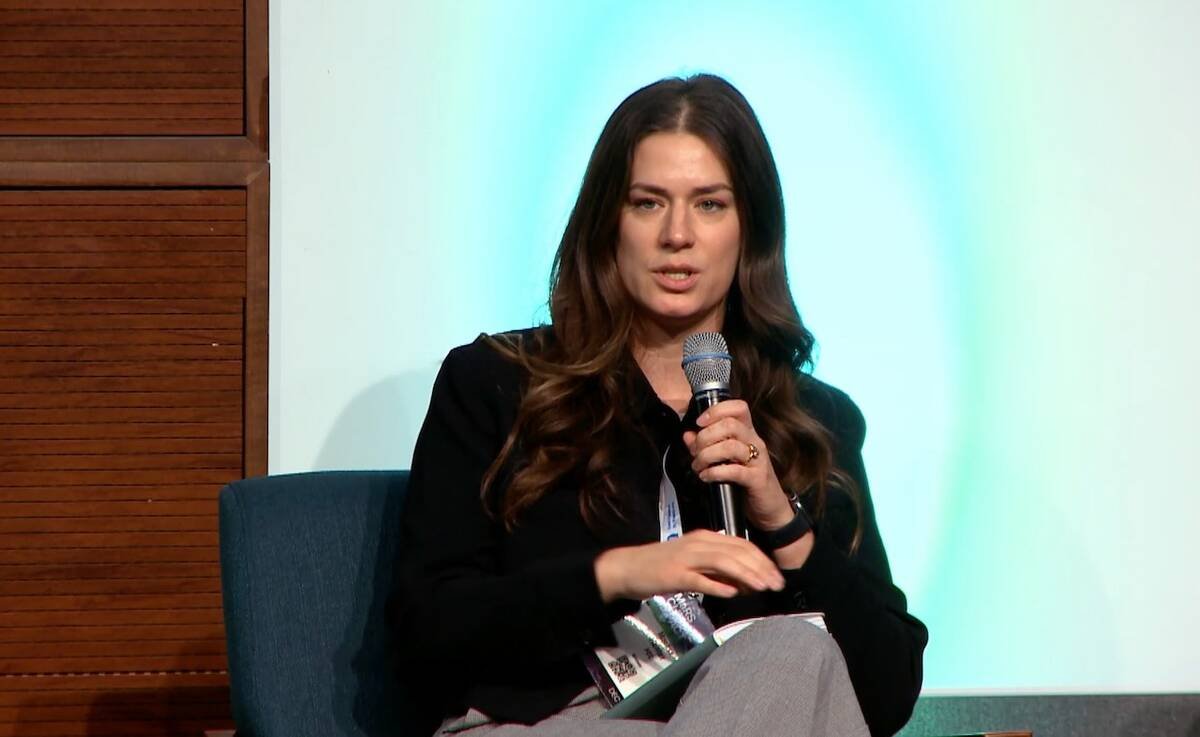
Photo: screen capture
“I think a lot of Canadians, when they go to the grocery store, and they buy a bag of flour to make bread, they’re like, ‘I’m buying Canadian flour to make bread’,” says Goodman.
“There’s a good chance that it went to the U.S. to get processed before it came back up here and landed on the grocery shelf.”
The first year of the mission will focus on the food supply chain. The first nine people into the Mission from MaRS: Food and Agtech venture accelerator include:
- Luke Scales, co-founder of Arbia (Formerly known as Stocky AI)
Arbia is an AI-powered operating system for food suppliers that automates workflows, optimizes sales channels and buyer discovery through a B2B marketplace. - Corey Ellis, CEO and co-founder of Growcer
Growcer is a manufacturer of modular hydroponic farms that provide a simple solution to locally grow and sell fresh, profitable crops year-round, regardless of the climate. - Pierre-Xavier Roy, COO and co-founder of Hydro Cool Systems
Hydro Cool Systems is developing an intelligent, zero-carbon, mobile refrigeration system optimized for delivering food. - Lourdes Juan, CEO and founder of Knead Tech
Knead Tech is a software company that enables scalable food recovery solutions, helping food rescue organizations track and co-ordinate donations, ensure food safety and measure impact. - Francois Menard, CEO and founder of PULR Technologies
PULR Technologies provides foundational infrastructure for Industry 5.0 with AI-enabled regenerative electronics to improve traceability and optimize shelf life of ingredients and products. - Marcia Woods, CEO and founder of Purchs
Purchs is a B2B SaaS platform that automates the entire order-to-cash workflow for brands, distributors and retailers working in consumer-packaged goods. - Wayne McIntyre, CEO of Relocalize
Relocalize has developed autonomous micro-factories to create packaged ice and water cold packs that cut both costs and carbon emissions. - Yun Yao, CEO and co-founder of SoraLink
SoraLink provides a predictive maintenance service for industrial machines using AI and machine learning to analyze data and prevent equipment breakdowns for food processors. - Gaurav Tewari, CEO and president of Tewari De-Ox Systems
Tewari De-Ox Systems has invented and patented packaging technique for extending the shelf life of meat and poultry.
The post Food systems focus of first Mission to MaRS agri-food cohort appeared first on Farmtario.


