

The Ford Bronco will make its way Down Under in a softened, electrified form aimed at providing an adventurous alternative to the Toyota RAV4 PHEV.
The Bronco Basecamp – a very different vehicle to the butch Bronco sold in America – will arrive in the second half of 2027 with an extended-range electric vehicle (EREV) powertrain combining a 49kWh battery with a 1.5-litre turbocharged petrol engine.
Unlike a conventional plug-in hybrid, the petrol engine acts solely as a generator rather than driving the wheels, leaving two electric motors to do the job of turning the wheels.
READ MORE: 2026 Toyota RAV4 PHEV Review: New plug-in hybrid takes the fight to GWM, Haval, BYD
READ MORE: Revealed: Hyundai’s 1000km-plus electric ute tech will debut in Santa Fe SUV range extender
READ MORE: 2025 Leapmotor C10 REEV Design Review: Is this range-extender SUV the most frustrating new car on sale in Australia today?
READ MORE: Ford reinvents its global EV future: Eight affordable new models led by dual cab ute coming to tackle the Chinese head-on
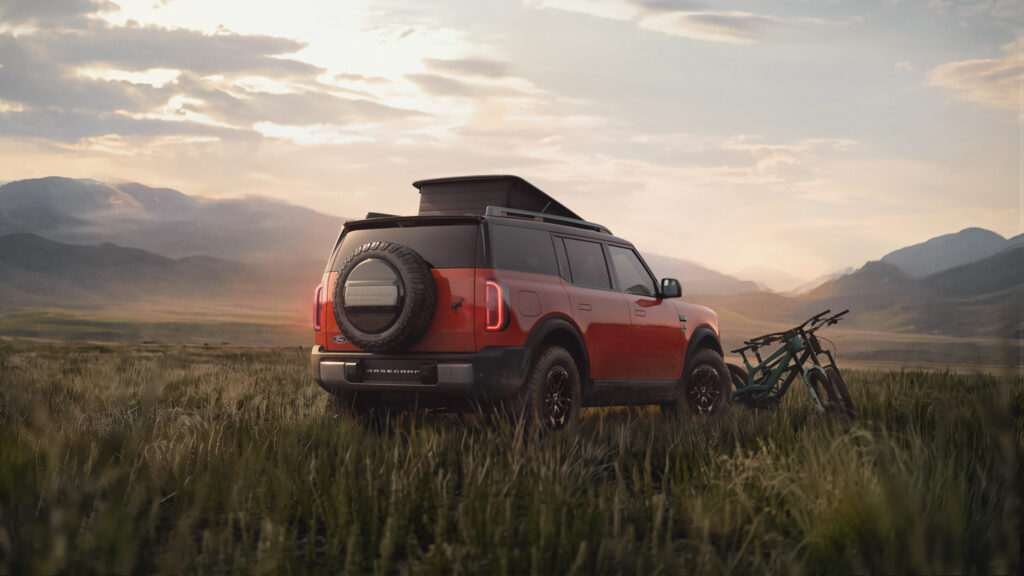
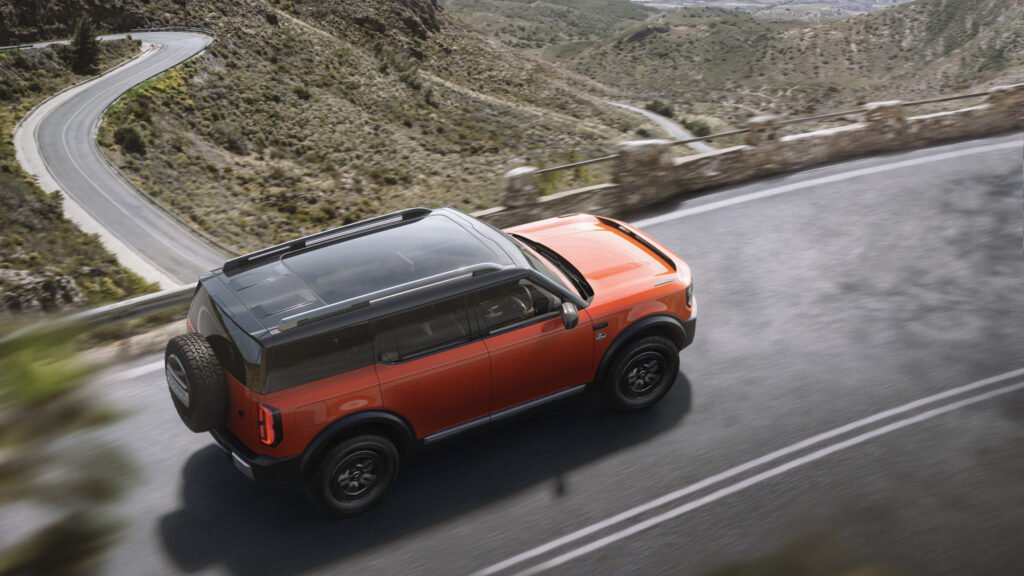
Rather than the body-on-frame construction of the Ranger and Everest, the Basecamp is built on a more car-like monocoque platform. So it is less about hardcore rock-hopping and more about venturing beyond the black-top, with the range-topping Outer Banks model getting chunkier all-terrain tyres.
It also gets a full-size spare wheel mounted on the tailgate.
“When we looked at how Aussies and Kiwis spend their time outdoors, the national parks, the coastal trails, and the distances they travel, the fit was immediate,” said Ford Australia marketing director Ambrose Henderson.
“Outdoor life here isn’t a trend, it’s just life. Bronco Basecamp was almost purpose-built for these customers.”
Built from the campsite out
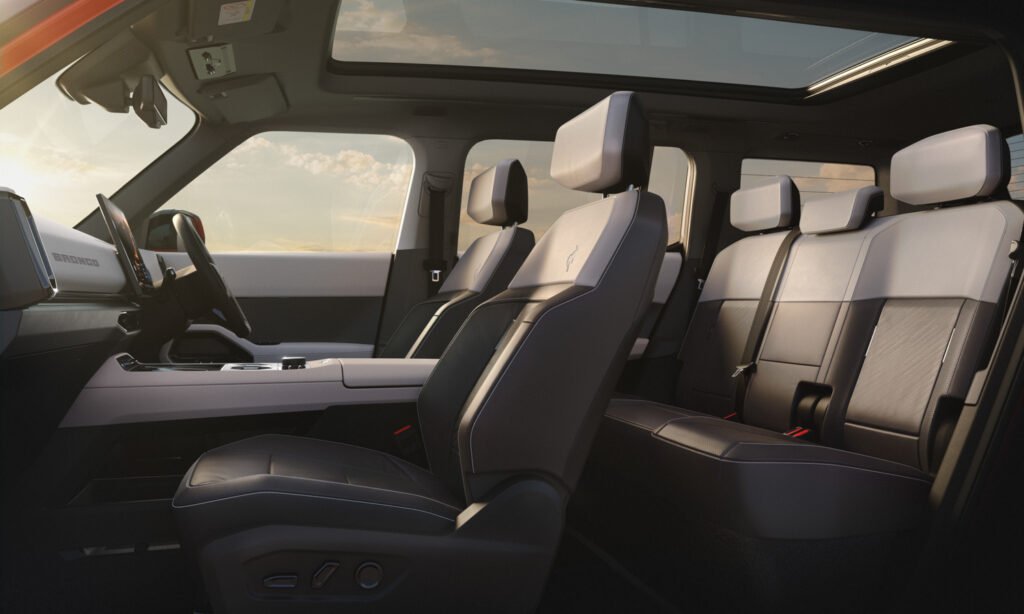
The Bronco Basecamp is a five-seat, all-wheel-drive SUV that Ford says has been designed around camping and outdoor pursuits, giving it a clear point of difference from the city-focused electrified SUVs that dominate the segment.
“It really is built from the campsite out,” Ford studio design director Simon Brook said at the vehicle’s Australian unveiling.
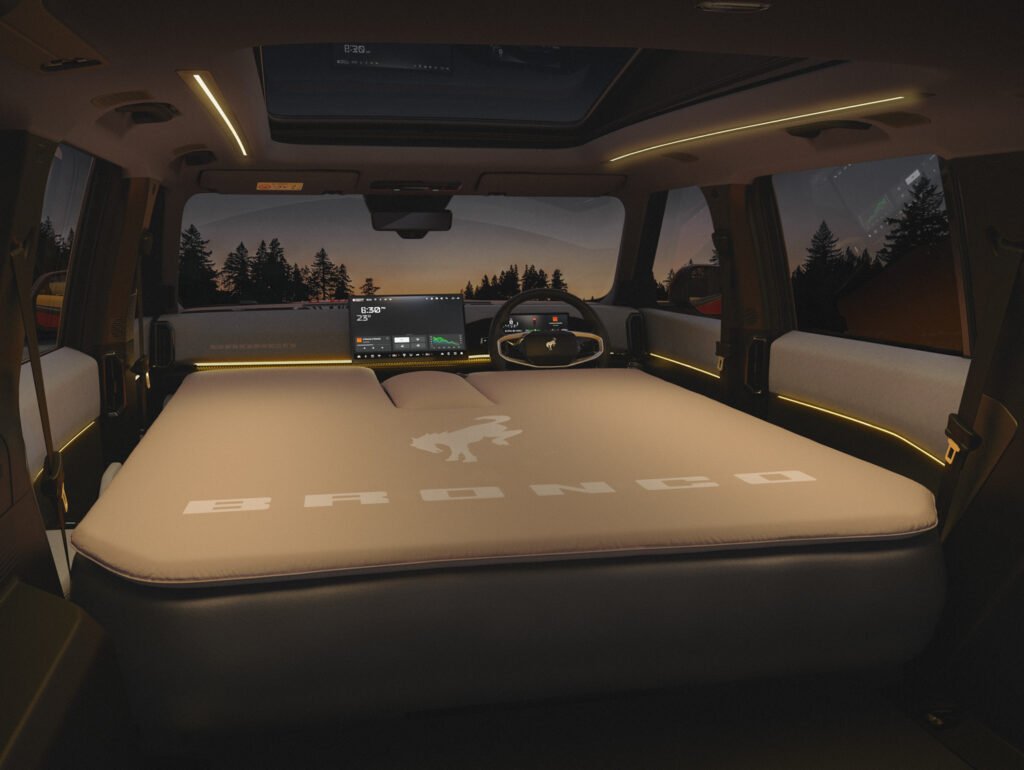
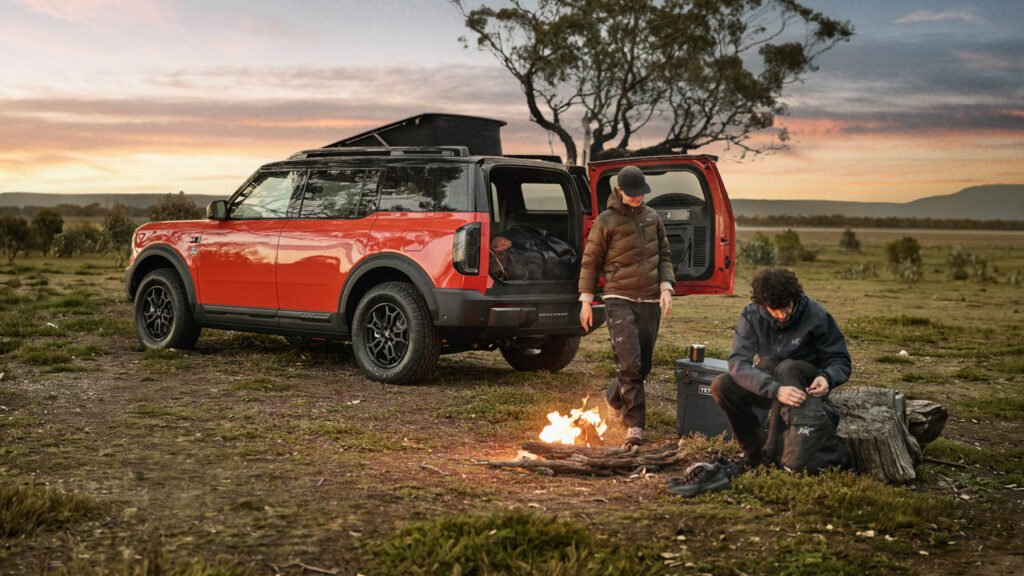
The most unusual feature is an electrically operated Pop-Up Lift Roof on the flagship Outer Banks variant. At the press of a button it raises the roof to increase headroom and ventilation, while the seats fold flat to turn the cabin into a sleeping area.
Ford will offer a full-length inflatable mattress as an accessory, while overhead LED lighting, air-conditioning vents and charging points have been positioned with overnight stays in mind. The Outer Banks also gets a 7.5-litre central storage compartment that doubles as a fridge or pie warmer.
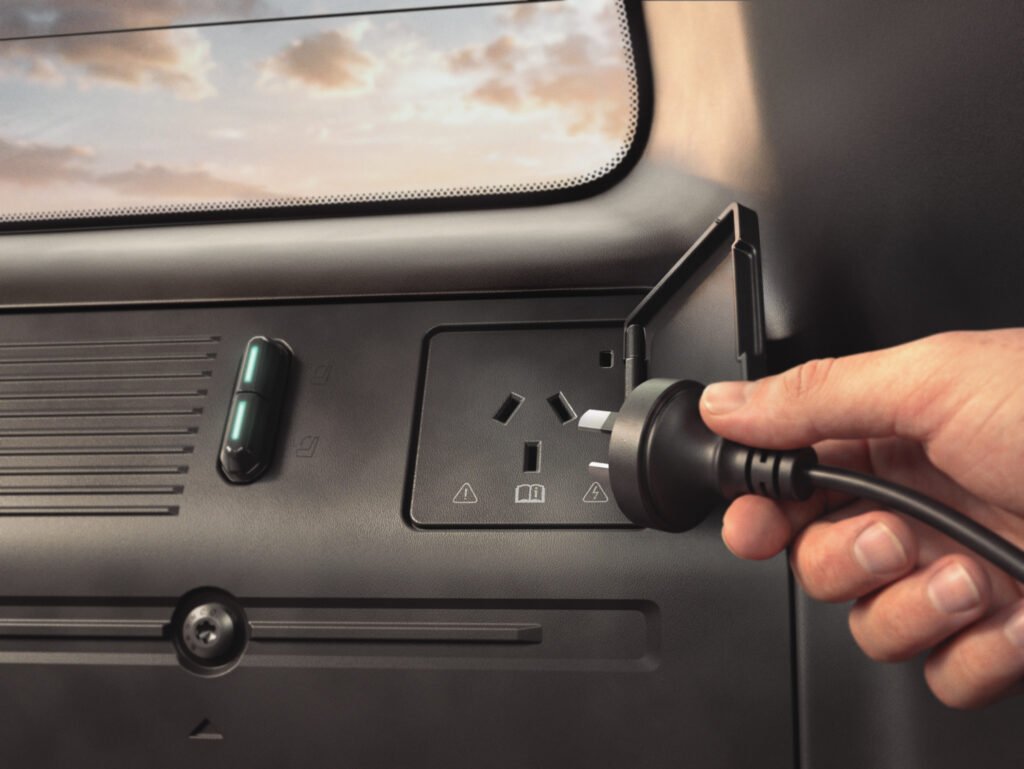
At the back is what Ford calls its “Wild Kitchen”, built into the side-hinged rear swing gate with a fold-down table and access to the vehicle’s electrical supply. Up to 6.6kW can be supplied through Ford’s Pro Power Onboard system, enough to run induction cooktops, lights, laptops and, as Ford pointed out at the unveiling, an espresso machine.
“Bronco Basecamp doesn’t just get you to the adventure,” Brook said. “The destination is part of the design.”
The first electrified Bronco
Underneath the camping equipment is arguably the more significant development: this is the first electrified model to wear the Bronco badge.
Its usable 49kWh battery supplies two drive motors, with the 1.5-litre turbo-petrol engine acting as an onboard range extender once additional energy is required.
Ford is estimating a combined WLTP range of between 800km and 900km, although those figures remain preliminary. The company has not yet disclosed electric-only range or outputs, although a 49kWh battery should be good for something like 200km between plug-ins.
Henderson described the powertrain as “electric power for the everyday and a petrol engine to charge the battery when the road keeps on going”.
The EREV configuration could prove particularly relevant in Australia, where long distances and patchy charging infrastructure outside metropolitan areas have made pure-electric SUVs a harder sell for buyers who regularly travel remotely.
Built to adventure, created in China
The new model also represents another major step in Ford Australia’s embrace of Chinese-developed and manufactured vehicles as it attempts to expand beyond its reliance on Ranger and Everest. Like the Transit City, the Bronco Basecamp has been developed through Ford’s partnership with Chinese manufacturer JMC.
Ford Australia president and CEO Fadi Mawal said the company is increasingly willing to look to China when the right product is available.
“We’ve got great partners in China. We’re open to products coming from China,” Mawal said.
“If they meet the needs of our customers and they’ve got the features and the tech and the capability that we are looking for … and we can get a great product at the right price point, yes (we’ll consider them).”
It also fits Ford’s plan to keep offering multiple powertrain options. “Our proposal is to offer choice,” Mawal said. “We’re going to have BEV, and we’re going to have hybrids, plug-in hybrids, and then we’re going to have ICE, and we’re going to have diesel, and we’re going to have a full range.”
Ford is careful to distinguish the Basecamp from the more hardcore off-road members of the Bronco family, saying the badge can accommodate both dedicated off-roaders and a model that places greater emphasis on electrification, everyday comfort and integrated camping gear.
Brook said designers were conscious of the weight of the name.
“Sixty years of history on your shoulders is a huge responsibility,” he said. “So we started by preserving that honest Bronco stance, reimagining those classic proportions for the electric era, and balancing rugged volumes with modern design language.”
Part of a bigger Ford push
The Basecamp forms part of a broader Ford Australia product offensive. Ford says it currently competes in only about 30 per cent of Australia’s new-car market but wants to more than double that to above 60 per cent within three years, with more than 90 per cent of the vehicles it sells by volume either all-new or significantly refreshed by the end of 2030.
Mawal said Ford needed a broader range able to attract customers beyond the Ranger and Everest that underpin its Australian business. “We need to evolve to win,” he said.
Australian specifications, variants and pricing will be confirmed closer to the second-half 2027 launch, but expect the Bronco Basecamp to start at around $55,000 before on-road costs. That would line it up against the Toyota RAV4 PHEV, Nissan X-Trail E-Power and Chinese rivals such as the Haval H7.
If that circa-$55,000 estimate proves accurate, the Bronco Basecamp will be considerably more than an electrified curiosity. It would put Ford’s first EREV directly into the mainstream SUV fight, with up to 900km of claimed range and a campsite built into the car as its points of difference.


