
A Kingston, Ont., biotechnology company is using gene editing to add drought- and heat-tolerance traits directly into commercial canola varieties, a step it says could speed up the path from laboratory to farmers’ fields faster than traditional breeding.
Performance Plants is one of nine startups selected for HARVEST, a new agri-tech accelerator managed by Ontario Genomics and funded through Agriculture and Agri-Food Canada’s Agricultural Clean Technology Accelerator program. Participating companies are eligible for investments of up to $750,000, along with mentorship and commercial rollout support designed to help emerging technologies reach commercial scale.
Why it matters
Weather extremes are making yield stability increasingly important for farmers. Technologies that strengthen drought and heat tolerance without giving up yield could help seed companies deliver new varieties to the marketplace more rapidly.
Canola is one of Canada’s most important agricultural commodities. The country is the world’s largest exporter of canola products, and according to the Canola Council of Canada, the sector generates an average of $43.7 billion in economic activity annually and supports more than 200,000 jobs.
Performance Plants Inc. has spent nearly three decades identifying naturally occurring genes that regulate how crops respond to environmental stress.
“We need to find the key regulators that already exist in the plant and fine-tune them so we can improve tolerance to environmental stressors like drought and heat while ultimately increasing yield — that’s the goal,” said Jiangxin Wan, the company’s president and chief technology officer.
Gene editing
Rather than developing entirely new varieties, the company is using gene editing to introduce the traits it has identified into elite commercial canola genetics. Unlike traditional genetic modification, which introduces foreign DNA, gene editing makes precise changes to a plant’s existing genetic code. Wan described the approach as “precision breeding” because it targets specific genes already known to control desirable traits.
“Instead of breeders spending years selecting for traits, we already know which genes regulate those traits,” she said. “We can make very small changes to those genes to achieve the same result much more efficiently.”
The process begins in the laboratory, where researchers design and verify the gene edits before moving into greenhouse testing. Field trials will follow over several growing seasons to confirm performance under commercial conditions.
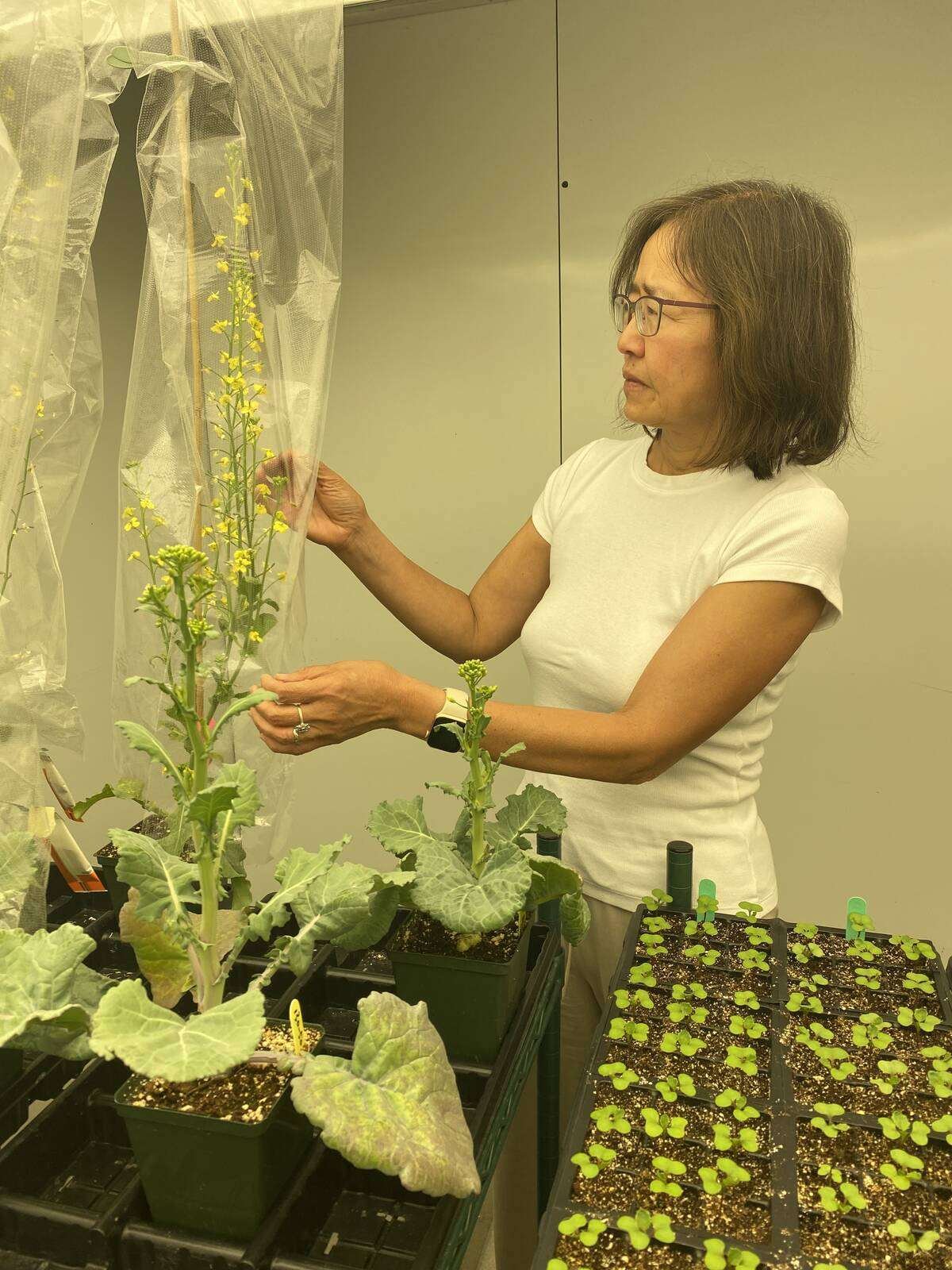
Wan estimated commercial varieties could reach growers within five to six years, after greenhouse testing and several seasons of field evaluation, although the timeline is limited by the fact that canola can only be evaluated in outdoor trials once each year.
Crop applications
Although canola is the first commercial target, she said the same platform could eventually be applied across many crops, including soybeans, corn, lentils, rice and horticultural crops. The technology could also be used to improve nutritional quality or processing characteristics.
Wan pointed to soybeans as one example. Gene editing could potentially remove compounds responsible for the “beany” flavour found in some soy-based foods or alter oil composition to produce healthier cooking oils.
“We can improve climate resilience, but we can also improve nutrition and make crops more useful for processors and consumers,” she said.
Performance Plants was founded in 1995 and has focused on developing stress-tolerance technologies through plant genomics. More recently, they’ve been working directly with seed companies, allowing promising traits to move into commercial varieties more rapidly.
Research partnerships
For the canola work, Performance Plants is partnering with Manitoba-based DL Seeds, which has four research stations across western Canada and 17 North American distribution partners, to edit elite commercial varieties rather than building entirely new genetics from scratch.
For the Performance Plants team, years of identifying and validating key genes have laid the groundwork for the current commercialization effort.
“This isn’t easy research, but we’ve proven the concepts and now we’re ready to move into commercial varieties,” she said.
For farmers, Performance Plants’ work will lead to varieties that can better withstand environmental stress while maintaining productivity as growing conditions become more unpredictable.
“I hope farmers understand that this technology is being developed for them,” Wan said. “Our goal is to help them grow better crops and get these improvements into the marketplace as quickly as possible.”
The post Gene editing could speed climate-resilient canola to farmers’ fields appeared first on Farmtario.


