
Summary: From July 14 through Aug. 10, the Ontario growing region received normal to above normal precipitation while temperatures were 2 to 3 C cooler than normal. Conditions have been optimal for Ontario corn and soybean crop development. The corn and soybean markets are anticipating North American harvest selling pressure. Buyers are waiting for lower prices to extend coverage. The wheat market is set to rally after the spring wheat harvest.
Quick look
- Soybeans: Ontario sees yield increases, offshore sales encouraged
- Corn: Environment will cause Ontario basis depreciation
- Wheat: Global conflict impacts supply chains
Soybeans
We’ve increased our yield forecast for the Ontario soybean crop to 51 bushels per acre. Using Statistics Canada’s acreage estimate of 2.872 million acres, this would result in a crop size of four million tonnes, up from the 2025 crop of 3.6 million tonnes. Ontario farmers will sell 85 per cent of the soybean crop between Sept. 1 and Dec. 31. Ontario soybean basis levels are expected to deteriorate. Domestic crushers will secure supplies first. After this demand is covered, the market will need to encourage offshore movement.
We’ve increased our U.S. soybean crop forecast to 120 million tonnes, up from the 2025 output of 116 million tonnes. U.S. farmers will sell 75 million to 77 million tonnes from Sept. 1 through Dec. 1. U.S. soybean crushers will set the price structure early in the harvest period. This will be largely influenced by the soybean oil usage in biofuel.
We continue to project a year-over-year increase in Chinese demand for U.S. soybeans. President Xi Jinping is scheduled to visit the White House on Sept. 24. During the second week of August, U.S. soybeans for the Gulf were trading at a US$13/tonne discount to Brazilian soybeans for Paranagua.
We’ve advised Ontario farmers to be 20 per cent sold on their 2026 production. Our strategy is to sell regular increments during the crop year. After harvest, the soybean market tends to incorporate a risk premium until the South American crop is more certain. Next spring, the market tends to experience a seasonal rally in March after the bulk of the Brazilian crop is harvested and prior to the U.S. seeding period. Late in the crop year, the Ontario market can experience a rally if adverse growing conditions materialize. This strategy has been statistically proven to increase your overall average price over the long term.
Corn
We continue to forecast an Ontario corn crop of 9.7 million tonnes, up 200,000 tonnes from the 2025 crop. Ontario farmers will sell 60 per cent or 5.8 million tonnes of corn during the first four months of the crop year. From Sept. 1 through Dec. 31, total domestic demand is estimated at 2.7 million tonnes while exports are estimated at 1.3 million tonnes. This environment will cause Ontario basis depreciation during and shortly after harvest.
The European Commission’s agriculture and rural development directorate said French corn production is estimated at 10 million tonnes, down from 13.8 million tonnes last year. Poland’s corn crop is projected to finish near 8.7 million tonnes, which is a year-over-year decrease of 1.8 million tonnes. Total EU production is estimated at 51.8 million tonnes, down 8.3 million tonnes from last year. Our contacts suggest that the total EU will eventually finish near 49 million tonnes so we are looking for further downward revisions on upcoming reports. This will enhance export demand for Ontario corn in the 2026/27 crop year.
We’re expecting the U.S. corn crop to finish around 400 million tonnes, down from the 2025 output of 432 million tonnes. U.S. farmers will sell 50 per cent of their corn production during the first three months of the crop year.
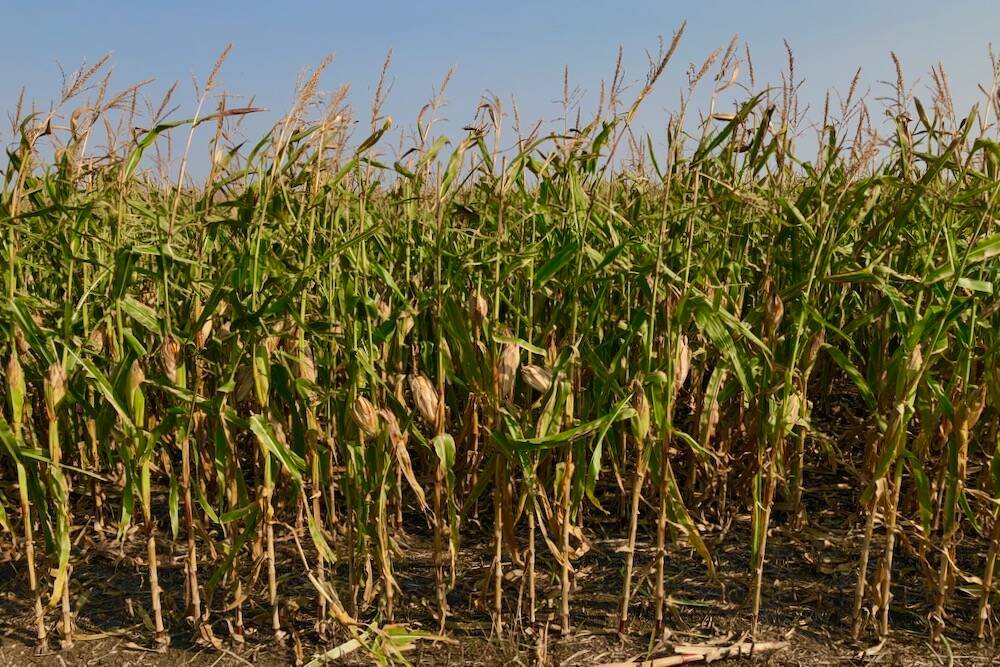
Corn prices typically climb up off seasonal lows during the autumn and winter, after the main U.S. harvest in late August. Photo: File
Corn is one crop that we only recommend sales once quality final production figures are known. Therefore, we’re planning to sell 40 per cent of the crop during the harvest period. We plan to sell remaining supplies in regular increments throughout the crop year. The corn market tends to make seasonal lows prior to the main U.S. harvest (in late August) and then percolates higher during the fall and winter. Given the quality and yield risk along with the seasonal price pattern, it’s not prudent to make early sales on corn.
Wheat
The Northern Hemisphere winter wheat harvest has wrapped up. The U.S. spring wheat harvest was 24 per cent complete as of Aug. 9 and will be over 50 per cent by the end of the month. The Canadian spring wheat harvest will move into high gear during the last week of August and wrap up by the end of September. The weather forecast is favourable for harvest progress. We’re estimating Canadian spring wheat (non-durum) production at 29 million tonnes, down from the year-ago figure of 29.3 million. U.S. hard red spring output is estimated at 11.9 million tonnes, down 500,000 tonnes from last year.
Restricted shipping out of the Black Sea continues to support world wheat values. Russian and Ukraine exports during the first half of the 2026-27 crop year will be lucky to reach 30 per cent of normal volumes. This will enhance demand for wheat from other origins. Russia is building up resources for a major offensive in the fall. The escalation will be unparalleled in modern history with no regard for infrastructure or vessels.
It’s hard to forecast how the ongoing vessel restrictions through the Strait of Hormuz will play out globally. Iranian food inflation was 128 per cent year-over-year during the Iranian month of Tir (June 21 to July 20).
The European Commission estimated the soft wheat at 124 million tonnes, down from the 2025 crop of 135 million tonnes. We’re looking for downward adjustments on subsequent reports. Our contacts suggest the crop could finish around 120 million tonnes. The EC had French soft wheat production at 31.7 million tonnes compared to 33.1 million tonnes last year. German output was estimated at 21.8 million compared to the year-ago figure of 22.6 million tonnes. We believe there was more severe yield drag late in the crop year due to the dryer conditions.
We mentioned in previous issues that the U.S. Department of Agriculture had soft red winter output at 7.8 million tonnes, which was a year-over-year decrease of 1.6 million tonnes. U.S. hard red winter wheat production was estimated at 11.8 million tonnes, down 9 million tonnes from last year.
A year-over-year decrease of 30 per cent is expected for Australian production. The market in Australia is incorporating a risk premium due to the uncertainty production due to “super El Nino,” meaning hot and dry.
The Ontario winter wheat crop is now estimated at 2.9 million tonnes, unchanged from last year. We’ve advised farmers to be 20 per cent sold on their 2026 production. The wheat market has potential to rally $60-80/tonne between mid-September and mid-October. Longer-term, there is no cushion if major exporters have a problem in the spring and summer of 2027. This justifies holding stocks over the winter and not selling all your crop at harvest.
The post Geopolitical conflict strains crop supply chains appeared first on Farmtario.


