
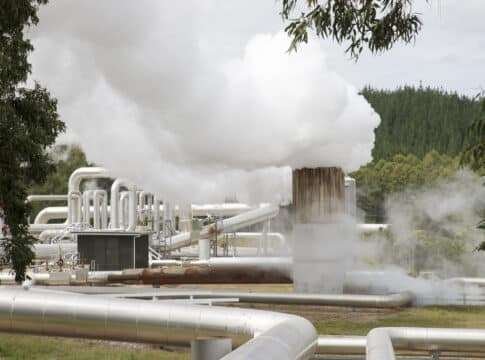
Google is turning to next-generation geothermal power as it expands its artificial intelligence infrastructure. The tech giant and geothermal developer Fervo Energy have signed a 396-megawatt (MW) power purchase agreement (PPA) for Fervo’s Cape Station project in Utah. The deal has a 15-year term and marks the largest enhanced geothermal power purchase agreement to date, according to Fervo.
Power delivery will start in the third quarter of 2028 through four 99 MW blocks. Google also has an option for about 600 MW of additional capacity, which could bring total contracted capacity to roughly 950 MW by June 2030.
The deal comes as AI data centers drive electricity demand higher. It also shows why companies are looking for clean power that can operate around the clock, rather than relying only on variable sources such as solar and wind. Lucia Tian, at Google, remarked:
“The next chapter of advanced power generation technology is being written in Utah. This project will drive meaningful economic benefit to the local community and help catalyze long-term energy cost reductions by making enhanced geothermal more affordable and accessible.”
Google Locks In 396 MW of Next-Gen Geothermal
The agreement covers 396 MW from Fervo’s Cape Station enhanced geothermal system in Beaver County, Utah. Fervo will provide power through four 99-MW blocks, with deliveries starting in Q3 2028. The agreement will run for 15 years.
CEO and Co-Founder of Fervo, Tim Latimer, noted:
“As demand for reliable electricity grows, customers like Google need energy resources that can be deployed at scale, operate around the clock, and deliver where power is needed. This new PPA is part of our repeatable commercial model that enables us to meet customer needs and directly deliver clean, firm power to large electricity users.”
Google has not finalized the location of the Utah data center that could use the power. The company says the geothermal supply would support a potential Utah data center presence, subject to engineering, regulatory, and commercial approvals.
The deal therefore secures power before Google has announced a final data center site.
The tech giant can also choose to buy about 600 MW of additional Cape Station capacity. If it exercises the option and the companies reach final terms, total contracted capacity could reach about 950 MW, with the added capacity guaranteed to operate by June 2030.
The financial terms were not disclosed.
AI Is Creating Demand for Firm Clean Power
The deal comes as data centers become a much larger source of electricity demand. The International Energy Agency expects global data center electricity use to rise from about 415 TWh in 2024 to around 945 TWh by 2030. AI is the main driver of the increase.
Google is already moving quickly to secure more clean energy. The company says it signed contracts for more than 12 GW of new clean energy in 2025, its largest annual total. It also aims to run its data centers and offices on 24/7 carbon-free energy by 2030.
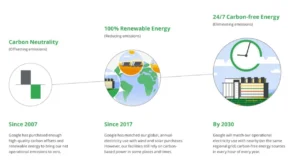
That goal is harder than simply matching yearly electricity use with renewable energy purchases. A data center needs power at night and during periods when solar or wind output is low.
Geothermal can help fill that gap because it can generate electricity continuously.
Fervo’s Enhanced Geothermal Could Unlock New Resources
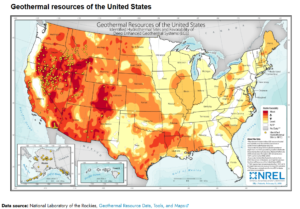
Traditional geothermal power depends on natural underground conditions. That limits where developers can build projects. Fervo uses enhanced geothermal systems (EGS) to reach heat in hot rock that lacks the natural conditions needed for conventional geothermal plants.
The company uses drilling techniques adapted from the oil and gas industry to create engineered geothermal reservoirs. The approach could allow geothermal development in more places.
The U.S. Energy Information Administration says geothermal plants generated about 16 billion kWh of electricity in 2025, equal to roughly 0.4% of U.S. utility-scale generation. That small share shows how much room geothermal has to grow. If EGS can lower costs and work in more locations, it could become a larger source of firm clean power.
For AI companies, that could be especially valuable because data centers need reliable electricity around the clock.
Cape Station Is Built to Scale
The Google deal helps move Cape Station from an early project into a much larger commercial development. Fervo’s first phase is about 100 MW.
The company expects its first GeoBlock to begin producing test power in Q4 2026, with full production expected by the end of the year. Its second phase represents about 400 MW and is expected to come online in 2028.
Fervo expects Phase II to reach an installed cost of about $5,500 per kilowatt. Its long-term goal is to reduce that cost to $3,000 per kilowatt.
Lower costs will be critical if enhanced geothermal is to compete with other large-scale clean energy technologies. Fervo says it is using a repeatable GeoBlock design to make future projects easier and cheaper to build.
The company also reported a commercial development pipeline of more than 50 GW at the end of June 2026. It went public last May 2026 on Nasdaq under the FRVO stock ticker.
Google and Fervo Take Their Partnership to the Next Level
The new agreement builds on a partnership that started in 2021. Google and Fervo developed an enhanced geothermal project in Nevada known as Project Red. Fervo began producing power from the pilot in 2023, supplying electricity to the local grid, including the system serving Google’s Nevada data centers.
In June 2024, Google, Fervo and NV Energy signed a separate 115 MW agreement in Nevada. That deal supported NV Energy’s Clean Transition Tariff, which lets Google help fund new geothermal power while limiting the cost impact on other utility customers.
The Utah agreement now moves the relationship to a much larger commercial scale. It also shows how large technology companies can help emerging clean-energy technologies reach the market by committing to long-term power purchases.
Geothermal Could Fill the Gaps Left by Solar and Wind
The value of geothermal goes beyond supplying one data center. Unlike solar and wind, geothermal plants can operate regardless of weather and time of day. That makes them useful as a steady power source alongside variable renewables.
Google’s clean energy strategy includes solar, wind, hydro, nuclear and geothermal. The company says a mix of clean energy technologies can help supply power when variable renewable sources are not producing enough electricity.
Fervo’s systems could therefore complement growing solar and wind capacity rather than replace it. This could become increasingly important as electricity demand rises from AI, electric vehicles and industrial electrification.
More firm clean power can also reduce the need for fossil-fuel generation during periods of high demand. For carbon markets, the benefit is indirect. The geothermal deal is not a carbon credit purchase. Still, replacing fossil-based electricity with new clean generation can lower the emissions intensity of the power system.
Fervo (FRVO) Stock Jumps on Google Deal
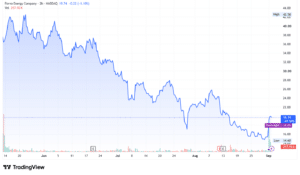
Investors reacted strongly to the announcement. Fervo shares jumped 28.41% to $19.75 on September 1, according to market data, with trading volume reaching about 35.1 million shares. The company went public on Nasdaq in May 2026.
The rise came after Fervo announced the 396 MW Google agreement.
The market reaction shows how important long-term customer contracts are for an emerging power company. A major buyer such as Google can provide more visibility into future demand and help support financing for large projects.
However, FRVO stock remains highly volatile. Fervo’s projects still face construction, financing, permitting, and operating risks.
AI Could Give Enhanced Geothermal Its Breakthrough Moment
The Google-Fervo agreement is a power purchase deal, not a carbon offset transaction. Google is paying for electricity from a new geothermal project. The company is not using the deal as a substitute for direct emissions cuts.
That distinction matters as companies face growing pressure to show that climate claims reflect real changes in energy use, especially AI.
The tech giant says it is working toward 24/7 carbon-free energy by 2030 and continues to invest in new clean generation. Fervo’s deal could help support that goal by adding firm power that can operate when solar and wind output is low.
The geothermal developer also has a major opportunity ahead. Its pipeline exceeds 50 GW, while its long-term cost target is $3,000 per kW.
The next challenge is execution. The company must build projects at scale, control costs, and show that enhanced geothermal can provide reliable power at competitive prices. The Google agreement gives it a major customer and a clearer path to growth.
The bigger story is that AI is creating demand not only for more electricity, but for new forms of reliable, low-carbon power. If Fervo can scale enhanced geothermal as planned, the technology could become an important part of the clean-energy system supporting the next generation of AI infrastructure.
- READ MORE: Google Taps Earth’s Heat in 150MW Geothermal Deal with Ormat Technologies to Power Data Centers
The post Google, Fervo (FRVO Stock) Sign Record Geothermal Deal to Power AI appeared first on Carbon Credits.


