

Google has strengthened its clean energy strategy in Malaysia through two major long-term agreements. The company has signed a solar power pact with a Japanese renewables firm, Shizen Energy, and a separate 21-year clean energy deal with TotalEnergies. Together, these agreements support Google’s growing data center operations while reducing emissions linked to electricity use.
The deal with Shizen Energy involves a 30-megawatt solar farm in Gurun, Kedah. The project will begin generating power in 2027. Meanwhile, Google’s deal with TotalEnergies includes more solar projects in Peninsular Malaysia. These projects have a total capacity of up to 300 megawatts. Some of these projects will include battery storage to improve supply reliability.
These agreements reflect rising corporate demand for clean power in Malaysia. They also align with the country’s push to expand renewable energy capacity under national transition plans.
Inside Google’s 30MW Solar Project in Kedah
The Shizen Energy project has a planned capacity of about 30 megawatts. It reached financial close in November 2025, allowing construction to move forward. Commercial operations are scheduled for 2027.
Kenji Kawado, CEO, Shizen International Inc., said:
“The successful expansion of our collaboration with Google from Japan to Malaysia underscores the trusted relationship we have built and validates Shizen Energy’s capability to deliver large-scale, complex renewable energy solutions across borders.”
The project is being developed by SM01 Sdn Bhd. The consortium includes Shizen Malaysia with a 49% stake, Solarvest Asset Management with 33%, and HSS Engineering with 18%. Financing is being provided by a Malaysian bank acting as the sole lender.
Under the agreement, Google will receive renewable energy attributes linked to the solar plant’s output. This allows Google to match a portion of its electricity consumption with locally generated clean power. This approach is especially relevant for data centers, which require constant and high levels of electricity.
Expanding Clean Energy Across Google’s Malaysian Data Centers
The Shizen Energy project is part of a wider clean energy strategy by Google in Malaysia. In a separate agreement, Google has signed a 21-year power purchase arrangement with TotalEnergies. This deal supports the long-term energy needs of Google’s Malaysian data centers.
Giorgio Fortunato, Head of Clean Energy & Power, Asia Pacific at Google, stated:
“We’re thrilled to build on our collaboration with TotalEnergies in Malaysia. This agreement is a key part of our strategy to make meaningful investments that benefit the economies where we operate. By enabling this new clean capacity, we are supporting local growth of the electricity system hosting our infrastructure.”
Under the TotalEnergies agreement, new solar projects will be developed across multiple sites in Peninsular Malaysia. The total capacity is expected to reach up to 300 megawatts. Battery energy storage systems will be added to part of this capacity to help balance supply and demand.
This longer-term deal provides stability for both parties. For Google, it has secured a reliable supply of clean electricity for over two decades. For developers, it ensures predictable revenue that supports large-scale investment in renewable infrastructure.
The Shizen and TotalEnergies agreements highlight how global tech firms are mixing smaller projects with large-scale developments. This strategy helps them meet the growing demand for power.
Malaysia’s Solar Growth and Policy Support
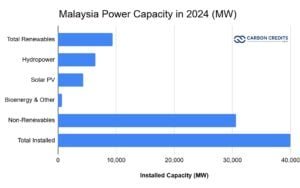
Malaysia continues to expand its renewable energy capacity. As of 2024, renewable sources accounted for about 23.6% of total installed power capacity. Hydropower and solar energy made up the bulk of this share.
Solar photovoltaic capacity reached about 4.3 gigawatts by the end of 2024. This represented an increase of around 1.27 gigawatts in just one year. Growth has been driven by utility-scale projects, rooftop installations, and corporate demand.
Under the National Energy Transition Roadmap, Malaysia aims to raise renewable capacity to 40% by 2040 and 70% by 2050. Solar energy could be a key contributor due to its scalability and declining costs.
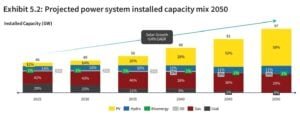
Long-term projections estimate that total renewable capacity could reach around 30 gigawatts by 2035. To reach this goal, the country needs ongoing private investment, improved grids, and steady policy support.
Beyond Malaysia, Google has expanded clean energy procurement globally as part of its net-zero strategy. The company aims to achieve net zero emissions across its operations and value chain by 2030. A key pillar of this goal is operating on carbon-free energy on a 24/7 basis, meaning every hour of electricity use is matched with clean power.
- SEE MORE on Google’s clean energy deals:
- Google and TotalEnergies Unlock Carbon-Free Future for Ohio Data Centers with 15-Year Solar Deal
- Google and energyRe Boost Clean Energy in South Carolina with 600 MW Solar Deal
- After $102B Quarter Revenue and Record Stock, Google Turns to Nuclear to Power the AI Boom
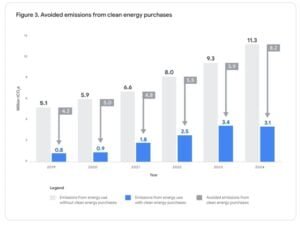
By 2024, Google had signed deals for over 11 gigawatts of renewable energy. This includes solar, wind, and energy storage projects around the globe. These efforts aim to offset yearly electricity use. They also work to reduce real-time emissions from data centers, offices, and cloud infrastructure as demand grows.
Corporate Power Drives Malaysia’s Solar Expansion
Malaysia’s solar market is expanding rapidly. Installed solar capacity could grow from about 3.75 gigawatts in 2025 to around 16.5 gigawatts by 2030. This represents one of the fastest growth rates in Southeast Asia.
Utility-scale solar accounts for roughly half of installed capacity. The rest comes from commercial, industrial, and residential systems. Falling technology costs have improved the competitiveness of solar power.
In 2023, large-scale solar generation in Peninsular Malaysia was estimated to be more than 50% cheaper than new fossil fuel-based power. This cost-benefit has led developers and corporate buyers to seek long-term solar contracts.
Corporate power purchase agreements play a central role in this trend. Deals like those signed by Google provide long-term price certainty and reduce exposure to fuel price volatility. They also help ensure that new renewable capacity is there to meet growing demand.
How Corporate PPAs Enable Renewable Growth
Malaysia’s Corporate Green Power Programme enables companies to purchase renewable electricity directly from generators through the national grid. This framework allows businesses to align energy use with clean power, even while fossil fuels still dominate the grid.
In 2025, coal accounted for about 45% of Malaysia’s electricity generation, while natural gas made up around 32%. Solar power contributed only about 2%. This gap highlights the scale of opportunity for renewable expansion.
Corporate PPAs help close this gap by supporting new projects that might not move forward without long-term buyers. They also help spread financial risk and encourage innovation in storage and grid management.
The inclusion of battery systems in some of Google’s solar projects reflects a growing focus on reliability, not just capacity.
From an environmental standpoint, expanding solar capacity reduces emissions by displacing coal- and gas-fired power. Over time, this supports Malaysia’s climate commitments and reduces exposure to fuel price swings.
Corporate agreements ensure that renewable growth keeps pace with rising electricity demand from digital services and data infrastructure.
Google’s solar agreements with Shizen Energy and TotalEnergies highlight a broader shift in Malaysia’s energy market. Clean electricity is becoming a core requirement for global companies, not just a sustainability add-on.
Corporate demand for clean power is rising, and so similar agreements will likely shape the country’s energy transition even more. Public policy, private investment, and long-term contracts will all be critical in determining how fast Malaysia can move toward a lower-emissions power system.
The post Google Signs Solar Deals with TotalEnergies and Shizen Energy in Malaysia to Power Data Centers with Clean Energy appeared first on Carbon Credits.


