
Watering is one of the most critical parts of plant care — too much water can drown roots and cause diseases; too little water stunts growth. Over the years, I have tried different gardening tools and products, but only recently I tried using a soil moisture meter. The moment I bought the Gouevn Soil Moisture Meter I realized just how much difference a simple, affordable tool can make.
In this review I’ll walk you through what this meter is, how it works in real life (on my windowsill houseplants, lawn pots, and even small garden plots), its strengths and weaknesses — and whether I think it’s worth it for gardeners, small farmers, or plant lovers.
What is Gouevn Hygrometer Moisture Sensor Soil Test Kit?
The Gouevn Soil Moisture Meter is an analog tool designed to measure the moisture content of soil. It has a probe (a metal sensor) that you insert into the soil, and a dial gauge that shows a reading — typically on a scale from 1 to 10, where:
- 1–3 indicates Dry (red zone)
- 4–7 indicates Moist (green zone)
- 8–10 indicates Wet (blue zone)
It does not need a battery — you simply push the probe into the soil and get an instant reading. The model I used is small (about 2.02″ wide by 1.3″ high) and weighs only about 0.08 kg, making it lightweight, compact and easy to handle.
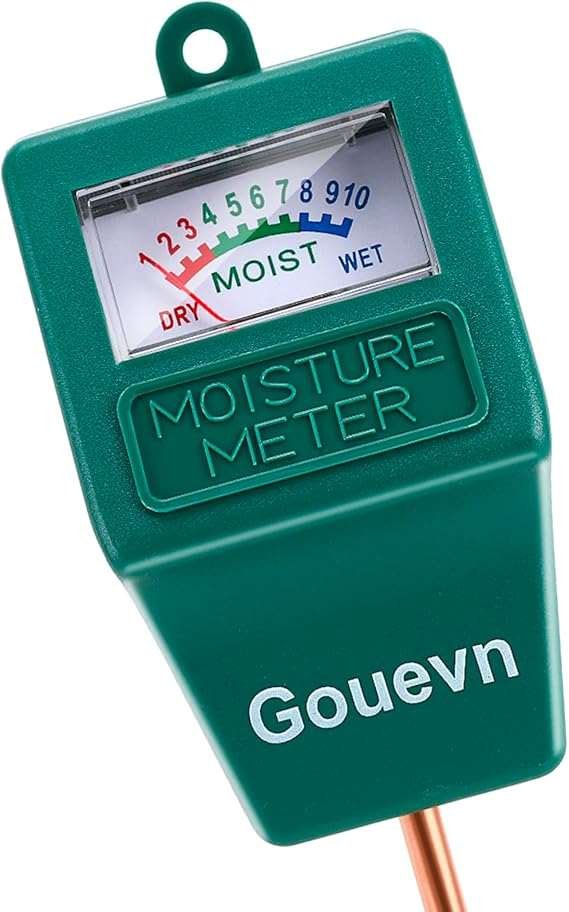
It’s marketed for both indoor and outdoor use — potted plants, garden soil, lawn, even small farm plots — wherever you want to check moisture before watering. Here’s a quick overview of what this Gouevn meter offers:
i. Simplicity and ease of use — no setup, no battery, no charging required. Just insert and read.
ii. Large dial gauge — easy to read even for beginners. On the packaging there is often a small watering guide (for houseplants) to help new gardeners decide when to water.
iii. Indoor & outdoor versatility — works with potted plants, garden soil, lawns, small farm beds. Useful for both delicate indoor plants and outdoor garden beds.
iv. Instant feedback — gives immediate indication of soil moisture, so you don’t have to guess when to water.
v. Portability & light weight — easy to carry around, suitable for small-scale gardening, balconies, urban gardens, farms, etc.
vi. Cost-effective tool — compared to high-end digital sensors or smart irrigation systems, this is a low-cost option to monitor soil moisture manually.
Given these features, this meter is especially appealing for gardeners and small-size farms — including those of us who cultivate a variety of plants (vegetables, ornamentals, houseplants) and want an easy way to monitor soil water conditions without high cost or complex technology.
Pros & Cons of Gouevn Hygrometer Moisture Sensor
| Pros | Cons |
|---|---|
 Simple to use — no battery, no setup required. Simple to use — no battery, no setup required. |
 Measures only moisture, not other soil parameters (like pH or nutrients). Measures only moisture, not other soil parameters (like pH or nutrients). |
| Lightweight and portable — easy to use in pots, small gardens, and lawns. |
Analog meters might be less precise than advanced sensors. |
| Instant readings — allows quick decisions whether to water or not. |
Accuracy depends on soil type, salinity, and how user inserts probe. |
| Affordable — good value for budget-conscious gardeners and small farmers. |
Not ideal for extremely compact or rocky soils. Manufacturer warns against using in “extremely hard soil.” |
| Helps prevent overwatering or underwatering — good for sensitive plants. |
Should not be left permanently in soil — prolonged use may damage sensor. |
| Useful for both indoor and outdoor planting setups. |
Cannot detect moisture-based issues like soil salinity, nutrient levels or pH. |
Why Moisture Sensor Soil Test Kit Matters?
Understanding soil moisture is fundamental to healthy plant growth. Soil moisture affects root health, nutrient uptake, microbial activity, and overall plant stress. Over-watering can lead to root oxygen deprivation, root rot, and nutrient leaching, while under-watering can stunt plant growth, reduce nutrient uptake, and cause wilting.
Soil moisture meters — including simple analog ones like Gouevn — serve as practical tools to monitor soil water content in real time. By giving data about soil moisture, such meters enable gardeners and farmers to water only when needed, rather than guessing or sticking to fixed schedules.
In modern agriculture, sensors and moisture meters are considered essential for what’s often called “precision irrigation” — applying the right amount of water at the right time, improving efficiency, saving water, and optimizing crop health and yield.
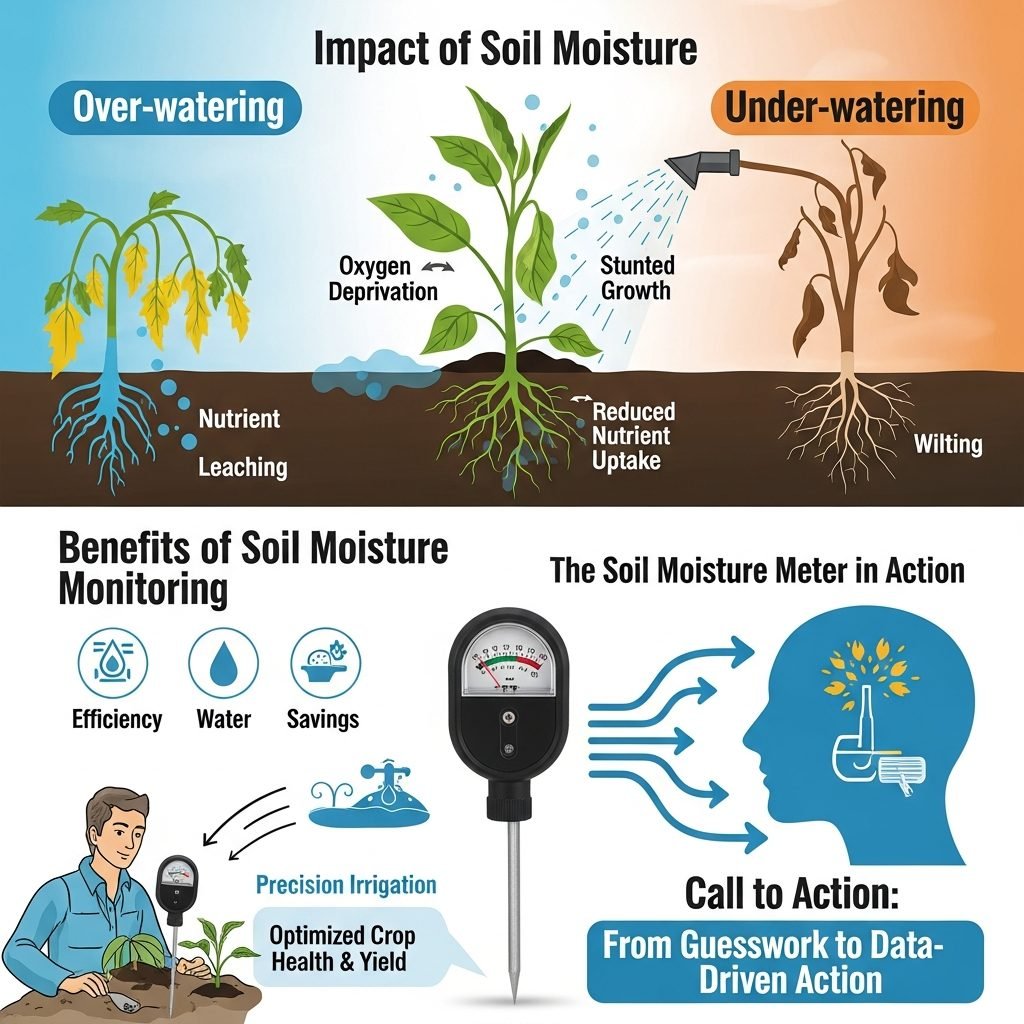
In short: a soil moisture meter helps turn watering decisions from guesswork into data-driven actions — which is especially important in water-scarce regions, small-scale farms, urban gardens, and for delicate plants that do not tolerate moisture extremes.
To strengthen the argument why soil moisture meters matter — and to place the Gouevn meter in context — here are some recent findings, research insights, and broader trends:
A recent academic study showed that soil moisture sensors (even low-cost ones) can significantly improve water use efficiency and crop productivity. In controlled field trials, sensor-based irrigation resulted in a yield increase of ~25%, while reducing water usage by up to ~30% compared to traditional manual irrigation.
Another review of soil moisture sensing technologies highlighted that low-cost resistance-based sensors (like those in many simple moisture meters) are widely used in small-scale and resource-limited farming because they are affordable, easy to install, and consume low power — making them practical even for small farms or home gardens.
However — and this is important — sensor accuracy can vary depending on soil type, salinity, temperature, and maintenance. Good soil moisture sensors generally deliver an error margin of ± 2–5% in volumetric water content (VWC) under ideal conditions.
On the sustainability front, using moisture meters and precision irrigation helps conserve water, reduce energy consumption, and minimize nutrient leaching or runoff — which aligns with global trends toward more sustainable, resource-efficient agriculture.
For someone like me living in Punjab — where water scarcity and efficient water management are often critical — these numbers and benefits make soil moisture meters not just convenient, but potentially essential tools for sustainable gardening or farming.
My Experience with Gouevn Moisture Sensor Kit
I used this Gouevn Soil Moisture Meter for a mix of environments: potted houseplants inside, balcony plants, and a small garden area outside. I have a variety of plants — leafy ornamentals, succulents, herbs, and a few fruiting plants.
i. First impressions: The meter felt sturdy and light. I appreciated right away the “no batteries” design — I never had to remember charging it. Inserting the probe was straightforward, and the dial reading appeared quickly.
ii. Ease of use: Once per week I would check soil moisture for each pot before watering. Especially for plants I tend to over-love with water (like leafy ornamentals), I found I was watering less often but more appropriately.
iii. Surprising results: A few times, soil that felt “slightly damp on top” was already moist enough at root level — the meter showed “5–6” (moist), so I skipped watering. Later, those plants responded well — leaves stayed healthy, no yellowing or root rot.
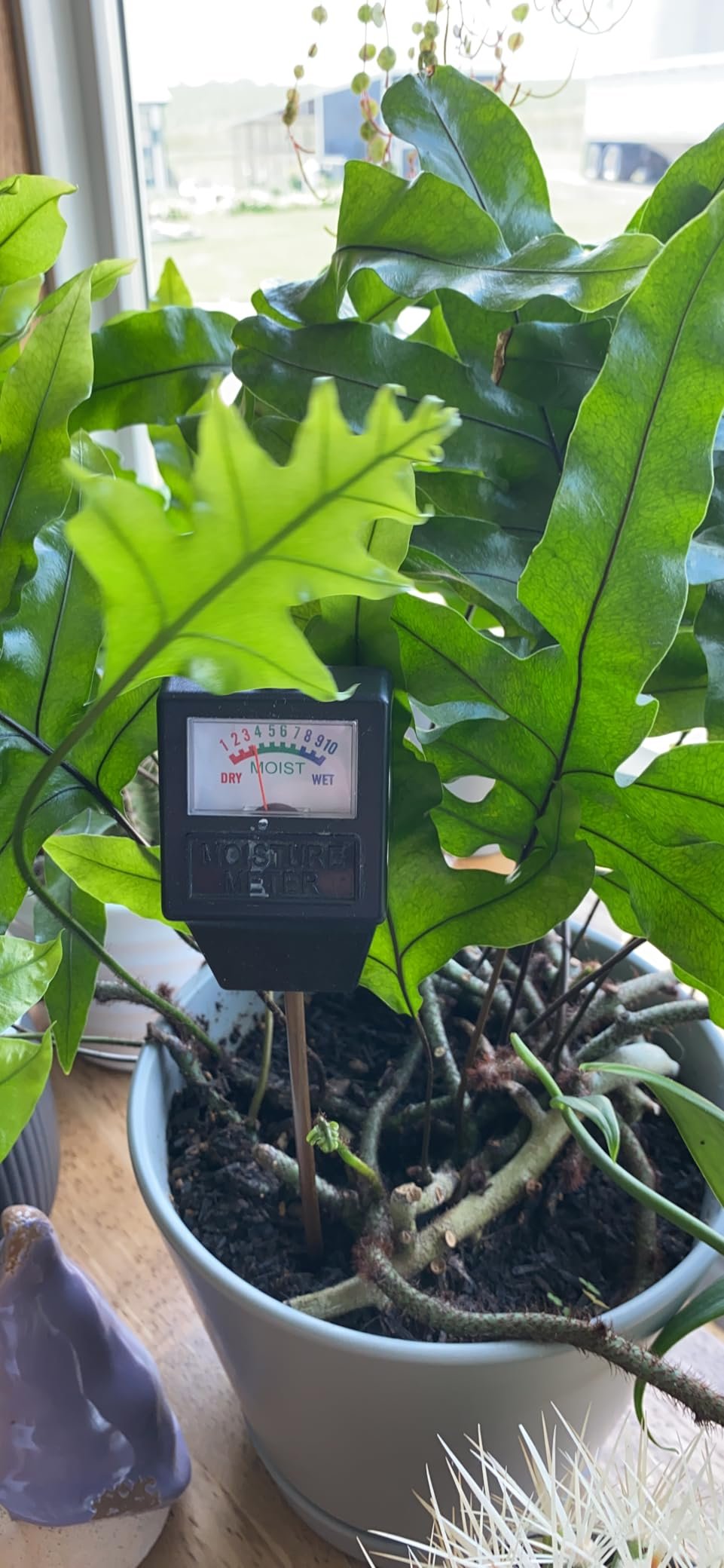
iv. Problems discovered: For a couple of dense-soil pots, the probe felt hard to insert; the reading seemed inconsistent. Also, I discovered from the product instructions that you should avoid leaving the meter inserted continuously in the soil — I had initially forgotten that, so after a few days I removed it.
Overall — after a few months — I found the meter consistently useful. My plants looked healthier, water use was better optimized, and I felt more confident managing a large number of pots without guessing.
However, I should mention: I’m not using it for scientific soil moisture analysis (e.g. percent volumetric water content); it’s a simple, practical tool for everyday gardening
Performance of Gouevn Hygrometer Moisture Sensor
From my observations, the performance of the Gouevn Soil Moisture Meter is quite good, with some caveats:
a. Accuracy: For typical potting soil (loam-based, balanced potting soil) and garden beds, the meter’s readings seem consistent with what I expect — dry soils on the “1–3” range, moist soils around “4–6,” and wet soils nearing “7–8.” Moisture readings mostly align with what I judge by feel (touching soil, checking drainage).
b. Reliability over time: So far, over several months of use, the meter remains responsive. I have not noticed major drift in readings. That said, I treat it carefully (cleaning after each use, not leaving in soil) — which I think helps maintain performance.
c. Usefulness across different soils: For dense soils (clay-loam), the meter works well. For very light, fast-draining soils (e.g., potting mix with lots of perlite, or very sandy soils), readings might be less consistent. In those cases, I combine meter readings with manual checks (finger test, observing soil dryness, checking pot weight) before deciding to water.
d. Ease and speed: The analog dial is easy to read. Using the meter adds minimal time to my routine (just a few seconds per pot). For someone managing many plants — indoor and outdoor — this convenience is very valuable.
In sum, I find the meter performs reliably for everyday gardening and small-scale farming tasks — especially when used properly and with awareness of its limitations.
Practical Tips for Gouevn Hygrometer Moisture Sensor Soil
Based on my experience and what I learned from research, here are some practical tips to get the most out of a soil moisture meter like this Gouevn model:
i. Use it in the root zone — Insert the probe deep enough into the soil to reach the root zone (not just the surface), because moisture near the surface can be misleading (evaporates quickly).
ii. Remove after reading — Don’t leave the meter probe permanently in soil. After reading, remove it and wipe clean. Continuous immersion can lead to corrosion and inaccurate readings.
iii. Consider soil type — Be aware that sandy, very loose or highly organic soils may give underestimates or inconsistent readings. In those cases complement with manual checks (touch, finger test) or pot-weight method.
iv.Regular monitoring — Use the meter regularly (weekly or before each watering) rather than on a fixed schedule. This helps respond to changing weather, evaporation, plant water use.
Combine with other observations — Don’t rely solely on meter reading. Also observe plant health, soil texture, drainage, pot weight — especially for sensitive plants or in mixed soil conditions.
Use for water conservation — In water-scarce environments (like many parts of Punjab/Pakistan), use the meter to water only when needed, avoiding waste and promoting sustainable gardening.
Comparison With Alternatives Moisture Sensor Kit
| Feature | Gouevn Soil Moisture Meter | XLUX Soil Moisture Meter | Sonkir Soil pH & Moisture Meter | Digital Moisture Meter | Finger Test Method |
|---|---|---|---|---|---|
| Power Requirement | No Battery | No Battery | No Battery | Battery Needed | No Tools Needed |
| Accuracy Level | Basic Moisture Reading | Basic Moisture Reading | Moisture + pH (Basic) | High Accuracy Digital Reading | Low Accuracy |
| Ease of Use | Very Easy | Very Easy | Easy | Requires Setup | Very Easy |
| Best For | Indoor & Outdoor Plants | Houseplants | Garden Soil pH + Moisture | Professional Growers | Quick Surface Check |
| Cost | Low | Low | Low–Medium | Medium–High | Free |
Final Recommendations
After months of using the Gouevn Soil Moisture Meter in different settings (indoor plants, balcony pots, lawn planters, small garden beds), and after comparing it with manual watering, I confidently recommend it to fellow gardeners, small-scale farmers, and anyone who grows plants — especially if:
- You have many plants (houseplants, containers, garden beds), making it hard to track watering for each individually.
- You struggle with overwatering or underwatering — or want to avoid that guesswork entirely.
- You live in a region where water is scarce or you want to irrigate efficiently and sustainably.
- You care about plant health, root health, and consistent growth (not just watering by schedule).
- You prefer simple, low-cost, low-maintenance tools — not expensive sensors or automation.
That said — be aware of limitations: in very loose, sandy or very compact soil, readings may be less reliable. Always complement the meter with occasional manual checks or observations. And follow best practices: insert probe properly, don’t leave it in soil, use it before watering.
Overall — for its price and simplicity — Gouevn Soil Moisture Meter is a very useful and practical tool. For gardening enthusiasts and small-scale growers (like you and me), it can make a real difference in plant health, water conservation, and ease of plant care.


