
Some articles are harder to write and swallow than others.
For me for some reason this is one of those as frankly the numbers are hard to sit with. Every single year, Greenland loses an estimated 280 billion metric tons of ice AND GROWING FAST.
That’s not a projection or a worst-case scenario – it’s the current reality, documented by satellites, ice cores, and researchers who have spent decades watching one of the planet’s most critical frozen landscapes disappear in real time. If you’ve been following climate news at any point in the last decade, you’ve heard the warnings. But the pace of change happening right now in Greenland goes beyond what most people fully appreciate.
This isn’t just an environmental story for scientists and policy wonks. It’s a story that touches coastlines in Bangladesh, storm patterns in the American Southeast, freshwater ecosystems in the North Atlantic, and the long-term livability of cities from Miami to Mumbai. Understanding what’s happening to the Greenland ice sheet – and why it matters so urgently – is one of the more important things any informed person can do right now.
What’s Actually Happening to the Greenland Ice Sheet
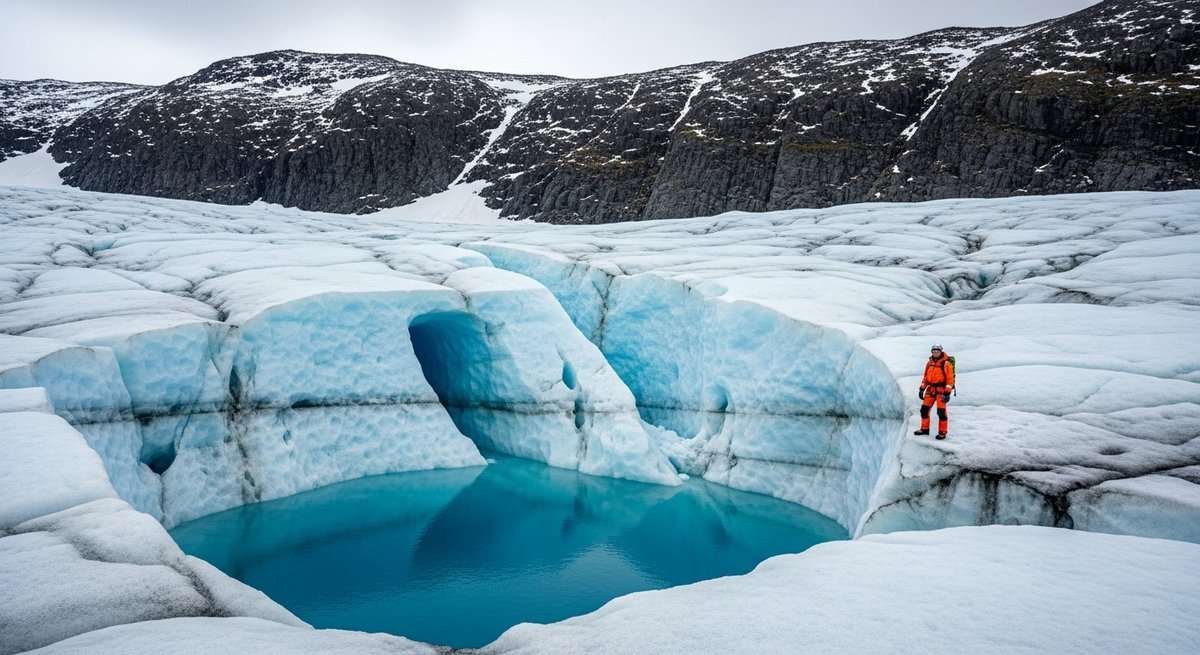
Greenland holds about 8 percent of the world’s fresh water, locked in an ice sheet that stretches roughly 1.7 million square kilometers. In geological terms, this ice is ancient. Some of it formed over 100,000 years ago. The idea that it could vanish within a human lifetime – or even across a few centuries – would have seemed absurd to scientists just a generation ago.
It no longer seems absurd. Data from NASA’s GRACE satellite missions have confirmed that ice loss from Greenland has been accelerating since the 1990s. What was once a relatively stable system has entered a period of rapid and measurable decline. Surface melting is increasing. Glaciers at the island’s edges are calving faster. And meltwater is flowing into the ocean at rates that are reshaping global sea level calculations.
The mechanics are worth understanding. Ice loss in Greenland happens through two main processes. The first is surface melt – warm air temperatures cause the top layer of the ice sheet to melt, and that water either refreezes, drains into the ocean, or flows into moulins (vertical shafts in the ice) that carry it to the bedrock below. The second is dynamic ice loss, where outlet glaciers that reach the coast speed up and calve enormous chunks of ice directly into the sea.
Both processes are accelerating. And they’re reinforcing each other in ways that make simple projections difficult. To dig deeper into the science of whether this system is approaching a point of no return, this detailed look at whether Greenland’s ice sheet is on the brink of collapse lays out the latest research clearly.
The Sea Level Threat Is Real and It’s Measurable
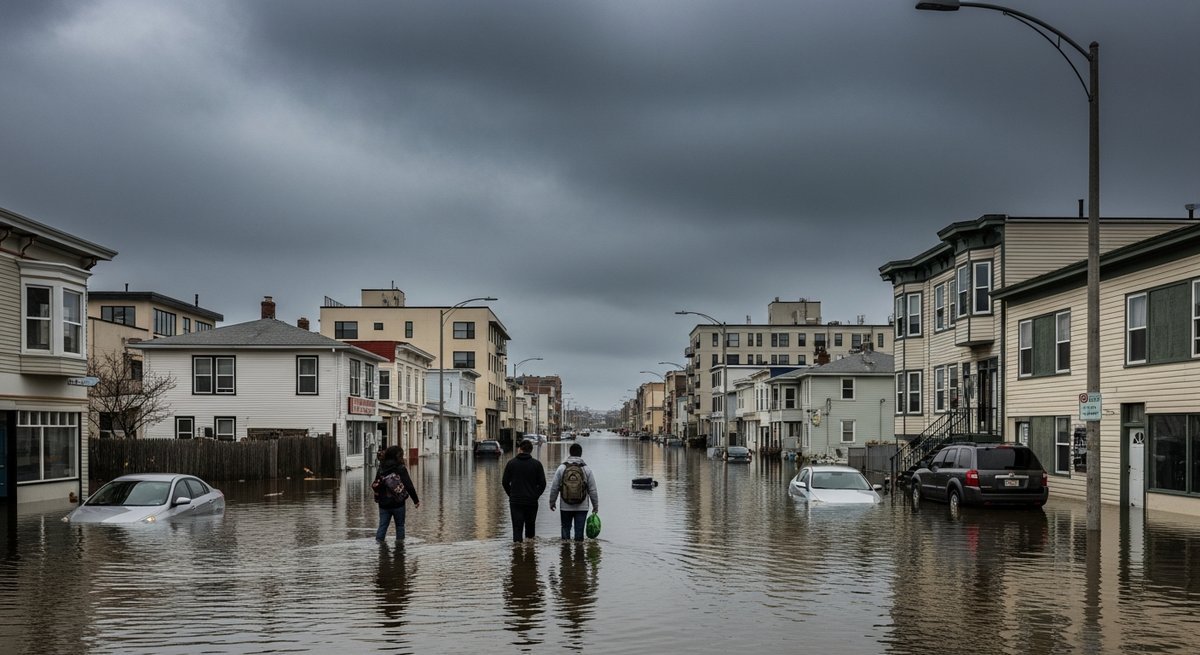
Here’s the number that keeps oceanographers up at night: if the entire Greenland ice sheet melted, global sea levels would rise by approximately seven meters. That’s about 23 feet. Obviously, that’s not happening tomorrow – or even in this century under most scenarios. But even a fraction of that rise carries profound consequences.
Current estimates suggest that Greenland ice melt has already contributed roughly 14 millimeters to global sea level rise since 1972, with the rate spiking sharply in recent decades. Under moderate warming scenarios, Greenland alone could add 10 to 15 centimeters to sea levels by 2100. Under higher-emission scenarios, projections climb considerably from there.
For low-lying coastal nations, small island states, and densely populated river deltas, even modest sea level increases translate directly into more frequent flooding, saltwater intrusion into freshwater supplies, and eventual displacement of communities. Climate advocates like Mia Mottley have been raising alarms about exactly this kind of existential threat to vulnerable nations for years, pointing out that the people contributing least to greenhouse gas emissions are often bearing the heaviest costs.
But it’s not only about the meters of water. It’s about timing and disruption. A sudden acceleration – triggered by a tipping point in the ice sheet’s dynamics – could compress decades of expected sea level rise into a much shorter window, leaving coastal infrastructure and communities without time to adapt.
The Arctic Feedback Loop Nobody Wants to Talk About
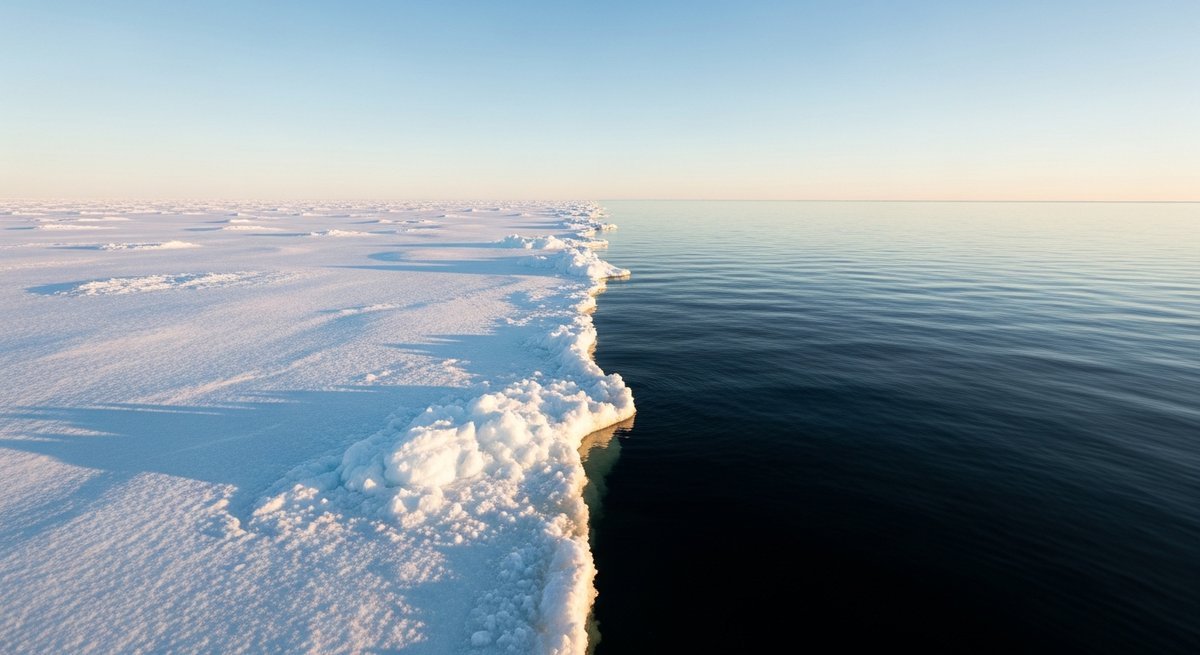
One of the most unsettling aspects of Arctic warming isn’t the ice melt itself – it’s what the ice melt causes next. The Arctic is warming approximately four times faster than the global average. Scientists call this “Arctic amplification,” and it’s driven in large part by a feedback loop involving albedo, which is the reflectivity of surfaces.
Ice and snow are highly reflective. They bounce sunlight back into space, helping to regulate the Earth’s temperature. When that ice melts, it exposes darker ocean water or bare rock – surfaces that absorb rather than reflect heat. This absorption accelerates warming, which causes more melting, which exposes more dark surface, which absorbs more heat. The cycle compounds on itself.
The consequences ripple outward. Changes in Arctic temperature gradients affect the jet stream – the atmospheric river that steers weather patterns across the Northern Hemisphere. A destabilized jet stream contributes to the kind of extreme weather events that have become increasingly familiar: prolonged heat waves, unusual cold snaps, devastating floods, and extended droughts. The connection between vanishing polar ice and weather extremes thousands of miles away is one of the clearest examples of how interconnected Earth’s climate systems really are.
For a fuller picture of what’s happening across the Arctic region and what it means globally, this analysis of the Arctic crisis and its global impact covers the scope of the challenge with real depth.
Technology Is Entering the Fight – But It’s Not a Silver Bullet
Science and engineering communities haven’t been standing still. Researchers around the world are exploring ways to monitor, understand, and even slow the pace of ice loss using some genuinely creative approaches. Autonomous underwater vehicles map the undersides of glaciers to understand where warm ocean water is eroding ice from below. Satellites track surface changes across millions of square kilometers with centimeter-level precision. Machine learning tools help researchers process enormous climate datasets faster than ever before.
Some more experimental proposals have entered the conversation too – from reflective coatings applied to ice surfaces to slow melting, to geoengineering schemes involving atmospheric particles that would reflect solar radiation. These ideas range from promising to deeply controversial, and none of them are ready for deployment at scale.
The role of robotics and autonomous systems in polar science is expanding rapidly, and it’s genuinely exciting. The growing use of ice robots to monitor and protect melting ice caps represents one of the more fascinating intersections of technology and climate science happening right now.
But technology – even the most sophisticated – can only do so much when the underlying driver of ice loss remains unaddressed. Monitoring and measuring ice retreat tells us exactly how fast we’re losing ground. Reversing that trend requires something more fundamental: dramatically cutting the greenhouse gas emissions that are driving the warming in the first place.
What Greenland’s Ice Loss Means for Ocean Systems
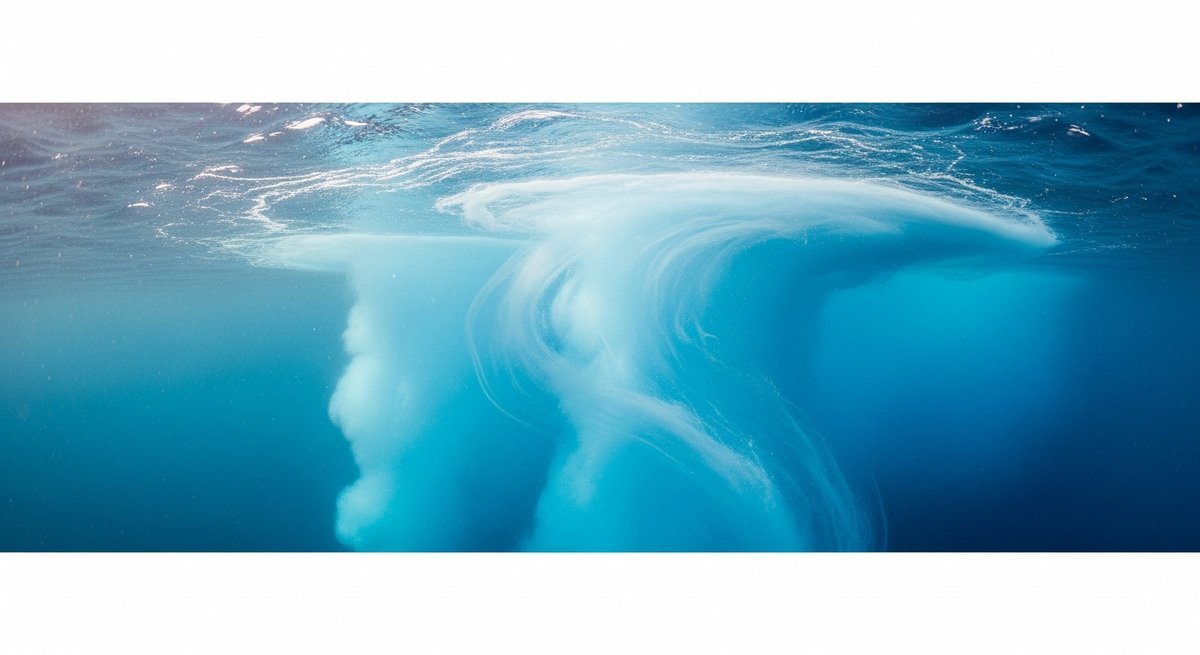
Beyond sea level, the influx of fresh meltwater into the North Atlantic is changing the chemistry and circulation of the ocean itself. The Atlantic Meridional Overturning Circulation (AMOC) – sometimes described informally as the ocean’s conveyor belt – depends on density differences between saltwater and freshwater to drive its movement. As large volumes of fresh glacial meltwater pour into the North Atlantic, they dilute the saltwater, reducing density and potentially slowing or disrupting this circulation.
AMOC plays a critical role in regulating climate across the Northern Hemisphere, particularly in Europe. A significant slowdown could cool Northern Europe, shift rainfall patterns across Africa and South America, and reduce the ocean’s capacity to absorb carbon dioxide from the atmosphere. Some research suggests AMOC may already be weakening, though the full implications and timeline remain areas of active scientific debate.
The ocean’s role as a carbon sink is already under pressure from multiple directions, including changes in polar regions. Interestingly, the dynamics of ice and carbon absorption are complex – recent findings on thinning Antarctic ice suggest it may temporarily boost oceanic carbon absorption in some regions, though this comes with its own set of uncertain trade-offs.
The broader point is that ice loss doesn’t operate in isolation. Every major component of Earth’s climate system is entangled with every other. Changes in Greenland send ripples through ocean circulation, atmospheric patterns, regional climates, and ultimately into the lives of billions of people who will never set foot anywhere near the Arctic.
Why the Urgency Matters Right Now
There’s a concept in climate science called a “tipping point” – a threshold beyond which a system undergoes rapid, self-sustaining change that is difficult or impossible to reverse. Some researchers believe the Greenland ice sheet may already be approaching such a threshold, where warming has progressed far enough that continued melting becomes self-reinforcing even if global emissions were to stop tomorrow.
This doesn’t mean the situation is hopeless. It means the window for meaningful action is narrowing, and every fraction of a degree of warming that is avoided translates directly into less ice lost, less sea level rise, and less disruption to ocean and atmospheric systems. The difference between 1.5 degrees Celsius of warming and 2 degrees isn’t just a number on a chart – it’s potentially hundreds of billions of tons of ice, centimeters of sea level, and millions of lives affected.
The energy choices made in the next decade – by governments, industries, and individuals – will shape the trajectory of ice loss for centuries. Global power demand continues to rise, which makes the transition to clean energy sources all the more critical. The scale and pace of that transition will determine how much of Greenland’s ancient ice survives.
The ice is telling us something. It has been for a while. The question is whether the warning is being heard loudly enough – and acted on quickly enough – to matter.
Frequently Asked Questions About Greenland Ice Sheet Melting
How fast is the Greenland ice sheet melting?
Greenland currently loses an estimated 280 billion metric tons of ice per year on average, though this varies year to year. The rate of loss has accelerated significantly since the 1990s, with recent decades seeing some of the highest melt years on record.
How much would sea levels rise if the Greenland ice sheet completely melted?
Complete melting of the Greenland ice sheet would raise global sea levels by approximately seven meters (around 23 feet). This would not happen quickly under any realistic scenario, but even partial melting contributes meaningfully to sea level rise over coming decades and centuries.
Is the Greenland ice sheet melting reversible?
- Some ice loss is already locked in regardless of near-term emission reductions, due to heat already absorbed by the oceans and atmosphere.
- The scale of future loss depends heavily on how quickly global emissions are reduced.
- Some scientists believe certain tipping points may already be close, beyond which melting becomes self-sustaining.
- Aggressive climate action can still prevent the worst outcomes, even if some change is unavoidable.
How does Greenland’s ice melt affect weather patterns?
Ice loss in Greenland contributes to Arctic amplification, which destabilizes the jet stream. This can intensify extreme weather events across the Northern Hemisphere, including heat waves, floods, cold spells, and droughts – even in regions far from the Arctic.
What is the relationship between Greenland ice melt and ocean circulation?
Meltwater from Greenland flows into the North Atlantic as fresh water, diluting saltwater and potentially weakening the Atlantic Meridional Overturning Circulation (AMOC). A significant AMOC slowdown could cool parts of Europe, shift global rainfall patterns, and reduce the ocean’s ability to absorb carbon dioxide.
Can technology stop or slow Greenland’s ice loss?
- Advanced satellites, autonomous vehicles, and AI tools are improving our ability to monitor and understand ice loss.
- Some experimental approaches – like reflective coatings on ice or atmospheric interventions – are being studied but are not proven or deployable at scale.
- Technology is a valuable tool but cannot substitute for cutting greenhouse gas emissions as the primary solution.
Why does Greenland ice loss matter for people who don’t live near the Arctic?
Sea level rise from Greenland melt threatens coastal cities and low-lying nations worldwide. Changes to ocean circulation and atmospheric patterns affect weather, agriculture, and water supplies across many populated regions. The effects are genuinely global, not regional.
What can individuals do to help address Arctic ice loss?
- Reduce personal carbon footprints through energy choices, transportation, and consumption habits.
- Support policies and elected officials who prioritize ambitious climate action.
- Stay informed and help raise awareness – public understanding drives political will.
- Engage with organizations working on climate solutions at local, national, and international levels.
This article is for informational purposes only.
The post Greenland’s Vanishing Ice: A Stark Warning for Our Planet’s Future appeared first on Green.org.


