
Reliable supplies of quality malt from Western Canada make it hard for Ontario craft malt producers to build inroads with craft brewers. Terry Byrne and his family from Essex County, however, are making a go of it with a small-scale traditional floor malt system.
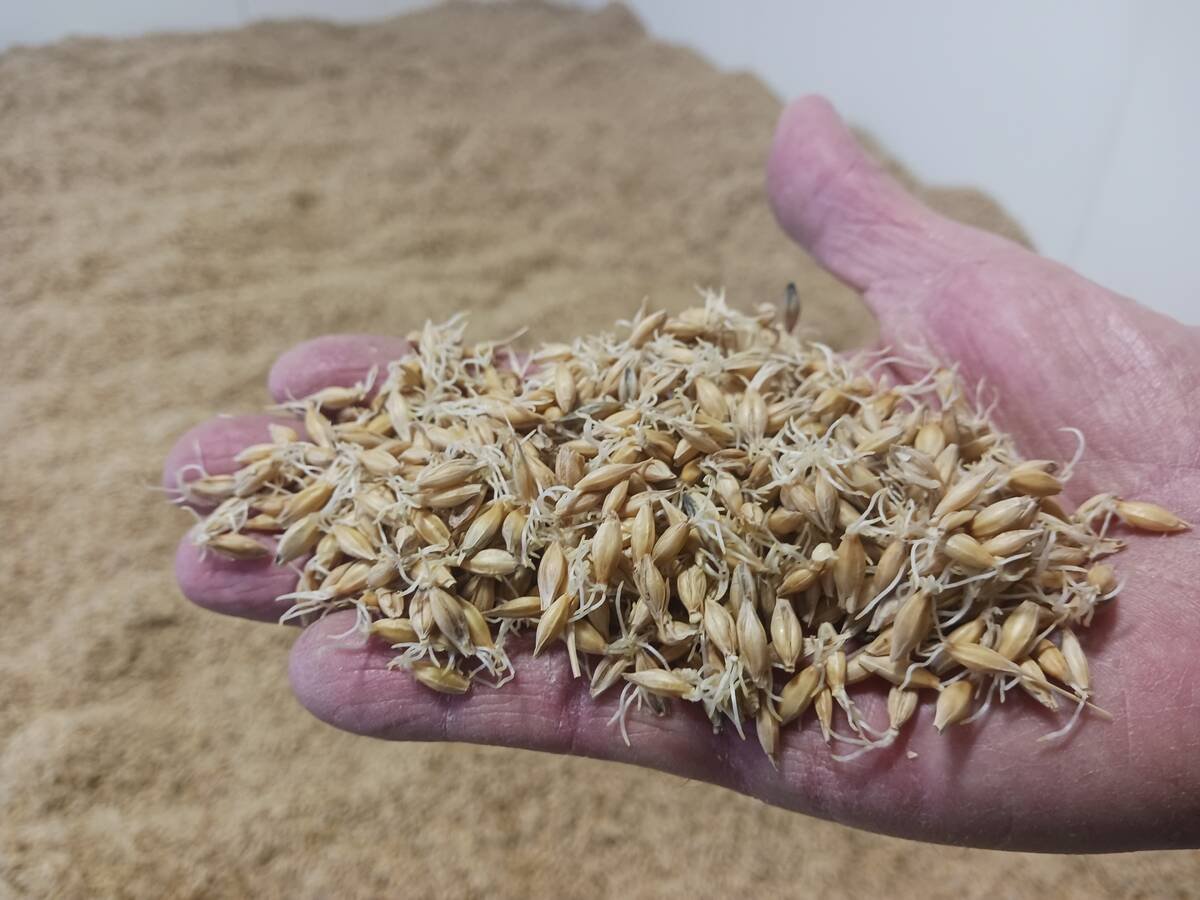
Just outside the village of Gesto, the Byrne Craft Malthouse produces brewery grains from winter and spring barley grown on the family’s farm. Malt refers to grain that has been partially germinated to convert starches to sugars. Barley is the most common malted grain, with two-row barley – varieties featuring two kernel rows – being much preferred by most brewers.
Malt barley agronomy
“I grow two-row barley. We looked at six-row, but the brewers won’t touch it,” Byrne says, while inspecting his overwintered crop on a damp day in early March 2026. Newdale is Byrne’s spring barley variety of choice, while his winter variety is Calypso. The latter consistently outperforms the former in yields.
In total, the family farms five acres of spring barley and 10 acres of winter barley each year – a small acreage, but more than enough for their production facility to process. Winter barley also fits well into Byrne’s wider crop rotation, with a late June harvest providing opportunity for late-season soybeans.
“It grows all winter. But we can only grow the winter barley successfully up to maybe Sarnia. Otherwise, it gets too cold and it dies. Agronomically, fertilizer is the same. High fertility, and you have to have good drainage because this is heavy soil,” Byrne says. “We keep our nitrogen rates at 70 per cent of what we put on our wheat crop. Otherwise, our protein levels will get too high. You want to keep that protein down around 12 for beer. Yield for winter barley, last year we had 80 bushels, which is good. It’s more than I can utilize in the plant.
“My dad grew winter malting barley when I was a kid. It was a ‘wish we did, wish we didn’t have it.’ But I don’t think they had the agronomic knowledge given to them about growing the crop as much as what’s available today. There wasn’t as much about nitrogen rates, and a lot of that wasn’t in the picture. If it made good malt, great, and if not, we had pig feed.”
The malting process
The Byrne malt house is a multi-purpose facility where barley is germinated, heated, cleaned and bagged for sale. Many malt houses use tumbler systems for germination. Byrne opted for a more traditional floor system, in part because of the lower cost, and since managing small-batch craft quantities can be accomplished by a small number of people – Byrne and his sons Shaun and Ben, specifically.
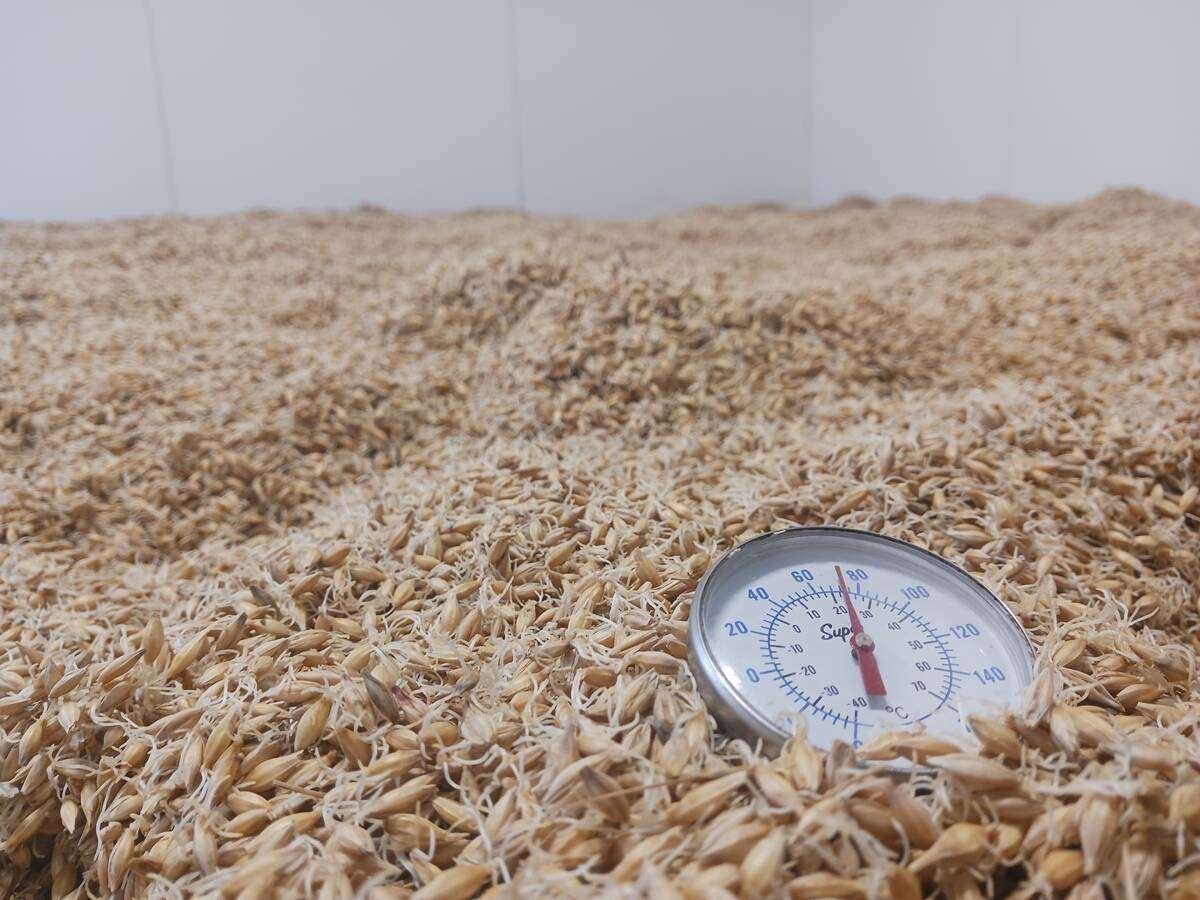
“We don’t have a cooling system, so only have about 10 or 12 weeks through the winter when we can malt because of the temperature. We have to keep the germination room at 58 F, no more than that. I want it cooler than that. And when the malt is on the floor it gives off heat,” Byrne says. “I keep it four to six inches on the floor, and the room heats up. As it goes through the modification process it gives off more and more heat. Tomorrow is going to be our peak day, and it will get up to 90 F. We have to keep turning it over to cool it down.
“There’s still floor malting in Ireland and Scotland. A little bit in England. That’s what we based our system on.”
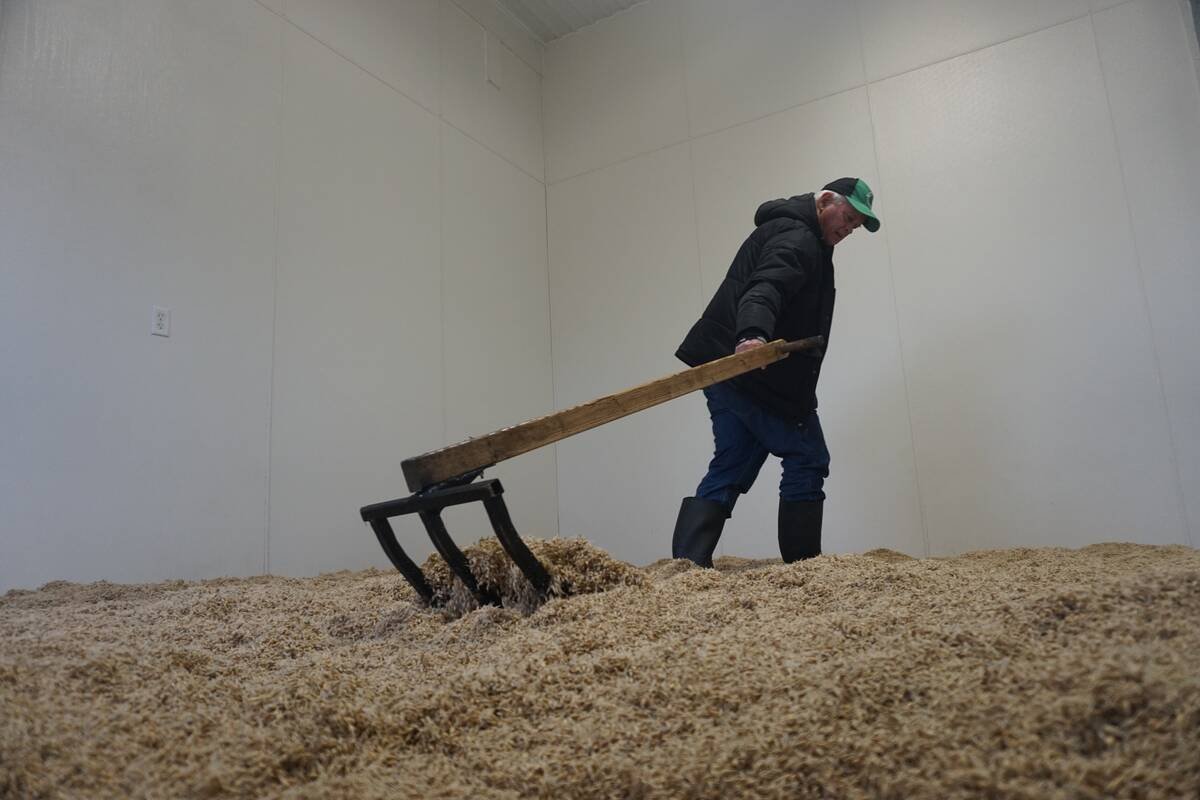
Additional cost savings for operations in the malt house were secured through the purchase of a seed cleaner from the 1960s, as well as the salvage of materials – and the contact network – from Byrne’s time in grain bin sales and construction business.
Generating brewer interest
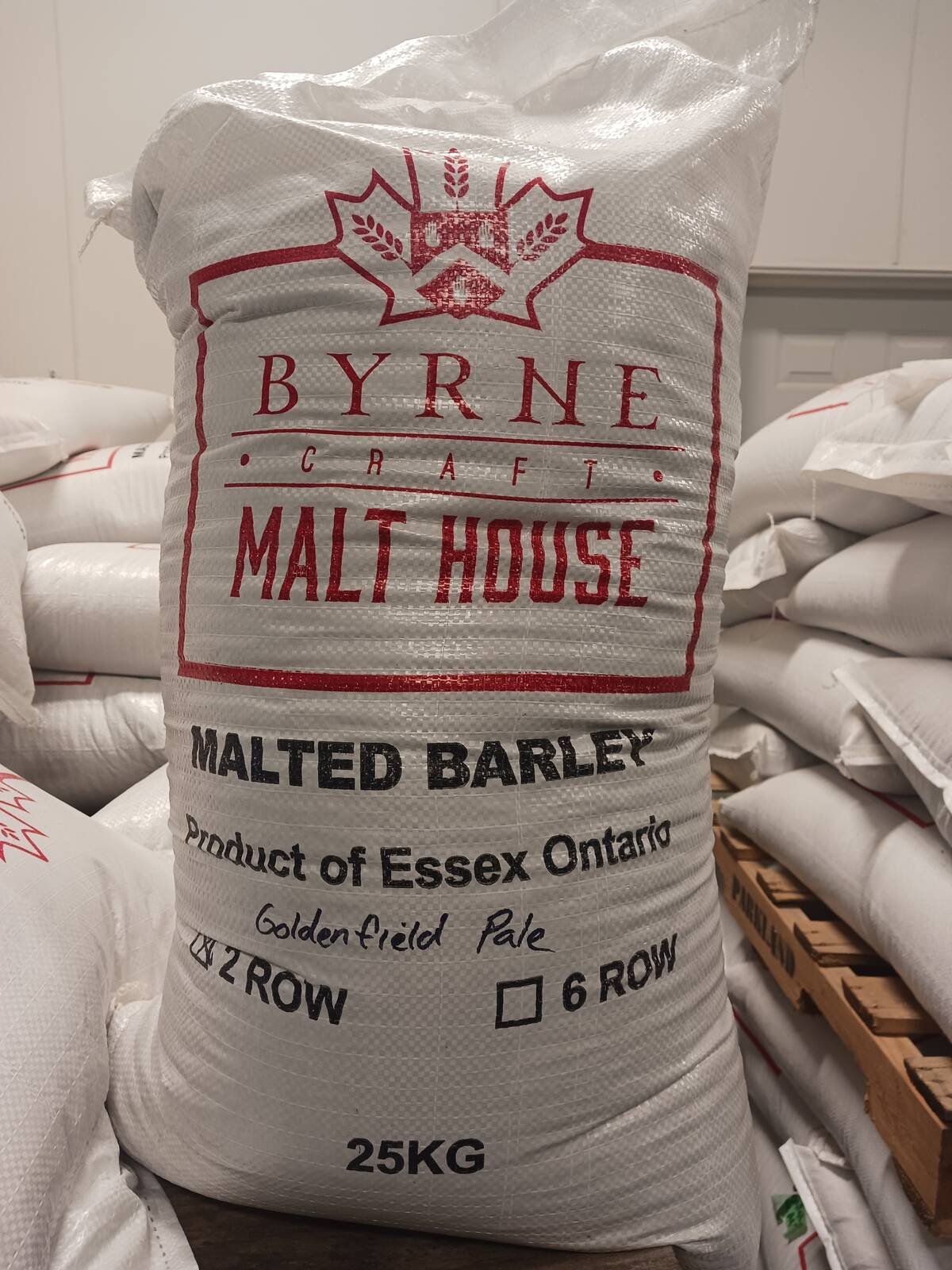
Byrne and his family first started malting in 2016, though a series of health problems and COVID delayed full operations until 2024. Currently they can produce around 400 25-kilogram bags (10 tonnes) of malt barley in a season, and supply several local breweries. There is capacity to expand with additional buyers, and Byrne is actively contacting potential new customers.
Getting more breweries onboard, however, is not easy, and it shows in the dearth of craft malt producers in the province. Indeed, Byrne is one of very few, if not the only small-batch malt producer left in Ontario.
From a brewer’s perspective, a major challenge with supporting craft malt is logistical in nature. Devon Lafebre, a southern Ontario brewer with 10 years in the industry, says it’s common for breweries to source a wide range of materials – hops, yeast, malt, equipment, etc. – from a single company, in an effort to save costs and reduce paperwork. Greater quality variation from malt barley grown and processed in Eastern Canada is also a problem.
“It’s almost like a one-stop shop. At this point, you almost have to have a portfolio of stuff we can pick from,” Lafebre says. “Our climate isn’t great for it either. The grain doesn’t do well in southern Ontario. The biggest thing for craft breweries is risk. They don’t have the same blending power or equipment that the big guys have.”
“If the consumer doesn’t care so much, there’s no extra selling feature towards going towards a craft malt that’s more varied but costs the same … especially now, with the margins in craft being so small.”
Dirk Bendiak, technical advisor for Ontario Craft Brewers, agrees practical challenges are a concern for small brewers. A lack of roasting capacity for craft malt producers – a step necessary to create different styles of malt – is another issue.
“Years ago, there used to be malt on this side of the country because distribution costs were so high. Growing it out west and bringing it here was a big deal,” Bendiak says.
“The other snag is, as soon as you bring Western Canada malt into the Ontario environment, it’s susceptible to humidity. It’s the same thing with hops. They grow here, but grow much better in the Okanagan region because it’s a desert.”
Still, he says there is opportunity for small-scale malt production to supply smaller-scale breweries.
“In Ontario, most of the little craft brewers are probably brewing under 5,000 hectolitres a year, which is quite small volumes. Probably 80 per cent of craft brewers are small brewers,” Bendiak says, adding there may also be marketing opportunities for products with all local ingredients.
Byrne himself remains optimistic. The malt business fits within their existing grain operation, they’ve had success with a few local breweries, and crucially, he enjoys the work. For now, he plans on knocking on more doors “to try and grow the business.
“We’re going to pick away at it. I know we’re going to get bigger with more sales. But we’re not going to be like Canada Malt in Montreal. The reality is we’re only going to be a niche small player,” Byrne says.
“Our sales are going up every year a little bit.”
The post Growing craft malt barley — in southwestern Ontario appeared first on Farmtario.


