
Watering plants sounds simple, but in reality, it is one of the most common reasons why houseplants, garden plants, and even expensive ornamentals die. Many plant lovers rely on guesswork, finger tests, or visual signs, which often come too late.
This is where tools like the GROWIT Soil Moisture Meter for Plants become extremely helpful. In this detailed review, I will share what this product is, how it works, why it matters scientifically, and my own experience using it for different plants.
What Is GROWIT Soil Moisture Meter?
The GROWIT Soil Moisture Meter is a simple, mechanical plant moisture testing tool designed to measure the moisture level in soil. It does not require batteries, electricity, or complicated setup. The meter works by inserting a metal probe into the soil, where it measures moisture at the root level instead of only the soil surface.
This product is mainly designed for houseplants, succulents, cacti, potted plants, and small garden plants. It helps plant owners understand when to water and when to wait, reducing the risk of root rot, fungal disease, and plant stress caused by improper watering.
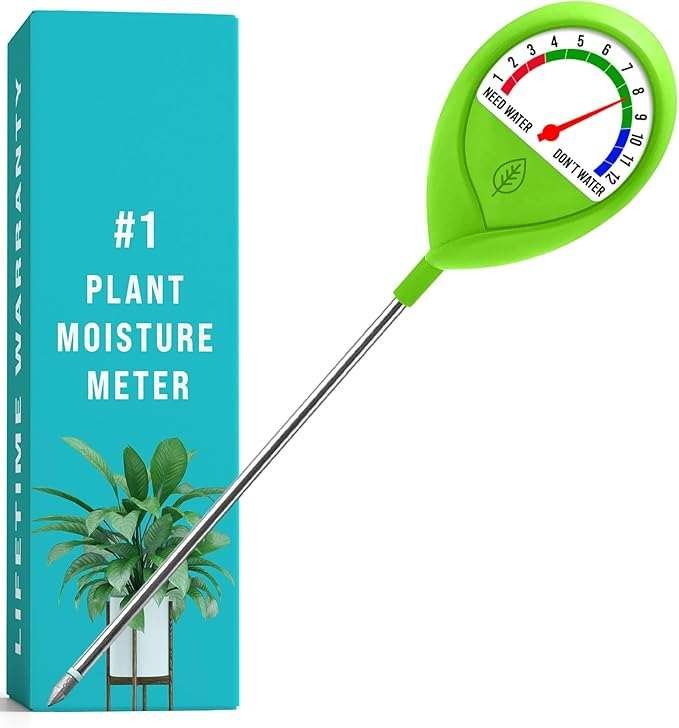
The GROWIT Soil Moisture Meter stands out because of its simplicity and practicality. Unlike digital meters that depend on batteries and electronics, this device uses a passive sensing mechanism. This makes it reliable, lightweight, and easy to use for beginners and experienced growers alike. Key highlights of the product include:
- No batteries required
- Easy-to-read moisture scale
- Detects hidden moisture issues
- Helps identify hydrophobic (water-repelling) soil
- Sturdy and durable design
- Designed for soil only (not water testing)
One important thing the company clearly mentions is that the meter measures soil moisture, not free water. This is why placing it directly into a glass of water will not give correct results. This detail is important and often misunderstood by first-time users.
Pros & Cons of GROWIT Soil Moisture Sensor
| Pros | Cons |
|---|---|
 No batteries required – always ready to use No batteries required – always ready to use |
 Does not work for hydroponic or water testing Does not work for hydroponic or water testing |
| Easy to use, even for beginners and children |
Needs correct placement for accurate readings |
| Helps prevent overwatering and root rot |
Not suitable for very hard or compacted soil |
| Detects moisture at root level, not just surface |
Cannot provide exact percentage moisture value |
| Sturdy build and long-lasting design |
Only measures moisture (no pH or light reading) |
Overall, the advantages clearly outweigh the minor limitations, especially for indoor and container plants.
Why Soil Moisture Meter for Plants Matters?
Water management is one of the most critical factors in plant health. In agriculture and horticulture, incorrect watering practices are responsible for significant plant losses every year. For home gardeners and indoor plant lovers, the problem is even more common because pots do not drain water the same way open soil does.
Many people unknowingly kill their plants with love by watering too often. The GROWIT Soil Moisture Meter matters because it removes guesswork and replaces it with actual soil moisture data.
Soil moisture refers to the amount of water held in the spaces between soil particles. Plants absorb this water through their roots. When soil remains too wet for long periods, oxygen levels around the roots drop, leading to root suffocation and rot.
Another hidden issue is hydrophobic soil. Over time, dry potting mixes can repel water instead of absorbing it. This creates a situation where:
- The top soil looks wet
- Water runs down the sides of the pot
- The root zone remains dry
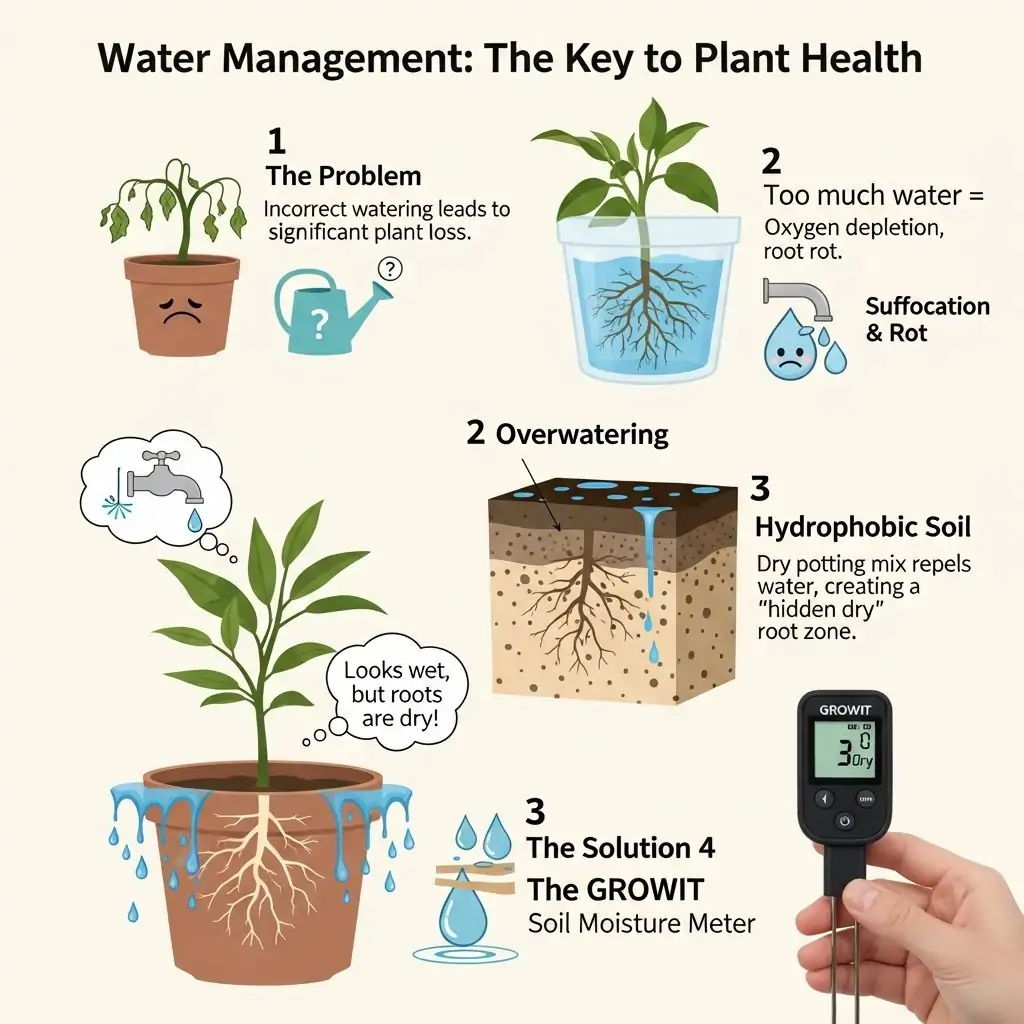
This is extremely dangerous because plants appear watered but are actually dehydrated. The GROWIT moisture meter helps detect this issue by showing dry readings even when the surface looks moist. Recent studies in horticulture and indoor plant care highlight the importance of proper watering:
Research shows that overwatering accounts for nearly 60–70% of houseplant deaths, especially among beginners.
According to indoor plant surveys, root rot is the number one cause of plant loss in potted plants.
Soil moisture monitoring has been shown to improve plant survival rates by up to 40% in container gardening.
Studies on succulents and cacti indicate that improper watering reduces plant lifespan by more than 50%.
With the rise of indoor gardening, the global plant care tools market has grown steadily, reflecting increased awareness about precision watering.
These figures clearly show why tools like soil moisture meters are becoming essential rather than optional.
My Experience with GROWIT Soil Moisture Meter
As someone who regularly experiments with gardening tools and plant care products, I tested the GROWIT Soil Moisture Meter on a variety of plants, including:
- Succulents
- Cacti
- Fiddle Leaf Fig
- Pothos
- Decorative indoor plants in pots
In the past, I lost a few succulents due to accidental overwatering, which caused root rot. Like many people, I relied on visual cues and finger testing, which turned out to be unreliable.
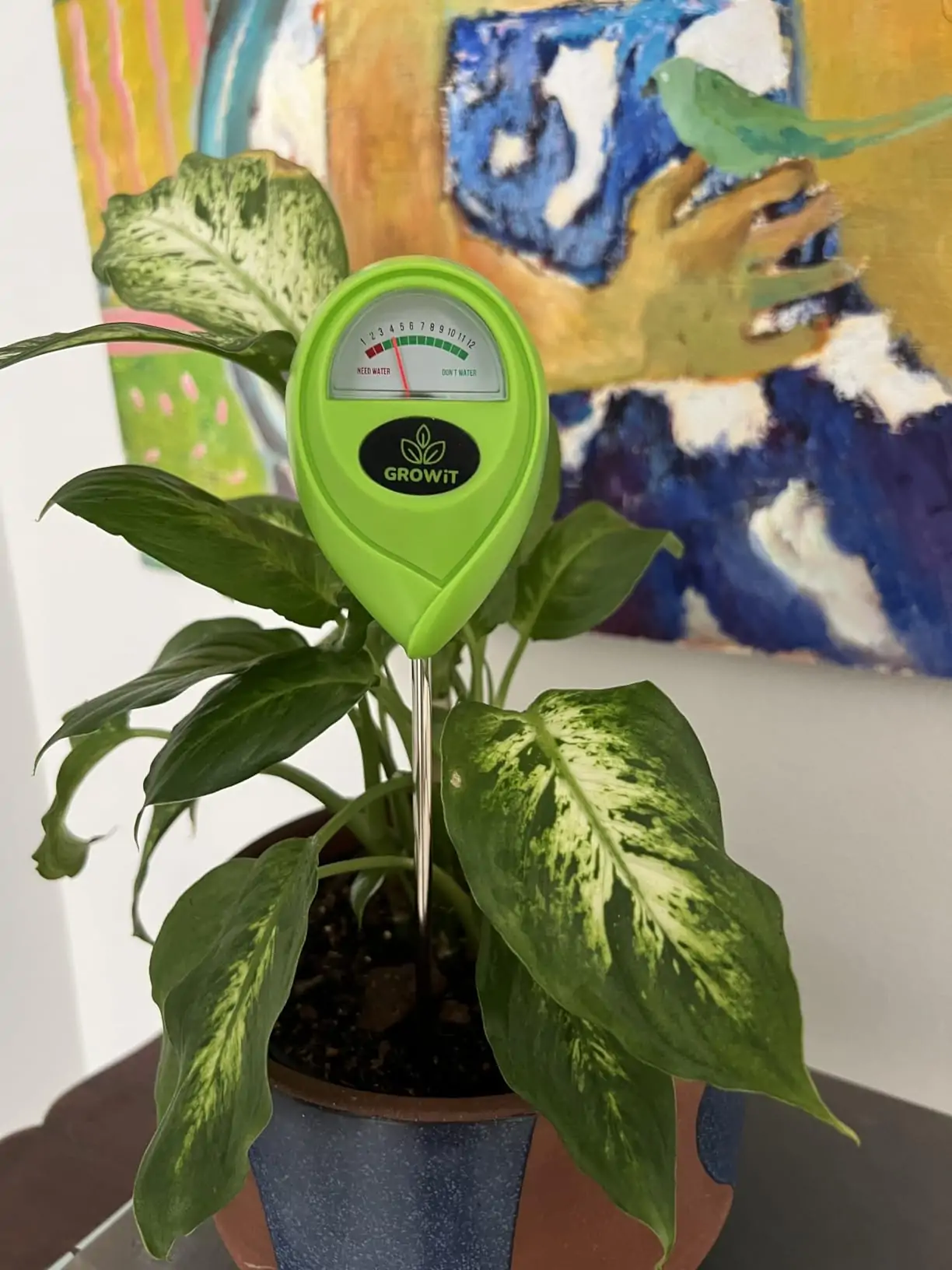
Using this meter was extremely simple. I inserted it into the soil near the root zone, waited a few seconds, and checked the reading. I also followed the recommended method of testing different locations in the same pot for better accuracy.
One important lesson I learned was that when the meter shows dryness but the surface looks wet, the problem is often hydrophobic soil, not the meter.
Performance of GROWIT Soil Moisture Meter
The performance of the GROWIT Soil Moisture Meter has been impressive in daily use. It provides consistent readings when used correctly and helps maintain a proper watering schedule. Key performance observations:
- Accurately detects moisture at root level
- Helps avoid unnecessary watering
- Prevents overwatering-related diseases
- Works best when soil is moderately loose
- Provides instant readings without calibration
The meter made plant care feel more professional and controlled rather than emotional and guess-based.
Practical Tips for GROWIT Soil Moisture Sensor
To get the most out of this moisture meter, here are some practical tips based on real use:
- Always insert the probe deep enough to reach root level
- Test soil in more than one spot in the pot
- Clean the probe after use to maintain accuracy
- Do not use in pure water or extremely hard soil
- Combine readings with plant-specific watering needs
- Allow soil to dry slightly between tests for accurate results
These simple practices can greatly improve the effectiveness of the device.
Comparisons with Alternatives Soil Moisture Meter
| Feature | GROWIT Soil Moisture Meter | Digital Moisture Meter | Finger Test |
|---|---|---|---|
| Power Requirement | No batteries needed | Requires batteries | No tools needed |
| Ease of Use | Very easy for beginners | Easy but needs setup | Depends on experience |
| Moisture Depth Check | Measures moisture at root level | Measures moisture at root level | Surface level only |
| Accuracy & Reliability | Reliable when used correctly | Can fail due to battery or sensor issues | Highly unreliable |
| Best Use Case | Houseplants, succulents, potted plants | Tech-friendly users | Not recommended for sensitive plants |
Final Recommendations
If you are a plant parent, gardener, or agriculture enthusiast who struggles with watering consistency, the GROWIT Soil Moisture Meter for Plants is a highly recommended tool. It is especially useful for:
- Beginners who tend to overwater
- Succulent and cactus owners
- Indoor plant lovers
- Anyone who wants healthier plants with less stress
This meter has genuinely helped keep plants alive, improved growth, and removed uncertainty from watering routines. Its sturdy design, honest performance, and ease of use make it a valuable addition to any plant care toolkit.


