
Gardening and farming in a water‑scarce region—or even on a balcony or small patio—can be challenging. Over‑watering wastes water, under‑watering stresses plants. That’s why I was excited when I first heard about the HEKIWAY 49FT Solar Drip Irrigation System.
It promises to simplify watering, save water and time, and keep plants healthy even when life gets busy. In this review, I share my full experience with this system, what works — and what doesn’t — and how it compares to traditional watering.
What is HEKIWAY 49FT Auto Solar Drip Irrigation System?
The HEKIWAY 49FT Solar Drip Irrigation System is a solar‑powered automatic watering kit designed for indoor and outdoor gardens — suitable for potted plants, balcony/terrace gardens, and small patio or backyard vegetable/flower gardens. Instead of manually watering each plant, this system pumps water (from a bucket or container) through tubes to drip stakes placed at plant roots, on a timer schedule you set.
Because it runs on solar power (or via a Type-C port when solar isn’t available), it doesn’t require plugging into mains electricity — making it especially useful in areas with unreliable electricity or for pots on balconies without taps. Here are the main features of the HEKIWAY Solar Drip Irrigation System (49 ft / 15 m version):
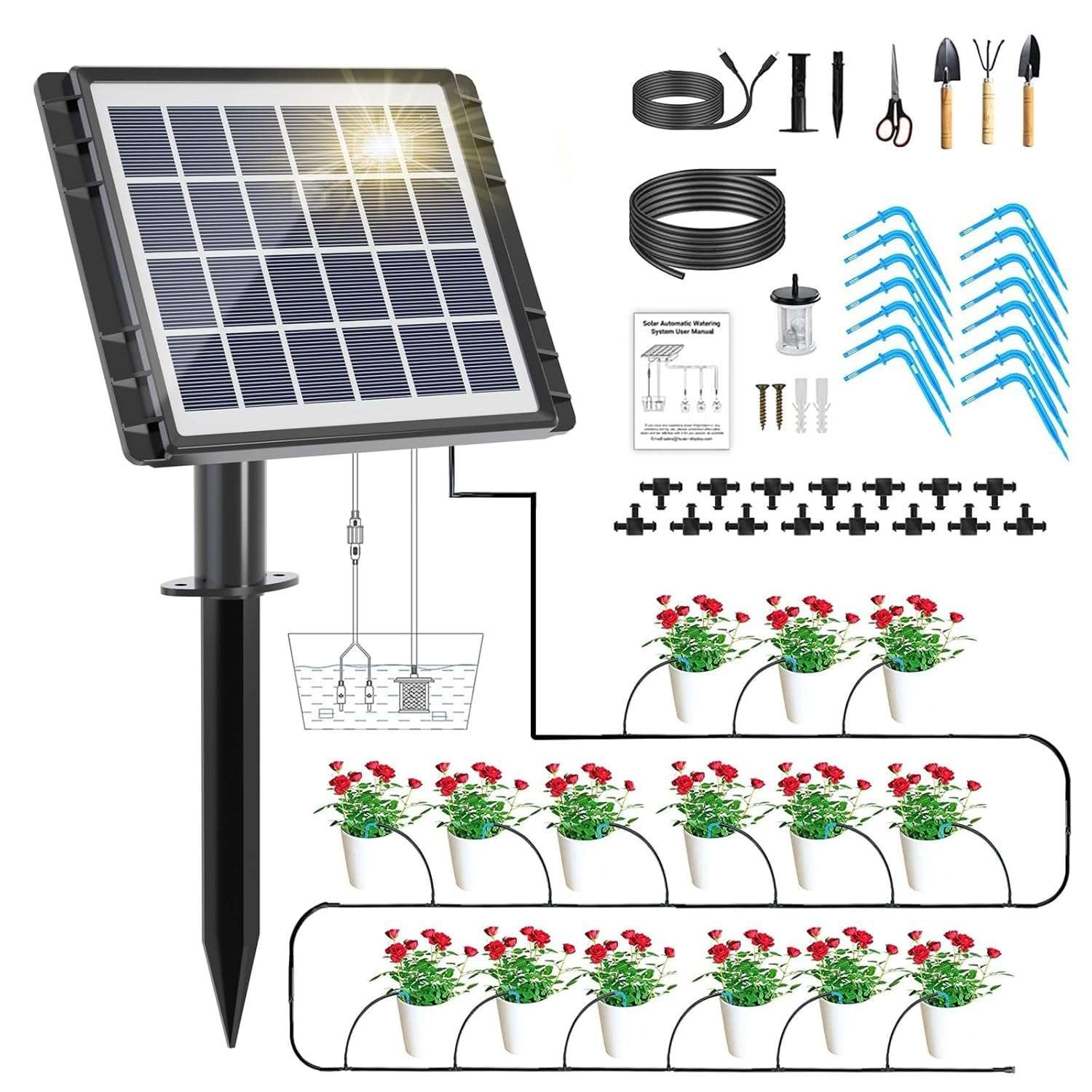
i. Indoor & Outdoor Versatility, All‑Season Use: Works both indoors and outdoors. In summer, the solar panel powers the pump; in winter or low light, you can charge via Type‑C port to keep indoor plants watered.
ii. 25 Customizable Timer Modes: You can choose watering durations (3–20 minutes) and intervals (every 12–96 hours), which allows customizing for different plant types and weather conditions. For example: small indoor plants could get a short drip every few days, while larger outdoor plants may get longer watering less often.
iii. Water‑Saving & Efficient Design: The low flow rate and drip-based watering reduces water waste, delivering water directly to roots rather than spraying wide areas.
iv. Comprehensive Kit: Comes with 50 ft tubing, 15 watering stakes, 15 T‑joints, and a filter — enough to water up to ~15 pots or plants.
v. Flow Rate & Capacity: Up to 900 ml/min flow — suitable for flowers, vegetables, potted plants, balcony plants, and small gardens.
vi. Smart Alerts: A buzzer or flashing light warns if the pump is blocked, filter is clogged, or water container is empty — helping prevent failed watering cycles.
vii. No Tap Needed: The system draws water from a bucket or container, so it’s ideal for places without a running tap.
Pros & Cons OF HEKIWAY Auto Solar Drip Irrigation System
| Pros | Cons |
|---|---|
 Saves a lot of time — automatic watering means you don’t need to hand‑water every plant. Saves a lot of time — automatic watering means you don’t need to hand‑water every plant. |
 Limited number of drippers (15) — may be insufficient for larger gardens or lots of plants. Limited number of drippers (15) — may be insufficient for larger gardens or lots of plants. |
| Water‑efficient: delivers water directly to roots, reducing waste from evaporation and runoff. |
For many outdoor plants, watering from this system may not deliver enough water per plant unless you use fewer drippers or refill water container frequently. |
| Works in places without running water or electricity (solar‑powered or USB charged). |
Plastic tubing and small fittings may wear out over time, especially under sunlight (drip‑line brittleness or fragility after few weeks/months). |
| Customizable watering schedule: you can adapt to different plant types and seasons. |
Solar panel + pump unit design can make control buttons awkward to press (especially if panel is installed high). |
| Good for indoor/outdoor, balcony, patio gardens — flexible and versatile. |
Requires some maintenance: checking water level, ensuring filter/pump are clean, and periodic tube/fittings inspection. |
| Alerts help avoid dry runs (empty bucket) or clogs, protecting plants. |
Long‑term durability uncertain — in some cases, breakdown or leakage reported after a few months of use (depending on quality of materials and maintenance). |
Why Auto Solar Drip Irrigation System Matters?
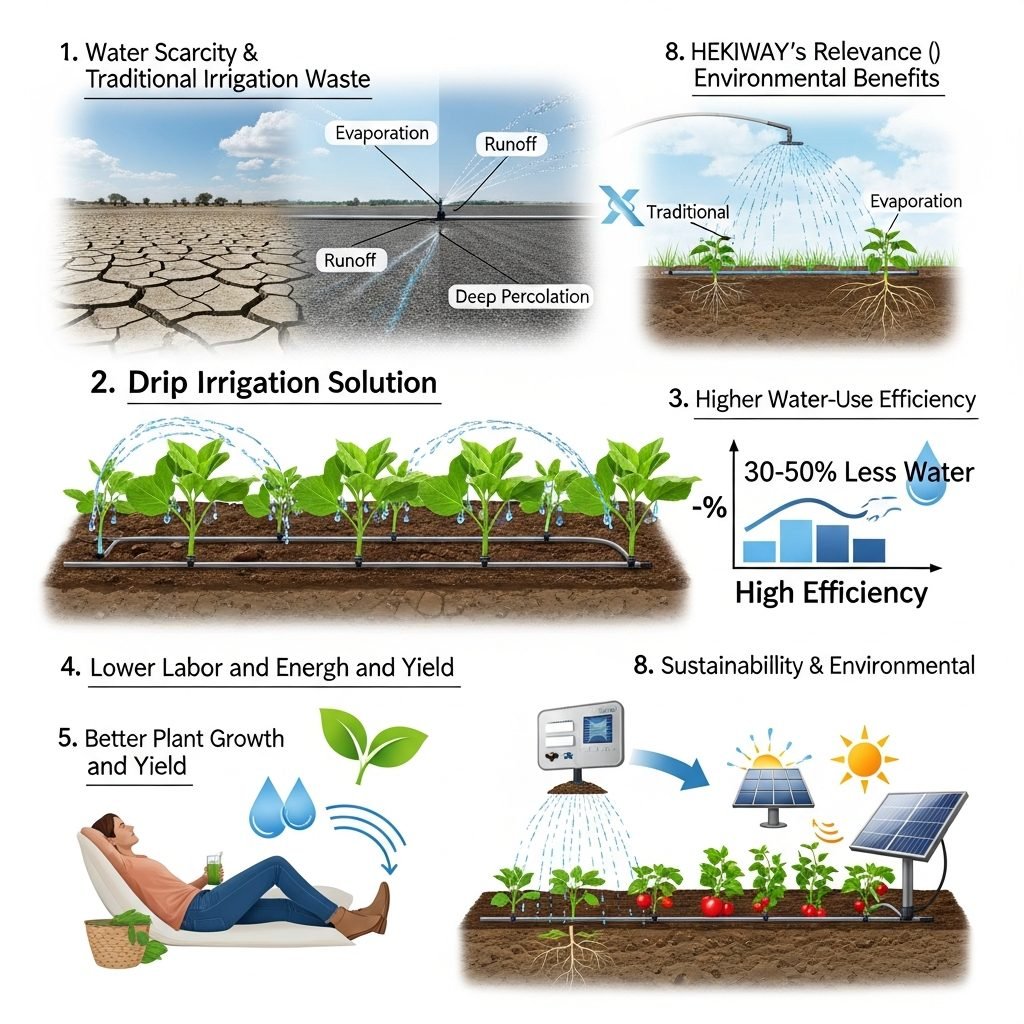
Water scarcity is one of the biggest challenges facing agriculture and gardening, especially in arid or semi‑arid regions (like many parts of South Asia). Traditional irrigation (flooding, overhead sprinklers, frequent manual watering) often wastes water — through evaporation, runoff, or deep percolation beyond the root zone — and is inefficient. Drip irrigation solves many of these problems by delivering water directly to the root zone. This means:
a. Less evaporation and runoff. Since water is applied at soil level and directly to plant roots, it doesn’t spray into the air or wet non‑plant areas.
b. Higher water‑use efficiency. Many studies find drip irrigation reduces water consumption by 30–50% (or more) compared to traditional irrigation methods.
c. Better plant growth and yield. Controlled, precise water delivery helps maintain optimal soil moisture — neither waterlogging nor drought — which supports healthy root growth, better nutrient uptake, and improved overall growth or yield.
d. Lower labor and energy costs. Automation reduces the need for manual watering and can cut down time and effort. Solar‑powered systems add an extra advantage by using renewable energy.
e. Sustainability & environmental benefits. Less water usage means conserving a precious resource; solar-powered irrigation avoids emissions from diesel or grid electricity and reduces energy footprint.
f. For gardeners and small‑scale growers — particularly in water‑scarce regions — a system like HEKIWAY’s can be quite significant. It aligns with sustainable agriculture practices and addresses real challenges: limited water, erratic weather, and lack of time for manual watering. Here are some of the latest findings from research on drip irrigation and solar‑powered watering systems:
A recent 2025 study comparing drip irrigation and traditional flood irrigation for tomato crops in a semi‑arid region found that drip irrigation used only ~50% of the water required by flood irrigation. At the same time, yields improved: tomato yield under drip was 3.75 kg/m² compared to 2.85 kg/m² under flood irrigation.
Drip irrigation systems have been reported to reduce water consumption by 30–50% compared to traditional methods.
Water use efficiency (WUE) — a key metric in agriculture especially under water scarcity — improves significantly under drip irrigation, because water is delivered directly to roots and not wasted.
Solar‑powered drip systems also show benefits beyond water saving: one study found that solar‑drip irrigation for cucumber yielded a high “water use efficiency” (kg per cubic meter of water) and had the lowest CO₂ emissions compared to diesel-powered or grid‑electric irrigation systems.
For smallholders and gardeners in water‑stressed areas, such systems can deliver socio‑economic benefits: among early adopters of solar drip irrigation, many report improved crop quality, reduced labor needs, and more consistent yields — making gardening more sustainable and reliable.
These data highlight that drip irrigation — and especially solar‑powered automated watering — is not just a convenience, but a scientifically backed, resource‑efficient, and climate‑smart approach.
My Experience with HEKIWAY Solar Drip Irrigation System
Here’s how I set up the HEKIWAY kit — and the real-world results I observed in my balcony / small garden environment:
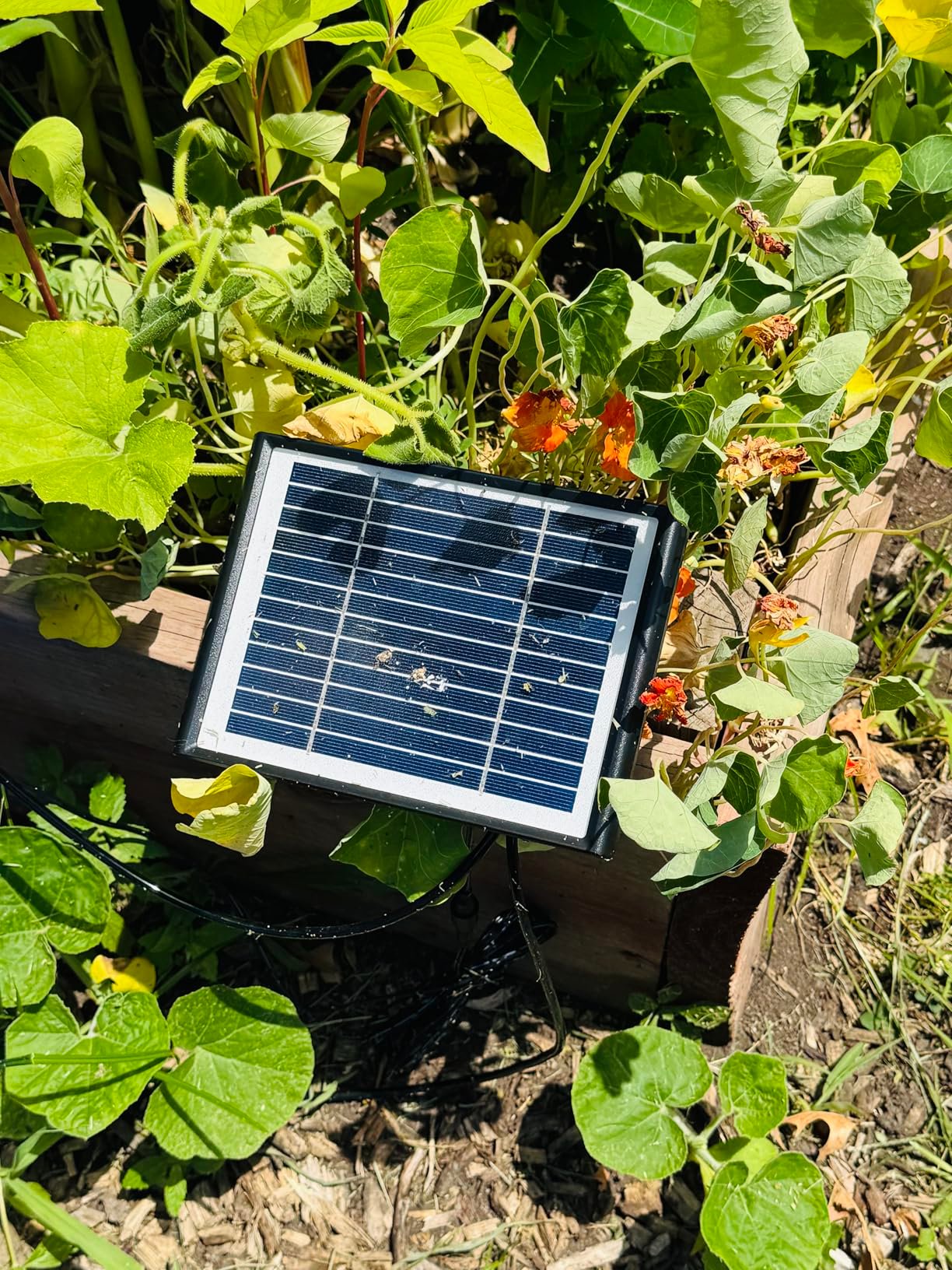
Setup: I used a 20‑liter plastic bucket as a water reservoir (soaking manually whenever water level dropped). I laid out the 49 ft tubing across 12 medium-sized pots (flowers, herbs, a few vegetables), placed drippers near each plant’s root zone, and positioned the solar panel + pump unit on a small elevated shelf (higher than the bucket) to avoid unintended siphoning. Installation took about an hour — mostly connecting tubing, positioning stakes, and testing flow.
First testing: I used the system’s test mode (3‑minute manual run) to check all drippers — ensured uniform flow, no leaks, no clogged emitters.
Scheduling: I configured watering based on plant size: for small herb pots — 5 min every 2–3 days; for medium pots — 7–10 min every 3–4 days; for vegetables and larger pots — 12–15 min every 5–7 days. This schedule seemed appropriate for my local climate (moderate humidity, warm days).
Observations over 2–3 months:
Plants looked healthier — more consistent growth and greener foliage compared to prior hand‑watering periods.
Soil moisture remained more stable: I noticed fewer days when soil dried out completely, and less over‑watering risk (because water was delivered slowly).
Less maintenance: I no longer had to carry a watering can daily, especially convenient if I was away for a day or two.
Alerts worked: once the bucket got near empty, the system buzzed/alerted — saved me from accidental drought stress on the plants.
Overall — especially for a balcony or container‑garden setup — the system made watering effortless and reliable.
However: I did notice that after a few months, the tubing got slightly stiff (probably due to sunlight exposure) and I began thinking of replacing tubing/fittings eventually to ensure long-term durability. Also, having only 15 drippers limits how widely one can expand — it’s ideal for small gardens / planters, not large fields.
Performance of HEKIWAY 49FT Solar Irrigation System
Yet, long-term durability remains a concern. The plastic tubing and connectors feel somewhat low-grade for long exposure to sun and heat; after several months I’m considering replacing some parts to improve reliability. In terms of actual performance, I found the HEKIWAY drip system to be:
i. Consistent: Water delivery was regular, root‑zone focused, and I had minimal over‑ or under‑watering once schedule was optimized.
ii. Efficient: I estimate water savings compared to previous hand‑watering — I was using roughly 30–40% less water, because I only filled the bucket every few days, rather than watering many pots several times per week manually.
iii. Convenient: The automation saved significant time and effort. Especially on busy days or when traveling, I didn’t worry about neglecting the plants.
iv. Sufficient for small gardens: For 10–15 pots or a small balcony garden, flow rate and dripper count were adequate. For larger setups, you’d need to add extra tubing/drippers or opt for a more heavy‑duty system.
For me, the performance met — and sometimes exceeded — expectations; it transformed plant care from a chore into a mostly “set and forget” system.
Practical Tips for HEKIWAY Solar Drip Irrigation System
If you decide to use a solar drip irrigation kit like HEKIWAY’s, here are some practical suggestions based on my experience:
a. Position the system properly — keep the solar/pump unit elevated above the water container to avoid unintentional siphon draining.
b. Use a covered water container — especially outdoors, to reduce dust/contamination and algae growth; check the water level regularly (before dry periods).
c. Group similar plants together — water requirements vary: herbs vs vegetables vs ornamentals; grouping by water need helps optimize timer settings.
d. Test all drippers before first run — to avoid leaks or clogged emitters.
e. Consider sun exposure — plastic tubing/fittings may degrade under strong sun over months; try parts replacement or shading if possible.
f. Plan for expansion carefully — if you expand beyond 12–15 pots, you may need extra tubing or a more robust drip system.
g. Clean filter/pump occasionally — to avoid blockages that could impair water flow.
h. Adjust watering seasonally — in hot months shorten intervals; in cold/dormant seasons extend intervals or reduce flow.
Comparisons with Alternatives Drip Irrigation System
How does the HEKIWAY Solar Drip Irrigation System compare with other watering/irrigation methods and kits?
| Method | Description | Use Case | Notes |
|---|---|---|---|
| Manual watering (watering can or hose) | Flexible but time-consuming and inconsistent | Small gardens, individual plants | Requires daily attention, labor-intensive |
| Sprinkler / Overhead watering | Waters entire area, not just roots | Lawns, large garden areas | Evaporation loss, wet foliage may cause disease |
| Traditional flood / furrow irrigation | Water flows over soil surface | Farm plots, large fields | High water usage, less efficient than drip |
| Other solar irrigation kits / larger drip systems | Large reservoirs and pumps for farms or big gardens | Medium to large gardens, small farms | Higher water volume and coverage, more expensive |
| HEKIWAY 49FT Solar Drip Irrigation System | Small bucket-based solar drip system for pots and small gardens | Balcony, patio, indoor/outdoor small gardens | Automated, water-efficient, limited for large setups |
Final Recommendation
If you are a home gardener, balcony‑garden enthusiast, or small‑scale grower — especially in a water‑scarce area or an urban setting — the HEKIWAY 49FT Solar Drip Irrigation System is an excellent choice. It simplifies watering, saves water, and reduces labor, while giving you control over watering schedules and plant hydration. For me, it transformed plant care from a frequent chore into a mostly “set and forget” routine — and my plants responded well with healthier growth and less stress.
For larger gardens, farms, or heavy-duty use: this kit may be limited (tubing, drippers, flow rate), so consider more robust solar drip systems or conventional drip installations for long-term farming. But for indoor plants, balcony pots, small vegetable beds or container gardening — this system is definitely worth it.
In short: I recommend this kit strongly for small to medium gardens, container setups, and anyone wanting to save water and time while keeping plants healthy — especially in regions where water scarcity is a concern.


