
Hog trailers have undergone significant changes, with ongoing investment in animal and operator welfare.
The challenge with trailer innovation is that improving one area, such as pig welfare, often comes with a trade-off around operator ease of use, washing or capacity.
WHY IT MATTERS: There are 600 to 700 loads of Ontario pigs moving each week, which underlies the importance of a healthy transportation experience for the pigs.
“It’s often hard to check all those boxes, but you can try to check as many as you need,” said Tyler Jutzi of Brussels Transport at the Ontario Swine Conference, held recently in Niagara Falls.
What a processor can do
Conestoga Meat Packers can’t control all the types of trailers that arrive, but they can control the environment while the trucks are waiting and can be efficient in unloading.
Kyly Miller, procurement manager with Conestoga, said that the company tightly schedules its truck arrivals.
“Our commitment is to have those trucks received and waiting less than 45 minutes,” said Miller.
Conestoga also has banks of fans set up, and in warm weather, a truck can pull up beside one of three banks of fans, which will start by sensor and keep the pigs on the truck cool.
There are fans in the receiving bays as well. The fully enclosed receiving bays are climate-controlled in both the summer and winter, and ramps move to match the level of the trailer and reduce unloading stress.
The thought that’s gone into unloading management at Conestoga is appreciated by trucking companies like Brussels Livestock, whose Tyler Jutzi also spoke about the trailer designs his family’s company has worked on with Wilson Trailer through Ontario dealer Ulch Trailers.

The “tried and true” pot-belly, three-deck still works, but there are various modifications being done to it to alleviate challenges.
The system is simple. Innovations require more complex systems, including air pressure, hydraulics and electronics. That complexity can add more maintenance.
The real opportunities for change come when a trailer is only going to be used for hogs, said Jutzi. If the trailer is running with hogs to Manitoba or the United States and returning with cattle, then the design must fit both species.
“If you have a pig-specific trailer, you can make it more pig friendly. But if you want cattle on it, it’s going to be a little different,” he said.
Once it’s decided that the trailer will only be used for pigs, there are still competing priorities. Is the trailer going to emphasize pigs, washing, operator ease or maximize capacity?
With an aging truck driver workforce, Jutzi prioritizes trailers that are easier to use for drivers who are around 65 years old.
Hydraulic third floors in trailers are becoming more common, as one solid piece that’s lifted into place. It’s easier to wash and easier for the operator.
“The drivers don’t have to bend and crawl underneath the deck anymore,” said Jutzi. The design they are working with will continue to be usable if the hydraulics aren’t working, although it makes it tougher on the operator, who will have to crawl through the trailer.
Changes to trailers started when animal-friendly Berdex trailers were imported from Europe.
Miller said Conestoga tested them and found they reduced death loss during transportation.
European trailers weren’t always conducive to Canada’s cold environment, which is why companies have been modifying North American trailers towards the Berdex design, but including options that work here.
For example, both Wallinga and Wilson, major trailer manufacturers, have adopted the hinged deck of the Berdex trailer.
Ramp changes
Experimentation has also happened with ramp angles in the trailers.
A five-degree change from the traditional 25 per cent incline to 20 per cent incline was part of the latest Pig Code of Practice recommendations, said Jutzi.
Moving pigs down a 20 per cent incline ramp works better, said Jutzi, but the tradeoff is that the ramp has to be longer and is heavier, which makes it challenging for older and/or smaller drivers.
A hydraulic ramp has been designed, but it is more difficult to wash because it has more moving parts.
Some ramp changes, however, can affect the quality of ventilation through the trailer.
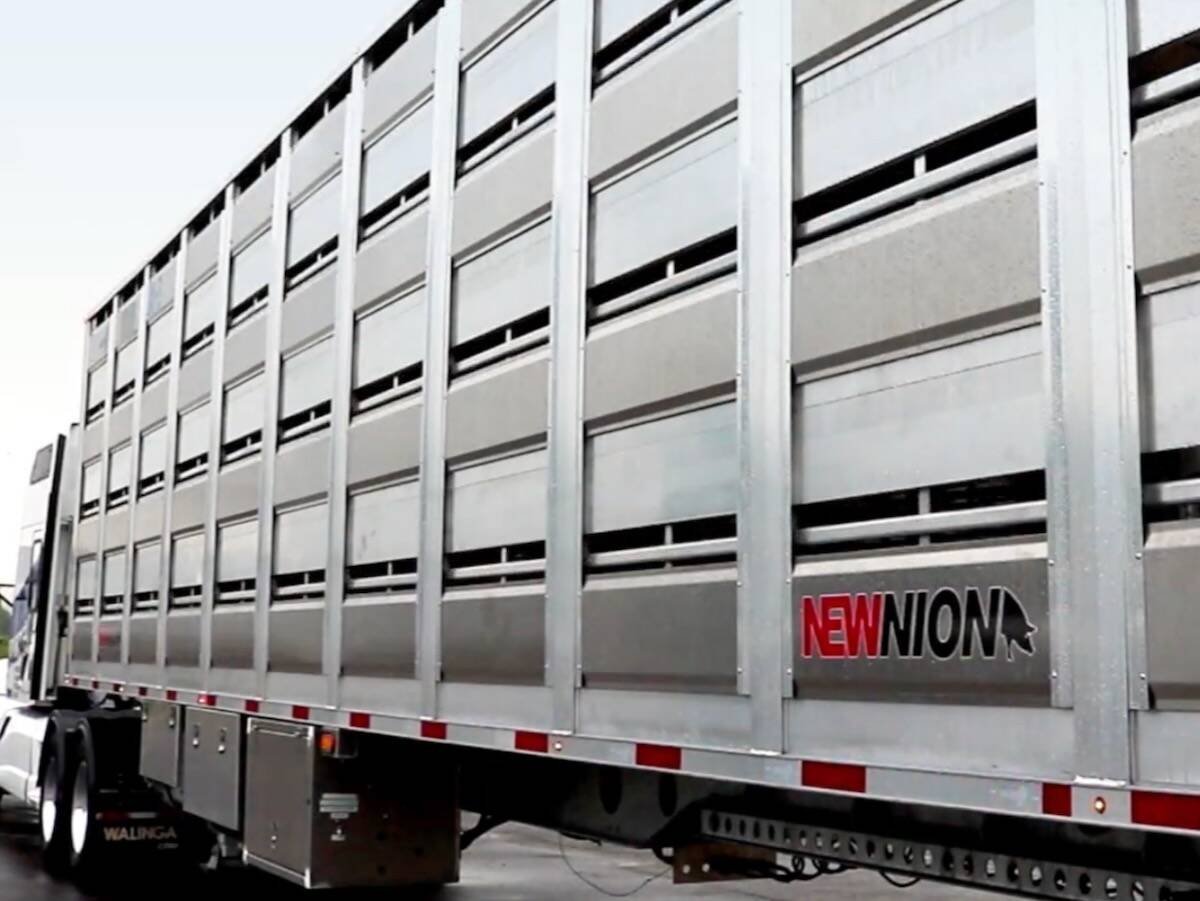
Ramp design has also been important at Walinga, said Dylan Van Veen, where they now have a 16 per cent incline ramp that uses springs to make it easier to move.
Other trade-offs include an easier ability for operators to adjust weather boarding, the panels that go in the trailers to keep trailers warmer during cold temperatures, which also take more work to clean.
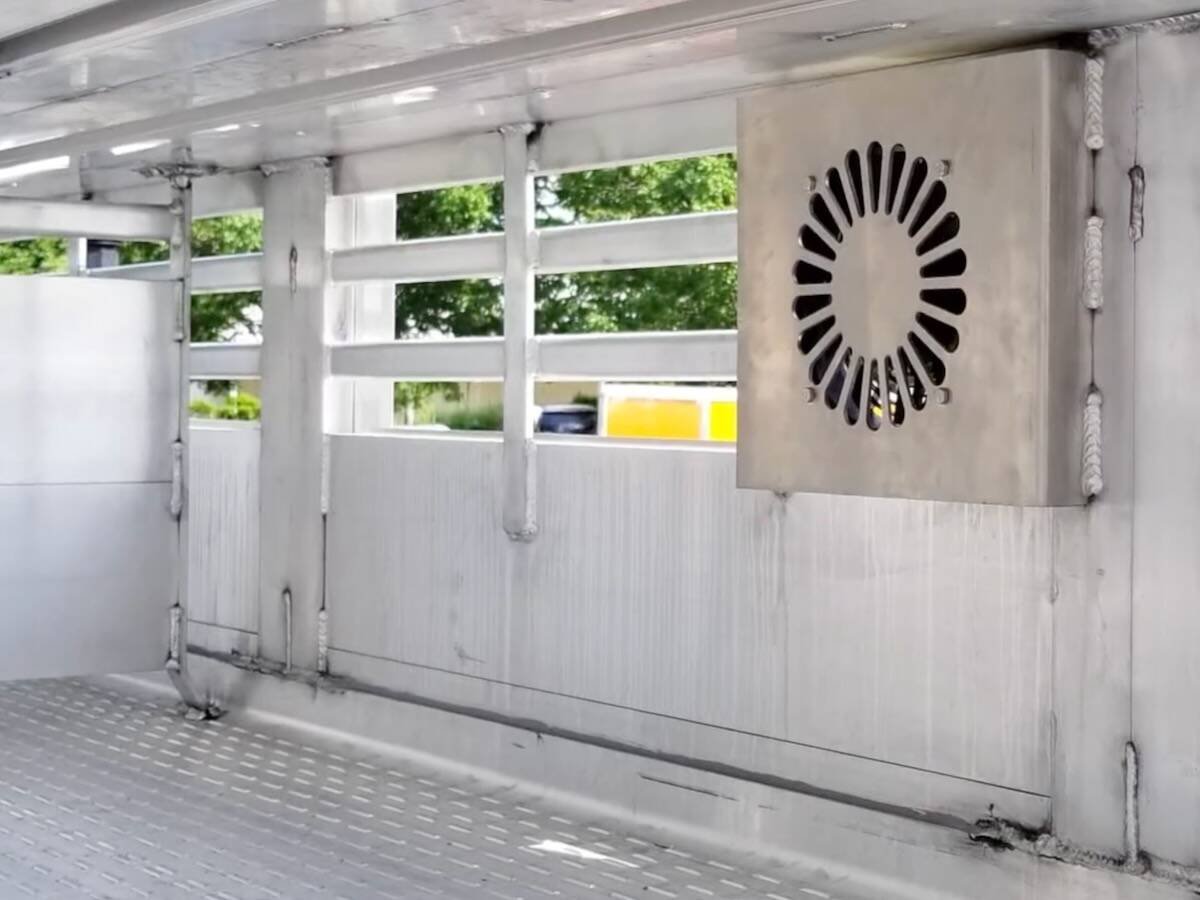
Ventilation has also evolved with roof vents and full venting at the front more standard, and some trailers with fans inside.
Trailer doors for people to enter are now wider and easier to step up to. Some include places for drivers to stand to make boot changes easier. Changes have been made to reduce the risk of falling.
Guelph-based Walinga has two trailers for pigs, including a four-deck, hydraulic style for isowean pigs and a ramp-style for feeder pigs and market hogs, said Van Veen.
They are working with some of the largest pork producers in the United States like Smithfield and Pipestone, to add details, like fans, where needed.
Removing pig flow and air flow barriers in the trailers have made them more pig-friendly. Data from temperature sensors at the head height of the pigs can be read by the driver in the cab and some ventilation parameters can be adjusted.
Using extruded aluminum and advanced composites has allowed the company to reduce trailer weights and add more hogs.
Frank Wood, director of industry and member services at Ontario Pork, who hosted the session, said that people outside of the industry don’t understand how much has been done to improve hog transportation and that was the motivation for the session.
“We get criticized in this industry for not making any changes, but that’s not true,” said Jutzi. “There’s been a lot of improvements in trailer design over the past 20 years.”
The post Hog trailer changes help both pigs and drivers appeared first on Farmtario.


