

Honda is taking a new step toward its climate goals by supporting farmers across the United States. The company has joined Carbon by Indigo, a leading regenerative agriculture program that helps farmers improve soil health, capture carbon, and boost their income. Through this partnership, Honda is backing 1,800 metric tons of soil carbon removals, which brings the company closer to its long-term decarbonization targets.
Mahjabeen Qadir, sustainability strategy lead at Honda Development & Manufacturing of America, LLC, said:
“For over 40 years, Honda has supported farmers near our Ohio operations through conservation programs that protect farmland and help expand access to markets for their crops. Now, Honda is building on that history by supporting regenerative agriculture practices that help farmers manage climate challenges and maintain healthy farmland for future generations.”
Regenerative Farming: A Simple Way to Heal Soil and Cut Emissions
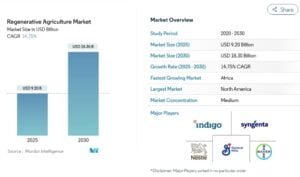
Regenerative agriculture is becoming a powerful tool in the fight against climate change. It helps the soil store more carbon, keeps water in the ground, and strengthens farms against extreme weather.
Carbon by Indigo: Empowering Farmers With High-Value Carbon Credits
Farmers who join Carbon by Indigo receive guidance on practices like:
- Planting cover crops
- Reducing tillage
- Rotating crops
- Using nitrogen more efficiently
These methods build healthier soil and reduce runoff. They also improve air quality and make farmland more resilient over time.
The company produces high-quality agricultural soil carbon credits that help farmers strengthen their bottom line while enabling corporations to reduce risk by supporting carbon removals, emission reductions, and water benefits.
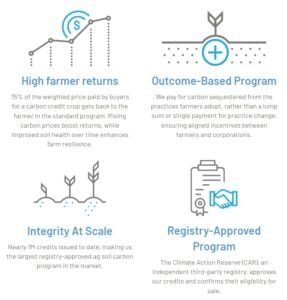
- Under its standard program, the company returns 75% of the carbon credit purchase price to the farmer.
Even though water conditions vary by region, the project achieved a notable result: on average, each metric ton of carbon removed conserved approximately 69,000 gallons of water. This demonstrates how regenerative practices enable farmers to adapt to changing climate conditions while enhancing productivity.
Supporting 150 Farmers Across Five States
Honda’s investment supports about 150 farmers near its U.S. operations in Alabama, Indiana, Ohio, North Carolina, and South Carolina. Altogether, these farmers manage 214,000 acres of farmland using regenerative methods.
Importantly, all carbon credits in the Carbon by Indigo program are independently verified by Aster Global Environmental Solutions and issued by the Climate Action Reserve, a widely trusted carbon registry.
READ MORE:
- Microsoft (MSFT) Signs $2.6 Million Soil Carbon Credit Deal with Agoro Carbon to Meet its Net-Zero Goals
- Microsoft Buys 60,000 Soil Carbon Credits from Indigo’s Largest Carbon Crop
Honda’s Road to Decarbonization: Cutting Emissions From Products and Operations
Honda has shown leadership in environmental efforts for over 50 years. Now, the company is moving quickly toward an electric and low-carbon future.
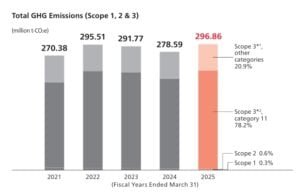
- It reported 296.86 million t-CO₂e in total global greenhouse gas emissions for FY2025. About 80% of these emissions come from product use (Scope 3 Category 11). The remaining 20% comes from direct operations and upstream/downstream activities.
Because of this, Honda is prioritizing emission cuts from product use and business operations. The company aims to reach full carbon neutrality by 2050, aiming to increase sales of electric and hybrid vehicles in North America and other major markets.
Triple Action to ZERO: Honda’s Framework for a Sustainable Future
Honda’s clean energy target is ambitious, and its environmental vision is shaped by its “Triple Action to ZERO” strategy, which includes:
- Carbon Neutrality – achieving net-zero CO₂ emissions
- Clean Energy – switching fully to carbon-free energy sources
- Resource Circulation – creating products with sustainable and recyclable materials
These three actions connect to global climate and biodiversity goals. Honda also supports Nature-based Solutions, such as restoring forests and ecosystems, to increase its positive environmental impact.
Honda also trains suppliers through the Green Excellence Academy and supports dealerships through the Environmental Leadership Program, so the entire value chain can lower emissions.
Protecting Biodiversity Across the Globe
Honda is protecting ecosystems near its facilities through forest projects and greenbelt expansion. In Ohio, the company created the Honda Power of Dreams Forest, planting 85,000 trees over 40.5 hectares to restore riparian zones and create wildlife habitats.
Similar initiatives are underway in Europe and Brazil. In Belgium, Honda is restoring black poplar trees and building insect hotels and ponds to boost biodiversity. In the Amazon rainforest, Honda maintains 80% of its motorcycle test course as a protected conservation area and supports replanting endangered species like mahogany and rosewood.
A Long-Term Commitment to a Cleaner Future
Honda’s partnership with Carbon by Indigo reflects its broader mission to cut emissions, expand clean energy, and support sustainable communities. Through regenerative agriculture, renewable energy, circular manufacturing, and biodiversity programs, Honda is building a pathway toward a Zero Environmental Impact Society by 2050.
These efforts show how large companies can support climate solutions while strengthening local communities and protecting the planet for future generations.
- FURTHER READING: Scaling Sustainable Farming: AgreenaCarbon’s 2.3 Million Verified Carbon Credits Redefine Regenerative Agriculture
The post Honda Backs U.S. Farmers With Regenerative Agriculture to Drive Its Net-Zero Future appeared first on Carbon Credits.


