
Worker bees are the first line of defence when it comes to removing contamination in honeybee colonies, but a queen has her ways, too.
A honeybee queen facing chronic exposure to pesticides will take up that contamination and pass it along to her eggs, a process researchers call maternal offloading.
Why it matters
Pesticide exposure in the field doesn’t stop at the worker bees. This research is the first to show a queen will pass her own chemical load to her eggs, which means the timing of foraging and colony buildup could carry longer hive-health consequences than growers, beekeepers and IPM planners have accounted for.
The findings, which document for the first time the extent a queen will go to survive, are published in the journal Current Biology. Research was led by the University of California, Davis.
“In order to protect herself, the queen bee offloads these chemicals into her eggs to get rid of them,” said Sascha Nicklisch, the paper’s senior author and an associate professor in the Department of Environmental Toxicology. “No one has shown this in honeybees before.”
Research was conducted in conjunction with Lawrence Livermore National Laboratory, or LLNL, and the U.S. Department of Agriculture’s Agricultural Research Service, or USDA-ARS.
A tipping point for queen and colony health
“When pesticides accumulate to the extent that the queen bee has eggs that are so loaded they may no longer develop properly, there could be a tipping point,” Nicklisch said. “There may be a slow creeping effect of chemical accumulation that will contribute to delayed colony collapse.”
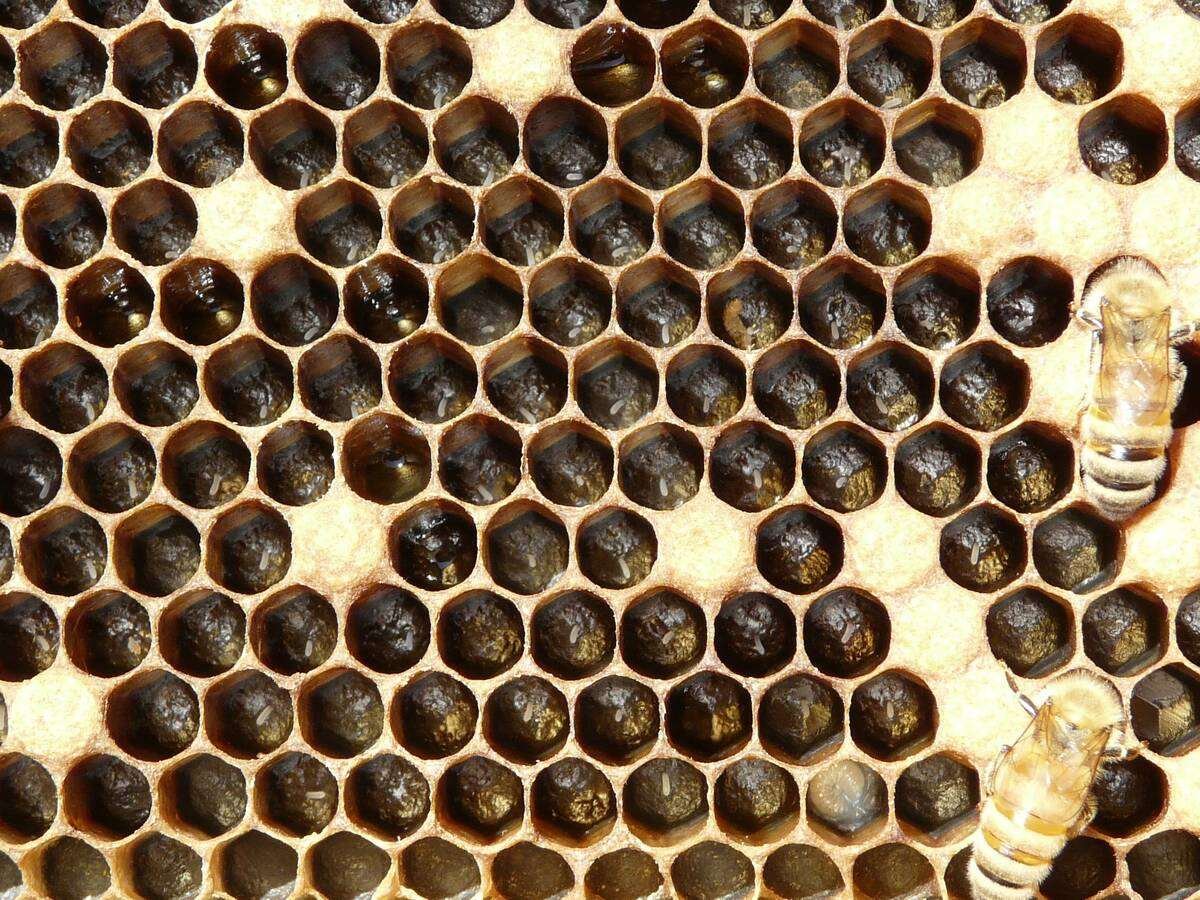
Toxicology studies on honeybees have generally focused on worker bees. However, this research looked at where chemicals get deposited in the hive and how that affects the entire colony, including the queen, her ovaries, the eggs and the wax. Inside a colony, worker bees feed and care for queens and developing larvae.
- 95% to 86% — worker filtration of the pesticide, day one to day 10
- 1 queen + 60 workers — the size of each test “nanocolony”
- 1,500–2,000 — eggs a healthy queen lays per day
- ~1/3 — share of the world’s food crops honeybees pollinate
It has long been thought that queens are protected by worker bees that filter out contamination from the food they give to queens, but the scientists are seeing a limit to this protection, said Angela Encerrado-Manriquez, the lead author on the paper and a recent Ph.D. graduate from UC Davis.
“In our study, pesticides began to accumulate in queens over time, suggesting that worker filtration capacity can be overwhelmed,” Encerrado-Manriquez said. “When this happens, queens have their own defence. Maternal offloading allows them to shunt the toxic burden to their eggs.”
How researchers tracked the pesticide inside the hive
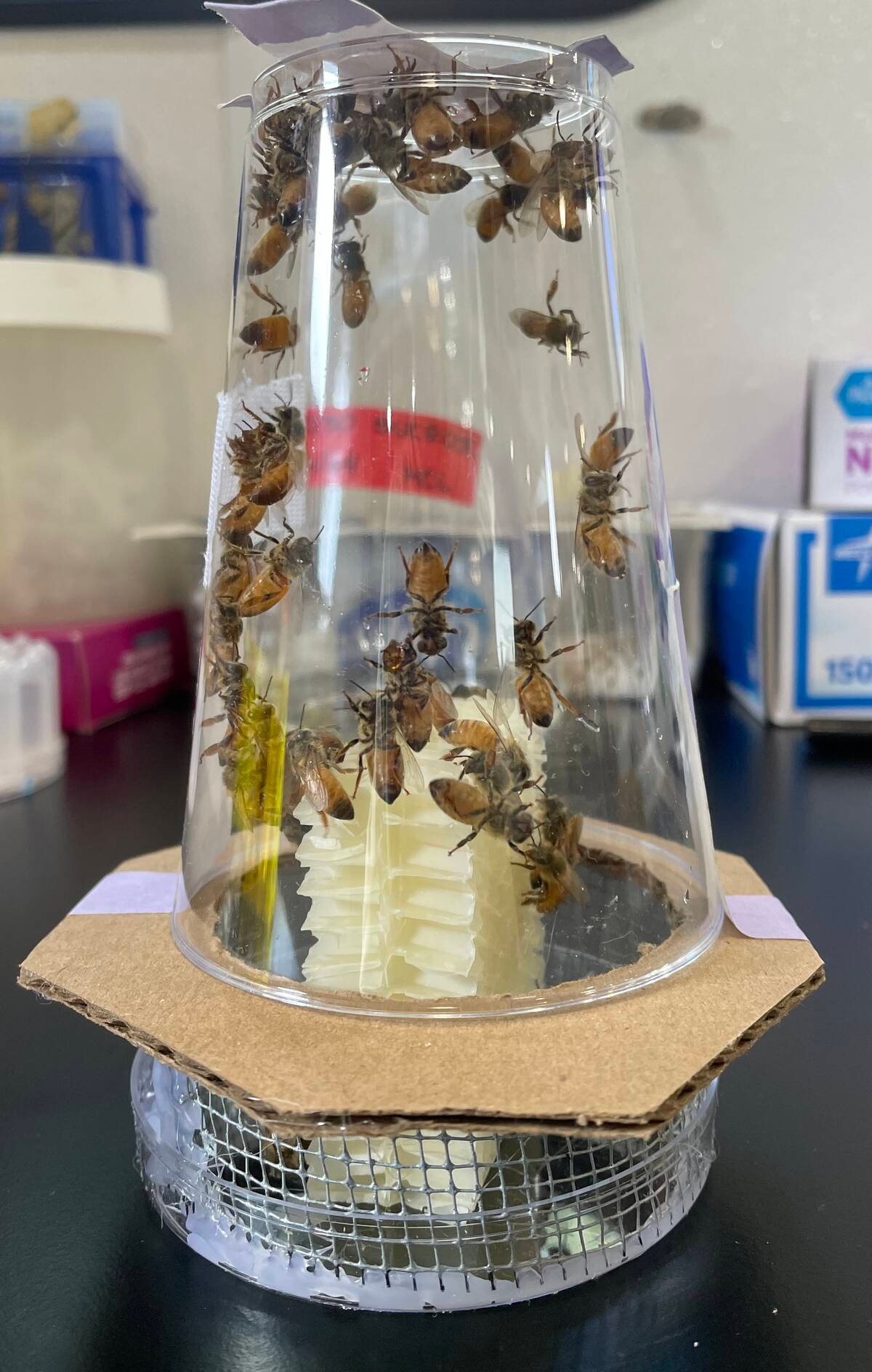
Researchers created so-called “nanocolonies,” which represent the inner workings and functions of a hive and colony using conical plastic containers fitted with netted bottoms. Each nanocolony contained one queen and 60 worker bees.
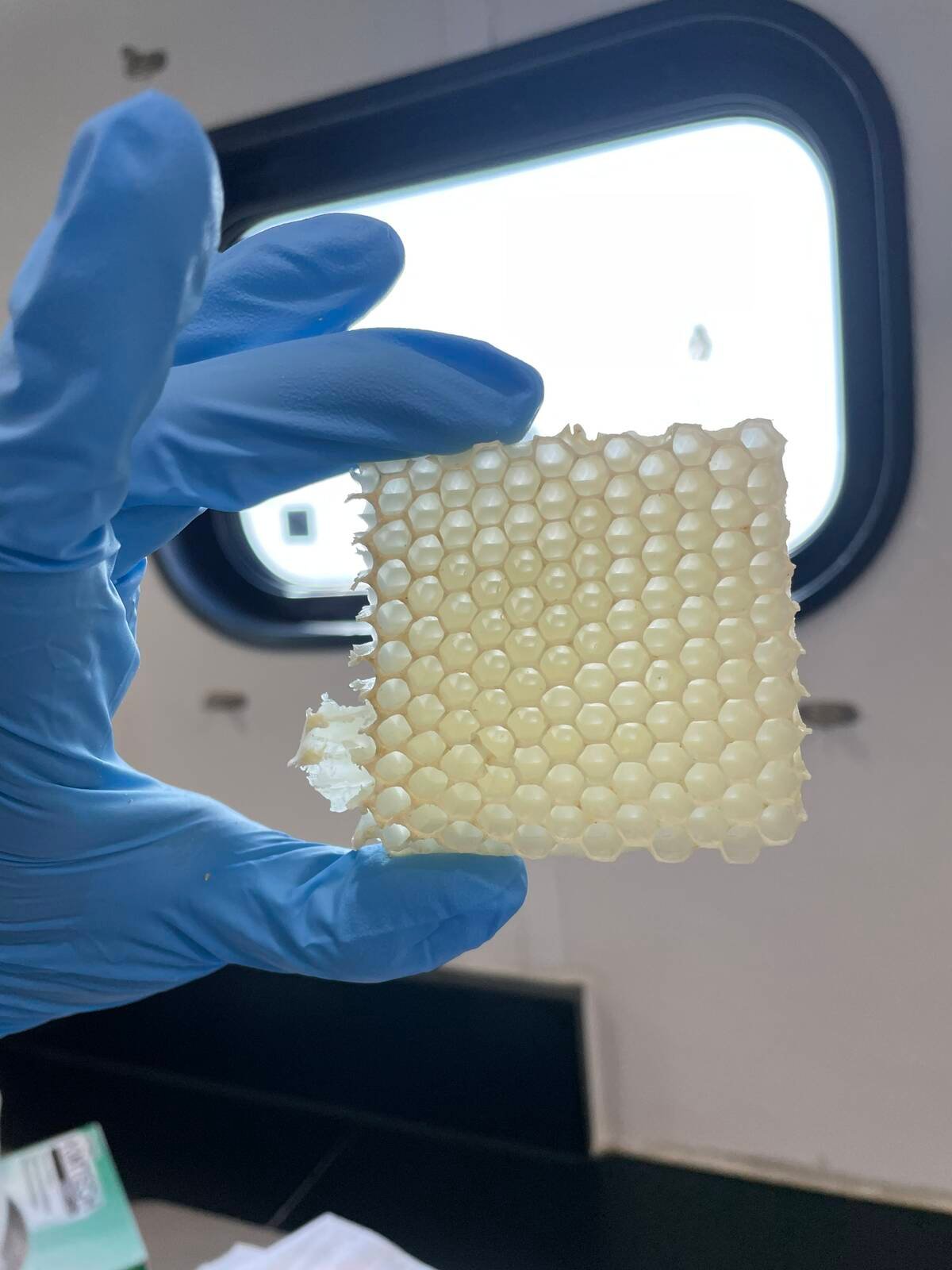
The bees were given pollen, water and food tainted with the pesticide methyl parathion that was tagged with a low-level radioactive marker to enable tracking. In the first day, worker bees were able to filter out 95 per cent of the pesticide and deposit it into the honeycomb, but that number fell to 86 per cent by day 10.
The research was possible via a collaboration between the USDA, which provided unique expertise in honeybee biology and study design, and LLNL, which was able to measure radioactive tags down to the atomic level using a biological accelerator mass spectrometry, or BioAMS.
“With BioAMS, we can trace very low levels of a pesticide,” said Bruce Buchholz, an LLNL scientist and author on the paper. “The pesticide concentrations we used were not lethal and were environmentally relevant to that seen in nature.”
Why the queen’s egg output is the whole colony’s lifeline
Honeybee queens can lay 1,500 to 2,000 eggs per day to support their hives, which pollinate about one-third of the world’s food crops. Losing colonies diminishes agricultural productivity and food security.
“The queen is the only member of the hive who can lay eggs that become the next generation of workers,” Nicklisch said. “She keeps the colony alive, so understanding how pesticides can affect queen bees and also her offspring is important.”
How long queens can pass along contamination, the long-term effects on colonies and if it varies by pesticide are other topics for future research.
Julia Fine and Eliza Litsey with USDA-ARS and David Baliu-Rodriguez, Sean Leonard and Bruce Buchholz at LLNL contributed to the research. The study received support from the USDA’s National Institute of Food and Agriculture and Non-Assistance Cooperative Agreement program, the PAm-Costco USA Scholarship program and the University of California National Laboratory Fees Research Program. The work at LLNL is under a U.S. Department of Energy contract.
The post Honeybee queens pass pesticide burden to their eggs, study finds appeared first on Farmtario.


