

Hyundai’s funky-looking people mover has welcomed a hybrid powertrain in Australia, giving anyone with a family that could field a football team a more efficient (read: cheaper) way of shuttling everyone about.
There’s also a commercial van version, called the Staria Load, but we’ll focus on the one designed for human cargo here.
READ MORE: Hyundai’s Australian V2G roll-out takes a big step forward
READ MORE: Hyundai makes another big EV price play: Kona and Ioniq 5 $8000 discount
READ MORE: The Hyundai ELEXIO is a great family SUV – here are 10 reasons why
You can have your Staria in petrol or diesel, too, but the most luxurious version, the Lounge, is the hybrid hero. In fact, it’s the only trim in which you can get the electrified powertrain.
So, does electric help push the Staria Lounge to the top of the people-mover podium?
2027 Staria Lounge Hybrid price and equipment
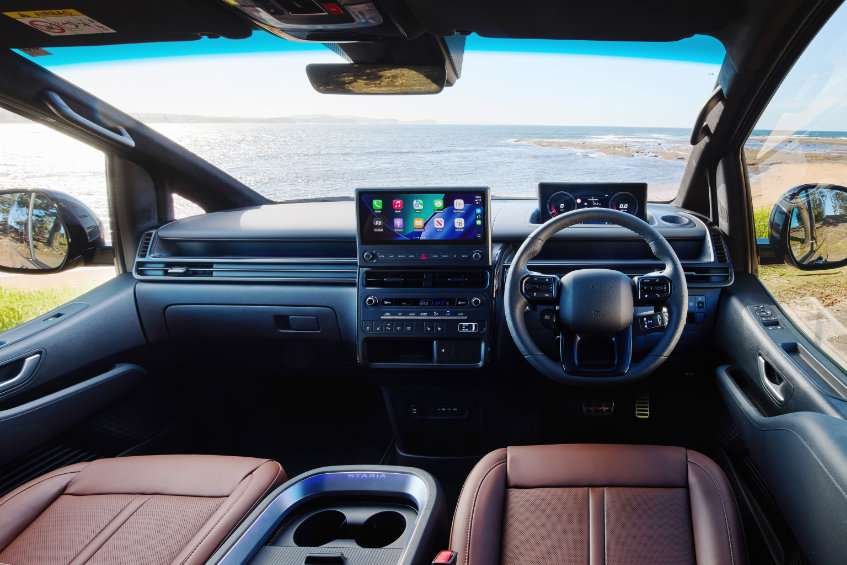
The 2027 Hyundai Staria Hybrid is offered exclusively in flagship Lounge form, priced from $73,740. That pricing plonks the hybrid above the eight-seat Staria variants, with both the 2.2-litre diesel and 3.5-litre petrol versions priced from $54,300.
The hybrid, however, is pitched as the flagship model in Hyundai’s people-mover range, combining the new electrified powertrain with the Lounge’s seven-seat cabin and more luxurious fitout.
Power comes from Hyundai’s 1.6-litre hybrid powertrain, producing a combined 180kW and 304Nm. It drives the front wheels through a six-speed automatic transmission, with claimed combined fuel consumption of 6.5L/100km. Unlike the petrol and diesel Staria models, the hybrid is not rated for towing. As in, at all.
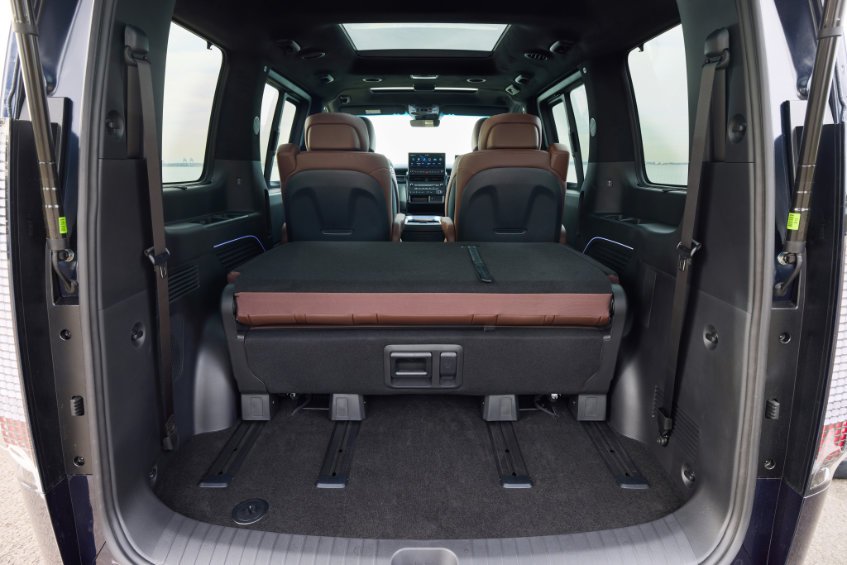
The Staria Lounge measures 5253mm long, 1997mm wide and 1990mm tall, and it rides on a massive 3273mm wheelbase. Cargo space is listed at between 117 litres and 431 litres, but that number must surely grow with the rear seats folded, which massively increases boot space. It’s also heavy, at at least 2.3 tonnes.
Hyundai also makes a big deal of its e-Motion Drive technology, which is a suite of systems designed to smooth the ride, reduce bouncing and deliver more stability during sharp turns. But we’ll come back to that in the driving stuff in a moment.
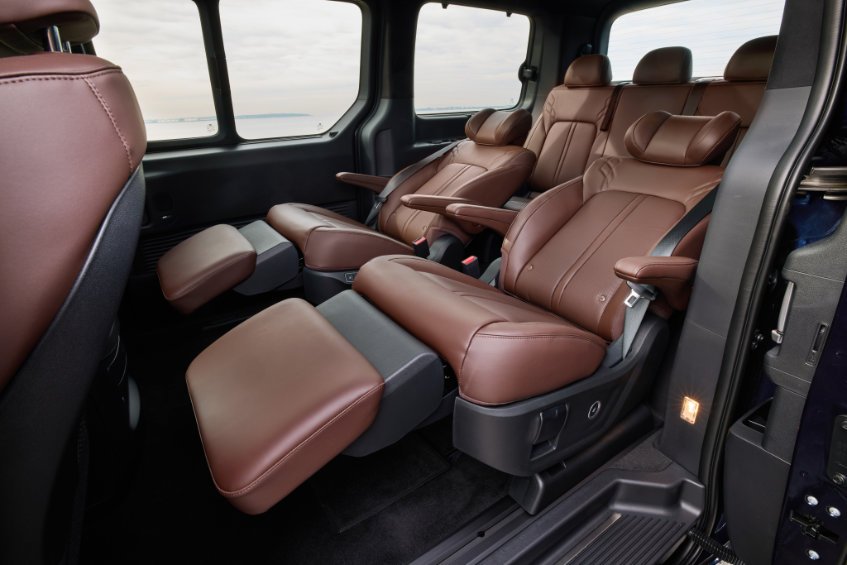
Standard Lounge features include Nappa leather trim, heated and ventilated seats for the first two rows, second-row relaxation seats, power adjustment for the front seats, a heated steering wheel, ambient mood lighting and more soundproofing, including acoustic laminated front glass.
The Lounge also gets a more special-feeling exterior treatment, including 18-inch alloy wheels, LED projection headlights, privacy side glass, satin chrome door handles, what the brand calls “deluxe door scuffs” (though we didn’t really notice them), dual power sliding doors, and a powered sunroof and tailgate.
On the tech front, expect Hyundai Digital Key 2, a 12.3-inch digital driver screen and a 12.3-inch central screen with Apple CarPlay and Android Auto, a Bose 12-speaker stereo and wireless phone charging.
It’s also a five-star ANCAP car, but with a twist. This new model is still wearing the five-star ANCAP rating issued to the Staria family back in 2021. It will need to be retested next year.
Hyundai has recently upped its warranty coverage, too, now offering a seven-year unlimited-kilometre term, and eight years or 160,000km on the battery.
2027 Staria Lounge Hybrid: What we think
A near-$20k jump is a lot to stomach, I know. But trust me, it does not feel anything like a van with seats in it on the inside.
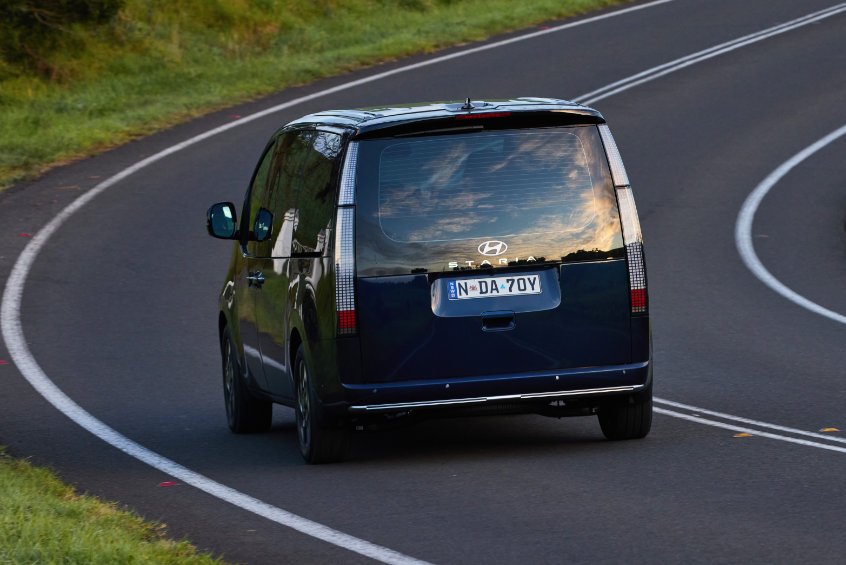
This is a properly luxurious way to transport seven people, and it makes the old Toyota Taragos you still see getting about look like they’re from a different era.
The Nappa seats and tech up front are lovely, but the real winning seats are in the second row, with comfy and opulent-feeling captain’s chairs, complete with heating and cooling, offering plenty of space to stretch out and get comfy. Especially when reclined into a business-class-like position.
The powertrain is a peach, too. It’s far from aggressive, but it never feels particularly wanting either, and the help from the 54kW electric motor makes jumping off the line easier than you might expect in a 2.3-tonne, five-metre-plus behemoth.
It also feels mostly smoother and quieter than we remember the straight-ICE engines being — though we haven’t driven them back to back — and the powertrain switches between power sources without fuss, too.
The most surprising thing, though, is the Staria Lounge’s manoeuvrability. It is a big beast, and more van-like than a seven-seat SUV, which is inescapable, but it doesn’t feel massive from behind the wheel. Don’t get me wrong, it’s no i30. But it doesn’t feel nerve-wracking either. There’s a cohesion in ride and steering that makes the Lounge feel somehow a little light on its feet.
If that’s the good, the bad is that the Staria Lounge does reward gentle inputs. It was wet and slippery on our testing day, but we had no issue lighting up the front tyres under heavy acceleration, and there’s no shortage of cabin noise when you flat-foot it either.
2027 Staria Lounge Verdict: Verdict
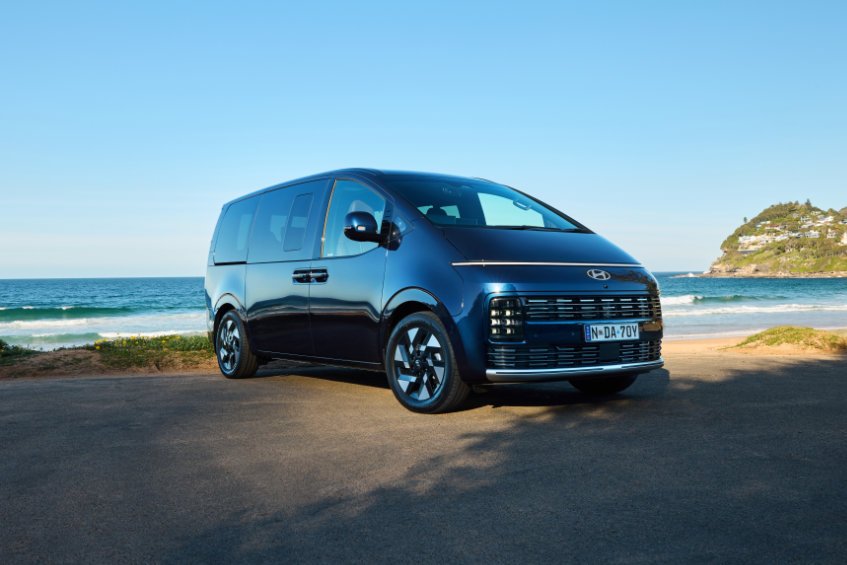
It’s a fairly unique proposition, this Staria Lounge. The same hybrid powertrain as a Kia Carnival, but with a van-like shape and an interior layout that feels more luxe airport transport than traditional family wheels.
Space for people is plentiful, and the kids will adore the second row.
And there’s no doubting electrification is a step up from ICE only. It does feel expensive as a standalone model, though.
SCORE 3.9/5
2027 Staria Lounge Verdict: Price and specifications
Price: $73,740 plus on-road costs
Basics: Hybrid, 7 seats, 5 doors, people mover, FWD
Battery warranty: Eight years/160,000km
Fuel consumption: 6.5L/100km
Powertrain: 1.6-litre turbo-petrol four-cylinder, 54kW electric motor
Combined power/torque: 180kW/304Nm
Transmission: Six-speed automatic


