
This is part one of our IWCA Conversation Series. This segment is taken from a digital roundtable held with four honourees from the 2026 Influential Women in Canadian Agriculture program, held in June 2026 and moderated by agriculture editor Bree Rody. For information on the honourees and the background of the Influential Women in Canadian Agriculture program, click here.
The honourees featured in this conversation are:
- Jennifer Woike, B.C. Ag Council
- Margaret Hudson, Burnbrae Farms
- Susan Ainsworth, Keystone Potato Producers Association
- Tori Waugh, Ontario Soils Network
This transcription has been edited for clarity and length.
On unconventional beginnings
Jennifer Woike: On [my and my now-husband’s] first date, I thought he was blowing me off, because he said the chicken truck was late and he needed to move chickens. And I said, “Well, why don’t I come help?” That was my introduction to poultry farming. I made the decision early on that I wanted to not be a “farmer’s wife.” I wanted to farm alongside him. We did so for many years, [as we] raised our children. Then I discovered that my talents were probably more effective in the professional agriculture side of things – more the advocacy, the lobbyist side of things.
Bree Rody: For those of you who serve in more of an organizational leadership capacity, what were the “soft skills” – management, communication, etc. – you had to develop? Did you find those things came naturally to you?
Susan Ainsworth: I don’t think it necessarily came naturally or easily. I think I followed a lot of different paths – I’ve ended up where I am just by following the things that I enjoy. I took agriculture in university, although my first year, I actually took foods and nutrition. I was passionate about the land, as Margaret talked about. Eventually, you gravitate toward what you’re most interested in and what you’re most passionate about. By default, I guess, after you’ve got 20-some years under your belt working in a certain field, you sort of stumble into those more management type roles. It was certainly nothing that I thought I was going to set my target on. My trade is an agronomist, so I love being in the field.
During COVID, when things had kind of shut down, I decided to go back to school and work toward my MBA, because there were things happening in potatoes, specifically on the sustainability side that I thought, I can’t solve these agronomically. These are bigger picture issues.
Some of those soft skills, I would say, develop over time. I don’t think it’s something I’ve necessarily focused on, but probably something I should focus more on.
BR: So for those of you who have gone back to school or taken a pivot in your career or changed pathways, what hesitations or fears went through your mind?
SA: Asking if I was making the right decision – you know, when things aren’t necessarily bad. My agronomy business was great. I enjoyed it – I really loved it! But it’s just thinking, should I try something different? I think it’s an age thing, which sounds weird, but you know, you get to an age where you think, is this it?
I’m lucky; I still feel young enough that I can try something new and see how it works. But I think any time you try something, it’s a little bit of a risk, especially when you’re not necessarily moving away from anything that’s negative. That’s not the driver, right? It’s more to explore and get a new experience.
JW: For me, it probably stems back to a little bit of ADHD. I like to try new things – my husband calls me the fixer. I go in, I work on a project for a couple of years and then I change that organization and move on – that’s what kept it fresh. So the risk for me, well, I guess there’s always a risk when you change, especially when you’re leaving something that isn’t broke – something you’re enjoying and is going well.
But I like that risk – going in an seeing how I can affect it personally, seeing what I can bring to the table. That’s landed me where I am now with the organization that I’m with. I only new poultry, so it’s been a real learning experience for me to be an advocate and a spokesperson for potatoes, for honeybees, hazelnuts.
I guess that’s the answer for me – I’ve always wanted to keep learning. If I were 10 years younger, I’d go to law school, because I think we need advocacy in agriculture and law. That’s a big piece missing – but I don’t want to be articling anybody when I’m in my sixties!
On social responsibility
BR: No, that’s the most exhausting part of law school. Now, Margaret, I also want to specifically ask you this because as you said, you’ve always known what you wanted to do – but that doesn’t mean there haven’t been significant periods of change, or pivots or risks. What have been some of those big moments for you?
Margaret Hudson: It’s interesting, because when I went to school, I did a double major in business and environmental science. I always said I did environmental science for me, but my dad was pressuring me to come into the family business – so I did my undergraduate in business for him, and I joined our business while I was still in college and I just never left – I ended up dropping two courses for my fourth year, picking them up and finishing my degree in five [years]. Probably a big moment for me was, I’d say, to a certain extent, you know, you were chosen. He chose me and created the conditions for me to stay.
I did have an opportunity to choose, but there was a lot of pressure for me to stay in the business. So, I have worked within the business to try and balance my interests. One [of those] has always been to support our family, keep our home operation – that was a big motivating force for me, to never see our family farm or business get sold and for it to stay in our family.
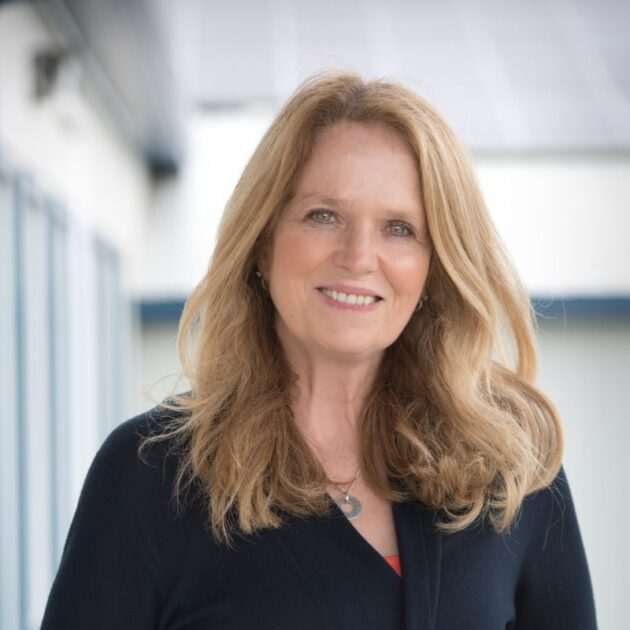 MH: I also do work to help affect change, because even at a very young age, I could tell you, we weren’t on a good path with respect to the environment. So I think a big, monumental shift for us was when I realized that the rest of the world’s ready for us to start taking stock of some of the things we’ve been working on.
We sell McDonald’s, right? We supply the egg for the Egg McMuffin. They started being very interested in going to suppliers and auditing some of the activities that they were doing around sustainability and corporate social responsibility.
We had to take stock of what we were working on in our first report – it was about 10 pages long. Then we started to document some of the initiatives that we had going within our business, because I think within our family, there’s a strong interest in doing the right thing.
My sister and I, we have bee lawns – our lawns look terrible because they’re full of alfalfa and dandelions, we don’t’ spray and we support flowering plants that support bee life, right? And most people will look at us sideways, like, “What are you doing that for?” Well, why not? A lawn is actually a very low-diversity monoculture – why wouldn’t you want to support more biodiversity, even though maybe your neighbours won’t like you much? But, you know – we’re just doing things that shape our sustainability programmes and our five pillars, getting the whole organization behind it.
A huge win for me was when my two interests came together, and I knew that working on these things would resonate within our business – people want to work for a purpose-driven company that cares about those things as well. We’ve been formally working on those things with formal structures now for over a decade, but it wasn’t obvious when I joined our business that I was going to be a part of helping be a leader in areas that we were going to support more sustainable business practices.
BR: As a fellow lawn-hater, shout out to bee lawns! So, speaking of advocacy and making change, Jen, you said we need advocacy at all levels in agriculture, and Tori, given that with Ontario Soils you do a lot of outreach and education – being on the front lines. How much of an eagerness do you see across the industry to actually make that change? Do you see a gap between what’s easily said and what’s easily done?
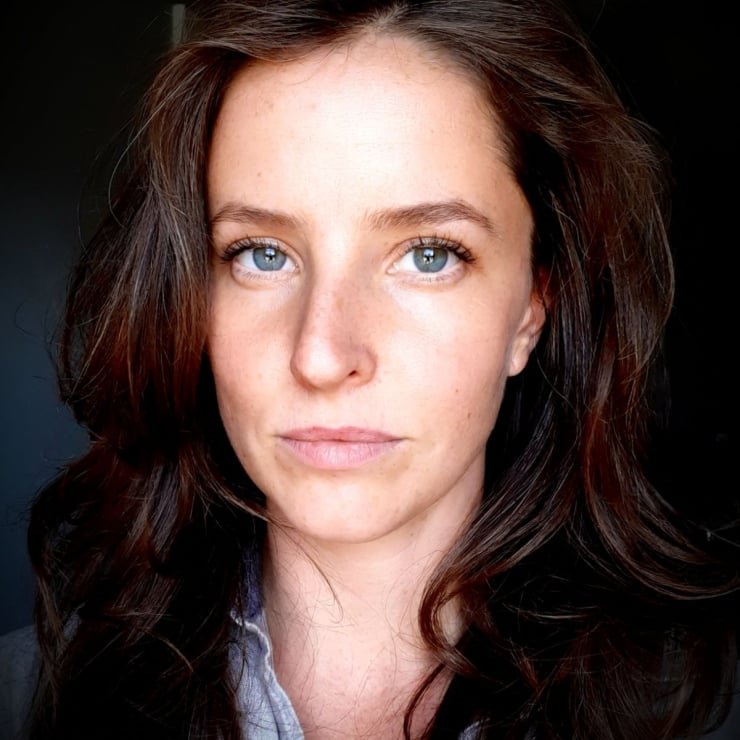 Tori Waugh: It’s a mixed bag, I think. As with any kind of big shift, to Margaret’s points, more and more farms are going to be asked, what are their five pillars? Or asked to commit to improving their sustainability by the people buying in. I think we’re sitting at about 30 percent adoption in Ontario, so the eagerness is on that kind of scale – it’s not great. We’re not there. Those who have made the shift, they are super eager.
Once you get into it, around three years of supported success, you start to reap the benefits and they start to see their personal benefit from having done the practices – they actually get to see better resilience, increased profits. Yeah, there’s a big gap on soil education and action, I think. That gap is what we’re working on right now, pulling in more agribusiness, because that’s where we get less apathy and more antagonism, which is an exciting thing to work with. Apathy is one thing – it doesn’t have any power, it’s really hard to move, but when something has actual power behind it, like antagonism, you know there is something that is kind of underpinning that antagonism and that has force that you can find common cause on. So I feel really excited about working within agribusiness on kind of bringing them on board and certainly in having kind of pulled in big purchasing players in Ontario – I’m confident I can pull it off.
Antagonism is an exciting thing to work with. Apathy is one thing – it doesn’t have any power, it’s really hard to move. – Tori Waugh
On goals, dreams and the big picture
BR: For everyone here, if you were given the following, what would you do with more time, more money and one new skill?
TW: More time, selfishly, I would use it to farm while doing all of this. More money, I would absolutely launch a fiscal model of agronomy – like a business where agronomists make money, not based off of commission on sales of inputs, but based off of farmer benefit. For new skills, I would also go back to get my law degree when I was 20, at the same time as I was farming, because I think there’s a lot of competition law and market concentration issues that farmers in Canada, North America and international are facing that deserves fresh perspectives and certainly change.
JW: More money, in my roll as BCAC president, I want to look at ways we can actually help. BC is the worst funded province in Canada to be supported by agriculture, by its ministry. So, you know, more money there through taxation. We’re [also] trying very hard to have ag viewed as an essential service. I go back to COVID – we had a hard time accessing sanitizer, masks, and things that were necessary to run our business because we weren’t viewed as essential at our grading station. We worked very hard to have it viewed by the government as essential moving forward.
The money would go toward value-added processing. I think we need to look at where ag is heading and not where it’s been, and how we’re going to get there. Automation and AI, I would look at investing into that. Water security is going to be a huge one moving forward, for everyone and every type of agriculture.
With more time, well, I’m a big believer that not only do we need mentors, but we also need mentees. And I try to spend time with young farmers. Sometimes, I have a hard time because I’m like, “am I still not a. young farmer?” But I guess I’m not. You know, spending some time with those in their twenties and thirties, because I think they’re the ones tahta re going to tell us what’s happening next, where we should be going. And I think everyone should have young farmers, young agricultural people in their lives to help guide that.
With a new skill, I’ll come back to that law degree. Just advocating for more women to be in more places in agriculture. Also, I’d be remiss if I didn’t mention that something I think we’re lacking in, I’d learn to help assist more with farm transition. Seventy-six per cent of farms across Canada do not have a succession plan, or even a will or a shareholders’ agreement. This next generation is going to be hug in seeing what happens to those smaller, family-based farms. I think a lot of advocacy needs to be focused there.
SA: My answer will be absolutely selfish. So, if I had unlimited funds and time I would travel. And honestly, that’s really what I’m super passionate about – but also, food security, food sovereignty. Travelling around the world and seeing how food is produced in other areas, I love learning about that. If I had the skills to apply those learnings, I would absolutely do that. But the nice thing about being at this stage in your career – and we’re probably all in the same boat – we have awesome connections. And to be able to make connections with other folks that could possibly help out… then just selfishly, learning from other people and learning how they’re doing things, if there are ways we could make improvements and share resources and collaborate.
I do think we need to be more sustainable and more efficient in the way we do things, and the only way to do that is to have an understanding, a baseline understanding of how things are currently being done. If we can help one another out, I think there are opportunities to work together and do that. So, that’s absolutely what I would do if I were to win the lottery tomorrow.
MH: For me, it’s interesting, because as I’ve evolved through my career, I’ve always had a huge interest in nutrition and health. As I’ve gotten older, I’m understanding that link between nutrition, lifestyle and personal health outcomes. Being in the egg industry and joining an industry that was in decline – egg consumption was declining by one to three per cent when I joined the industry, cholesterol was demonized, folks got pushed onto the low-fat diet in order to push people into a more processed food diet – how we’re seeing the personal outcomes of that over the last 36 years. So, a new skill I would love is to go back to school and getting a dietician’s degree, so I could speak with the accreditation and authority, because I believe in better understanding the link between the food and lifestyle – even the soil health, what we feed animals – it’s all linked together. We need to be sourcing from regenerative crops, where you can have carbon sequestration instead of carbon loss through the cropping process – it’s over 90 per cent of our carbon. So, there’s the link between environmental health, human health outcomes, crops, quality of nutrition.
With money, more research. A lot of research was done – and I don’t know if it was very good research – demonizing cholesterol, which really was disproven. So, I would love to help fund that big study that goes and takes the whole food diet, and tracks people, eating simply prepared food, over long periods of times. Less carbs, more quality protein, complex carbohydrates, and seeing what that does to metabolic health. Something over 90 per cent of our population is metabolically unhealthy, and bringing people. Back and bringing cooking back into the classroom, health education back into the classroom – being able to spread that around. I think a big disservice has been landed upon. Especially in Canada and the U.S., we’ve shifted away from simply prepared foods. We’ve suffered metabolically, and yet the power of research, well, it was research that helped turn the tides on egg consumption back in the mid-90s. The American Egg Board really started to counteract some of the other research promoting high-carb, low-fat diets and showing that eating eggs doesn’t really contribute to cardiovascular disease. Watching all that happen in my industry – how you destroy an industry that way and having to rebuild it through research, that’s what I wish I had more time, money and skill for.


