
The industrial and institutional wipes market is expected to grow as demand for effective, consistent cleaning solutions expands across healthcare, manufacturing, foodservice, automotive and other end-use markets.
.mobile-only {
display: none;
}
.scroll_to_continue:after {
content: ‘F282’;
position: absolute;
content: ‘F282’;
top: 21px;
transform: translateY(-50%);
right: 16px;
width: 10px;
height: 15px;
background-repeat: no-repeat;
background-size: 10px 15px;
background-position: center center;
font-family: “Bootstrap-icons”;
opacity: 1;
font-size: 16px;
right: 100px;
}
@media only screen and (max-width: 768px) {
.mobile-only {
display: block;
}
}
var labelText = “SCROLL TO CONTINUE”; //set custom “advertisment” awareness text label
var clickMacro = “/users/signupnewsletter/5” //set clickURL destination
var linkTarget = “_blank” //set link target attribute, by default “blank”
var hei = document.documentElement.clientHeight * 0.65;
/* == generator code == */
var container = document.getElementById(“inscroll-banner”);
//container.setAttribute(“style”,”height: 121vh; position: relative; margin: 55px 0;”);
var adlabel = document.createElement(“div”);
adlabel.classList.add(“scroll_to_continue”);
var lt = document.createTextNode(labelText)
adlabel.appendChild(lt);
//adlabel.setAttribute(“style”,”position:absolute; z-index:9; margin-top:-26px; color:#FFFFFF; background-color:#603577; text-align:center; width:100%; left:0;font-size:14px; padding:3px 0; height:26px”);
adlabel.setAttribute(“style”,”position: relative; z-index: 9; top: 21px; color: #FFFFFF; background-color: #603577; text-align: center; width: 200px; left: 0;font-size: 14px; padding: 0;line-height: 50px; margin: 0 auto;”);
var inner = document.getElementById(“banner-core”);
//inner.setAttribute(“id”,”banner-core”);
//inner.setAttribute(“style”,”width: 100%; top:49px; left: 0; clip: rect(0,100vw,100vh,0); overflow-x: hidden; overflow-y: auto; position: fixed; -webkit-transform: translateZ(0); -moz-transform: translateZ(0); transform: translateZ(0);”);
//var art = document.createElement(“img”);
//art.setAttribute(“src”,imagePath);
//art.setAttribute(“style”,”width:100%”);
//inner.appendChild(art);
//inner.appendChild(cm);
container.appendChild(adlabel);
//container.appendChild(inner);
window.onscroll = function(){
var pos = container.getBoundingClientRect();
inner.style.clip = “rect(“+pos.top+”px,100vw,”+pos.bottom+”px,0)”;
}
window.onscroll();
In 2026, the industrial and institutional wipes market is growing at a faster rate than the overall wipes market and at a faster rate than all other individual segments of the wipes market other than the personal care wipes segment, according to market research firm Smithers.
Phil Mango, nonwovens consultant at Smithers, says that enhanced and more comprehensive cleaning and disinfecting practices adopted after the Covid-19 pandemic have become standard operating procedures, now encompassing schools and grocery stores in addition to healthcare facilities. Additionally, the post-pandemic reoccupation of offices and other workplaces has increased demand for general-purpose janitorial wipes.
Smithers projects industrial wipe growth this decade to average 6.9% per year, while baby wipes will equal 4%. Overall, Mango says the industrial wipes market is a large wipes segment with better-than-average margins and growth rates through 2031. “Its multiple diverse segments provide excellent opportunities in a global marketplace with rapidly changing geopolitical and economic headwinds,” he explains. “Nonwovens offer excellent sustainability possibilities while not under the same immediate pressure as for consumer wipes. Healthcare (dominated by disinfecting wipes) and specialty wipes (clean room and critical cleaning transportation wipes) offer immediate growth opportunities through 2031.”
6.9%
Projected growth of industrial wipes this decade
compared to 4% growth in the baby wipes market
Source: Smithers
Laura Mahecha, director, Agrochemicals and Professional Cleaning Products, Kline + Company, also sees strong growth across several end-use markets, noting that healthcare facilities and the industrial sector are the largest and fastest-growing applications.
“The need to prevent healthcare-associated infections (HAIs) and keep vulnerable patient populations healthy and safe drives usage and spending in healthcare settings,” she says. “In industrial facilities, specialty wipes and wipers are often used for absorption of grease, lint-free cleaning and static-free cleaning. We are seeing gains for dry wipers that offer specialized cleaning and dusting of electronic equipment and LED screens in retail and restaurant settings and also data centers.”
Mahecha also points to the reshoring of industries and factories to the U.S. in recent years. “Overall, the number of factories in the U.S. is increasing, which increases demand for wipes. In addition, some sectors have been growing, such as automotive, EV batteries, aerospace and data centers. This has contributed to higher wipe usage.”
Market Developments
As demand grows across a range of applications, nonwoven producers and wipe manufacturers are developing materials and products to meet differing cleaning requirements.
Magnera, one of the world’s largest nonwovens producers, sees continued growth opportunities in the industrial and institutional market.
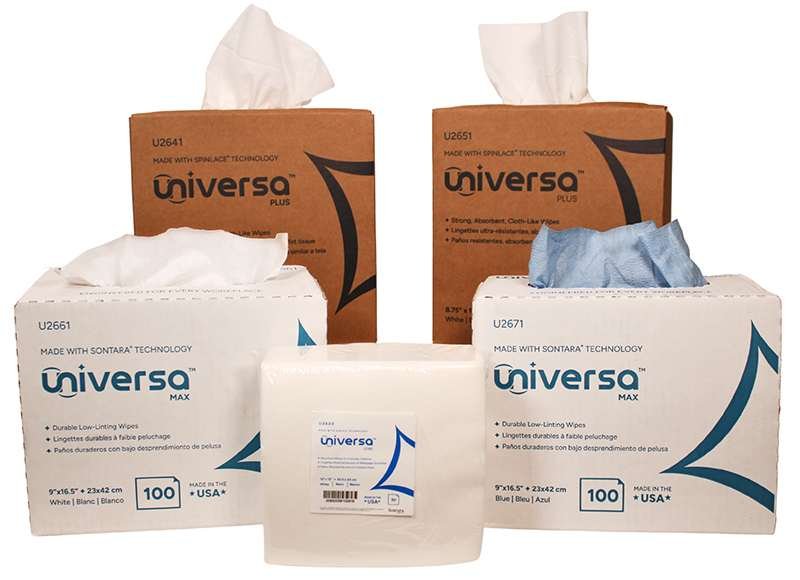
According to Zachary Stafford, Magnera’s product line manager for Chicopee, customers are increasingly choosing nonwoven wipes because they can provide a more consistent, hygienic and reliable cleaning solution. “Reusable rags and towels can retain oils, greases, solvents, metal shavings and other contaminants even after commercial laundering,” he says. “These residual materials can create quality concerns, introduce safety risks and complicate compliance requirements in sensitive environments.”
Nonwoven wipes can eliminate many of these challenges by delivering clean, consistent, single-use performance. “They help reduce the risk of cross-contamination, improve process control and can help enable users to achieve more predictable cleaning outcomes across a wide range of applications,” Stafford adds.
In June, Magnera launched the Universa platform, a unified range designed specifically for industrial cleaning applications. The consolidated range of industrial wipers brings together Magnera‘s Chicopee and Sontara brands and combines multiple nonwoven technologies, including airlaid, Spinlace and Sontara engineered fabrics.
Magnera’s Chicopee brand serves foodservice, hospitality and building care applications, where hygiene, safety and operational efficiency are essential. Through Sontara, the company serves precision cleaning markets such as aerospace, automotive refinishing, manufacturing and other critical cleaning environments where performance standards are especially demanding.
“Universa brings together the strengths of both brands, enabling us to offer a comprehensive portfolio that addresses a wider spectrum of cleaning needs,” Stafford says. “Based on current market trends, we see opportunities for continued growth across the industrial segment, driven by increasing focus on workplace safety, productivity, contamination control and the adoption of higher-performance wiping solutions.”
Freudenberg Performance Materials supplies high-performance microfilament wipe substrates and finished wipes based on its Evolon technology for industrial and institutional markets. The portfolio includes materials for reusable and washable, semi-disposable and disposable wiping solutions, as well as substrates for impregnated wipes.
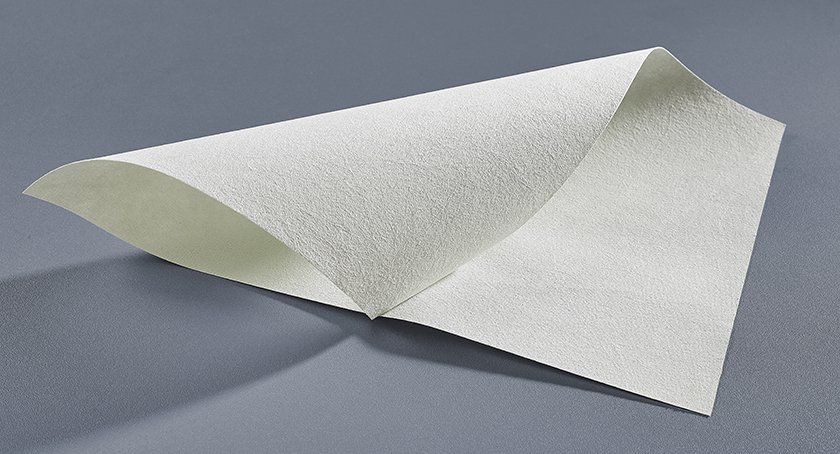
According to Jean-François Kerhault, director global sales & marketing—General Industry Division, Freudenberg Performance Materials, demand is strongest in applications where cleaning performance is directly linked to product quality, process control or operational efficiency. “In these segments, customers are showing a growing level of interest in materials that deliver consistent performance and can be integrated into standardized cleaning processes,” he says. “We continue to see opportunities in technically demanding applications where customers value reliable cleaning results, durability and material consistency.”
At the converter level, Hospeco, a manufacturer of wet and dry wipes, is seeing growing demand for pre-saturated wipers in the contractor trade and industrial markets. Matthew Kollarits, Hospeco’s senior product manager – Chemicals, Wet Wipes and Pet Products, attributes the growth to greater emphasis among tradespeople on keeping tools, equipment and work vehicles organized and clean. As contractors invest in tools and more organized storage systems, wiping down everything between jobs helps keep tools clean, extend their life and maintain their performance, he says.
Hospeco’s first expansion into service and trade contractor wipes is the pre-saturated NuBlend Heavy-Duty Wipes line, featuring a new flat-pack capability. The wipes clean paint, grease, grime and oil and are oversized to handle tough jobs.
“On a typical pre-moistened jumbo roll, wipers are eight-by-six inches or eight-by-eight inches,” Kollarits explains. “This will be 10-by-15 inches, so there really is a noticeable difference. We wanted it to be big enough that if a tradesperson wanted to wipe down their entire work area or tool bench, they’d be able to. It will also easily handle dirty and greasy tools.”
One side of the wipe is textured, while the other side is smooth. The textured side collects dirt and grime, including fine particles, and the smooth side enables users to squeegee surfaces to a smooth finish.
“Up until now, pre-saturated wipes have all been delivered in canisters or buckets,” Kollarits says. “There’s a problem with portability. It will always be the size of the canister or bucket, no matter how many wipes you use. The flat pack gets smaller and more compact as you use them. We’ll have flat packs of 72 wipes to keep in the truck and a smaller flat pack of 12 to toss in a toolbox.”
Hospeco plans to explore the potential for flat-pack formats in other markets that currently rely on canisters or pre-moistened jumbo rolls.
On the dry wipe side, Hospeco’s new nonwoven product launches are slated for early in the first quarter of 2027. Items will include a relaunch of its Taskbrand EasyTask family of products with an upgraded substrate and optimized sheet sizes and counts.
“These are versatile wipes effectively used with a variety of solvents,” says Jessilyn Duke, Hospeco’s general manager – Textiles & Wiping. “They enable the user to self-load the dry roll and solution into the bucket, giving them control of solution usage and saving costs associated with shipping dry product vs. pre-sat.”
Hospeco will also be introducing a new family of meltblown polypropylene wipers with low-linting characteristics, engineered for use with higher-viscosity fluids.
The new products target the growing automotive aftermarket and finishing market. Duke says U.S. consumers are keeping their vehicles longer, increasing demand for automotive maintenance and finishing services.
Earlier this year, Harrisons, a U.K. manufacturer of nonwoven wipes, launched a set of fully in-house manufactured wet wipes. This is the first time in its 135-year history that the company manufactured wet wipes.
The expanded offering bolsters Harrisons’ support for key sectors of the economy, including foodservice, janitorial, facilities management, industrial, aerospace, automotive and printing.
The new products, which are available in a variety of formats, include Surface Disinfectant Wipes, Probe Wipes, Hand Sanitising Wipes and Hand & Tool Wipes.
The launch follows Harrisons’ acquisition of the business and assets of Ecotech (Europe) Ltd last year, which added full wet wipe manufacturing capability to the business and expanded overall production output.
Healthcare is another area seeing new product development. In June, Clorox Healthcare launched two new disinfecting wipes, one formulated with 40% less alcohol to help maintain required surface contact times and a bleach-free sporicidal wipe designed for use against a range of pathogens. Clorox Healthcare Quat Alcohol Disinfecting Wipes and Clorox Healthcare HyperOxi Disinfecting Wipes address workflow efficiency and compliance needs in healthcare settings.
“Infection prevention teams are under increasing pressure to do more with less and disinfection solutions must be designed for the realities of today’s healthcare environments,” says Alec Frisch, general manager, CloroxPro. “With Clorox Healthcare Quat Alcohol Disinfecting Wipes and Clorox Healthcare HyperOxi Disinfecting Wipes, we’re delivering innovations designed for real-world compliance—helping teams meet required contact times without added steps or slowdowns, while providing options that make sporicidal disinfection more comfortable for everyday use.”
Environmental Priorities
As environmental considerations gain importance in the industrial and institutional wipes market, manufacturers are exploring approaches that include recycled and renewable materials, biodegradability, recyclability and more efficient material use.
Mango of Smithers says sustainability is important for industrial and institutional wipes, although the segment is not yet under the same degree of pressure as consumer wipes. “Unlike consumer wipes, where there is a major global mandate to reduce/remove plastics completely, in industrial wipes cost and performance are critical components, with sustainability next on the list of importance.”
Mahecha of Kline + Company says sustainability is also important to professional end users, who are often tasked with making sure the buildings they manage meet environmental, social, and governance (ESG) goals by 2030. “These goals can run the gamut from using cleaning products that come in recycled-content packaging, to changing active ingredients in disinfectants, to considerations of the substrates in their wipes,” she says.
While regulations on single-use plastics are limited to 12 U.S. states and largely target drinking straws, cutlery and shopping bags, disposable wipes that contain microplastics could potentially be targeted by these regulations in the future, Mahecha explains. “In the meantime, suppliers of professional cleaning wipes are already innovating to meet future demand by offering wipes with bamboo or cotton-based substrates that are sustainable, or using plant-based, botanical active ingredients.”
From a supplier perspective, Stafford of Magnera adds that sustainability is becoming an increasingly important factor in how industrial and institutional customers evaluate and select wiping products. “End users are increasingly seeking wipes that reduce reliance on virgin materials while maintaining the performance required for demanding cleaning applications,” he explains. “This shift is driving greater interest in products that incorporate recycled content, renewable fibers, biodegradable components and responsibly sourced raw materials.”
Regulatory requirements and corporate ESG initiatives are also accelerating adoption of solutions that can demonstrate measurable environmental benefits, he explains. “The challenge for manufacturers is to deliver these sustainability gains without compromising the durability, absorbency and cleaning effectiveness that customers depend on. As a result, innovation continues to focus on balancing environmental responsibility with high-performance wiping capabilities.”
Similarly, Kerhault of Freudenberg notes that customers are placing greater emphasis on environmental criteria alongside technical performance when selecting wiping materials. One area of focus is the use of recycled raw materials. Freudenberg Performance Materials has introduced Evolon wiping grades containing 70% recycled content, allowing customers to incorporate recycled materials into their products while maintaining specified performance levels.
Kerhault also points to material efficiency as an important consideration, with customers seeking products that perform effectively for the intended application while minimizing material use. “In some cases, wipes designed for multiple uses or extended service life can help lower material usage during a specific cleaning cycle,” he adds.
Duke of Hospeco says demand for sustainability is influencing substrate composition, with more mills developing wiping materials to support this demand. She notes that the U.S. is behind other countries in regulatory requirements around sustainability, such as those in the EU, but the U.S. is influenced by those countries.
“Certain states within our own borders are beginning to drive more focus and regulation in this arena,” she adds. “Packaging is an example of this, as it relates to the evolving extended producer responsibility (EPR) requirements in those states. The one thing that hasn’t changed is that users of the product want sustainability, but it remains higher in cost. Therefore, growth in actual adoption and usage is slower to evolve.”
Stay up to date with all Nonwovens Industry content by subscribing to our newsletter.
The post Industrial & Institutional Wipes Market Expands appeared first on Nonwovens Industry.


